Product Description
Antique Sumatran Batak Book 1 SOLD
Material: Bark, ink, wood
Style: Batak people, Lake Toba, North Sumatra, Indonesia
Size: Cover: Height 30 cm, Width 18.5 cm
Order Number: MHSASBB1
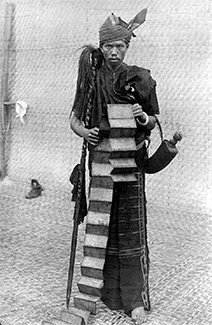 Portrait of a datu with divination book, medicine horn and magic staff, photographer unknown, 1929/1929. From the collection of the Nationaal Museum van Wereldculturen, Amsterdam, Netherlands.
The Batak people are Indonesia’s largest ethnic minority group with over 6 million people. They live around Lake Toba in Sumatra. There are 6 ethnic groups with different languages and customs and they all believe they are descended from a common ancestor called Si Raja Batak.
Their religion centred around Batak datu priests, who had magical powers and held totem pole staffs, curved horns holding magical substances, and folding books full of spells. Their chief duty was to protect the individual, family and village from black magic and malevolent forces through rituals, concoctions, statues and amulets.
In 1866 the Lutheran German missionary Ludwig Nommensen converted most of the Bataks.
These exotic books are called pustaha by the Bataks. They were written on bark with wooden covers by the Batak datu. There are 5 Batak languages with 3 sub-groups, but the script of each is similar.
They are actually made from the bast of the alim tree, which is removed in long strips, smoothed and covered with rice flour paste. The strips are cut and folded into a concertina. The two ends are glued to the wooden covers. The ink is made from several resins and boiled and applied with a pen made from bamboo or buffalo horn or sugar palm leaf.
The content may be religious or non-religious, but usually contains magic cures, medicinal recipes, how to make protective amulets, black magic, fortune telling, astrology and instructions on how to carry out rituals. They are shorthand notes for the datu for his own use and notes dictated to his pupils. This explains the abrupt and fragmentary character of many texts.
There are calendars in the books. The year is 12 months. The month is divided into three groups of ten days. There are no weeks. The calendar is used to determine auspicious days for carrying out important matters, such as going on a trip, sowing or harvesting or getting married.
The pustaha are no longer used and not many exist outside private collections.
Early 20th century.
Please ask for the price (or make an offer).