Product Description
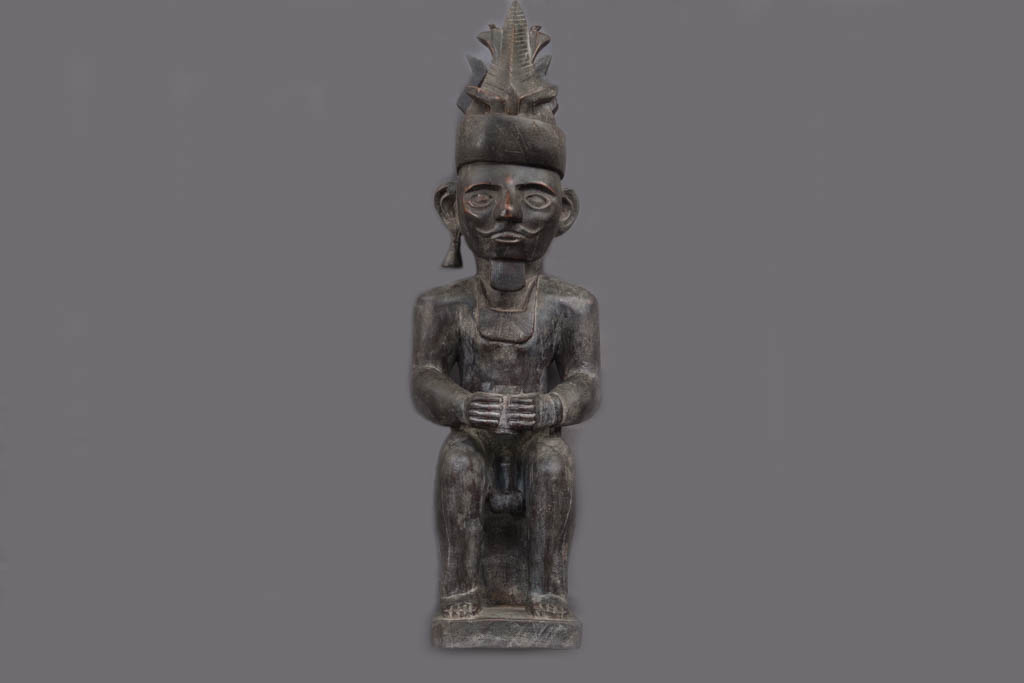
Antique Nias Ancestor Figure 1
Material: Wood
Style: Nias, North Sumatra, Indonesia
Size: Height 65 cm, Width 20 cm
Order Number: MHSANAF2
80-90 years.
Nias is an island located off the western coast of North Sumatra, Indonesia. Until the arrival of the Dutch Nias had one of the most vibrant warrior cultures of the Indonesian archipelago and their wooden ancestor figures have a distinctive style. Spirits of the dead possessed supernatural powers, which could influence the living in good or bad ways.
Ancestor images called adu zatua were made shortly after death. When the carving was finished, the deceased’s spirit was invited to dwell in the statue with ceremonies performed by a priest, who told the eldest son that his parent had returned to the house. The figure was collectively owned by all the descendants, but it was the duty of the son to make sure that all the ritual food offerings were given. The statues were usually tied to the right hand wall of the main room in the house and as people died new figures were added.
Females had a pair of earrings and males had one.
Most are nude with genitals, so that the gender is obvious, except for some in Central Nias, which are hermaphrodite and are usually standing. Those in North and South are more naturalistic, while those in Central Nias are angular. The aristocratic ones have tall crowns, pendant earrings, necklaces and bracelets. They were passed down from generation to generation.
They vary in size from 20 cm to 200 cm or higher and many were crammed into houses on the floor and on altars, hung from roof beams and placed on beams. Many were believed to hold the souls of the ancestors. Their purpose was to give fertility to humans and animals, provide protection and avert illness. The grander ones were for aristocratic families. They were given offerings and sacrifices, especially before headhunting or warrior raids.
Christian missionaries destroyed many ancestor figures in the late 19th and early 20th centuries.
This statue is a nobleman wearing a crown – it’s a distinctive style from South Nias that he sits on a stool of honour and holds a libation bowl in both hands on his knees. His fine moustache and goatee denote respect – rare attributes in this ethnic group. Facial hair was prized as a symbol of masculinity. His arching eyebrows emphasise his almond eyes. He is nude apart from jewelry, a massive teardrop earring, necklace and bracelet.
Please ask for the price (or make an offer).