Product Description
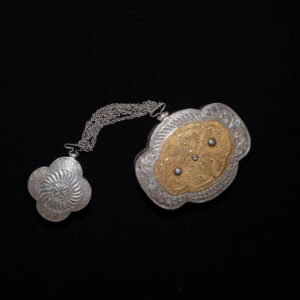
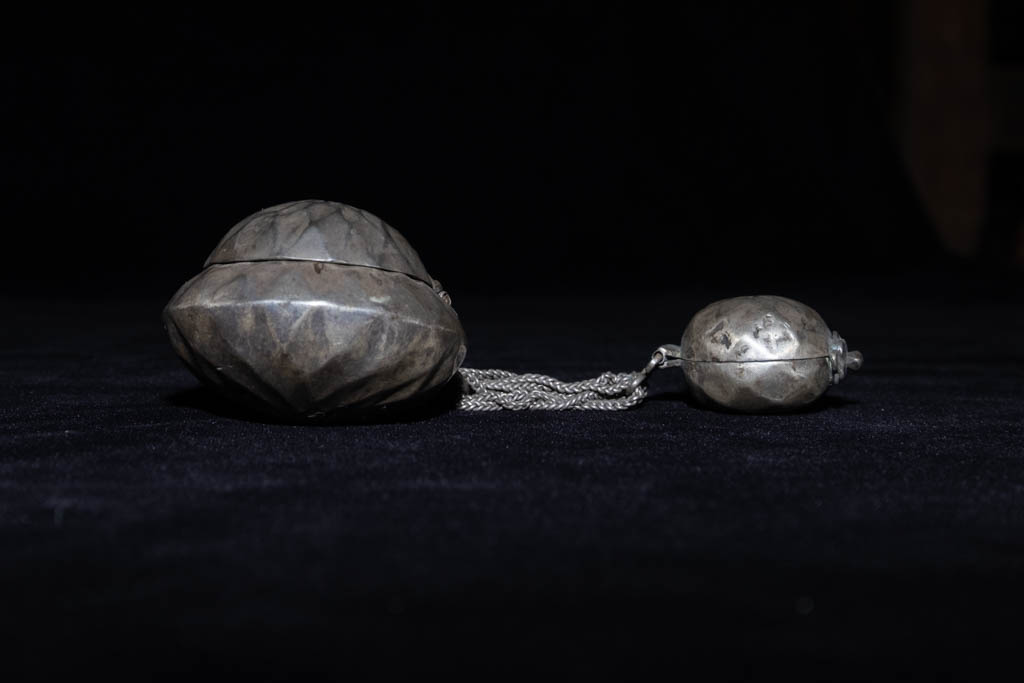
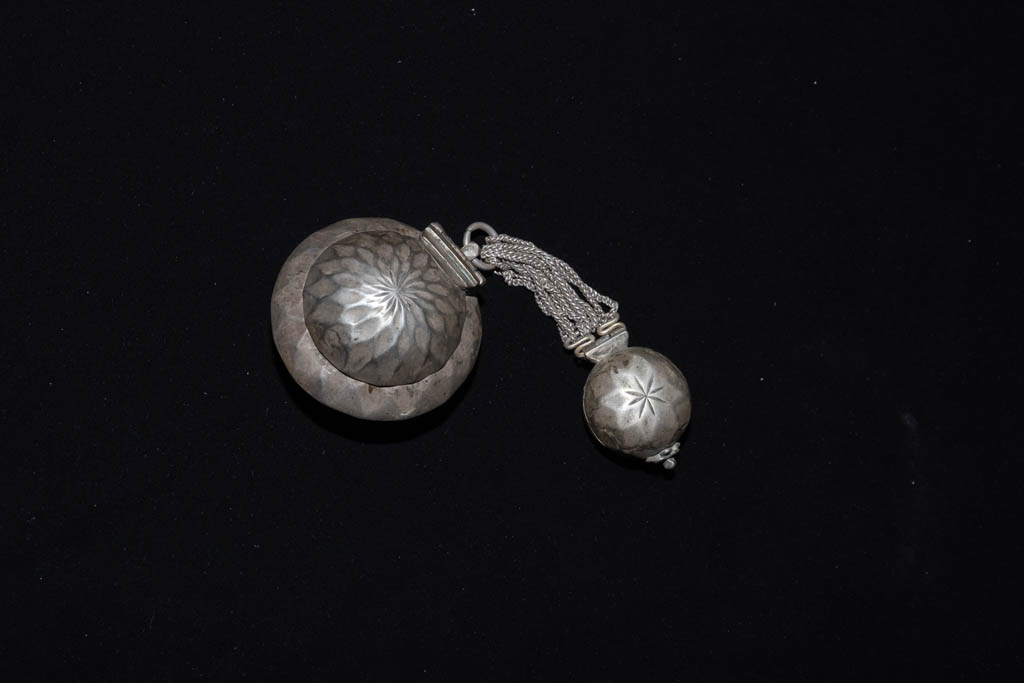
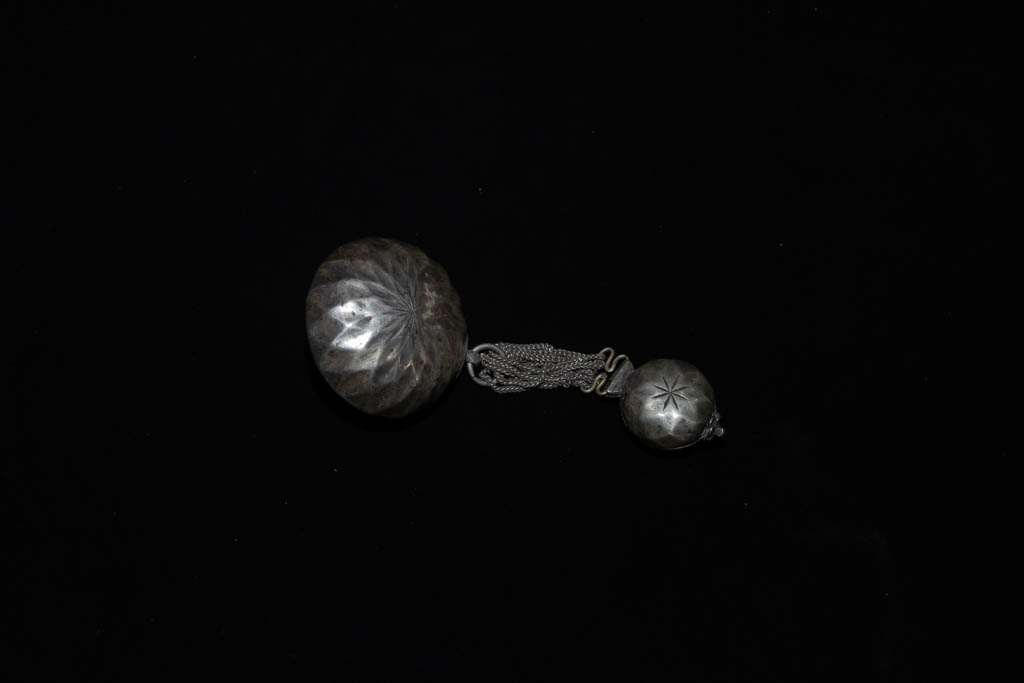
Antique Sumatran Tobacco Box and Small Lime Container 4
Material: Silver
Style: Sumatra, Indonesia
Size: Chain: 5 cm
Tobacco box: Height 5 cm, Diameter 7. 5 cm
Lime container: Height 2.5 cm, Diameter 3.5 cm
Order Number: MHSANT14
Betel chewing was widespread in Sumatra and offered to guests as a sign of welcome.
The basic ingredients are betel leaf, areca nut and lime powder. Gambir, an astringent extract obtained from the leaves and young shoots of the Umcaria gambir plant, and tobacco may be added to make it more fragrant.
Tobacco gives flavour. Sometimes shreds of tree bark are used instead. Shredded tobacco is rolled into a wad and placed in the cheek during chewing. Often they wipe their lips before and during chewing with a pinch of finely shredded young tobacco. Sometimes it is rubbed on the teeth before chewing the quid. After they might clean their teeth with a tobacco leaf.
The containers and implements included boxes of various shapes and sizes to store the betel nuts, betel leaf holders for the already prepared betel quid, lime pots, hinged cutters , similar to scissors, to cut the hard areca nut, knives to cut the softer nuts, pounders to crush the nut, salve boxes to hold beeswax for the lips, spittoons, tobacco pouches and trays on which they all were displayed.
These tobacco boxes (chelpa) are another example of the fine paraphernalia associated with betel nut chewing. The larger octagonal hinged silver box, engraved with floral decoartions, was used hold tobacco or betelnut (sirih). The smaller lime container is shaped like a mangosteen fruit.
The form of these boxes was based on pocket watches used by 17th, 18th and 19th century European traders and colonialists. They were worn by men and women attached to a scarf or kerchief draped over the shoulder or from belts around the waist.
19th century – early 20th century.
Please ask for the price (or make an offer).