Product Description
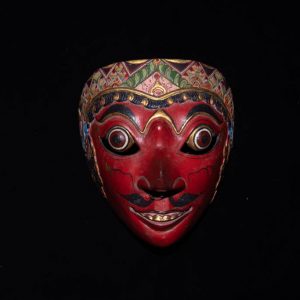
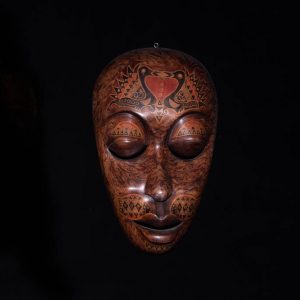
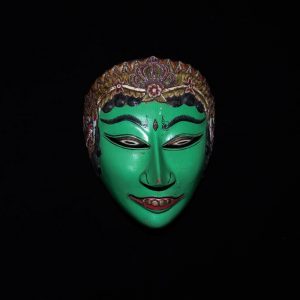
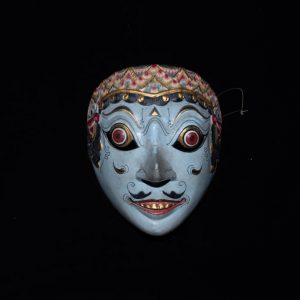
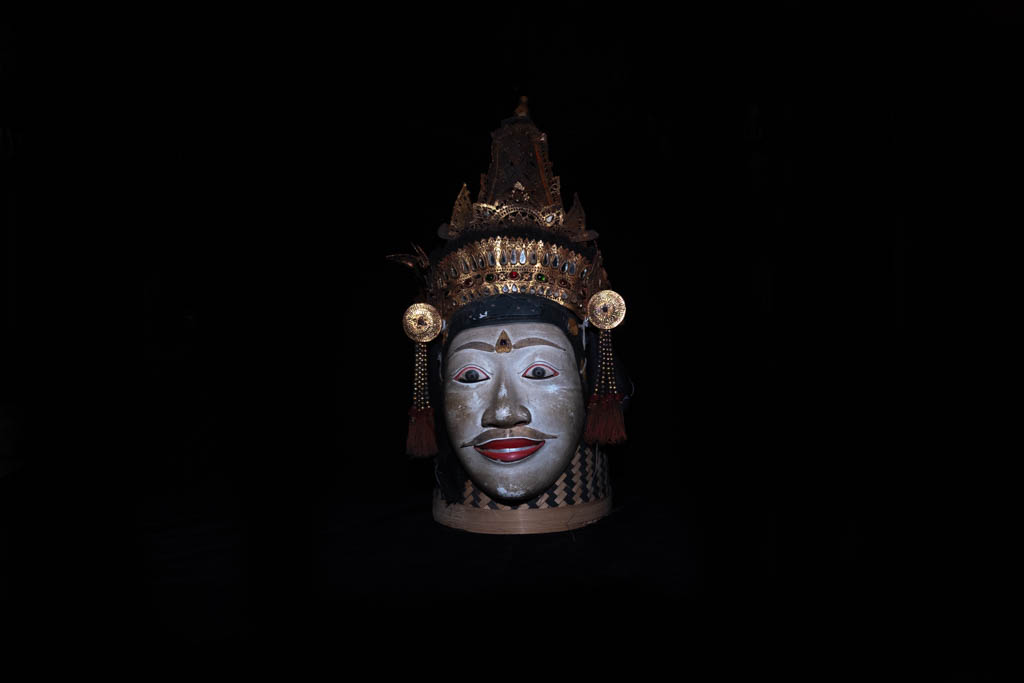
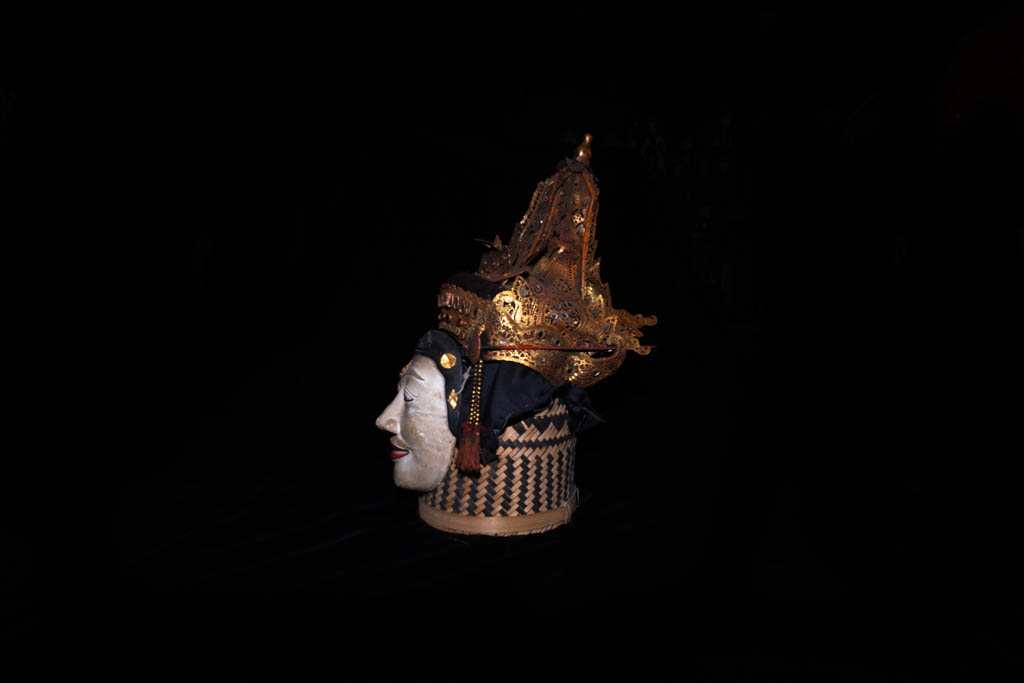
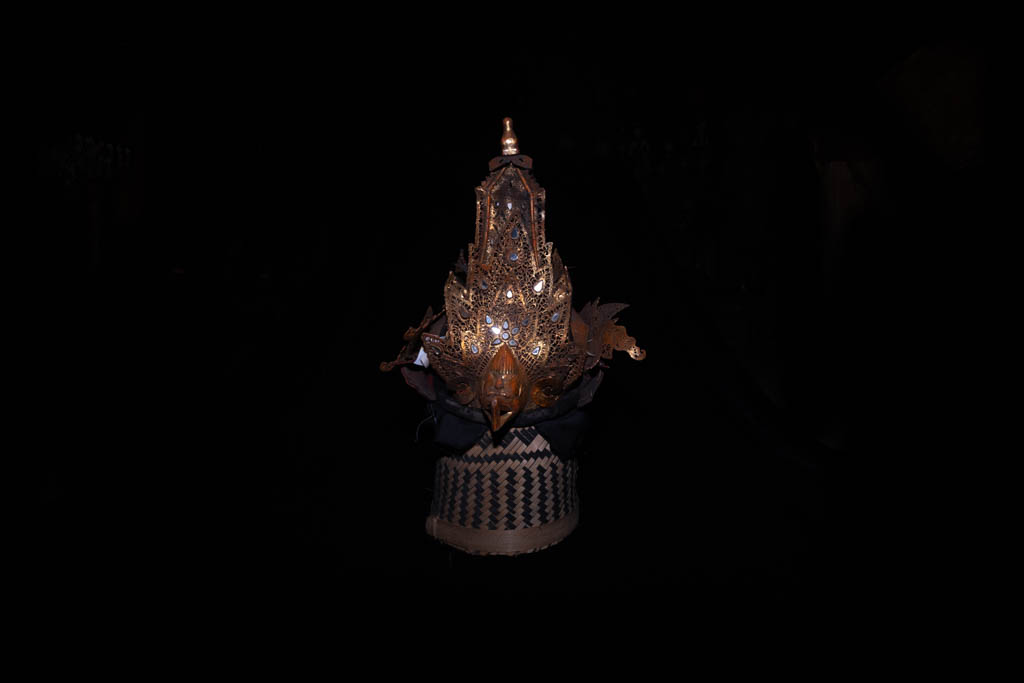
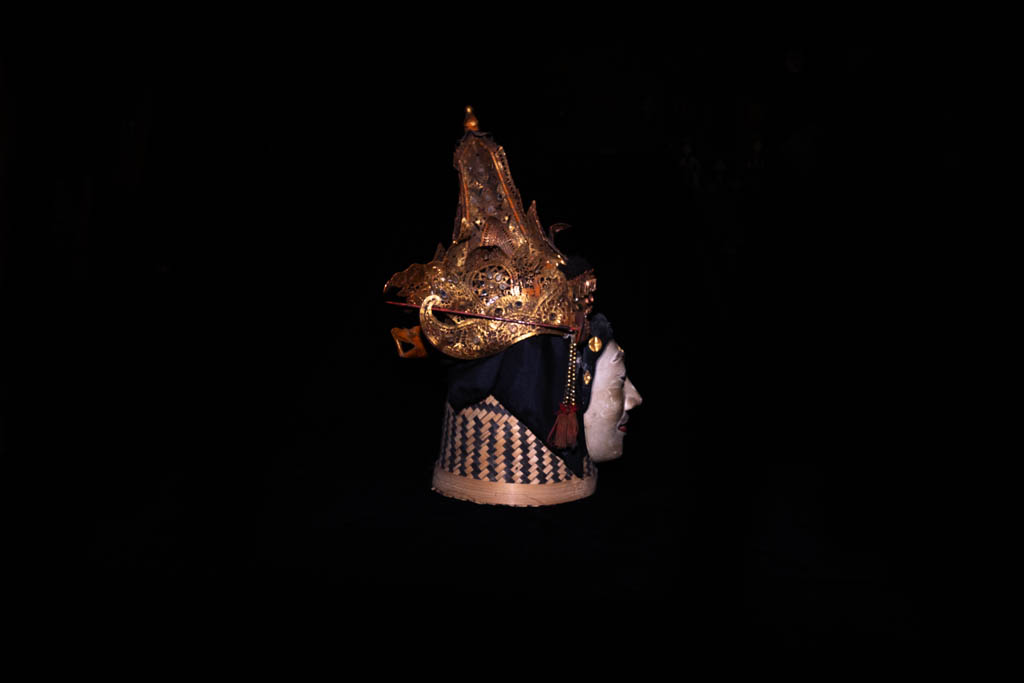
Antique Balinese Mask and Crown 1
Material: Wood, paint
Style: Nusa Penida, Bali, Indonesia
Size: Mask: Height 19 cm, Width 13 cm; Crown: Height 32 cm, Width 27 cm, Depth 22 cm
Order Number: MHSABMC1
From our book Secrets of Bali:
Balinese masks are of ancient origin and act like a lightning rod in the sense that they attract the spirit of the person to be portrayed. They are the vehicles of the gods and are sacred. The Balinese believe that living masks provide inspiration for the dancer or actor. The plot of the dance or play comes from the mask. In other words, as the Balinese say, the mask ‘speaks’.
Masks are treated with great respect. They represent the faces of revered gods and heroes and are put on the head, which is the most sacred part of the body. They should never be put on the ground or stepped over and are usually kept out of sight, wrapped inside a box, which is often covered with a white cloth…
Body colours represent values in Balinese society. The colours are the basic colours. White represents purity; green for fertility and steadfastness; black for evil; blue for bravery and intelligence and red for fire and strife.
Nusa Penida is a dry, hilly island southeast of Bali. Nusa means ‘island’ and Penida means ‘priests’. The Balinese believe the priests banish evil spirits to the island.
The area of Nusa Penida is approximately 3.6% of the area of all of Bali. The Balinese regard it as an area of evil and the main area is Pura Dalem Penataran Peed, sometimes spelled Ped, on the northwest corner. Many Balinese go for the odalan ceremony of this temple. It is the home of Ratu Gede Macaling, one of the most powerful and destructive and evil of all of the various gods in Bali.
The ogre-like, black-faced Barong Landung, Jero Gede, and his white skinned wife, Jero Luh, and her family came from Nusa Penida.
A white mask symbolises a refined person, such as a king.
Early – mid 20th century.
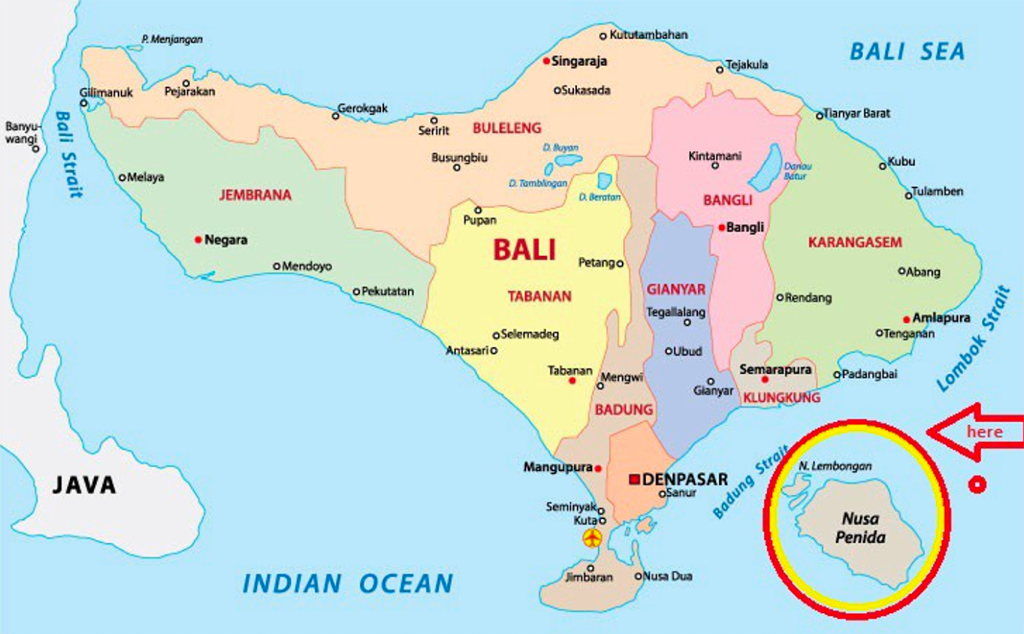 Map of Nusa Penida.
Please ask for the price (or make an offer).