Product Description
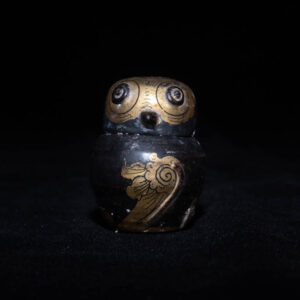
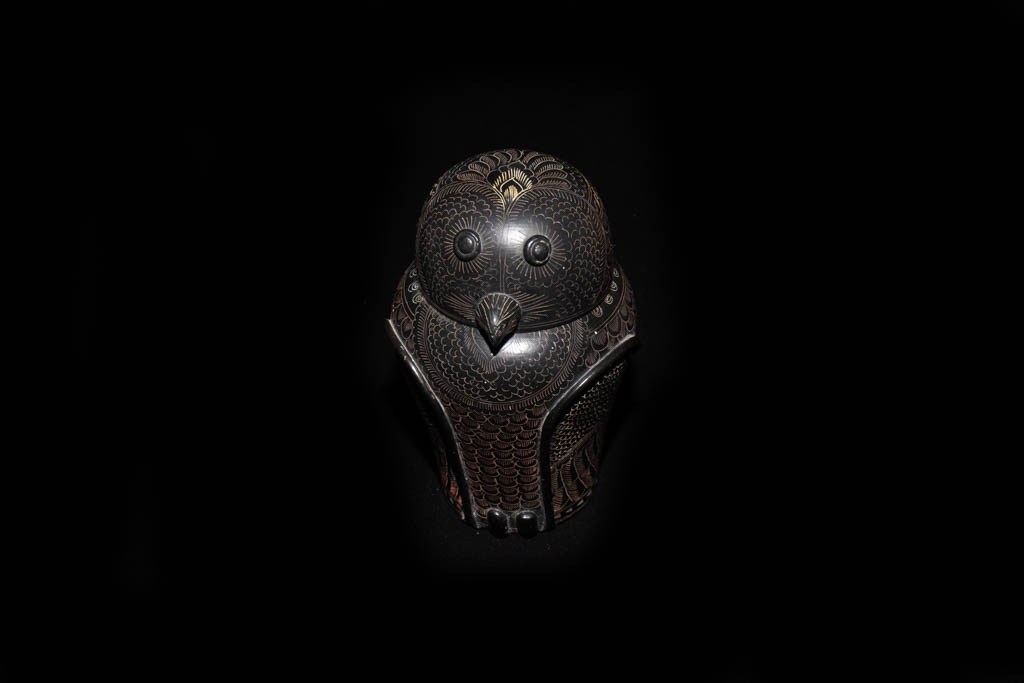
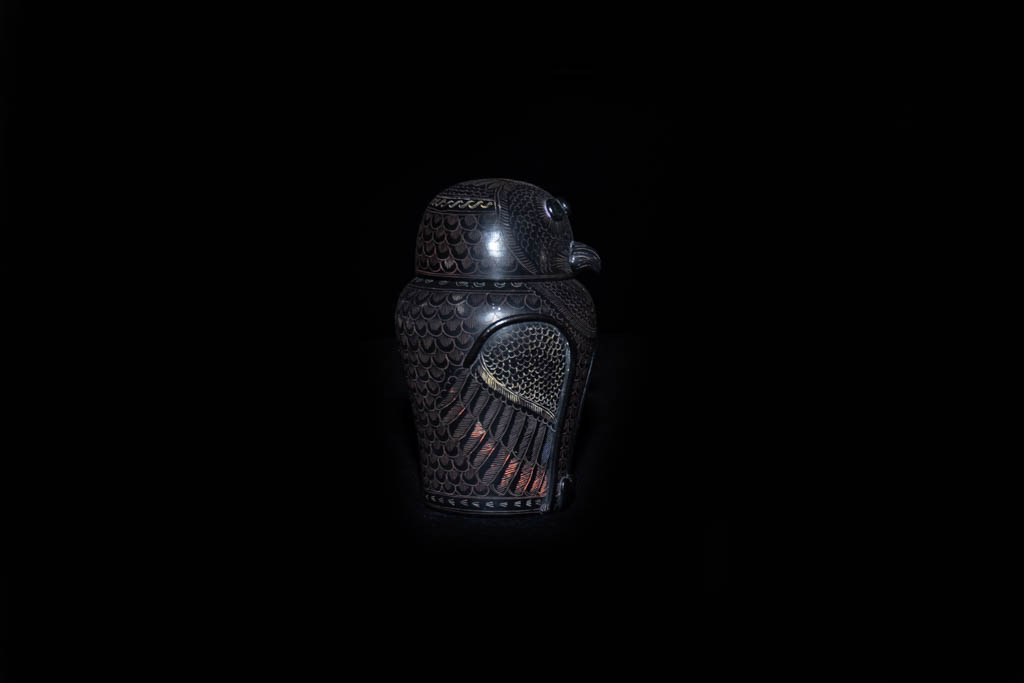
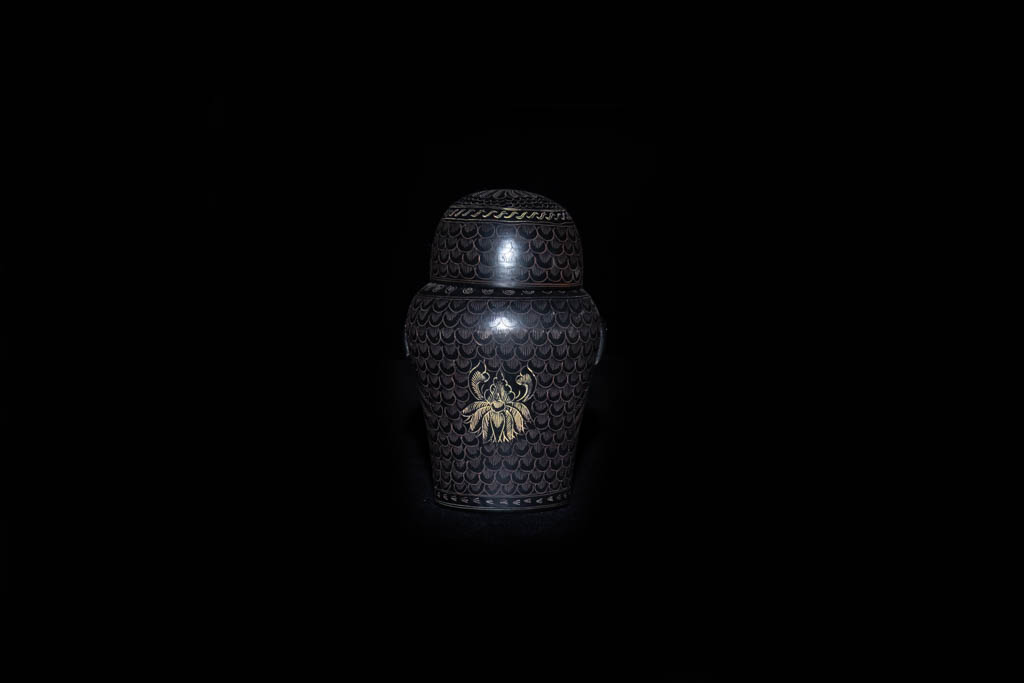
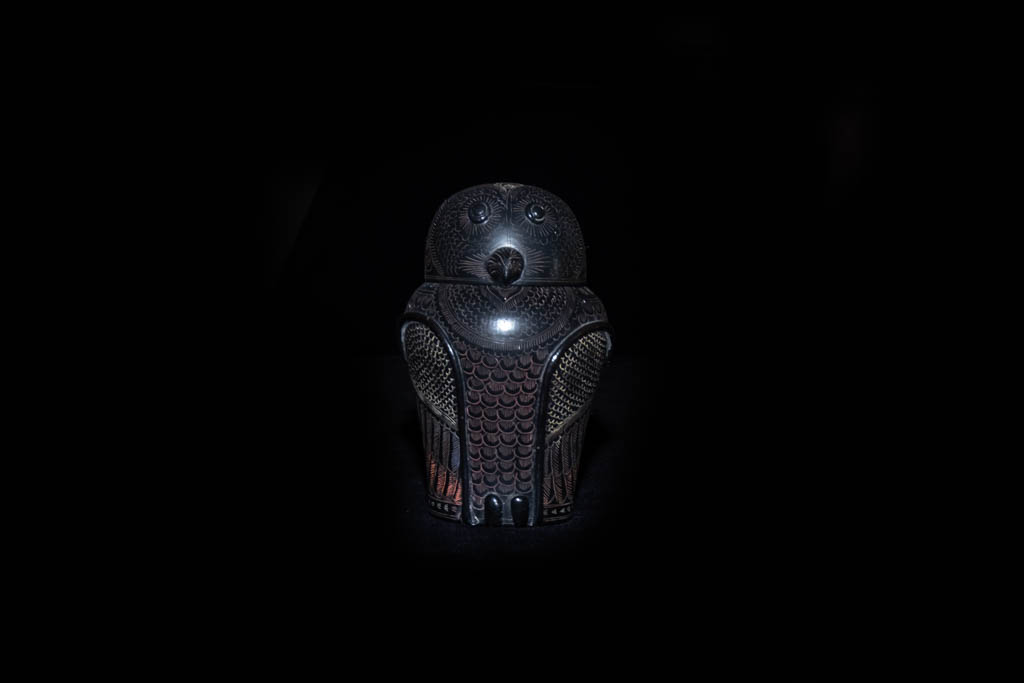
Burmese Lacquer Owl 2 SOLD
Material: Lacquer
Style: Bagan, Burma
Size: Height 16 cm, Diameter 8 cm
Order Number: MHSLO2
It seems that the art of making lacquer came to Burma from China. China had been making it for 3,000 years, but it may not have come directly.
Bagan was and is largest and most important centre for lacquer production in Burma.
Lacquer is made from the sap of the htanaung and neem trees. It is tapped like rubber. The grey, viscous liquid turns glossy black on exposure to the air. Objects, which are covered in lacquer, are usually of wood or bamboo, which can be made extremely flexible by interweaving horsehair.
It can also be used as a coating on cane, palm leaf, metal and leather. It forms a hard surface when dry and waterproofs the object and is insect resistant.
Numerous coatings of lacquer are applied. After each application the object is left to dry. The process may take 6 months or longer. A fine piece may have 26 applications. Lacquer furniture can take 2 years to make.
In pre-colonial times lacquered boxes stored royal jewels, letters and Buddhist manuscripts. Lacquered trays are still used to give food to the monks.
Ordinary people use lacquer containers for food, clothing, cosmetics and flowers, in preference to the increasingly common metal and plastic.
With the conquest of Ayutthaya in 1767 Burma acquired a number of gilded lacquer techniques from Thailand. One was shwei-zawa, which is the decoration of black lustrous lacquer with gold leaf designs. In pre-colonial times this technique was restricted to royal and religious items.
Bagan is the present day centre for this craft. Gold leaf is expensive, so pieces are usually made to order.
The top is removable. The owl is lucky in Burma.
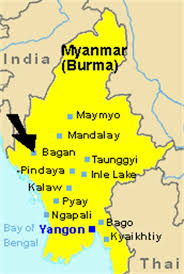 Map of Bagan.
Please ask for the price (or make an offer).