Product Description
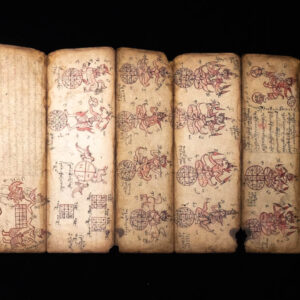
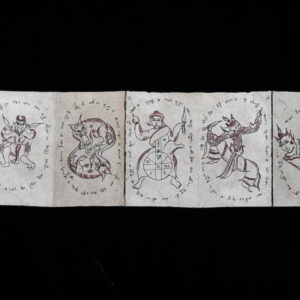
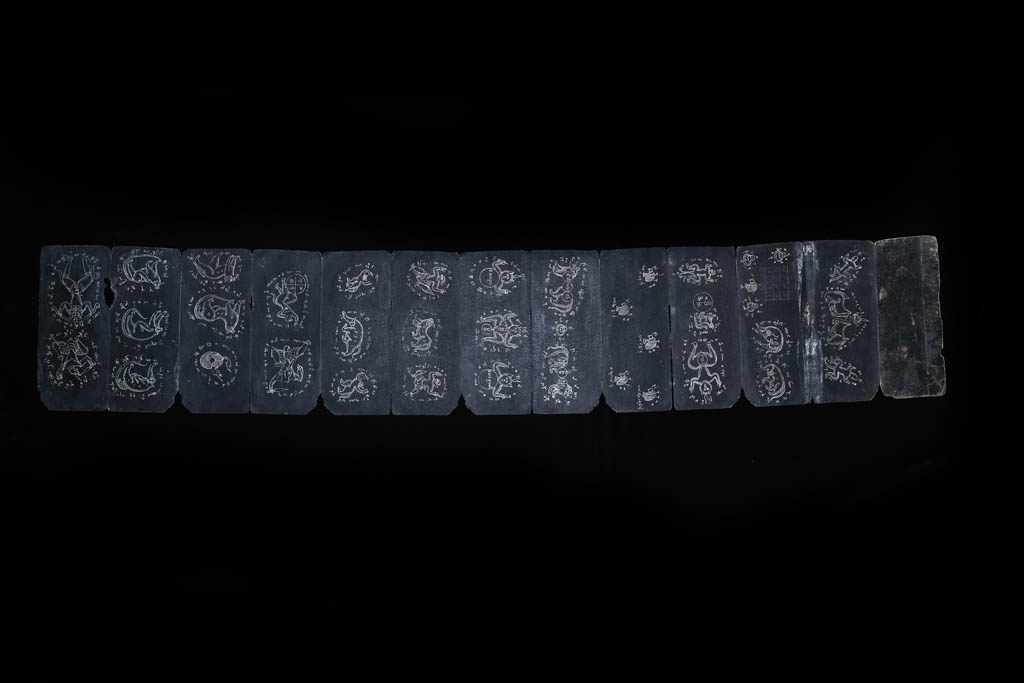
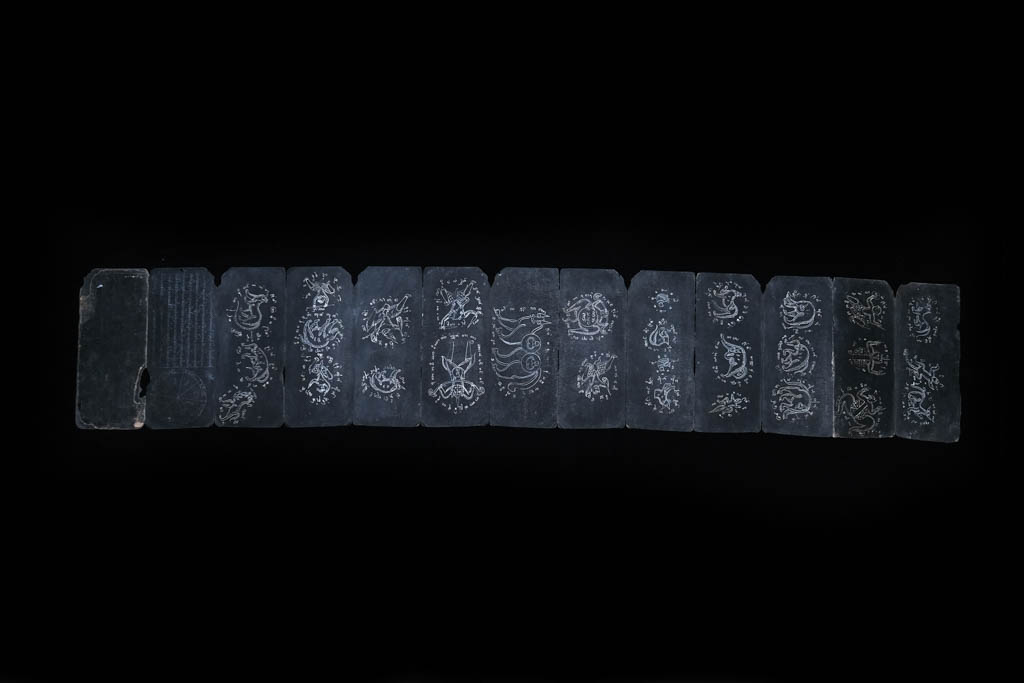
Antique Burmese Tattoo Book 7
Material: Inner bark of the mulberry tree
Style: Burma
Size: Length 180 cm, Width 32 cm
Order Number: MHSTABTB7
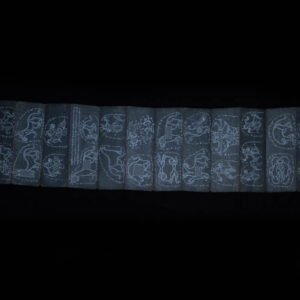
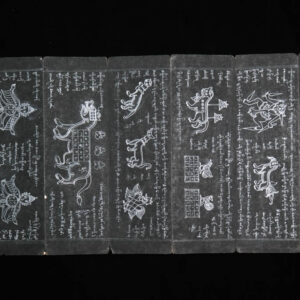
There are drawings and text on both sides. 13 pages.
Tattooing is an ancient tradition in Southeast Asia. Chinese records of the 4th century AD refer to it. The Tai people of Lan Na and Shan States had extensive tattoos on parts of their bodies until about 50 years ago, especially soldiers and monks. They were decorative but also certain patterns, with correct spells and incantations, gave protection from sickness and injury caused by evil spirits. Tattoos can also make a person popular and successful in love. Some can make a person invisible if he touches it and makes an invocation.
Tattoos are done on an auspicious day calculated according to the waxing and waning of the moon and the person’s birthday. The night of the full moon in November is the most auspicious. The person prepares himself by keeping the 5 precepts: no killing of a live being, no stealing, no lies, no adultery, and no alcohol. Also no showering for 7 days before the process and avoiding washing lines that have women’s lower clothes hanging on them.
The tattoo master draws an outline on the skin. He may have a wooden stamp for popular designs. An expert may even dispense with them. The needle is about 40 cm long with the brass figure of an angel or spirit at one end. The other end is a needle with groves to hold the ink, which is released on pricking the skin.
The ink is blue-black, red or colourless. The most common is blue-black made of animal fat, soot from a kitchen fire and a pig, bear or bull’s bile. Red is made from cinnabar, animal bile and herbs for the upper body. Blue-black does not fade but red does. Invisible ink is made from coconut or sesame oil. Invisible tattoos are just as powerful.
After the tattoo is carried out the person is supposed to keep at least one of the 5 precepts and not to eat offal or certain vegetables and meat served at funerals, failing which he will have a painful illness. They tattoos have to be recharged from time to time with a ritual to retain their power.
Because of the pain extensive tattooing gives a person moral status. They are a symbol of courage and endurance and show suitability for marriage. They represent a rite of passage from youth to manhood.
Tattoo manuscripts are like pattern books. Clients choose the designs and where they are to be placed. Burmese folding books date back to the 11th century. They are called parabaik. They are strips of paper, made from the inner bark of the mulberry tree (Morus indica), up to 12 metres in length, folded like a concertina or accordion. The paper was made in the Shan States and is soft and fibrous and does not tear easily.
There are black parabaik and white parabaik. The black ones are coated with charcoal powder and the white ones with chalk powder, black ink and gum. Black ink is made from soot and animal or fish bile. The white ones are finer. Writing is usually on both sides of the paper.
They are concerned with the magical religious systems of the Tai people of the Shan States of Burma and Lan Na (northern Thailand).
The Shan and Lan Na people are Theravada Buddhists and include aspects of Hinduism and spirit religion. People visit experts called sala and some Buddhist monks, who can perform rituals and give tattoos. The sala learn tattoo techniques, meditation, and magical incantations in Pali. They go through an initiation ceremony. Their implements and books are kept on a special altar.
Buddhist monks and expert laymen made the manuscripts. The text is in a variety of Tai scripts, but Burmese, Khmer and central Thai script may also be used. Two or more scripts are often present. Shorthand is used. Words and phrases are sometimes placed inside diagrams.
Tatttoo books contain drawings and significant letters and syllables. There are shorthand Pali incantations and magic spells that are tattooed on the upper body and back and down the arms. There are square, rectangular and circular diagrams filled with numbers for astrological calculations and birth details. There are Hindu characters, Buddhist and spirit iconography. Birds, animals and monsters also: vultures, pigeons, civet cats, lions, tigers, rats, bats, elephants, monkeys.
Soldiers favour tigers, monkeys and cats, which are agile, fearless, intelligent and fast. These tattoos are also popular with criminals. They believe the animal’s characteristics will be transferred to them. Incantations and spells are inscribed around the image.
Wild hogs, which have thick skins, give protection against bullets, spears and swords, are popular with construction workers and street gangs. Cows give courage. Elephants bring good luck. The sacred goose brings luck in business and travel. Singers and musicians choose kinnari, which are half human and half bird, as they have good voices. House lizards with forked tails bring good luck.
Tattoos can be so powerful that the sala may circle the image with words in Pali to reduce their potency and danger.
Tattooing used to be for men but now women are also tattooed.
Many magical parabaik books have not survived because they have deteriorated with humidity and age.
19th – early 20th century.
Please ask for the price (or make an offer).