Product Description
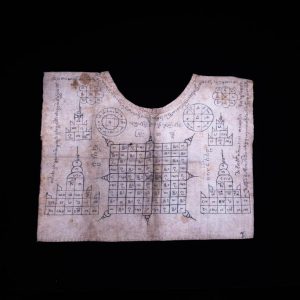
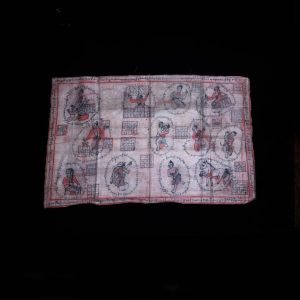
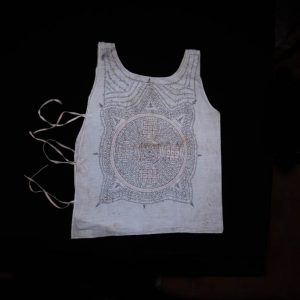
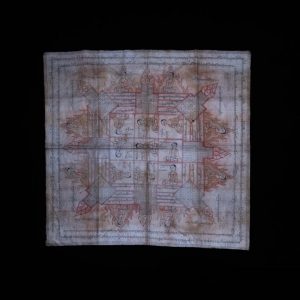
Antique Mandala Textile 1
Material: Cotton
Style: Shan States, Burma
Size: Length 68 cm, Width 65 cm
Order Number: MHSAMT1
Cotton thread is used in Buddhist and spirit ceremonies. Spinning and plyng, that is twisting together a number of filaments, is carried out by village women after childbearing age. Cotton was produced locally and also imported from India. When woven, they have a slightly rough texture.
Colours were obtained by using local plants, insects and soil extracts and painted on with a brush made of animal hairs. Indigo and cinnabar were the most popular and sometimes the colour seeps into others as a result of being sprayed with holy water. Later, commercial dyes were used.
Some people commissioned Buddhist monks and expert sala to make mandala textiles to aid meditation in their homes. Work was carried out only on auspicious years and could take a year or even longer. Mandala textiles were also used as canopies and temple hangings and to protect the house and its inhabitants .
Buddha, or more than one Buddha, is in the centre, representing moral discipline, surrounded by concentric circles of monks and guardian spirits displaying obedience, cosmological symbols, mythical animals and humans. Lines dividing the circles represent spokes of wisdom.
Text in Pali surrounds them. The four guardians of the cardinal directions, or diagrams containing protective incantations, are in the corners outside the mandala. The sun and moon may be represented as a peacock and rabbit.
Buddhist monks or shamans write the yantra on the cloth. Meditating first until they are in trance, they write and chant simultaneously. Meditation and chanting increase the power of the drawings.
The number of yantra masters has severely declined in recent decades.
19th – early 20th century.
Please ask the price (or make an offer).