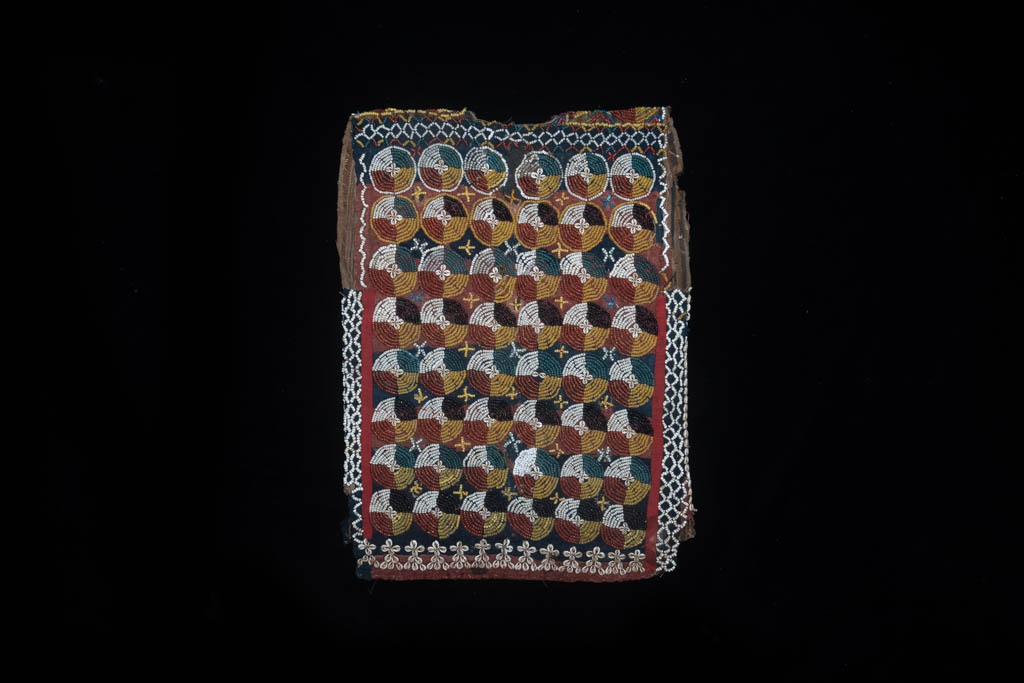
Product Description
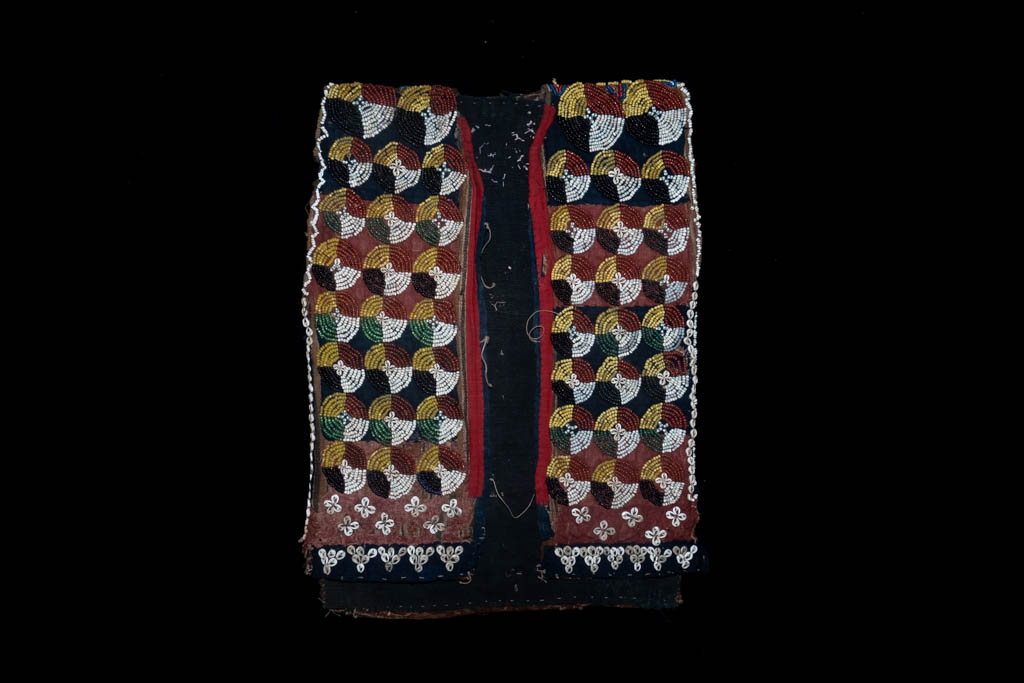
Antique Kalimantan Bead Jacket 2
Material: Beads
Style: Kalimantan, Indonesia
Size: Height 55 cm, Width 40 cm
Order Number: MHSAKJ2
Dayak is the name applied to a number of very different peoples living on the island of Kalimantan, but also elsewhere. They share some common characteristics. They live in longhouses, situated mostly on navigable rivers. They were rice farmers, living simple lives, but staging large religious ceremonies, which involved large feasts.
Kalimantan sits on the equator, so little clothing is necessary. Everyday Dayak clothing consisted of a loincloth for men and a short skirt or two apron-skirts for women. Inside they wore a headband and outside a hat. Both men and women wore a jacket for semi-formal events. Children were mostly naked, but girls may have worn a modesty plaque suspended from a string.
In contrast to these plain clothes ceremonial costumes, lavishly ornamented with animal claws, feathers and teeth, and feathers, silver and beads were worn.
Surprisingly most Borneo beads were not made in Borneo. They come from India, China and elsewhere, and are found in every part of the island. They were prized and most tribes used them and still wear them. They were used in trading as money.
Beads are used to decorate everything: jackets, skirts, hats, headbands, armbands, necklaces, ear-hangings, belts, baby carriers, baskets, betel boxes, sword hilts, walking stick sheaths, mats and the ends of loin cloths.
Traditionally men designed the patterns and women threaded the beads. Bead costumes require great skill and ample supplies. Wear and tear on these costumes is immense. If part of the bead fabric is damaged or worn out it cannot be replaced or patched up like a textile. Usually they are unravelled and the beads are used for something else, such as a necklace. So the costumes are usually only worn during festivals.
Bead jackets were traditionally woven by wives for their husbands to protect the husbands during headhunting raids or battles. Headhunting is no longer practised, but the wives still make them. For example, for protection during World War II against the Japanese, and later as a display of status and manhood.
Early – mid 20th century.
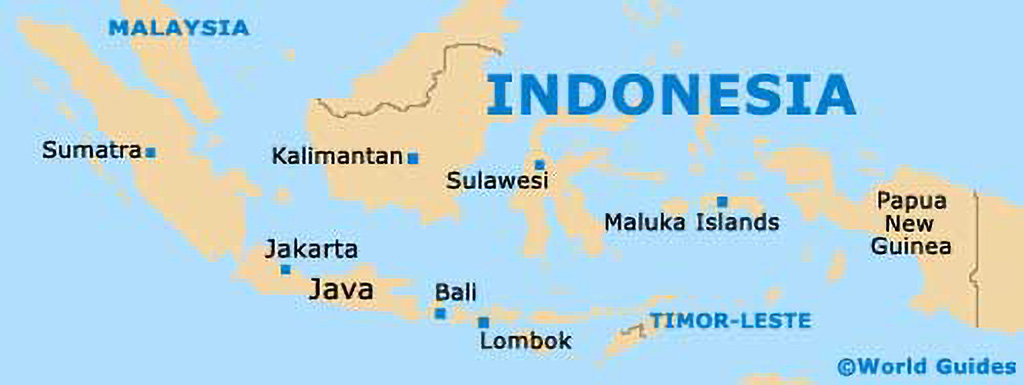 Map of Kalimantan.
Please ask for the price (or make an offer).