Product Description
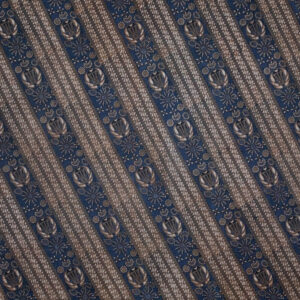
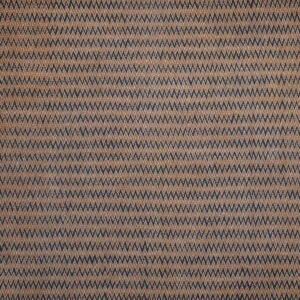
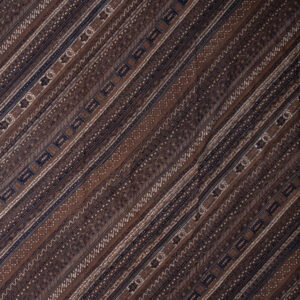
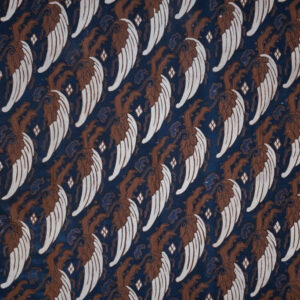
Antique Central Javanese Batik 14
Material: Cotton
Style: Central Java, Indonesia
Size: Length 251 cm, Width 104 cm
Order Number: MHSACJB14
Like a good wine, batik improves with age. It becomes soft and smooth.
Batik is regarded by the Javanese as one of the 5 halus or elite arts, along with wayang kulit (shadow puppets), gamelan music, lakon (the myths dramatized in wayang kulit), tempongs (classical poetry), and joged (classical court dance).
There are many waxings and dyeings and other treatments in order to make a batik. The great centres are in Central Java and North Java.
Central Java has three colours, whereas North Java is multi-coloured.
In Central Java, Yogyakarta batiks are distinguished by their strong dark brown, blue and white designs. Brown symbolizes the earth, blue symbolizes heaven, both placed on the white of the air.
Solo or Surakarta, also in Central Java, has brown, blue and cream. Around 1900 synthetic dyes were imported to Java from Germany. The colours are harsher than vegetable dyes. This is because the colours are equal in strength.
Vegetable dyes show a graduation of colour nuances.
There are two classic vegetable dyes: indigo (blue) and soga (brown).
Indigo comes from the leaves of the Indigofera plant. The soga brown comes from the bark of the jambal tree. Its range is from yellow to deep rich brown and is indigenous to Central Java.
Vegetable dyes are prized and sought after by batik connoisseurs, the upper classes, collectors and the wealthy.
Some families in Java keep their natural dyes extremely secret.
Clothing indicates social standing among many Indonesian peoples. The design and colour may be significant. Until the early 20th century certain patterns and materials were restricted to the aristocracy and the sultans of Yogyakarta and Surakarta.
In Java alone there are about 3,000 batik designs. Some date to pre-historic times. The scroll shape is called parang. These are usually set in light coloured bands with undulating edges, which are separated by strips of a darker colour. There are over 40 different kinds of parang, the most well-known being parang rusak. The circular one with 2 dots in the middle is called kawung. Garuda or just a single garuda wing (lar) or double garuda wing (mirong) or double wing with spreading tail (sawat), insects and ears of rice are well-known.
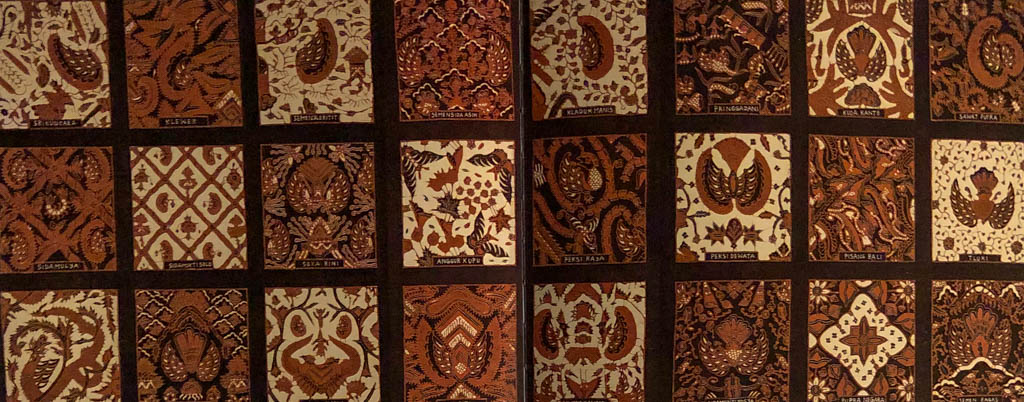 Batik Patterns.
UNESCO recognized batik as a Masterpiece of Oral and Intangible Heritage of Humanity on 2 October 2009.
There is a chapter on batik in From Tattoos to Textiles, Murni’s Guide to Asian Textiles, All You Need to Know … And More.
Early – mid 20th century.
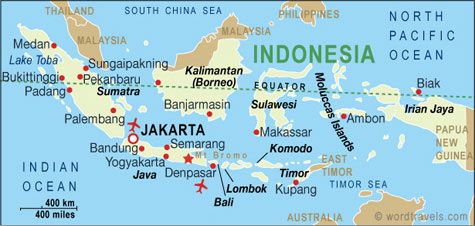 Map of Java.
Please ask for the price (or make an offer).