

Product Description
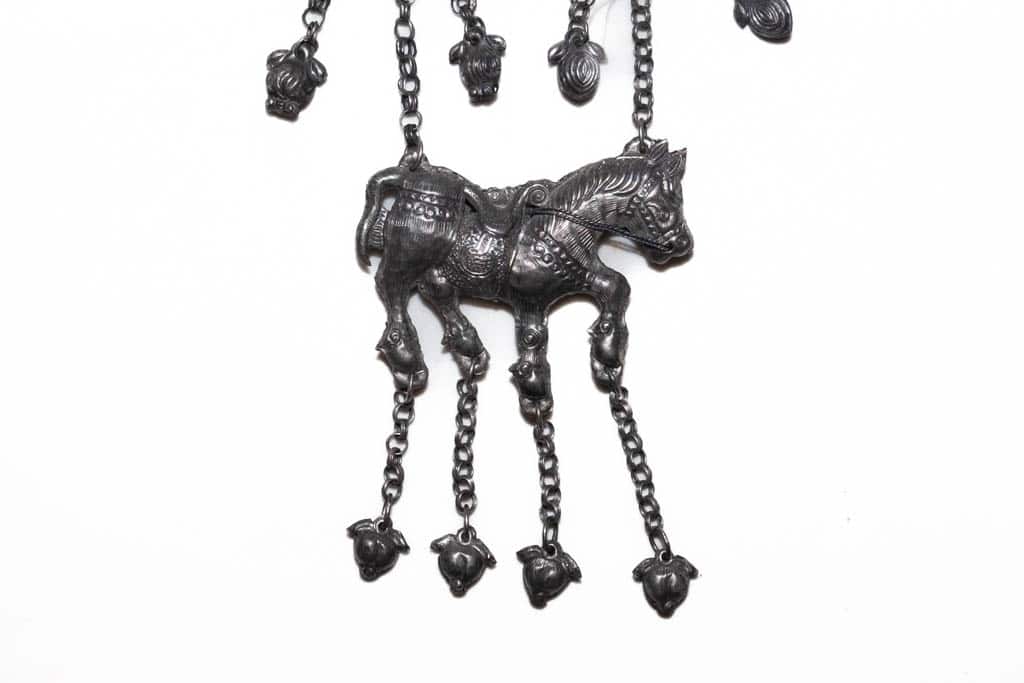
Antique Chinese Talisman Against Misfortune
Material: Silver
Style: China
Size: Height 36, Width of the horse 8 cm
Order Number: MHSACTAM1
The tradition of jewelry-making in China goes back at least to the Neolithic Period, and silver work at least as far back as 300 BC. Qing dynasty (1644 – 1912) silversmiths were expert in elegance, grace and beauty.
Obverse
Marianne seated with fasces (Marianne has been the national symbol of France since the French Revolution and personification of liberty, equality and fraternity. Marianne is shown holding a fasces, a symbol of authority).
Date in exergue (small inscription below the principal emblem on a coin or medal).
Lettering:
REPUBLIQUE FRANÇAISE (Translation: French Republic)
BARRE? ( Engraver: Jean-Auguste Barre? Jean-Auguste Barre (1811 – 1896) was a French sculptor and medalist).
Reverse
Denomination within wreath.
Lettering:
INDO-CHINE FRANÇAISE? (Translation: French Indochina)
20
CENT.
TITRE 0.680. POIDS 5 GR.4 (Translation: 0.680 purity, 5.4 grams)
Early 20th century.
There is an example in Four Centuries of Silver, Personal Adornment in the Qing Dynasty and After, Margaret Duda, Times Editions, 2002, page 88.
Please ask for the price (or make an offer).