Product Description
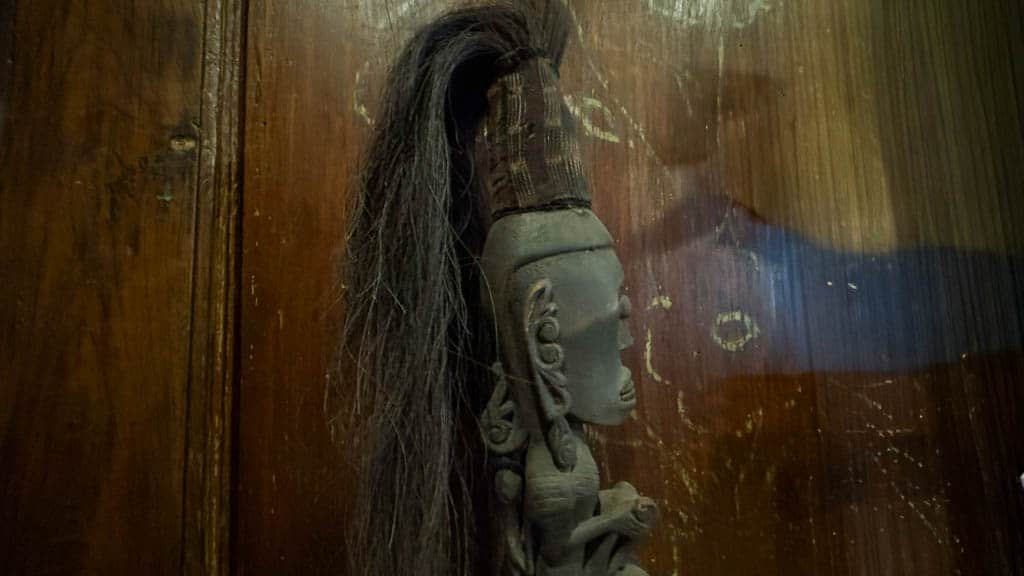
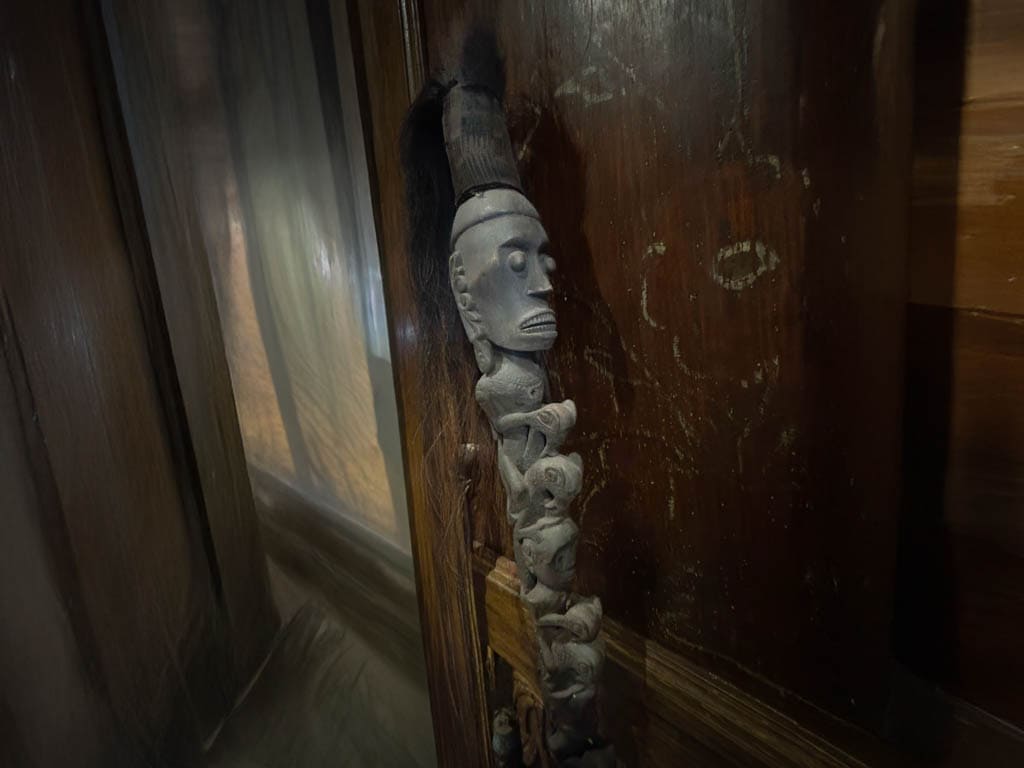
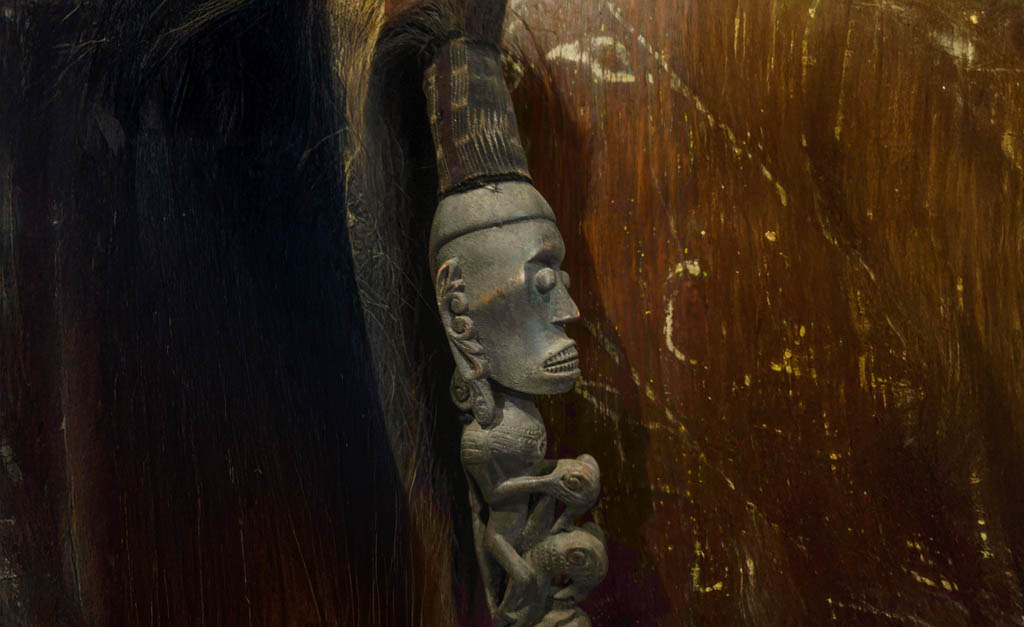
Antique Sumatran Shaman’s Staff 3
Material: Wood, fibre
Style: Batak people, Lake Toba, North Sumatra, Indonesia
Size: Height 175 cm, Width of head 8 cm
Order Number: MHSASSS3
Known as Tunggal Malehat or Tunggal Panaluan, the shaman’s staff displays pure, refined, ancient Batak iconography.
Shamans use the staff in rituals to ward off evil spirits, enemies, thieves and bandits from the village, and to start and end rain.
It is his most important ritual object. They often use a special wood.
They are all carved individually and display an enormous variety of styles.
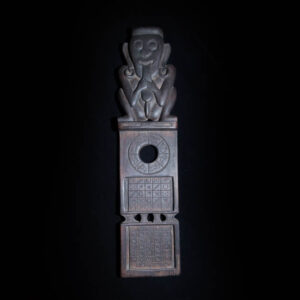
The simplest show a single figure standing or squatting. More complicated ones have many human figures arranged one of top of another. Between the figures are animals. The top figure is usually a male and the largest. Below him is a smaller female standing or sitting. The sex of the other figures is usually unclear.
The carvings represent a Batik myth. Incestuous twins from a village were punished by being made into part of a tree. Priests called in to help failed and were also made part of the tree. It was finally determined that wood from the tree would protect the village. To obtain some of this power shamans (datu) carved staffs resembling the tree.
Staffs are about 6 feet long. The two uppermost figures represent the twins. The others represent the priests who failed. A powerful substance called pupuk is inserted into holes along the length of the stick by the shaman to bring it to life. They are closed up with resin or a wooden plug.
It is cruel. Pupuk reanimates the spirits of the dead. To make the pupuk, the datu kidnaps a male baby from the enemy’s village. He raises the child to becomes obedient. Then the datu tells the child to drink boiling molten tin. The child dies immediately and his body is chopped up and mixed with the flesh of animals. The mixture is then left to putrefy. Liquid oozes out and is put in a guri-guri (a cup). The leftover material is burned until it becomes ash. This ash is known as pupuk.
Pupuk is also used to animate the ancestral statues (debata idup) placed around the village to protect it.
The magical properties of the staff become live and dangerous, so the staff is hung under the eaves or has a little house of its own. At ceremonies it is given offerings and the blood of sacrificed animals. The shaman dances in trance with the staff and spits betel juice on it and uses it to ascertain auspicious days and to tell the future.
A rich brown patina covers the entire staff.
 Map of Sumatra.
Early 20th century.
Please ask for the price (or make an offer).