Product Description
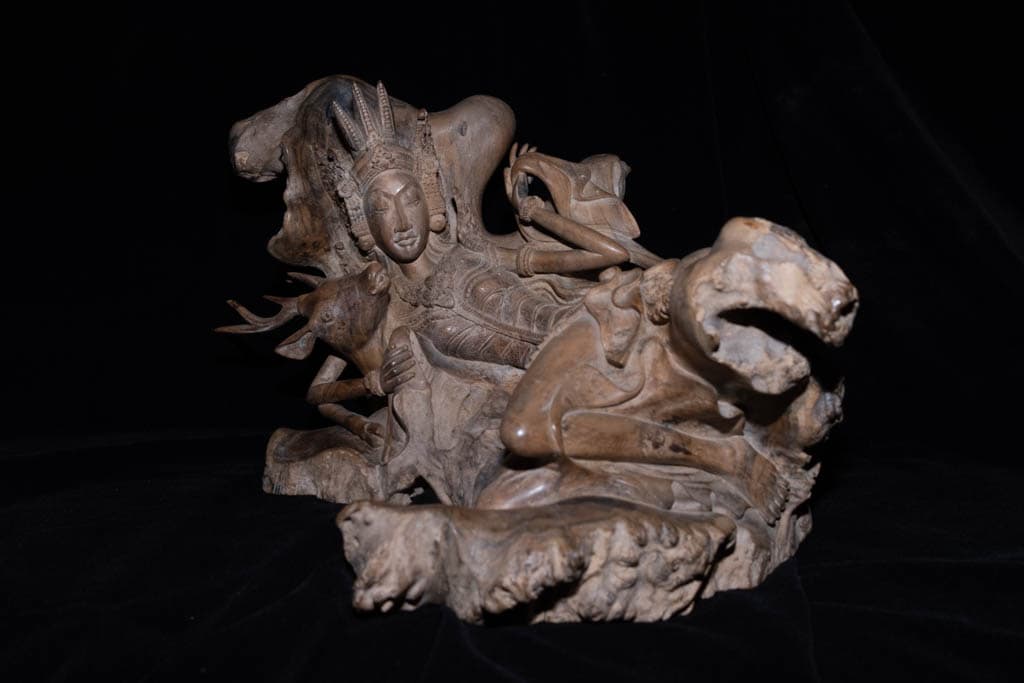
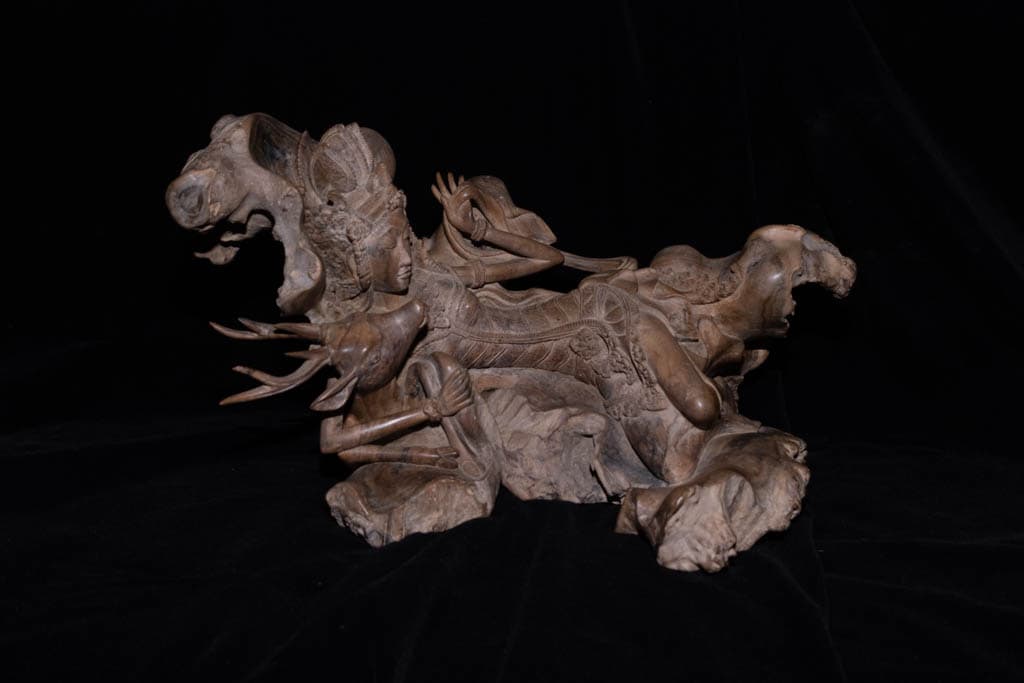
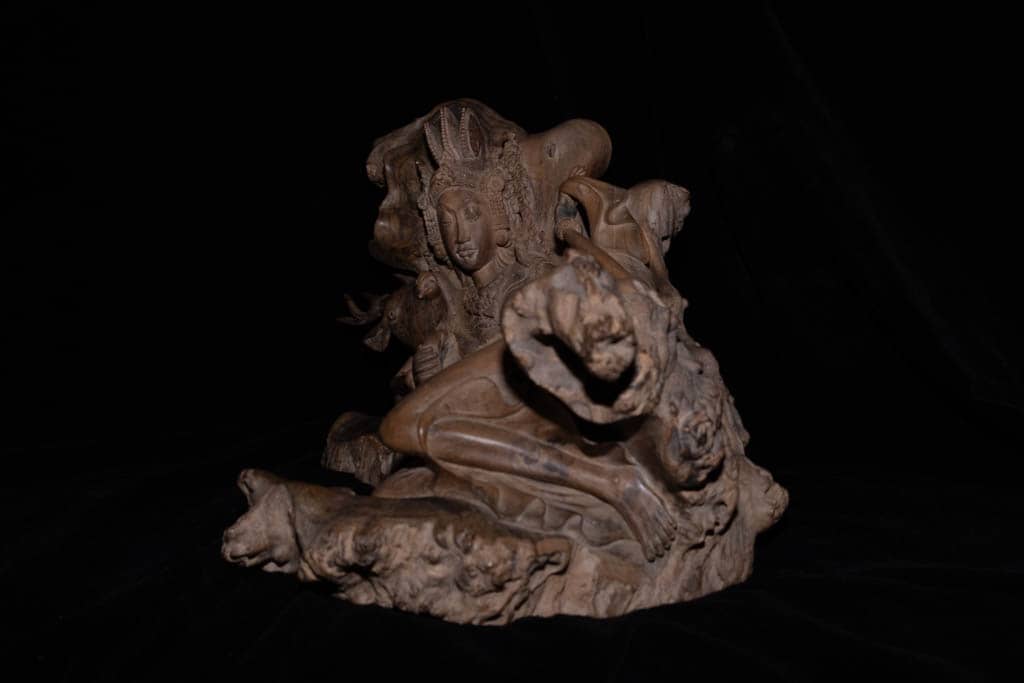
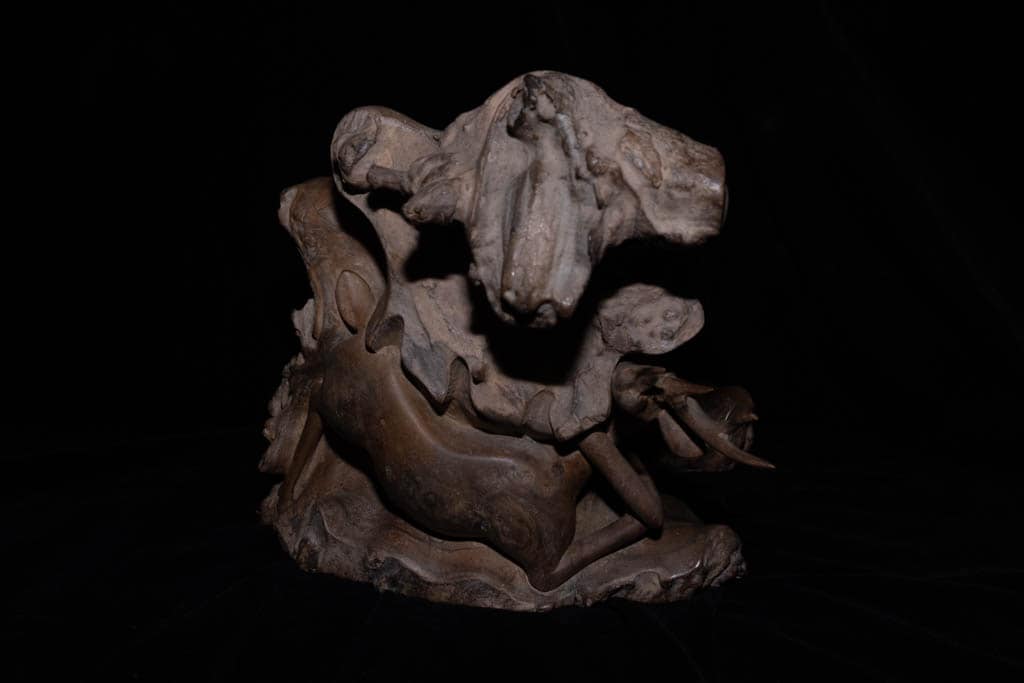
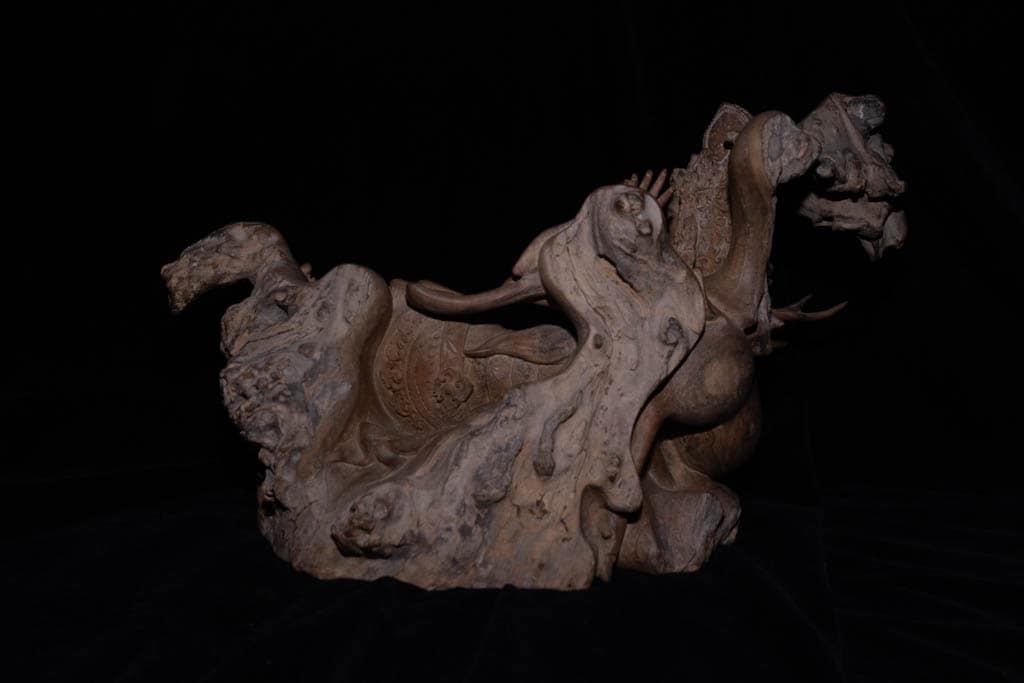
Balinese Driftwood Woodcarving
Material: Hibiscus wood, hand carved
Style: Bali
Size: Height 26 cm, Length 42 cm, Depth 26 cm
Order Number: BDW1
Most Balinese wood carvings are handcrafted by skilled artisans, requiring weeks to complete a single piece.
There are hundreds of species of trees in Bali and at least thirty-nine of them are used in woodcarving.
Up to the 1930s, it was highly formulaic and craftsmen tended to copy each other. Carvings consisted mainly of gods, heroes and demons. In the majority of cases they served a religious function, but they also decorated the royal palaces. They were not made for ordinary home decoration.
Modern styles arose to appeal to the tourists, who were beginning to come to Bali in the 1930s. As with painting, encouragement and suggestions came from Walter Spies and Rudolf Bonnet, who saw that tourism could create a source of income.
According to a report in the Indonesian language newspaper Kompas, in 2003 Gianyar recorded 14,368 woodcarving units employing a total of 37,150 workers.
The modern styles can be classified as:
- The elongated style
- The squat style
- The driftwood style
I Nyoman Cokot’s two sons developed the driftwood style incorporating faces, animals, demons and plants carved out of the twists and turns, often almost hidden, of the branches of the tree. Only the carved parts are finished.
This carving is hibiscus wood and shows Sita and the deer from the Ramayana epic.
The story involves a beautiful golden deer, actually the demon Maricha in disguise. Sita, enchanted by its beauty, asks Rama to capture it for her as a pet. Her request causes Rama to leave to chase the deer, and in his absence, the demon-king Ravana abducts Sita.
Mid- 20th century.
Please ask for the price (or make an offer).