Product Description
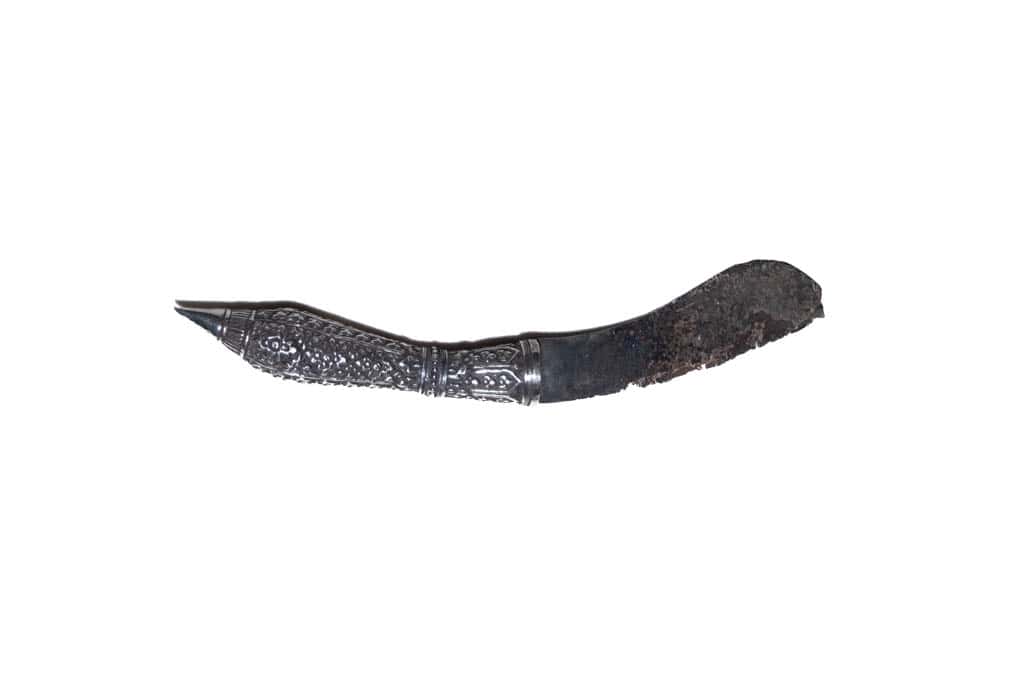
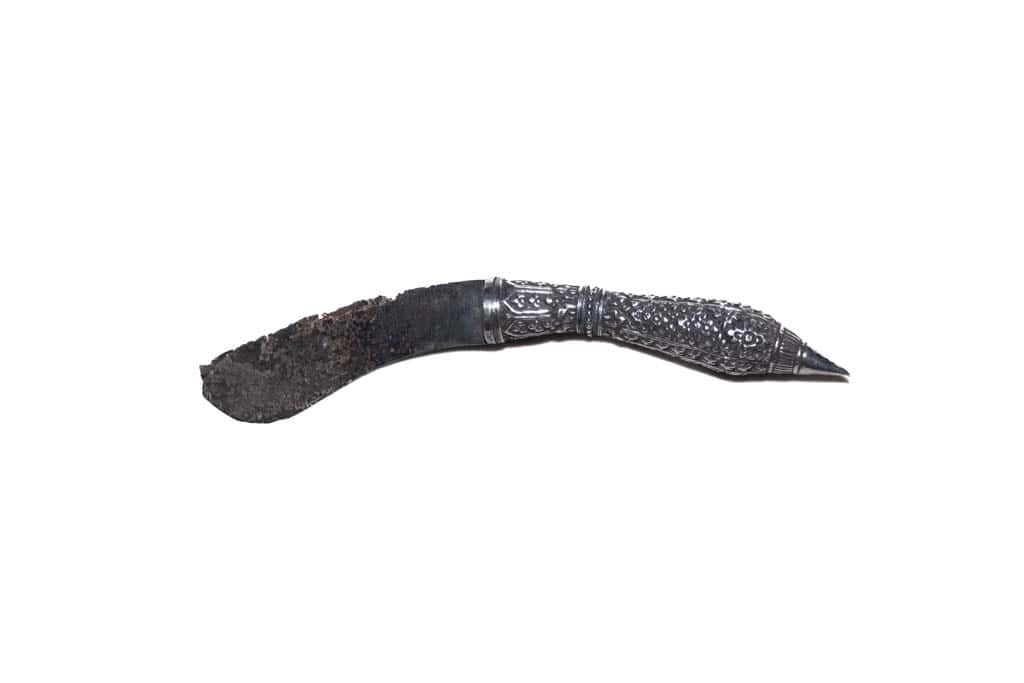
Antique Thai or Laos Betel Knife
Material: Silver, iron or bronze
Style: Thailand or Laos
Size: Length 9 cm, Width 1.75 cm
Order Number: MHSATBK1
The basic ingredients of a betel quid are betel leaf, areca nut and lime powder. Gambir and tobacco may be added to make it more fragrant.
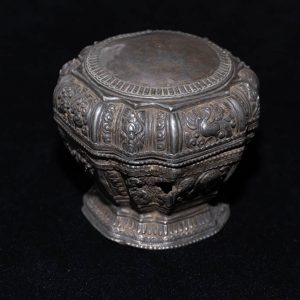
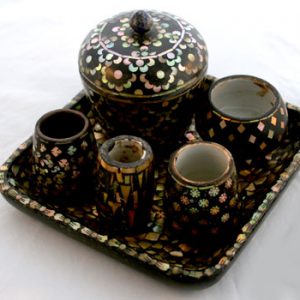
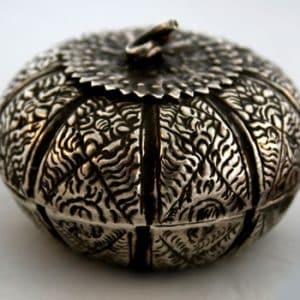
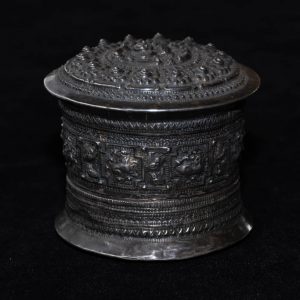
The containers and implements included boxes of various shapes and sizes to store the betel nuts, betel leaf holders for the already prepared betel quid, lime containers, hinged cutters, similar to scissors, to cut the hard areca nut, knives to cut the softer nuts, pounders to crush the nut, salve boxes to hold beeswax for the lips, spittoons, tobacco pouches and trays on which they all were displayed.
Knives are more common in Thailand than other countries. It seems that theThais preferred the areca nut in a fresh soft state, rather than the dried hardened state popular in other countries.
The following was inscribed in a Bangkok calendar for 1864, ‘The natives of Siam much prefer the nut in a fresh state before it is fully ripe.’
The handle is made of silver and the blade of steel (with high iron content). The handle is embossed with floral designs. The blade is probably held in place with gum.
The handle is embossed with flower designs. It is a beautiful example. The blade is curved upwards; this helps with cutting the nuts.
Belonged to the Thai Royal family.
19th century.
There is a similar example from Laos in The British Museum (Museum numberAs1971,06.5) and in the Asian Civilisations Museum (Accession No.2011-00845) and in Thai Silver and Nielloware, Paul Bromberg, River Books, 2019, page 90.
Please ask for the price (or make an offer).