Product Description
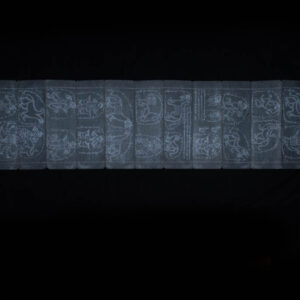
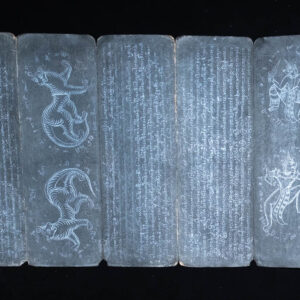
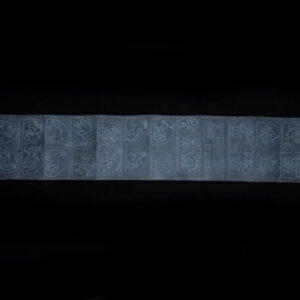
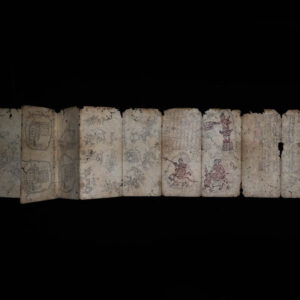
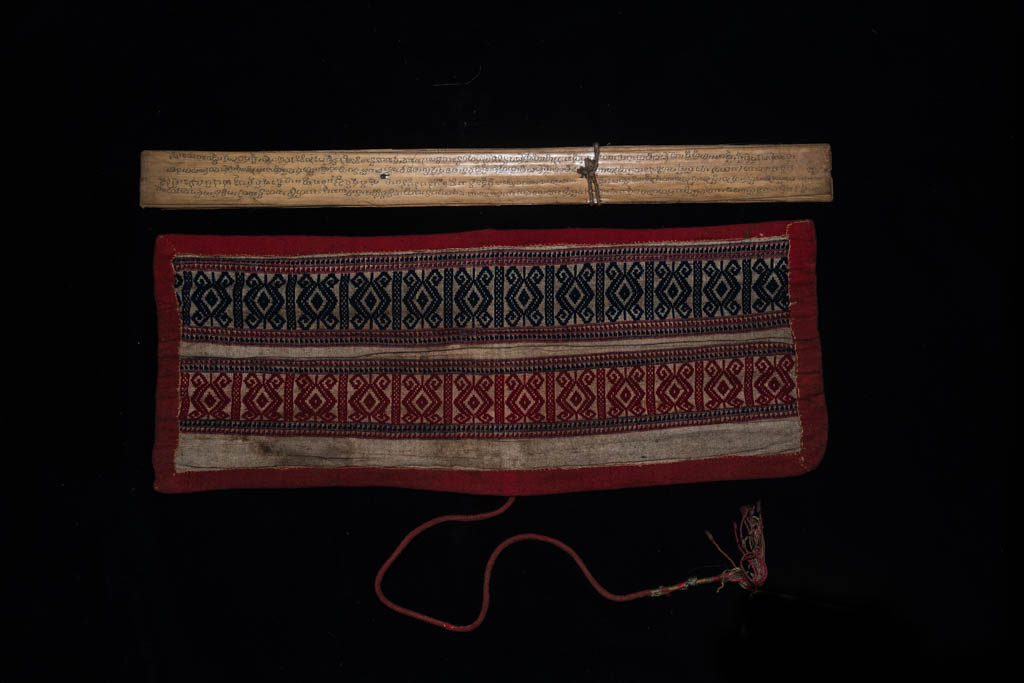
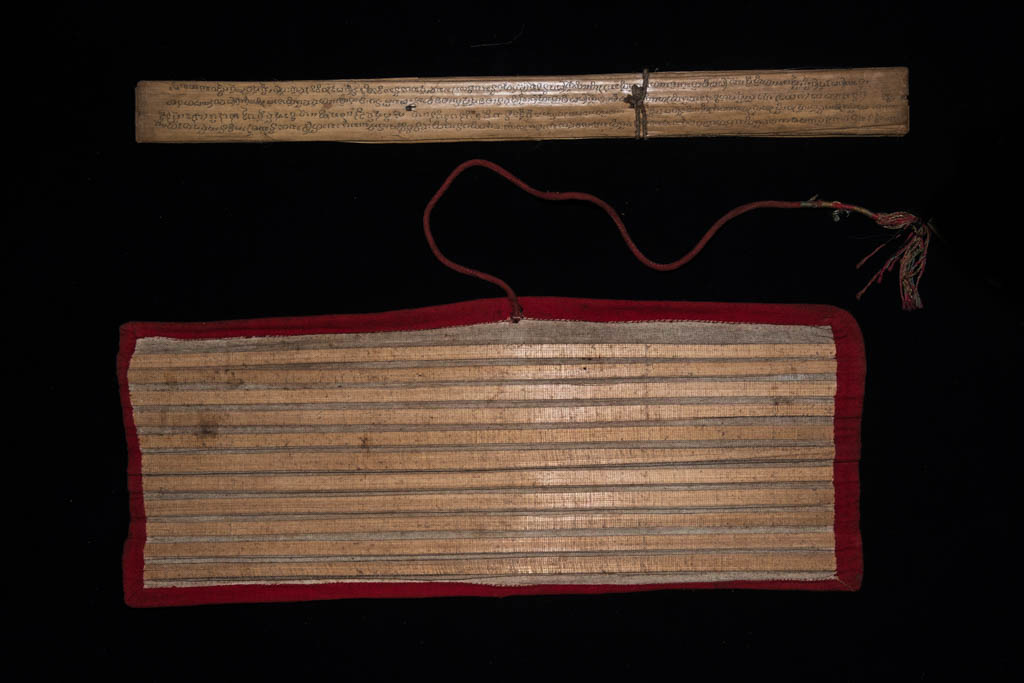
Antique Burmese Book Wrapper and Book 2
Material: Cotton, palm leaf
Style: Burma
Size: Wrapper: Length 53 cm, Width 21 cm; Book leaves: Length 56 cm, Width 4.5 cm
Order Number: MHSTABBWB2
Highly valued palm-leaf manuscripts were wrapped in a cloth cover called sapa-lwe to protect them from insects and dust. They were made strips of cotton and thread interwoven between a warp of bamboo sticks. They were interlaced for create lively geometric patterns.
6 palm-leaf sheets.
Palm-leaf manuscripts came to Burma from India together with Buddhism. The earliest book found in Burma dates to the 5th century AD. Monks made copies of Buddhist texts by writing on the leaves of the palmyra palm with a stylus. They were fragile. Some were treatises on history, philosophy, literature, astrology, astronomy, technology, music, law and medicine.
The letters were engraved from left to right with a sharp iron stylus held perpendicularly by the first two fingers and thumb of the right hand, steadied by the thumbnail of the left hand. Both sides were inscribed. Writing was made visible by rubbing the surface with a cloth soaked in oil or a paste of ground charcoal mixed with gum. The number of leaves depended on the length of the text. It was a time consuming process and only a few pages could be written in a day.
The introduction of the printing press to Burma by missionaries in 1776 gradually led to the end of the palm-leaf book, and paper replaced them in the mid 19th century, although there are reports of monks using them in Upper Burma in the mid 1980s.
Early 20th century.
There is a similar one in Burmese Crafts Past and Present, Sylvia Fraser-Lu, Oxford University Press, 1994, page 287.
They also have wrappers in Laos for books in Buddhist temples.
There is a similar one in Legends in the Weaving, Dara Kanlaya, The Japan Foundation Asia Center, 2001 , page 84.
Please ask for the price (or make an offer).