Product Description
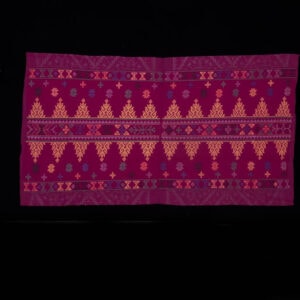
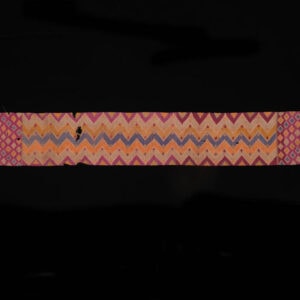
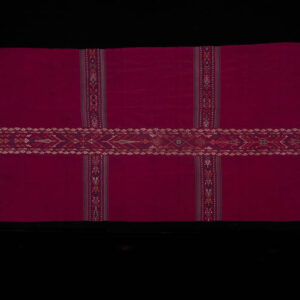
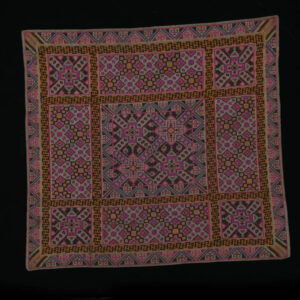
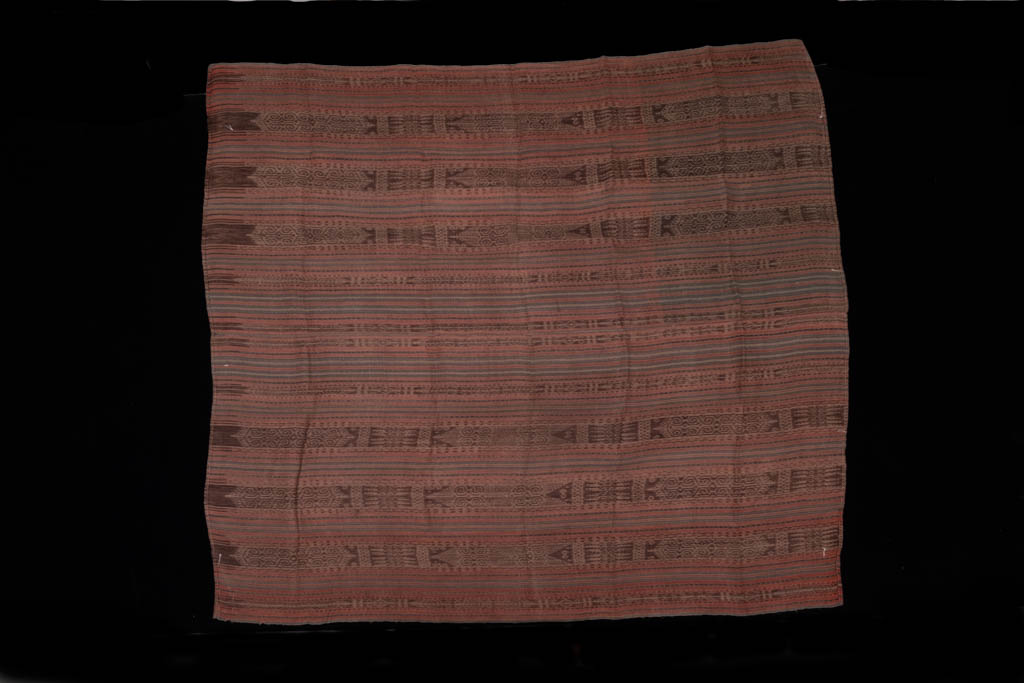
Antique Southern Philippines Sarong
Material: Abaca
Style: Southern Philippines
Size: Length 160 cm, Width 145 cm
Order Number: MHSASPB1
The Mandaya people are the main group living in the mountains separating Davao Gulf from the Pacific. They were there before the first Spaniards arrived in Mindanao in the 17th century. The word ‘Mandaya’ comes from the word man, meaning ‘first’ and daya, meaning ‘upstream’. Mandaya means ‘the first upstream people’.
Mandaya women produce abaca ikat cloth called dagmay, their traditional textile, which they consider sacred. It is similar in colour and appearance to ikat cloth made on the west side of Davao Gulf, but the patterns are different.
According to tradition, dagmay was gifted to the Mandaya by Tagamaling, a spirit associated with life and creation. They believe a young girl dreamt of Tagamaling who taught her how to weave dagmay. From then the Mandaya believed that weaving was sacred and they pray before starting to weave and only weave in the upper, quiet parts of the house.
Dagmay is a mud-dyeing technique. Abaca is the extracted fiber from banana leaves. The finest grade of hemp from abaca stalks is stripped, pounded, combed and then prepared for dyeing. The dyer submerges the tannin-dyed yarns into iron-rich mud for several days. First, they pound the bark of a tree and boil it with the abaca yarn. They add the mud with a bluish color and let the yarn boil until the desired tone is achieved.
The Mandaya women then weave the fiber into intricate patterns illustrating their beliefs. The skill is passed down from one generation to the next, but there are few left who can do it.
Dagmay are women’s skirts, blankets, and are used to wrap the dead. They should not be desecrated by tearing them apart or cutting them. This example is a tube sarong, which has been opened up to give one flat piece. It could be used as a blanket.
The patterns and details are intricate and the textiles are among the most beautiful in the Philippines. The traditional designs are human beings, who represent the tribe or Tagamaling, crocodiles, which are guardians and protectors, curvilinear, diamond, trellis and cross patterns. Most of the designs come to them in dreams. There are no pattern books.
Late 19th century.
Please ask for the price (or make an offer).