Product Description
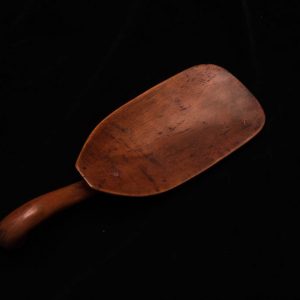
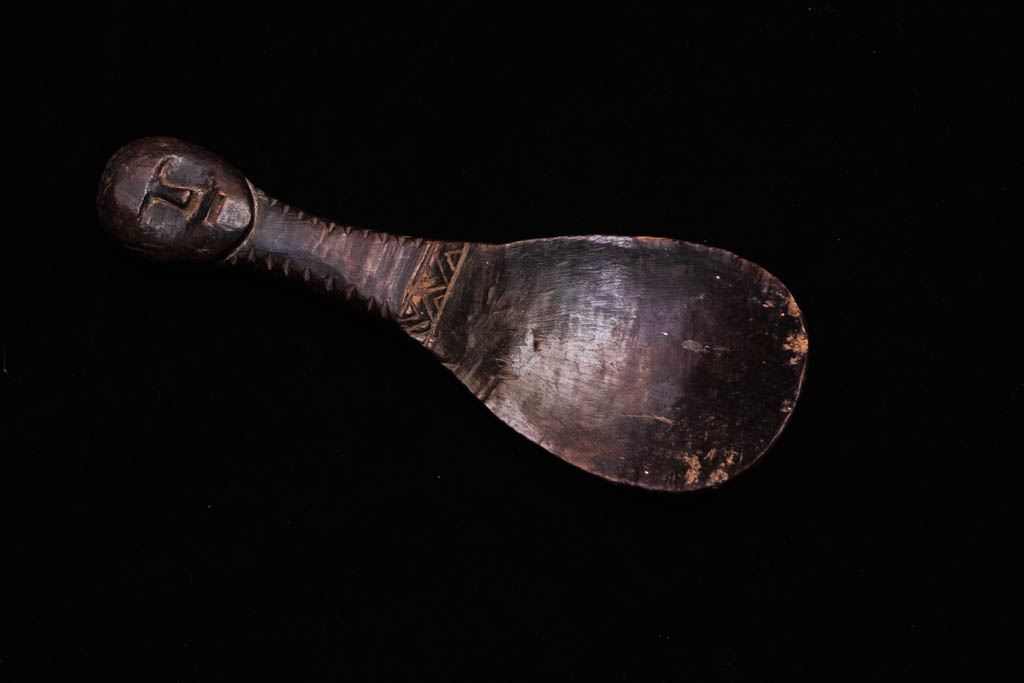
Antique Timor Spoon 2
Material: Wood
Style: Timor, Indonesia
Size: Length 24 cm, Width 8.5 cm
Order Number: MHSTR20
Ceremonial rice spoons (nura dikun), carved in Tetum style, are used to ladle cooked rice from the rice basket on the table to the plate at formal festivities, funerals and weddings and to honour guests. Note the outstanding delicacy of the elongated, lavishly carved handles from 6 to 16 inches long.
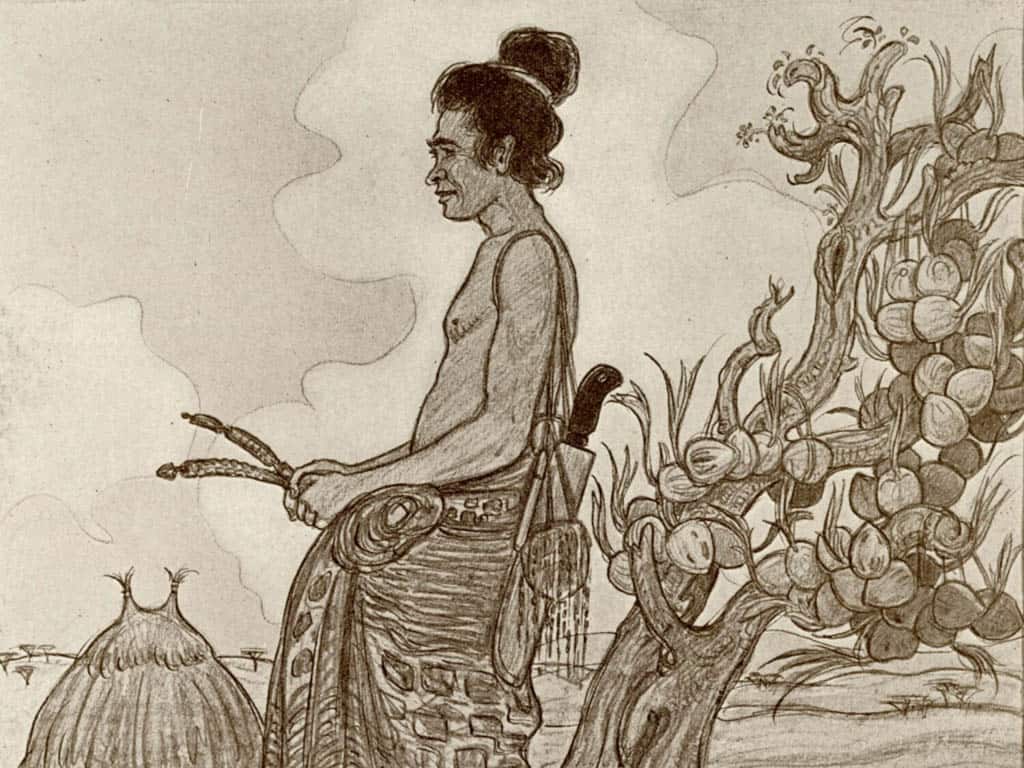 Drawing by W.O.J Neuwenkamp: An Atoni man clutching two ceremonial spoons, Central Timor, 1916.
They were carved by the Atoni and Tetun people, mainly made from Asiatic buffalo horn (Bubalus arnee), boiled in very hot water and sometimes treated with hot oil to make it softer and easier to carve, ranging in colour from amber to reddish brown to black. They were also made from coconut shell or wood. The men carved, engraved and chiselled designs and then polished them with dry banana leaves.
The carvings are of humans, crocodiles, lizards, trees, plants, flowers, birds and geometric shapes, with negative space to add to their impact. Handles are sometimes perforated.
The handles are often human figures, representing the founding ancestors. Similar bas-reliefs are seen on the wooden doors of royal or chieftains’ houses, ceremonial textiles and statues. Worship of ancestors lasted until the middle of the 20th century, even though West Timor converted to Protestantism and East Timor to Catholicism during colonial times. Some mix of Christian, ancestor worship and rituals still exist.
Sometimes there are crocodiles. The saltwater crocodile is indigenous to Timor and is feared. A legend says that a young Prince fled his war-torn country by sea and was carried lost and exhausted on the back of a crocodile and deposited on a long stretch of land surrounded by mountains, which became Timor.
The gecko, the largest of domestic lizards, about 20 cm to 30 cm long, living in roofs and trees, is a common carving.
There are the shapes of trees, plants and flowers.
Birds, carved from hardwood, are frequently found as a finial on thatched traditional houses, to guide the deceased’s soul to the family home. Birds appear as motifs on textiles, baskets, pottery and jewelry.
These spoons were used for the farewell feast (kenduri) for the deceased, held three nights after the burial. The spoons served as a reminder to the mourners that the deceased’s soul had assumed the form of a bird and separated itself from the living. The Atoni call the spoons kol kotin, meaning backbone of birds.
They reveal the status of the owner, king, chief, nobleman, free man or slave.
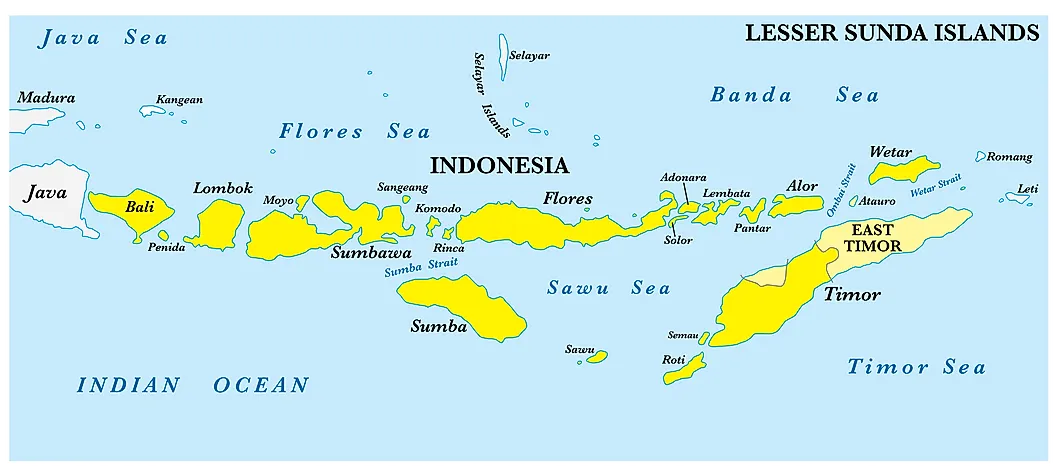 Map of Timor.
There are similar ones in The Dallas Museum of Art, Texas, Yale University Art Gallery, USA and the Tropenmuseum, Amsterdam, Arts and Crafts of Indonesia, Anne Richter, Thames and Hudson 1993, page 72 and Spoons from Timor, The Manfred Giehmann Collection Manfred Giehmann and Pierre Dugard, 2023 .
Early 20th century.
Please ask for the price (or make an offer).