Product Description
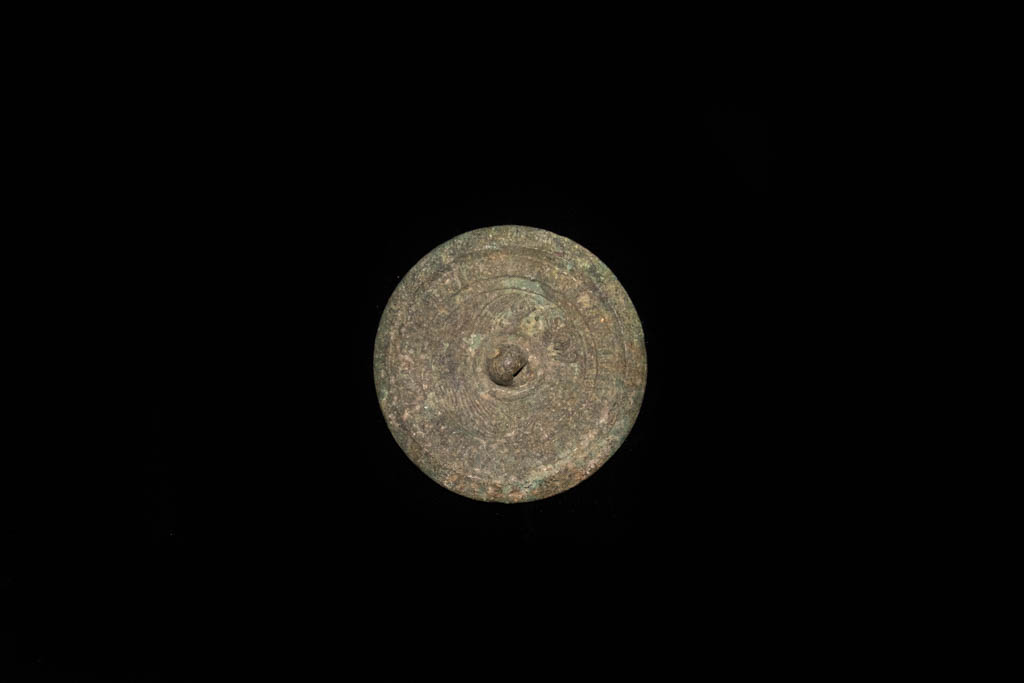
Antique Chinese Bronze Mirror 1
Material: Bronze
Style: China
Size: Diameter 7.5 cm
Order Number: MHSACBM1
As early as 2000 BC bronze technology was highly developed in China. Objects made from this alloy of copper, tin, and lead were luxury items for the aristocratic classes. Among these were small bronze mirrors, usually cast from clay molds.
Bronze mirrors were made until the Qing dynasty (1644 – 1912), when western glass mirrors were brought to China. Bronze mirrors were usually round, with one side polished bright to give a reflection, and the other side with designs.
Chinese bronze mirrors date back at least the 11th century BC. They were given as gifts to and by emperors and also ordinary people. They were handed down from generation to generation.
Mirrors were associated with the supernatural. By the later part of the Chou dynasty (500 BC) mirrors were buried with the deceased to dispel evil spirits.
Mirrors tended to be round in Han Dynasty (206 BC – 220 AD). By the late Tang period (907 AD) mirrors were highly prized objects. They brought good luck. Different shapes, such as oblong and octagonal, were introduced in the Song and Yuan dynasties (10th -14th century). Some have a handle or eyelets for hanging.
Bronze mirrors were used in the Buddhist and Taoist rituals.
The most noticeable characteristic is a knob in the centre on the back, with a hole in it, through which is passed a silk cord, varying in colour, length and pattern according to the class of the owner, intending to serve as a handle. The early Han dynasty knobs are semi-spherical, large and plain.
The mirror was polished so that it reflected the user’s face. Round is the ideal shape in Chinese cosmological theory. Round mirrors represented the heavens and were considered the most desirable. The back was often decorated with a button and various motifs such as phoenix, beasts, flowers, and leaves. Some had inscriptions. These inscriptions were often auspicious phrases, bearing good wishes for the owners.
Most bronze mirrors are round, which symbolises perfection and bliss. Round shapes in Ancient China also represented reunion, satisfactory love and marriage and fortune. They kept the home free from criminals, bad luck and evil.
With a patina. Believed to be Han dynasty (206 BC – AD 220).
Please ask for the price (or make an offer).