Product Description
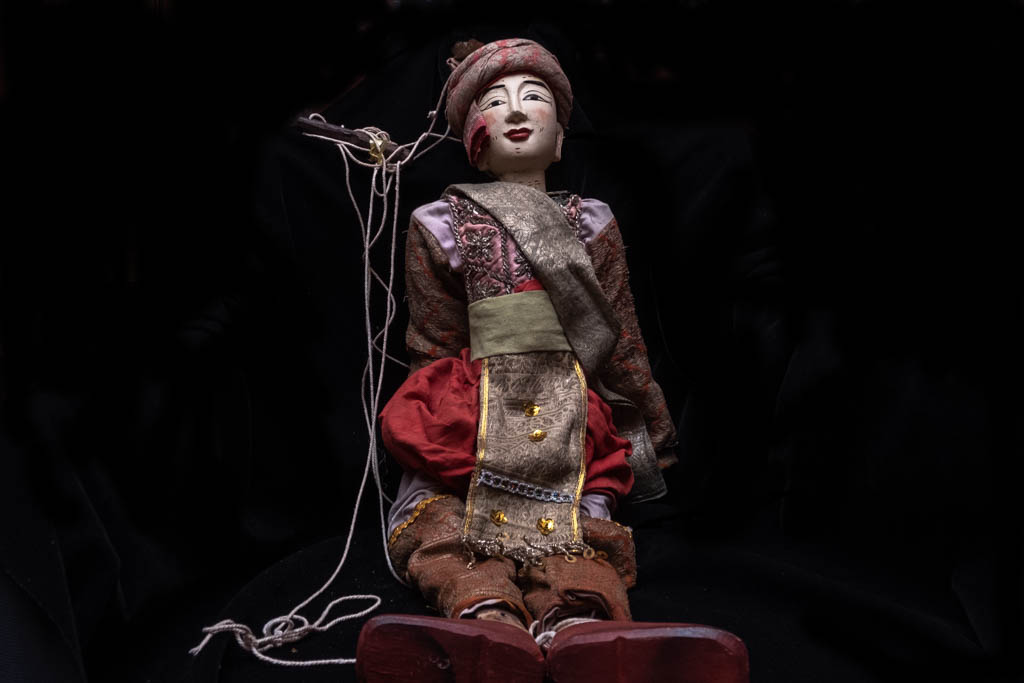
Burmese Puppet 2
Material: Wood, cotton, strings
Style: Burma (Myanmar)
Size: Height 27 cm
Order Number: MHSABP2
Burmese puppet shows (yokthe pwe) were a popular entertainment under the Burmese monarchy, and possibly date back to the Pagan kingdom of the 11th century.
Puppet plays have certainly been performed since the early 15th century and rapidly grew in prestige and popularity in the 17th century. By the 18th century puppet shows were common in ordinary Burmese circles. People learned about history, astrology, court intrigues and ethics from puppet plays.
At court, puppet shows were patronized by the Burmese kings, and the Thabin-wun (Minister for the Performing Arts) was in charge of performances.
The string puppets used in Burma (Myanmar) are made of wood, ideally Yamane wood, which is light and soft. Teak is also used. The size is from one to three feet tall.
The standard repertoire involves 28 puppets, comprising a nat (deva), sakka (ruler of the Tavatimsa heaven), zawgyi (alchemist), a king and queen, four ministers, a prince and princess, a hermit, a pageboy, punna (brahmin), bhilu (ogre), nat kadaw (spirit medium), two prince regents, a handmaiden, and animals including tiger, horse, elephant, monkey, parrot, garuda (mythical bird, galon), naga (serpant), kinnara and kinnari (mythical birds). Each puppet has its own style of dancing.
The themes of the puppet plays were based on the Buddha’s previous births (Jataka stories), Buddhist fables and stories, folktales and incidents in Burmese history, including the history of the pagodas. The last ten Jataka tales were very popular as they describe the perfection of 10 important virtues.
A puppet troupe includes puppeteers, singers and musicians. The most difficult part is the marionette strings. 16 strings are attached to the head, hands and feet and these strings are then attached to a cross-piece handle. The puppeteer needs great skill to hold the handles in both his hands and pull the strings to make the marionettes perform delicate movements. The singers sit behind the screen and the puppeteers stand behind the screen to handle the puppets, working in conjunction with each other.
The puppet is believed to be Shan and zawgyi (alchemist).
See the ebook Burmese Puppets: The Small Dolls of Burma by Jonathan Copeland
Please ask for the price (or make an offer)