Product Description
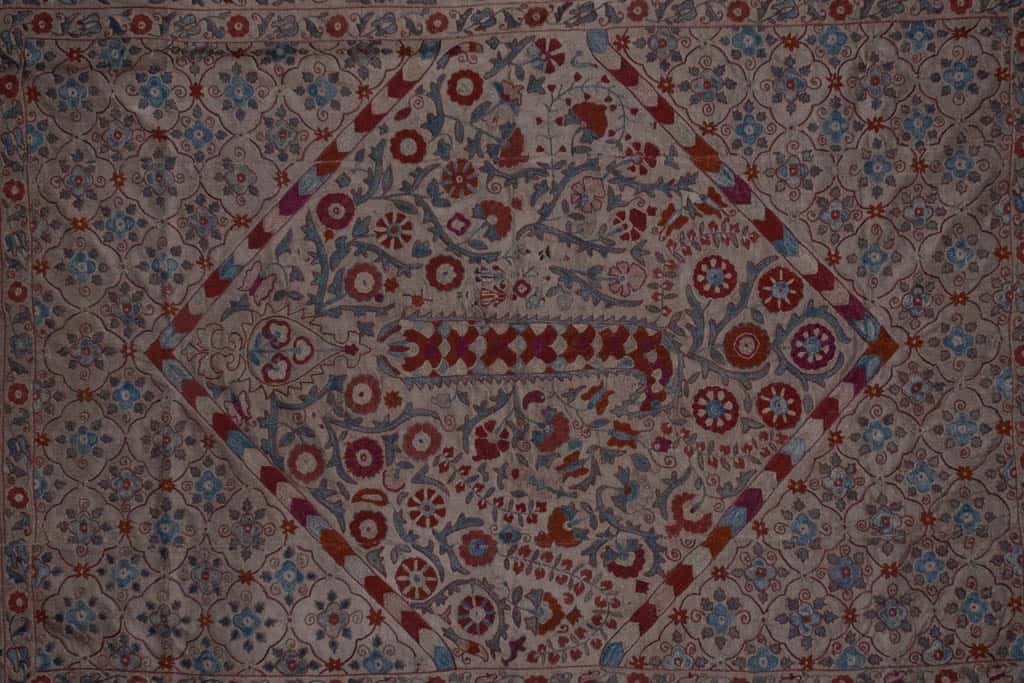
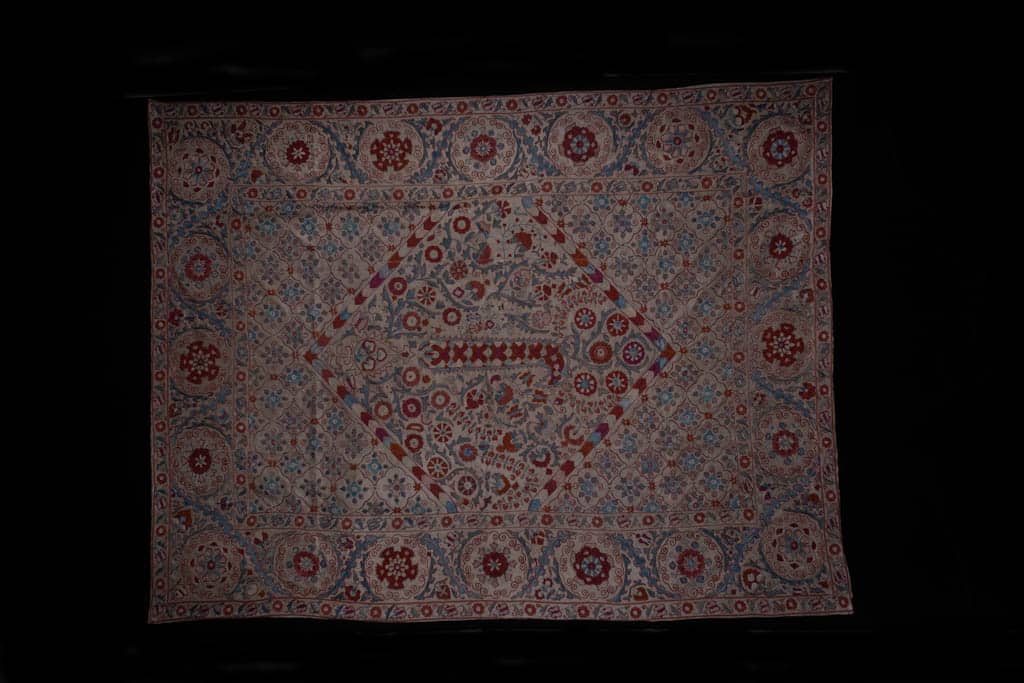
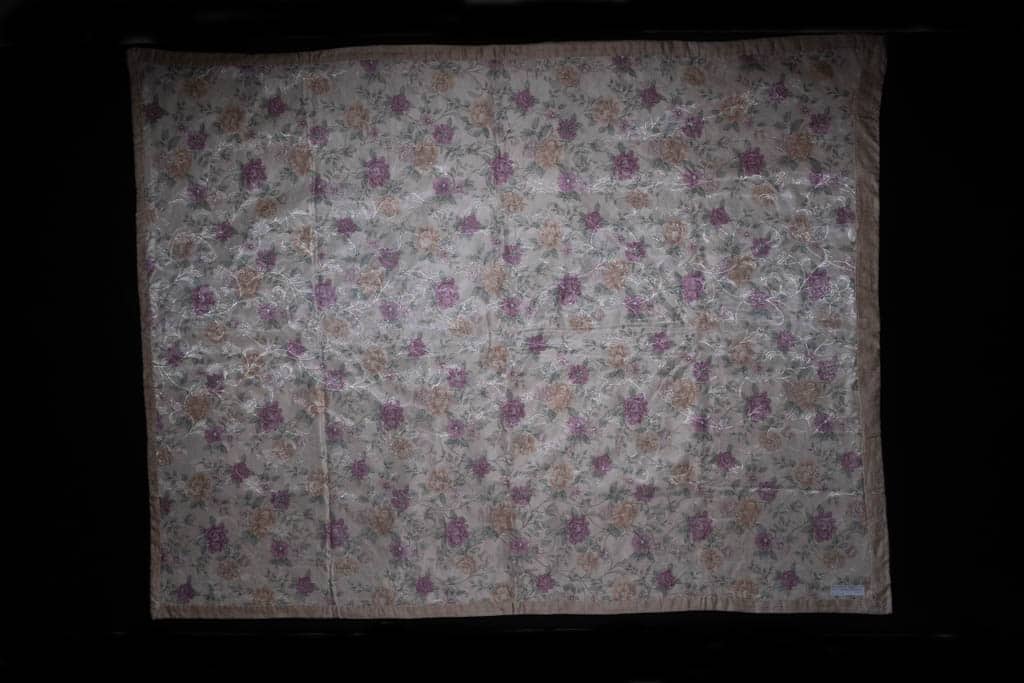
Antique Uzbekistan Suzani 2
Material: Cotton, silk
Style: Bokhara, Uzbek
Size: Length 177 cm, Width 133 cm
Order Number: MHSAUS2
Uzbekistan is a landlocked country in Central Asia. It is surrounded by 5 landlocked countries: Kazakhstan to the north; Kyrgyzstan to the northeast; Tajikistan to the southeast; Afghanistan to the south, and Turkmenistan to the south-west. The capital is Tashkent.
Suzani comes from the Persian word for ‘needle’ and refers to embroidered hangings or covers. They are typically 1.5 metres wide wide but sometimes much more.
The birthplace of suzanis is in the area now Uzbekistan along the Silk Roads which linked Europe, Turkey and China with the Muslim world. Islam arrived in the 8th century and splendid cities arose, such as Bukhara, Samarkand, Shakhrisabz and Khiva.
Women decorated prayer rugs, salt bags, gift wraps, saddlecloths, yurt bands, tent flaps, cradle covers, and mirror cases with weaving, embroidery and applique in wool, silk, cotton or felt.
Suzanis were made in the home for large hangings, to separate the sleeping alcove, and covers. Girls made them as dowries and gave them to their bridegrooms on the wedding day. Suzanis are divided into ‘eastern’ and ‘western’ on the basis of design and colour. Those made in the east show the influence of Kirghiz and nomadic Uzbek designs in large moon discs, or palaik, and those from the west have floral designs.
Many patterns, which are often abstract, resemble those in the tombs of Pazyryk in the the High Altai, dating back to the first millennium BC. Throughout Central Asia Khazakhs, Kyrgyz, Uzbeks, Turkomans, Lakai and Arabs developed their own designs.
The oldest surviving suzanis date from the late 18th and early 19th centuries, but they were in use long before that, at least the beginning of the 15th century.
The motifs are linked to Indian, Chinese and Persian textiles and decorative Western motifs. Since Alexander, Hellenic influences reached into Central Asia and along the Silk Roads and were incorporated into embroidered hangings and as far as the ceramics of Ming China.
The meandering vine pattern along the border of many suzanis was probably inspired by the scrolls of grapes shown on textiles, ceramics and stone sculptures across the Hellenic world. Patterns of flowers and vines is classic ‘Bokhara work’. Leaves sometimes emerge from a tiny watering can in one corner and spread around the entire design bordering central motifs. The palmetto, a fan-shaped, botanical motif from the Mediterranean, may also have been introduced following Alexander’s conquests in India and Afghanistan.
The botah motif, like a teardrop and a version of the ‘tree of life’, arrived from Persia as early as the 5th century BC. Flowers, including tulips and wild hyacinths, are similar to those on Iznik plates, suggesting a Turkic origin. Sometimes there is a frilly flower like a carnation, probably a pomegranate blossom, or a lotus.
These motifs are common among the western group of suzanis, which often show the influence of textiles imported from Mughal India through Kashmir.
Suzanis from the small town of Nurata have a star in the centre and scattered sprays of flowers, or sometimes botah, on the main field. The embroidery is in delicate shades, often muted indigos and rust.
Samarkand embroideries, closer to the eastern area, are less sophisticated and bolder in their patterns. They often have purple, yellow or pink backgrounds, embroidered in a limited range of colours, with abstract designs.
Eastern suzanis are closer to the traditional nomad designs of the Kyrgyz and Uzbeks, who worshiped the sun, moon and stars before Islam. The designs are bold, centered on a circular motif, which represent the heavens, the sun and moon or a flower or an open pomegranate, a symbol of fertility. There are strong contrasts, perhaps to distinguish dark and light, good and evil, life and death, and strong colors, such as red for blood, brown for the earth and blue-black for the sky.
This symbolism is clear in the suzanis of Tashkent, Pskent and Ferghana Valley, with a central roundel, known as the palaik. A palaik is a heavenly orb, sometimes with a star, and often looks like a giant red flower. This flower and sun palaik appear among the Central Asian nomads, embroideries of Rajasthan and Gujarat, in Kashmir and Turkish-influenced pieces from the Balkans. It is a symbol of power and fertility. Birds and a scorpion are sometimes found in eastern suzanis. In Ferghana a piece of embroidery was left unfinished to let any trapped spirits escape.
When a girl’s dowry was being prepared, fabric would be taken to a kalamkash, an older woman, the local designer, who drew the pattern on to four to six narrow strips of woven fabric. As silk wears away, the outlines are sometimes visible. After the design is drawn, the strips were divided and worked on by different members of the family. As a result, the patterns can be slightly misaligned and shades of colour vary from one strip to the another. The finished strips were stitched together.
The stitches are simple. The thread is normally silk, or sometimes cotton, and very rarely wool. In the older pieces, natural dyes were used: indigo from India for blue, cochineal and madder for red, saffron from the wild crocus for yellow, pomegranate skins or pistachio galls with iron for black.
Suzanis are still produced in Uzbekistan to decorate homes, tea houses, workplaces, and public buildings, and are used at weddings and festivals.
Mid – 20th century.
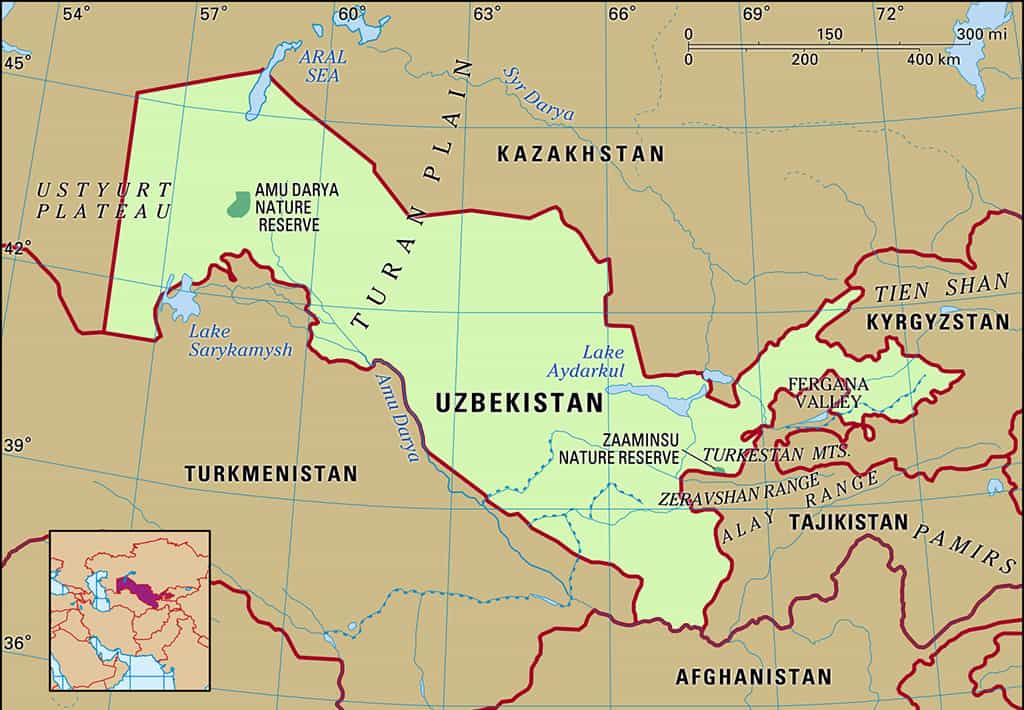 Map of Uzbekistan.
Please ask for the price (or make an offer).