Product Description
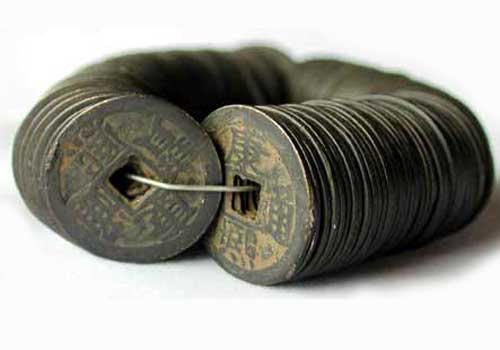
Kepeng Coins
Material: Bronze
Style: Bali
Size: Length 2.5 cm, Width 1 mm; hole in the center is 5 mm across and square
Order Number: CS14
From my book Secrets of Bali, Fresh Light on the Morning of the World:
Kepeng: Chinese Coins
Chinese coins, kepeng in Indonesian and pis bolong in Balinese, made of bronze with a hole in them, are an essential part of many offerings and temple decorations. One side of the coin has four Chinese characters. They are sold in bundles of 200, but supplied in loops which are slightly less than that, as 200 is an unlucky number.
In the 17th century, Indonesia was so great a drain on the currency that the Chinese government tried to stop the export of coins, but they failed. During the Dutch colonial period, it was difficult to find the raw materials and tin was used. Hoarding was a risky business, as the Dutch imposed a prison sentence on anyone found collecting them. One of the first European entrepreneurs in Bali, Danish Mads Lange imported a huge amount of the coins from China between 1839 and 1856. He bartered Balinese rice for them and became very rich.
They are used in cremation ceremonies and placed in the foundations when a building is constructed. Offerings in the temple usually have some of these coins in them. They are left by the ladies when they take their offerings home, as the coins are intended for the priest.
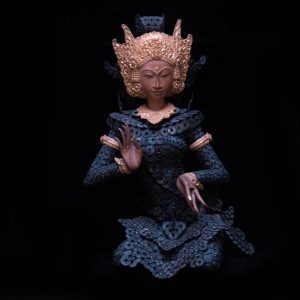
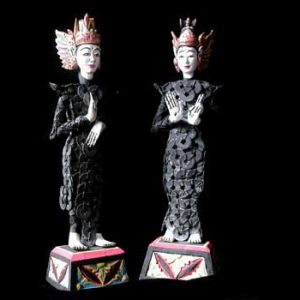
Temple decoration made of Chinese coins.
There was no local state currency in Bali or indeed the rest of Indonesia until the 20th century. Chinese kepeng were the currency in Bali, but, in practice, most people bartered in the markets.
Please ask for the price (or make an offer).