
Product Description
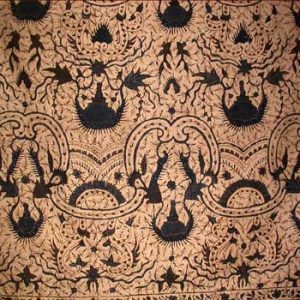
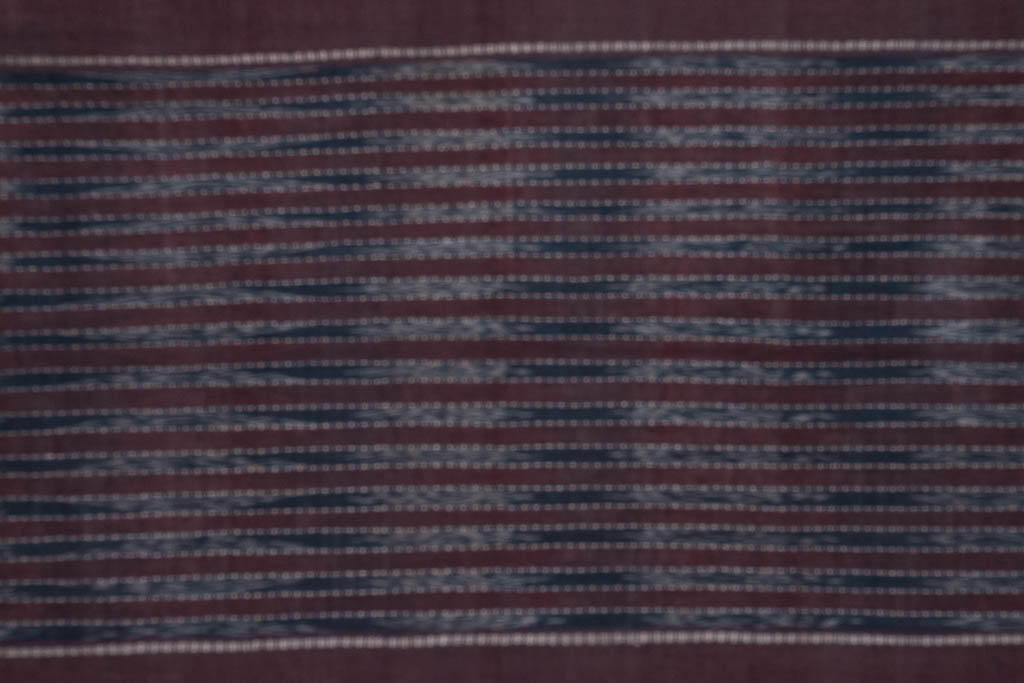
Antique Sumatran Ulos 19
Material: Cotton
Style: Batak people, North Sumatra, Indonesia
Size: Length 158 cm, Width 76 cm
Order Number: MHSASU19
Ulos are traditional, rectangular Toba Batak hand woven cloths and Toba highlands are their birthplace. Ulos means blanket. The ulos was originally a large scarf used to warm the body and has various cultural and ritual values, the values being reflected in different patterns. The meaning of physical warmth was extended to warm a person’s life. It has a significant role in every Batak traditional ceremony.
The size of the ulos determines its use and has its own name: wrapped around the head (dililithon), laid on the shoulder (sampe-sampe or dihadang), or wrapped around the waist (diabithon).
The weaver has to follow certain requirements and restrictions in the weaving process.
Ulos are presented as gifts to special individuals or guests to show respect, care or love. They can be given to Batak people and also foreigners. The more highly ranked person gives to the lower ranked person. It expresses wishes of good luck and happiness and binds the giver and recipient together.
Birth ceremonies: A Ragidup Ulos is given to a mother expecting her first child in the 7th month of pregnancy by her parents. The ceremony is called mambosuri boru.and welcomes the baby and wishes health on mother and child. There is a special meal called dekke, which is goldfish cooked with special Batak herbs and spices.
Between 2 weeks and 2 months after the baby is born, another
ceremony is held to celebrate the new baby. The family from the mother’s side will prepare an Ulos Bintang Maratur to give the baby a
steady life. The baby’s parents will be given an Ulos Sadum to help raise the baby.
Wedding ceremony: An Ulos Ragidup is given by the father of the bride to the mother of the bridegroom. This is an important symbolic act. The father of the bridegroom also places one on the shoulders of the bride’s mother. An Ulos Ragi Hotang is given by the bride’s parents to the groom.
The bride and groom are wrapped in an Ulos Hotang by the bride’s father with the wish that they will be happy and have a large number of children. That marks the moment of the marriage. The textile helps in fulfilling this wish.
An Ulos Sadum is given to the older brothers of the groom and also the brother of the groom’s father. Precious ulos and jewelry and household goods are heirlooms women can hand down to their daughters and granddaughters.
Bereavement ceremony: The type of ulos depends on the age of death. In a young death, Ulos Paroling-Olangan is given. In a young married death, Ulos Sibolang is given. In an old death, Ulos Ragidup covers the body or exhumed bones. It covers the coffin on the way to the cemetery.
Special celebrations: At celebrations, such as graduations, baptisms, and house warmings, Ulos Sadum are presented.
Every pattern has a special meaning. The main ulos are:
Ulos Ragidup are the most important and symbolically charged of Toba Batak textiles and are used in both happy and mournful occasions. Their importance is shown in the name: ragi (pattern) and idup (life).
The cloth can only be woven at certain times and has to be finished within 20 days. There may be one or more weavers. It is one of the largest and usually consists of several separately woven cloths sewn together. It’s in several parts: 2 strips at the side and 2 linking panels across the middle frame. The pattern never changes. The basic colours are black or red.
Harungguan Ulos are worn by married females only. They have rich patterns and take a lot of work.
Bintang Maratur have rows of stars in a regular order symbolising
a life of happiness and harmony. They are given to an expecting mother by her parents. This cloth should correspond to the personality of the mother-to-be.
Sibolang Ulos only have patterns in black, white, and blue, usually light indigo patterns on a black background. They are used to wrap a dead body and worn by people attending a funeral or mourning.
Sitolutuho Ulos are similar to Ulos Sibolang, being black, white and blue, but the pattern is more compact and takes more time to weave, so the price is higher. They are used as accessories, head bands,
and ladies’ scarves. They are given as gifts from parents to their daughters.
Sadum Ulos have many patterns and colours which reflect joy and happiness. The original Ulos Stadum was created with a dark background and decorated with very colourful glass beads. They are worn by women and also as wedding gifts.
Ragi Hotang Ulos have lines in red, black, white and red, the original ulos colours. The word hotang means rattan. They are used in Batak wedding ceremonies and worn by the bride and groom and are given by the bride’s parents, symbolising a new connection between parents and their son-in-law.
Ulos Mangiring are usually given by maternal grandparents to a new born, a first child or grandchild, with the wish that the child will become a good role model for his or her siblings. The child’s mother may use the cloth as a swing for the child. These cloths are also often used by men as a bandana. The cloths are narrow in light reddish colours. The patterns are simple arrowheads or coloured stripes with a regular strip pattern running down the centre.
Ulos Suri – Suri Ganjang are usually worn by musicians at traditional Batak parties. Every traditional Batak party has Gondang music and the musicians wear the Ulos Suri – Suri Ganjang.
There are examples in The Batak, Peoples of the Island of Sumatra, Achim Sibeth, Thames and Hudson, 1991, pages 198-203.
There is some damage.
19th – early 20th century.
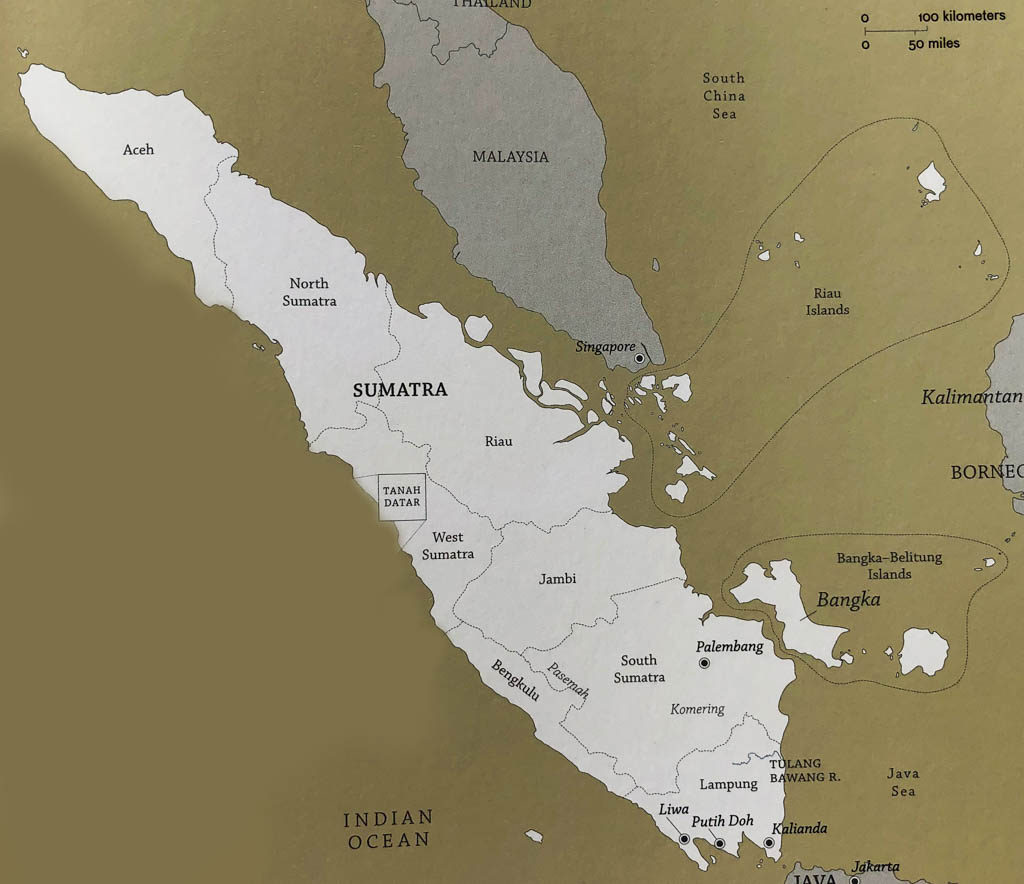 Map of Sumatra.
Please ask for the price (or make an offer).