Product Description
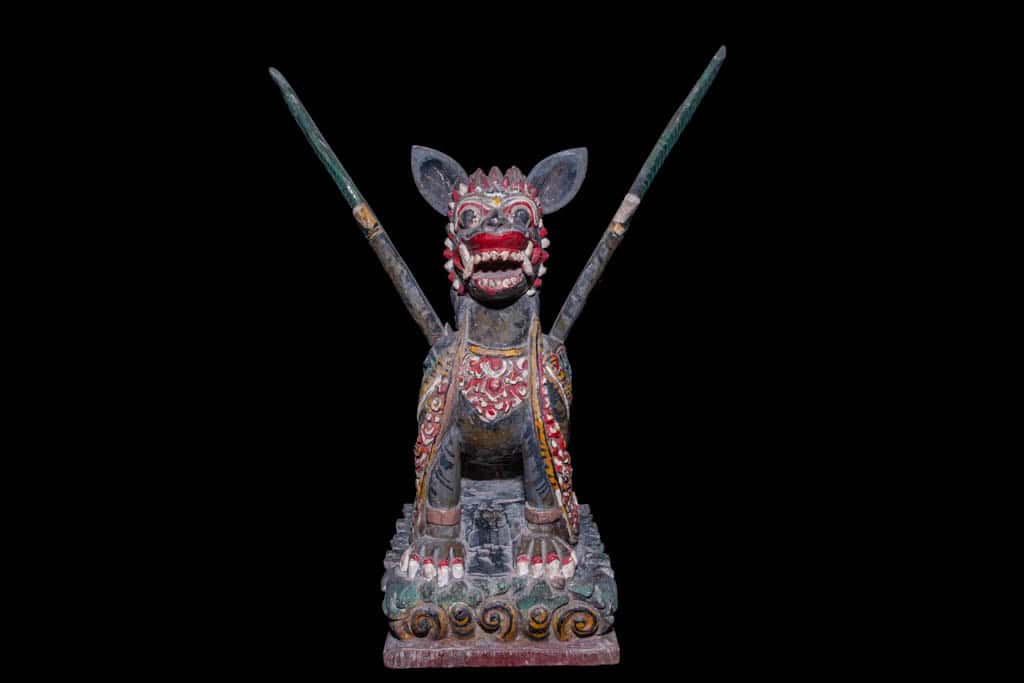
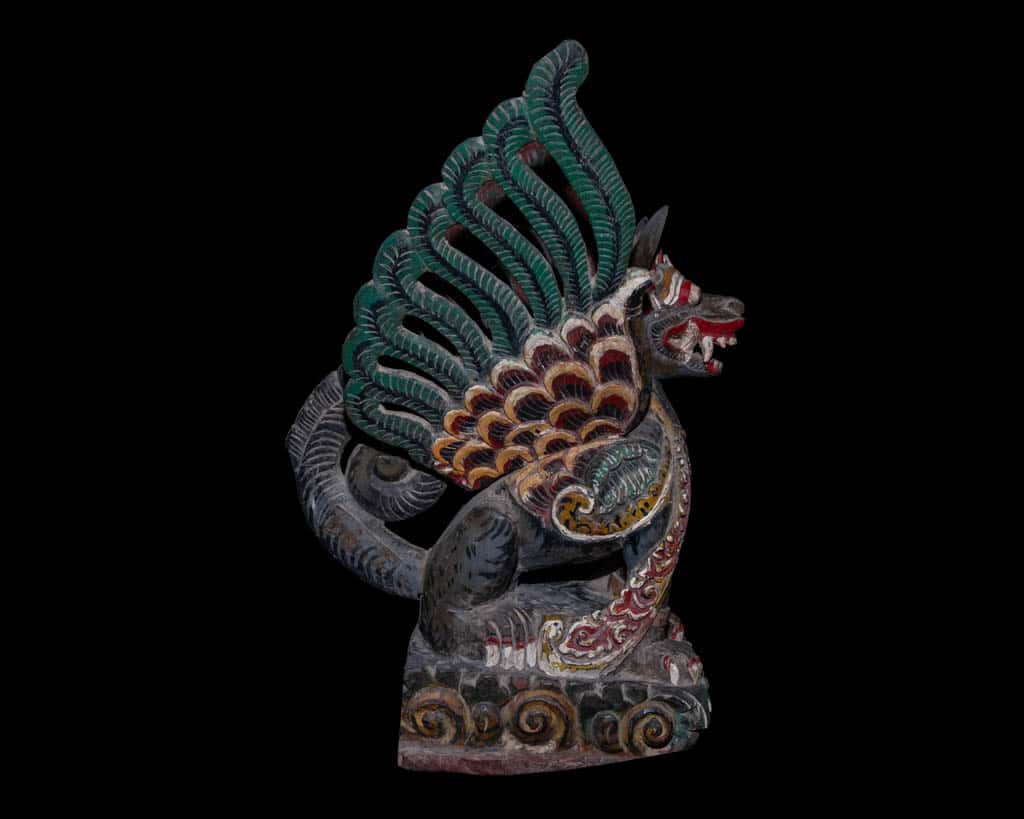
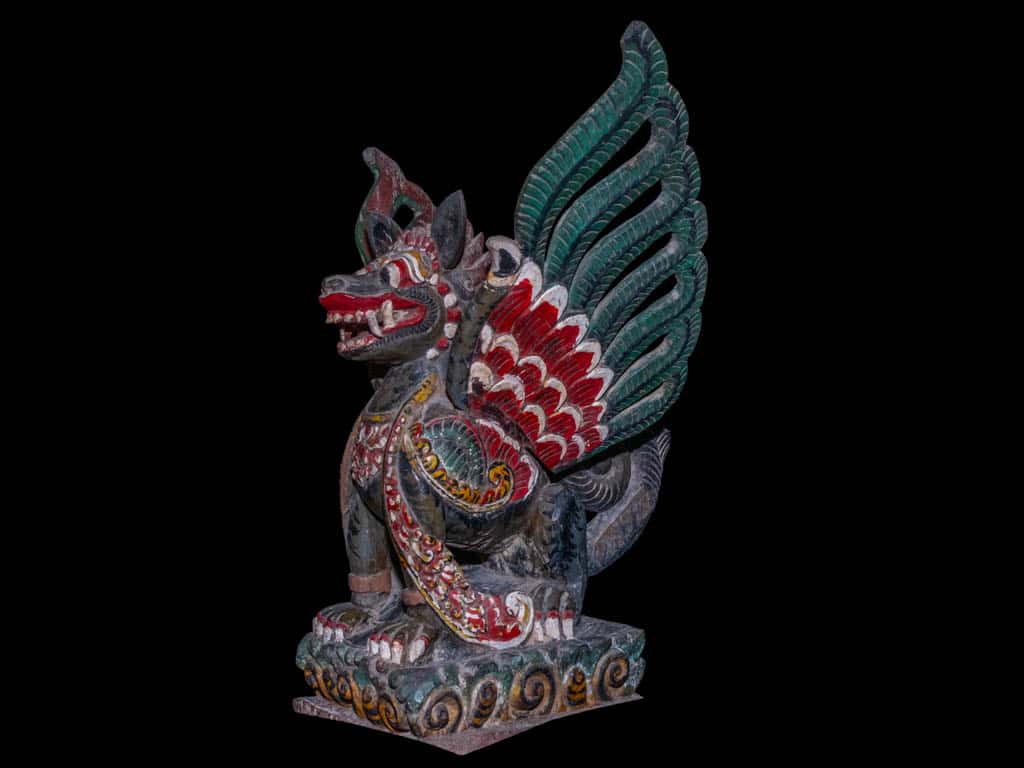
Winged Lion 1
Material: Wood, paint, hand carved
Style: Bali
Size: Height 46 cm, Width 36 cm, Depth 31 cm
Order Number: WOWL1
Temple decoration.
The predominant colours are of the gods. Green is associated with Wisnu, red with Brahma and white with Siwa.
This is a temple decoration. Winged lions also appear as a sarcophagus at cremations for the Wesia caste, as bases of pillars in buildings, as the top of posts supporting roof beams, usually in temples or palaces, as stoppers of bamboo containers, water vessels or bottles and the bases of gamelan musical instruments.
The lion is called singa in Bali. The word comes from Sanskrit singha meaning lion. The lion was native in India. The old capital in north Bali is called Singaraja meaning ‘lion king’. The lion was never indigenous in Indonesia, but was well known in the old Javanese stories, which were popular in Bali.
Tigers and leopards, however, were indigenous to Indonesia, and perhaps the artists drew inspiration from them. Knowledge of lions must have spread to Bali from India, where lions were a sign of royalty.
The lion is similar to the Chinese lion. For at least 1,000 years trade took place between China and Bali. The Balinese Barong, a lion-like creature, was also influenced by the Chinese lion.
The Balinese lion is shown standing on all four legs on the ground, as in this case, standing on his hind legs with raised forefeet, sitting on his haunches with feet stretched in front of him or lying on the ground.
His head is held high, mouth wide open, protruding fangs, ears perked, bulging wide-open eyes, and wings ready to take off.
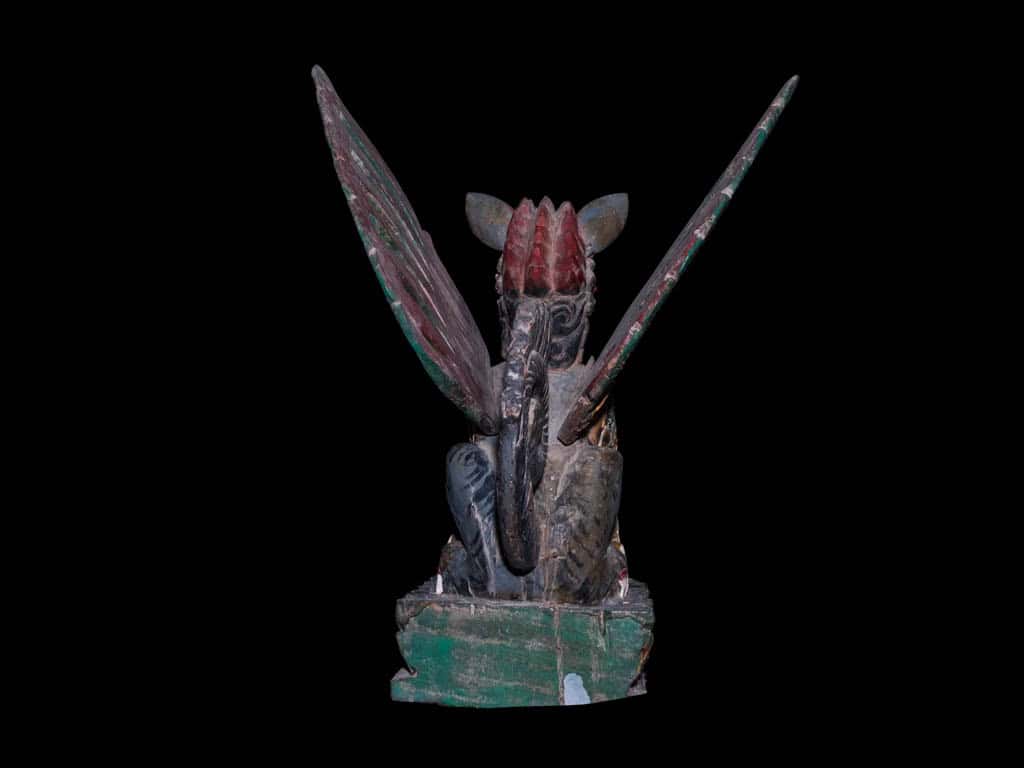
There is an old crack in the back.
Early to mid 20th century.
Please ask for the price (or make an offer).