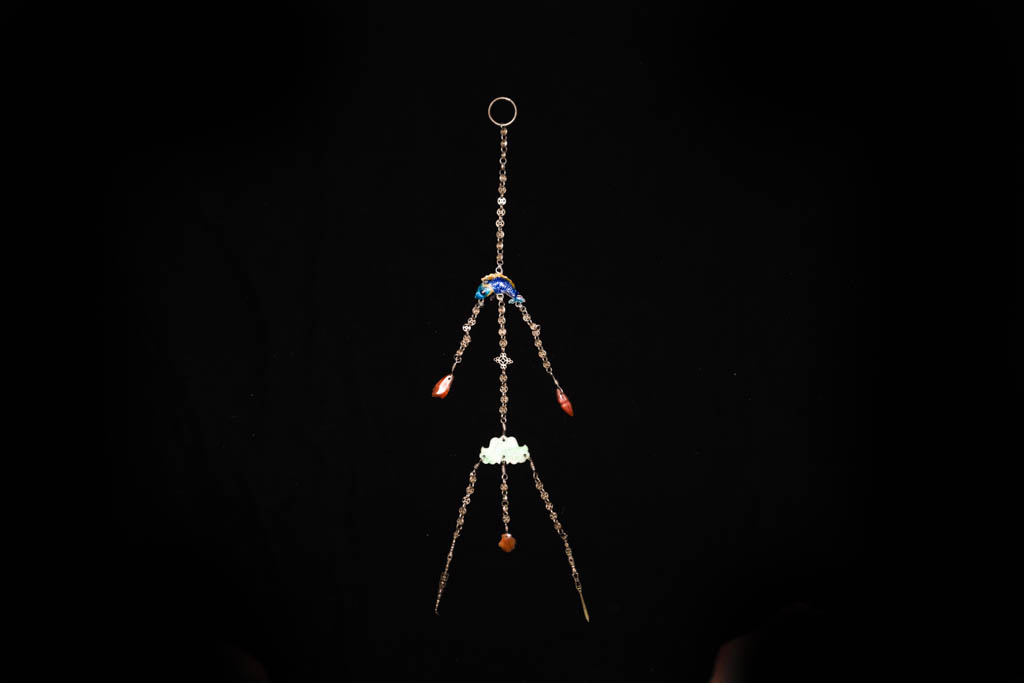
Product Description
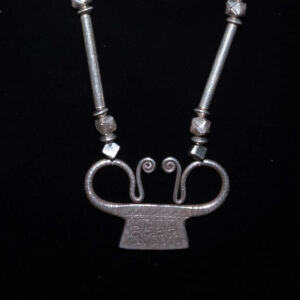
Antique Chinese Yi People Grooming Kit 3
Material: Silver, jade, carnelian, enamel fish
Style: Yi people, China
Size: Height 45 cm
Order Number: MHSACGK3
The tradition of jewelry-making in China goes back at least to the Neolithic Period, and silver work at least as far back as 300 BC. Qing dynasty (1644 – 1912) silversmiths combined usefulness with elegance, grace and beauty, even for such items as personal grooming kits.
Silver grooming kits typically comprised foxtail chains (two rows of slanted oval links facing each other at a 45 degree angle) ending in an ear pick, nail pick, tweezers to luck away unwanted facial hair, ornamental swords and an ornamental centrepiece, sometimes of silver, sometimes jade. High ranking officials preferred an intricate jade carving. It was believed that jade gave the wearer justice and wisdom. Some were wedding gifts.
Three tools was the norm, but there could be 5 or 7. Four and 6 tools are very rare as even numbers are inauspicious. Some minorities had just 2 tools, ear pick and toothpick. One or more miniature weapons, such as broadsword replicas, indicate it’s a man’s kit. In Daoism a sword is symbolic of victory over evil and in Buddhism of wisdom. There could also be spears, tridents, daggers and clubs. The chains varied in length, with the ethnic minorities having the longest.
Men wore them dangling from a sash around the waist. Han women from a button on their dress and some minority women from their neckrings. They demonstrate status and cleanliness. Every group in Qing dynasty China (1644 – 1912) was anxious to present themselves as well groomed.
Apart from personal grooming the tools could be used to probe food to check if it was poisoned or rancid. If the silver turned dark, the food was probably contaminated.
The tweezers could also be used to transfer tobacco to the pipe bowl for smokers, the ear pick to flatten the tobacco and the nail pick to clean the bowl. Both men and women smoked for medicinal reasons. They could also be used for opium smoking. The ear pick could be used to heat the opium over the flame.
Grooming kits date back a long time. They have been excavated in Ur (part of modern day Iraq) dating to around 3000 BC, the Indus civilisation of the 3rd millennium BC, Denmark in the late Bronze Age (about 500-400 BC) and a 9th century Viking village.
The Yi people are an ethnic group living in China, Thailand and Vietnam. There are about 9 million in China. There are about 9 million people and are the 7th largest of the 55 ethnic minority groups officially recognized by the People’s Republic of China. They live primarily in Yunnan, Sichuan, Guizhou and Guangxi, usually in mountainous regions.
The jade centrepiece of this grooming kit is in the shape of a lotus blossom, which symbolises fruitfulness, redemption and purity.
Early 20th century.
Please ask for the price (or make an offer).