Category Archives: Blog
Grand Nikko Hotel, Nusa Dua, Bali

Grand Nikko Hotel, Nusa Dua, Bali


Grand Nikko Hotel, Nusa Dua, Bali certainly has a ring to it. We had to go down to Nusa Dua for a wine-tasting and it was just too far, after all that wine, to drive back to Ubud, so we picked a hotel that had a grand sounding name.  Grand Nikko Hotel fitted the bill perfectly and is part of the worldwide Nikko Group of hotels. It’s the only one in the group called Grand. It’s also a grand place for families and kids.


Grand Nikko Hotel, Nusa Dua, Bali


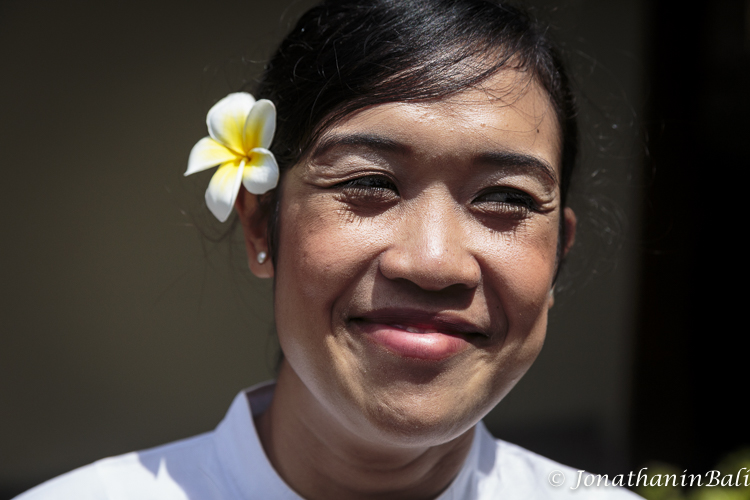
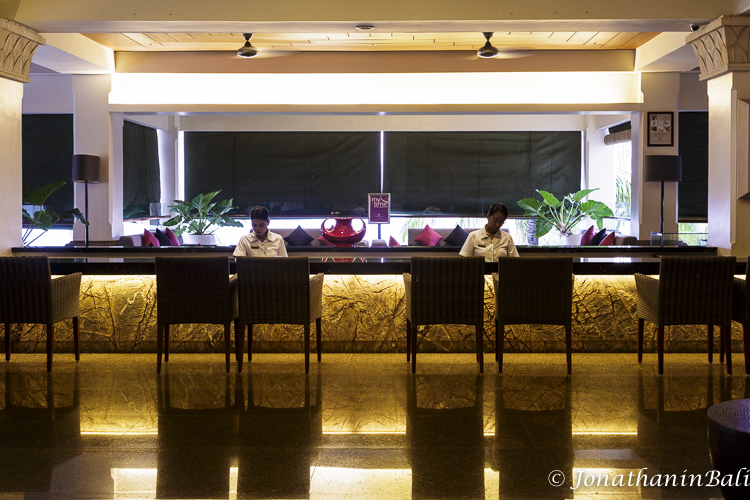
We drove up to the entrance and were met by smiling staff. A nice Balinese man with glasses took our cases. First impressions are so important. We both felt good immediately and went through a smooth and efficient check in and were escorted to our room. There is a wide choice of rooms, suites and villas.


Grand Nikko Hotel, Nusa Dua, Bali


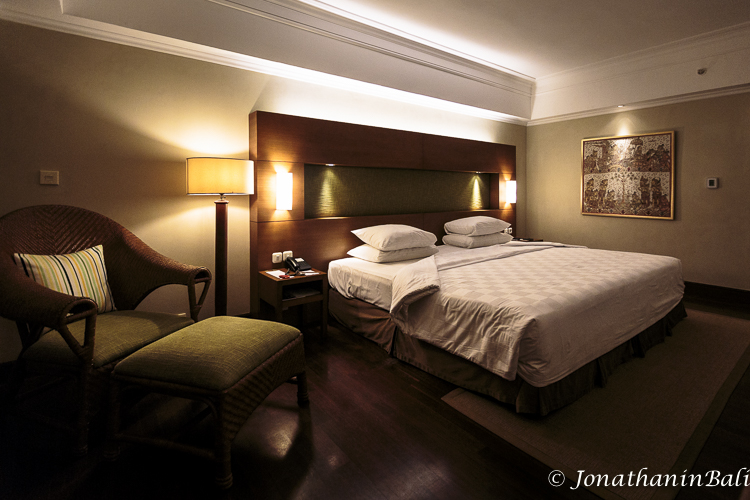
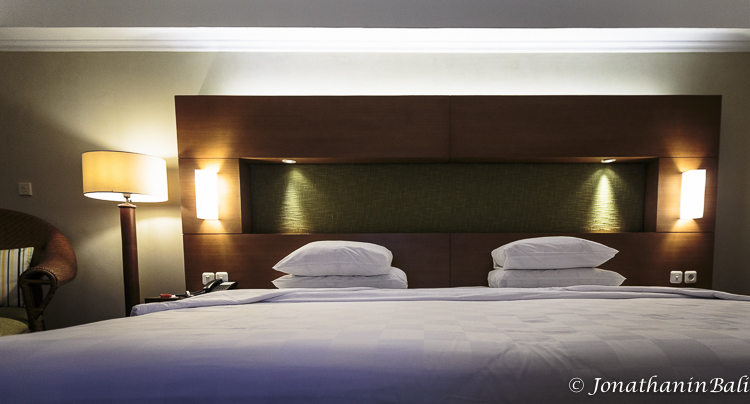
We had an Ocean View room. As you can see, it was spacious, clean and comfortable. I was pleased to see a traditional Kamasan painting hanging on the wall. There was a television with all the international channels, an electronic safe, which could fit a laptop, and complimentary water in the mini-bar.


Grand Nikko Hotel, Nusa Dua, Bali


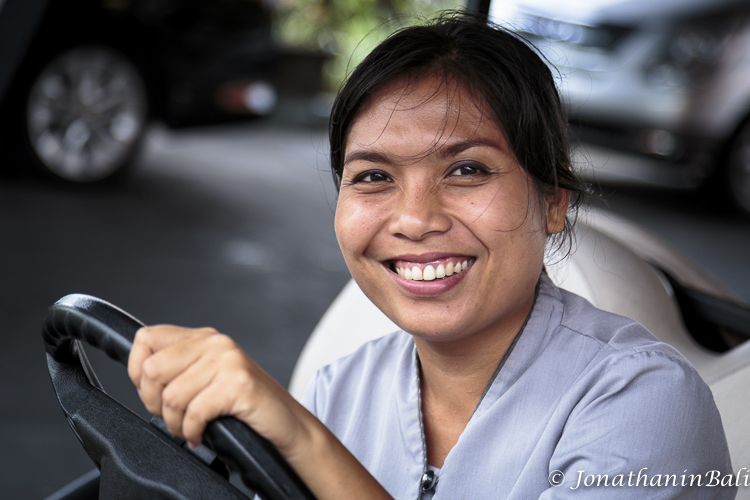
We didn’t need a buggy, but if your villa is far away, they will actually take you by buggy, driven by a wonderful, smiling girl called Yeni. It’s almost worth booking a villa just for the fun of riding in the buggy.


Grand Nikko Hotel, Nusa Dua, Bali


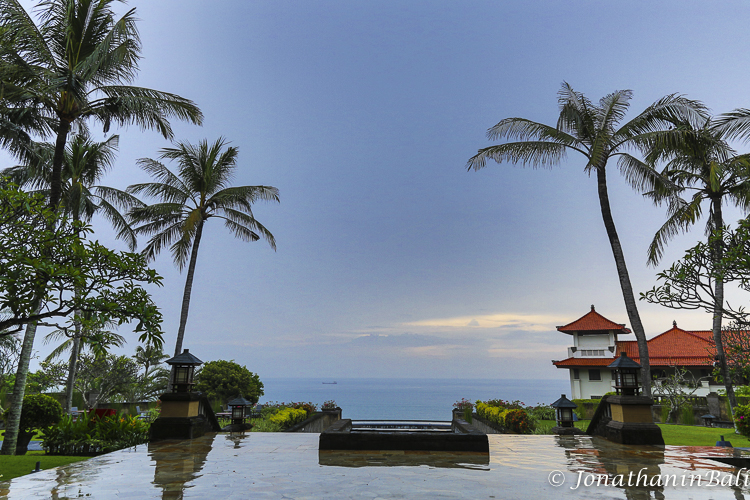
It’s a big hotel with two wings, built on a 40-meter cliff. The central core of the hotel has an incredibly dramatic view of the Indian Ocean. My jaw just dropped gazing out at the view.


Grand Nikko Hotel, Nusa Dua, Bali


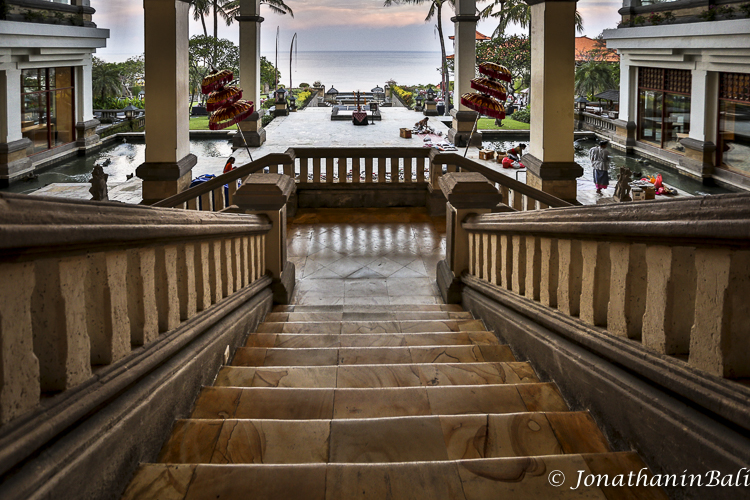
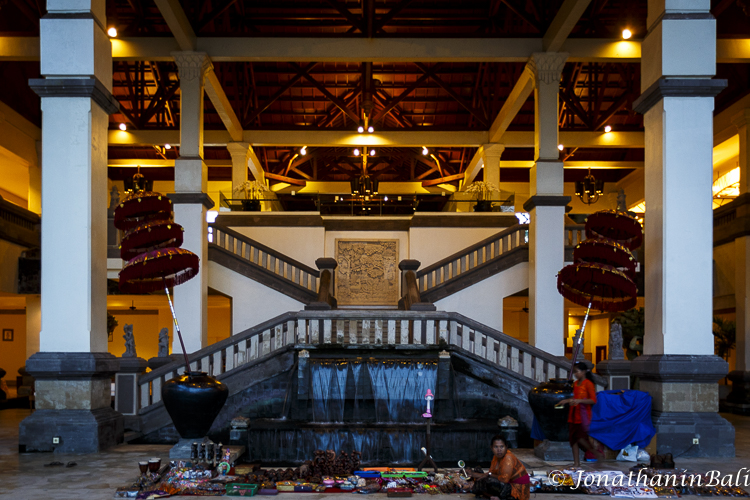
We immediately went down to explore. There’s a really imposing staircase from the entrance down to beach level. They also have elevators.


Grand Nikko Hotel, Nusa Dua, Bali


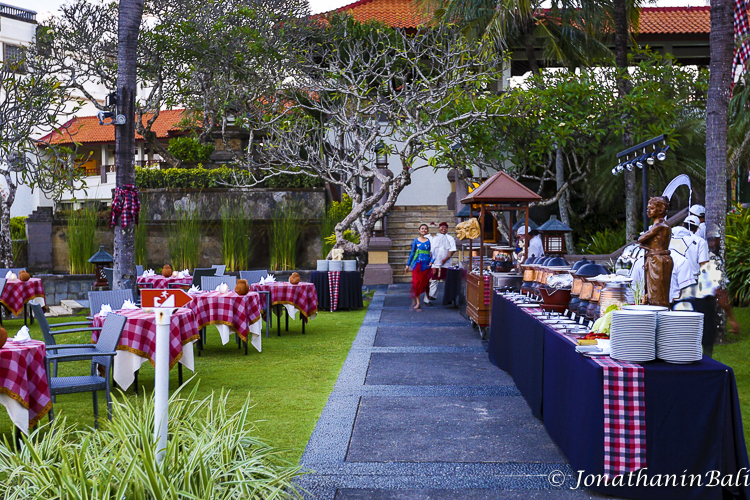
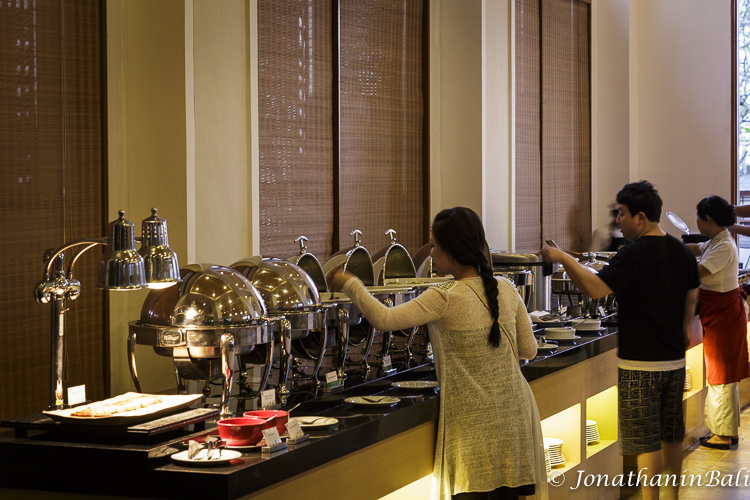
We saw a very impressive buffet being set up in the garden. They were getting ready for Balinese Night and we felt beautiful, soft breezes on our cheeks wafting off the Indian Ocean.


Grand Nikko Hotel, Nusa Dua, Bali


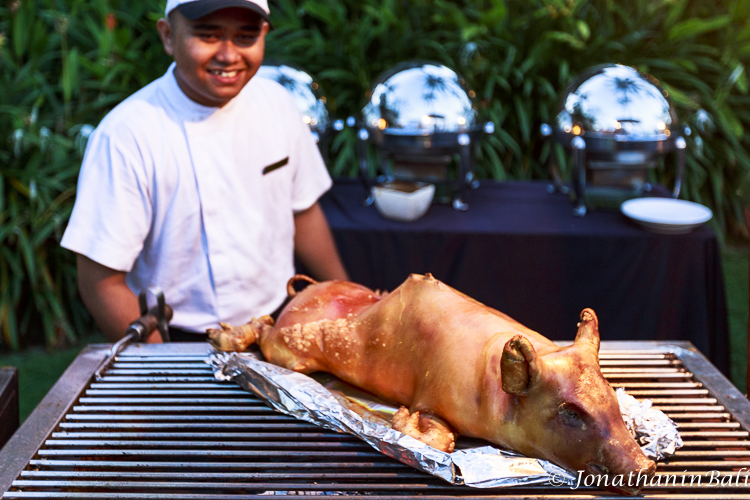
They had a sucking pig, babi guling, still untouched, but I’m sure not for long, as that’s one of the island’s most famous dishes. There was a vast array of food and there were drinks too.


Grand Nikko Hotel, Nusa Dua, Bali


I’ve got a small hotel in Ubud, Murni’s Houses, grand in its own way, and I know a good hotel when I see one. A good hotel has good energy and the Grand Nikko has lots of energy.


Grand Nikko Hotel, Nusa Dua, Bali


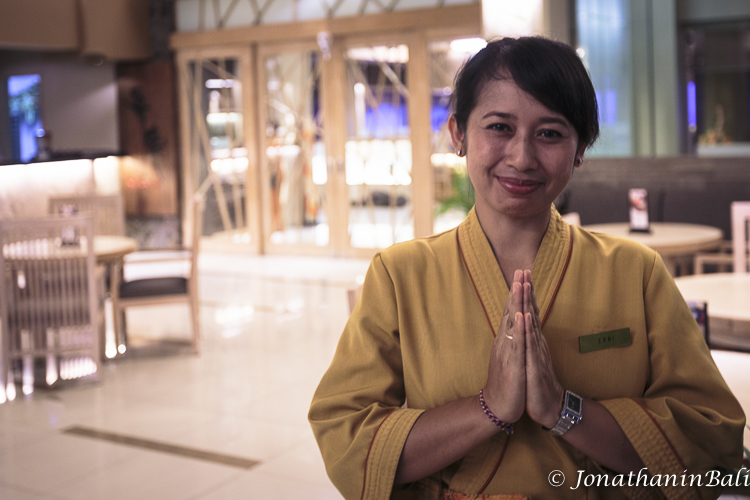
The staff are incredibly helpful – if you look lost, they come up to you and offer to bring you to where you are going. When you pass them in the corridor or meet them in the lift, they say hello and give you a big smile. How nice is that?


Grand Nikko Hotel, Nusa Dua, Bali


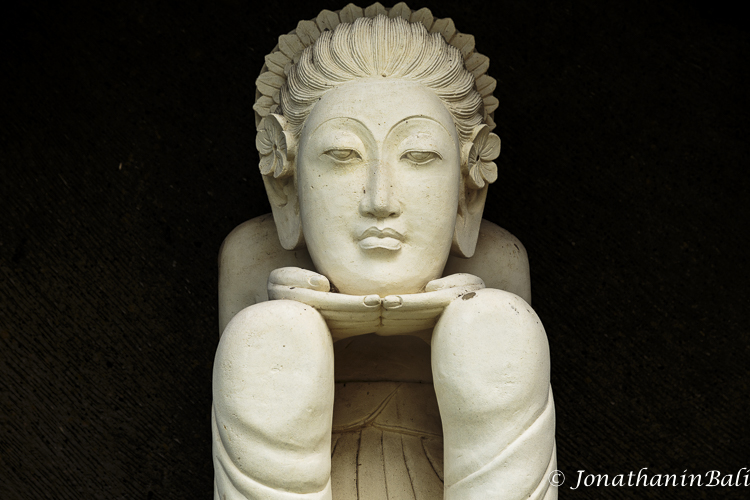
The hotel is large. I’m sure I haven’t seen it all, in fact, I know I haven’t seen it all. It has interesting statues and structures all over the place.


Grand Nikko Hotel, Nusa Dua, Bali


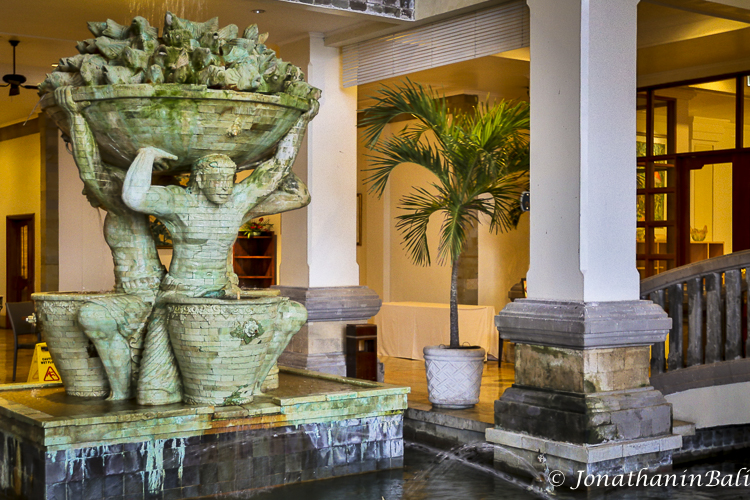
Balinese stonecarvers and sculptors are talented and I’m delighted that their works are on display. I particularly liked the three fishermen, back to back, with their shared catch on their heads. It was very appropriate for the ocean setting.


Grand Nikko Hotel, Nusa Dua, Bali


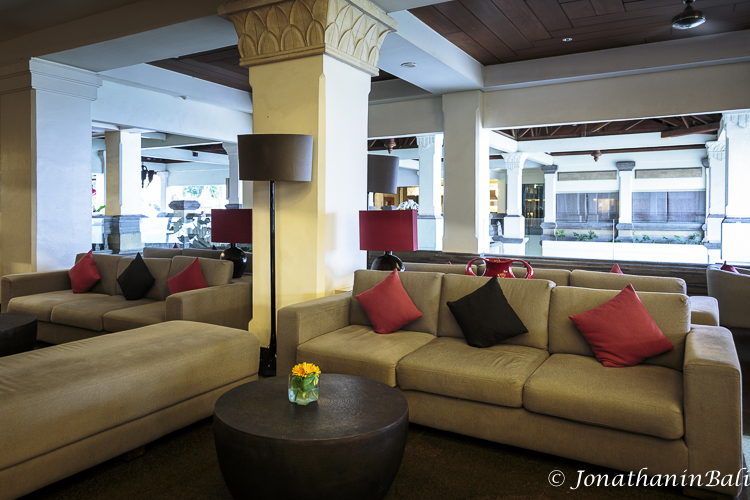
There are many comfortable places to sit and chill out. Tastefully decorated. Of course the whole place has wifi, which is vital these days.


Grand Nikko Hotel, Nusa Dua, Bali


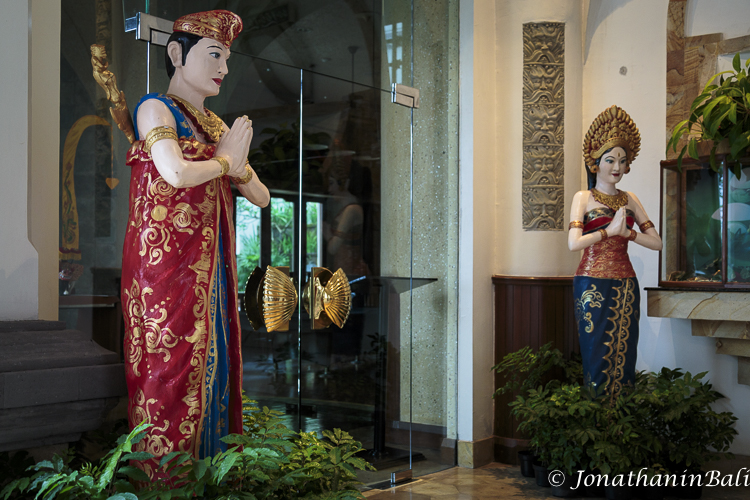
There are eight restaurants, yes, eight, including a Japanese one called Benkay and one called Olooloos. Don’t ask me what that means! They serve Mediterranean food, but outside a Balinese couple welcome you in.


Grand Nikko Hotel, Nusa Dua, Bali


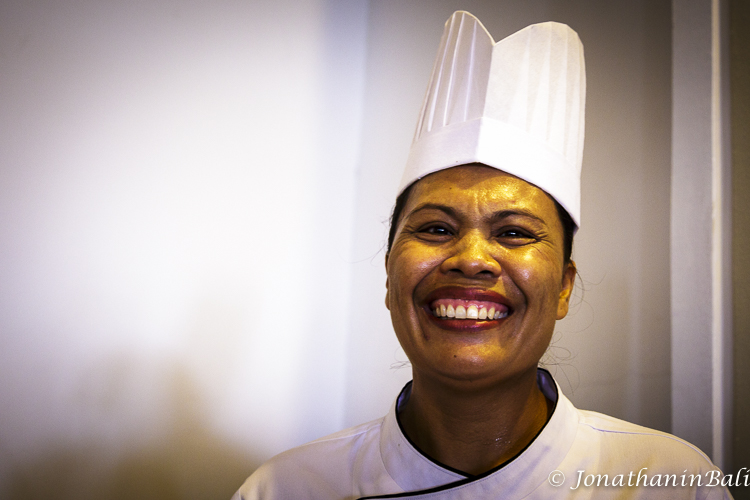
Breakfast is served in The Brasserie. It was very good indeed, regally and lovingly supervised by the charming Balinese sous-chef, Luh Sibang. She has worked there for eighteen years and is still loving it.


Grand Nikko Hotel, Nusa Dua, Bali


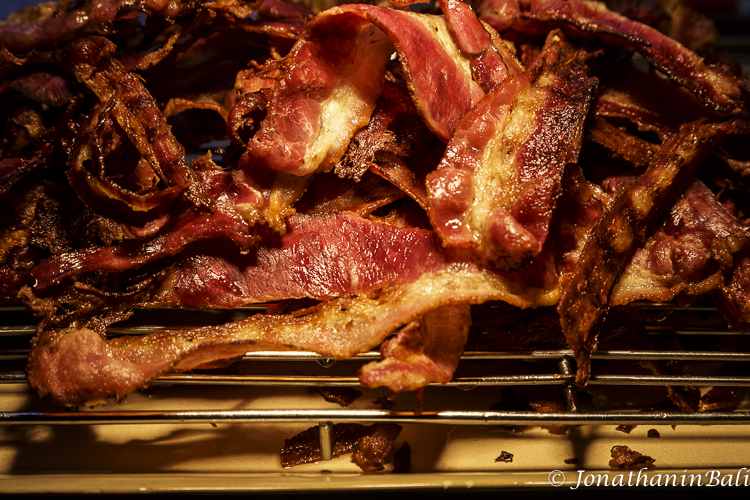
There are freshly baked breads, croissants, bagels, muffins, and doughnuts. Orange, tomato, watermelon, papaya and carrot juices. Scrambled, sunny side up, omelettes, poached and boiled eggs. Really whatever you want.


Grand Nikko Hotel, Nusa Dua, Bali


Western, Chinese and Japanese food. Indonesian fried rice, Indonesian fried noodles, chicken or pork congee and Soto Ayam (the famous spicy chicken broth). Unlimited smoked salmon too. Service was impeccable: lots of helpful staff helping you within seconds.


Grand Nikko Hotel, Nusa Dua, Bali


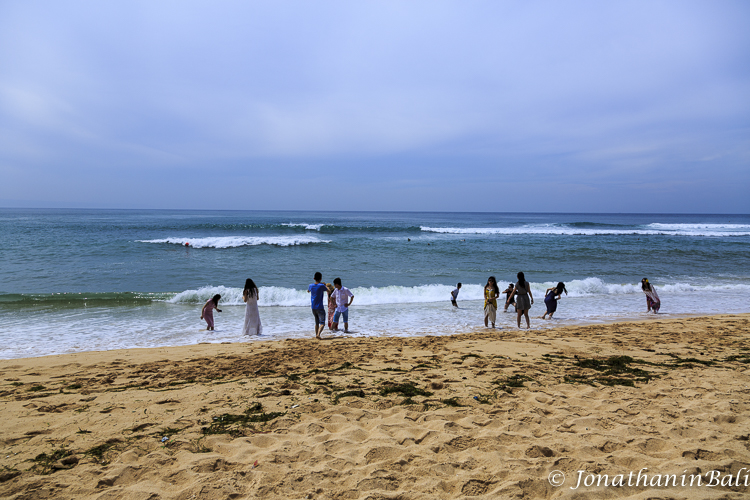
After breakfast there are a whole range of activities – the wonderful beach, of course, but also a fun jungle camp for children, a camel safari ride, fitness centre, tennis courts and sauna. There are probably even more things that I haven’t yet discovered.


Grand Nikko Hotel, Nusa Dua, Bali


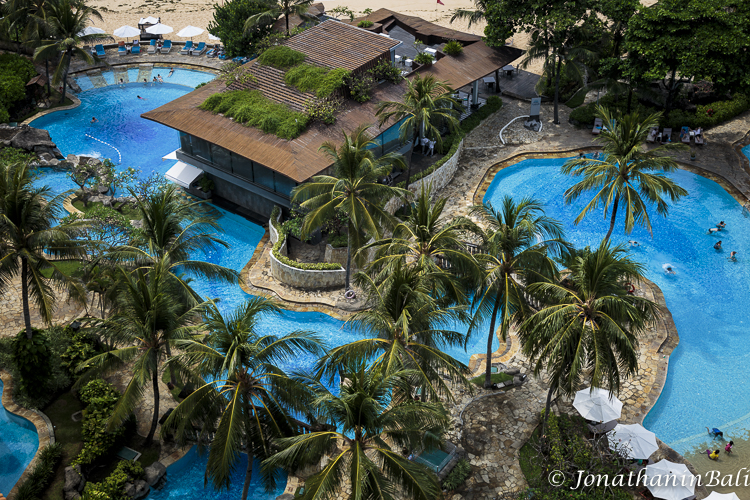
There are four, maybe more than four, amazing inter-connected swimming pools, that just have to be seen to be believed, and a 30 metre water slide into one of them. One of them actually has sand coming up to it, which is a genius and safe way of keeping an eye on young childen at the beach.


Grand Nikko Hotel, Nusa Dua, Bali


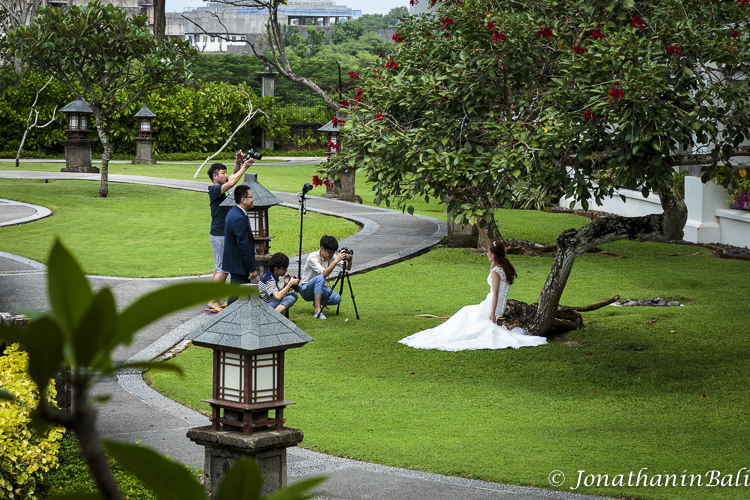
Just wandering around I came across a wedding in the grounds. Not surprising as it’s a perfect place to get married with the well-kept beautiful lawns, pools and beach. I am sure that the wedding photographs were stunning. Grand Nikko has it all.


Grand Nikko Hotel, Nusa Dua, Bali


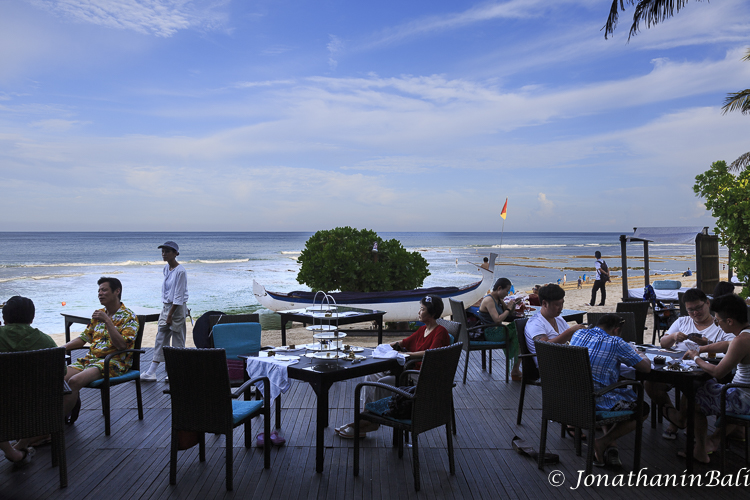
The Shore restaurant is ideally situated, yes, on the shore. We had lunch there and Komang, our kindly waitress, suggested that we join One Harmony for free and have 10% off all meals and future stays in the hotel group. We joined straightaway.


Grand Nikko Hotel, Nusa Dua, Bali


I love spas, and in fact, I have one in Ubud, Tamarind Spa at Murni’s Houses, so I am always keen to try them out. It was a real pleasure going to Mandara Spa. I had an excellent therapist, Oka Astini, and enjoyed the experience in a private villa immensely. I can certainty recommend it and have become a member of Mandara Spa.


Grand Nikko Hotel, Nusa Dua, Bali


The only bad thing was leaving, but, for sure I will return soon.


There are more photos in the Gallery.

Murni

Bali Photography Tours
Bali Photography Tours
 

We’ve been talking to David about the possibility of offering Bali Photography Tours to guests of Murni’s Houses for over a decade and now it’s finally happened. It was worth the wait!
 

Bali Photography Tours
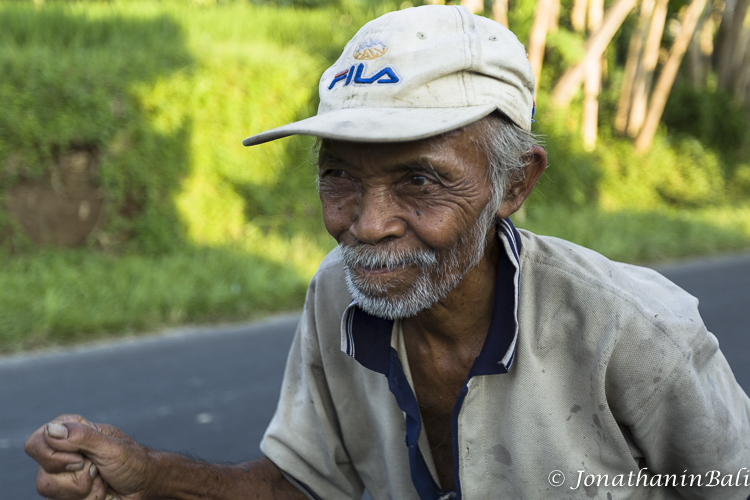
He’s providing Half Day and Full Day tours – there are four different themes to choose from.


Bali Photography Tours


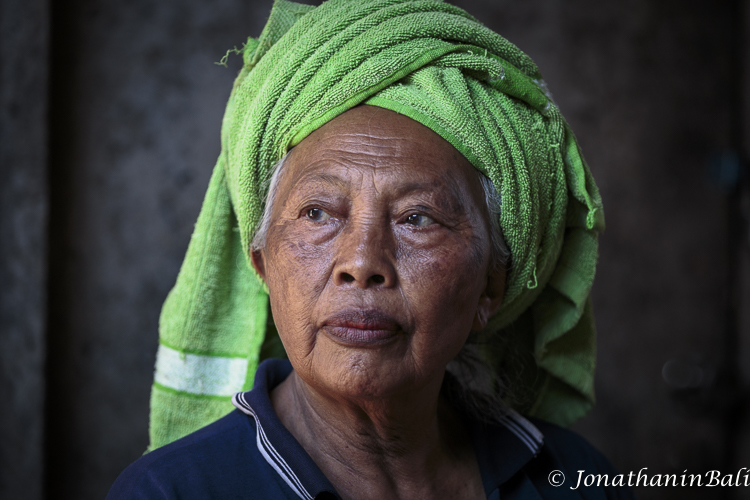
I was lucky enough to be able to join three guests on the first Bali Photography Tours and the theme was Rural Traditional Balinese Life and attending Balinese Ceremonies. They keep the number of guests small – minimum two, but it can even be one, with a small additional fee.
It quickly became apparent that no two tours are alike and they adapt the day to what is happening on the ground, and in Bali what is happening on the ground is totally unpredictable and full of delicious surprises.


Bali Photography Tours
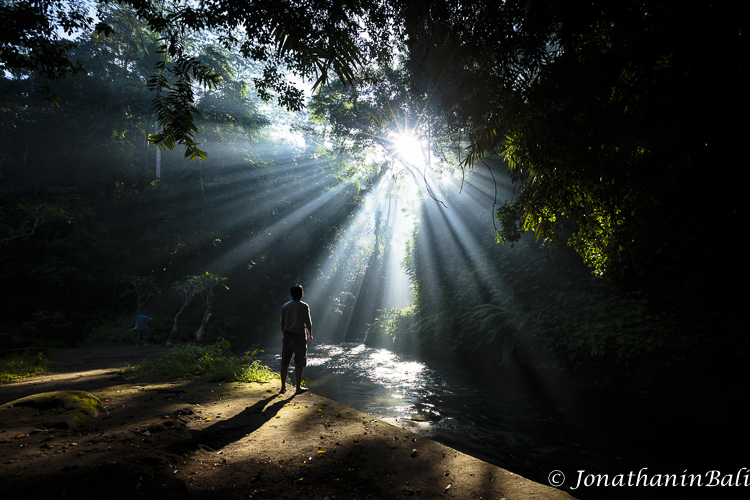
 

They picked us up at Murni’s Houses at 5.30 am. Full marks for the early start as early light is the best light. Photography is really about painting with light and harsh midday sun makes for harsh photos. It is also delightfully cool.

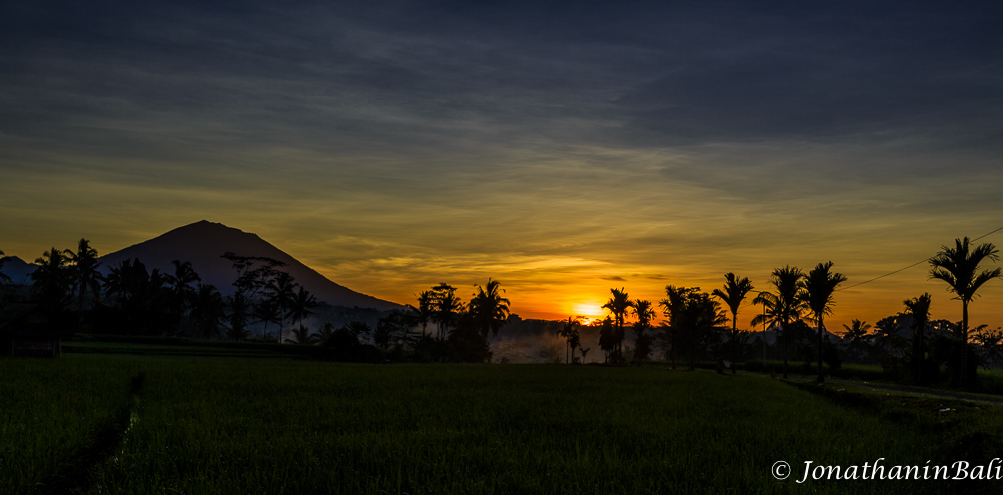
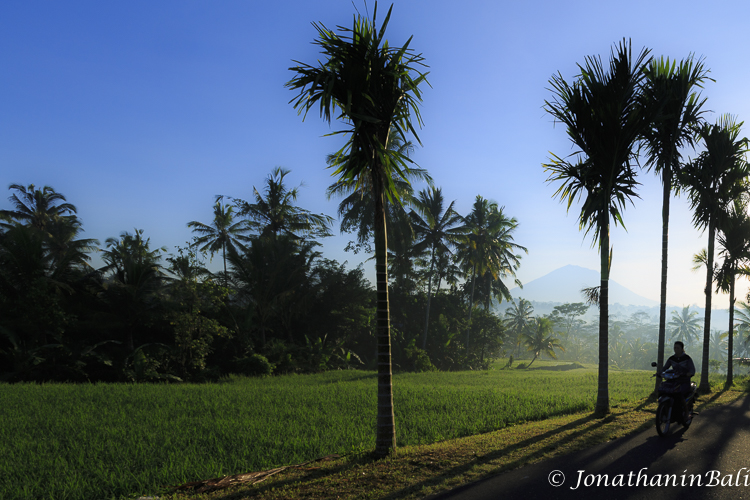
We drove a short distance, about half an hour, to a nearby place in the countryside where there was the most dramatic view of Mount Agung, the largest volcano in Bali. It was still dark but the early morning rays were just beginning to peek out. Those of us who had tripods set them up.

David and his assistant Nyoman immediately started to guide us through the settings in our cameras. David is an expert on Nikons and Nyoman on Canons, but they can explain the settings on any camera. They encouraged us to get away from using AUTO and taught us how to create the shot that we saw in our heads.


Bali Photography Tours


Then we wandered down the road, ricefields and trees on either side, which provided more photo opportunities, with people starting to go about their business.


Bali Photography Tours

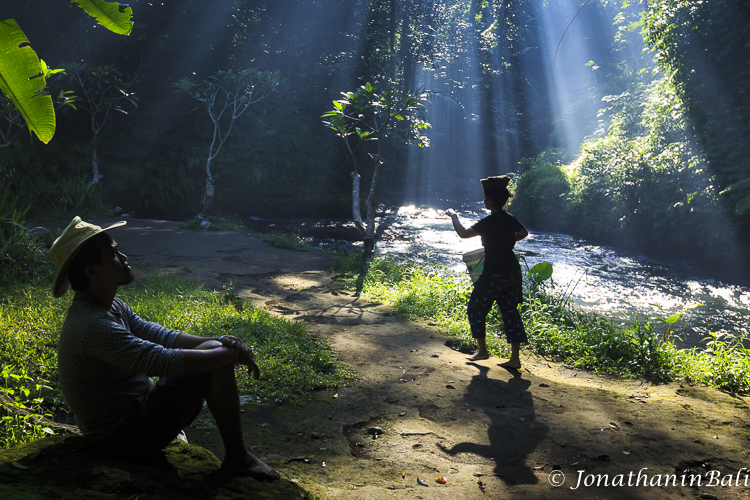
Very shortly we were down some steps at this amazing river. David had seen it before but hadn’t been down the steps. There was the most amazing light that any of us had seen.


Bali Photography Tours


The first rays of the sun

Living the Rangoon Dream
Murni explains how the history of one of the World’s great hotels is inextricably bound up with Myanmar’s roller coaster history: Living the Rangoon Dream.

March 2015

LIVING THE RANGOON DREAM
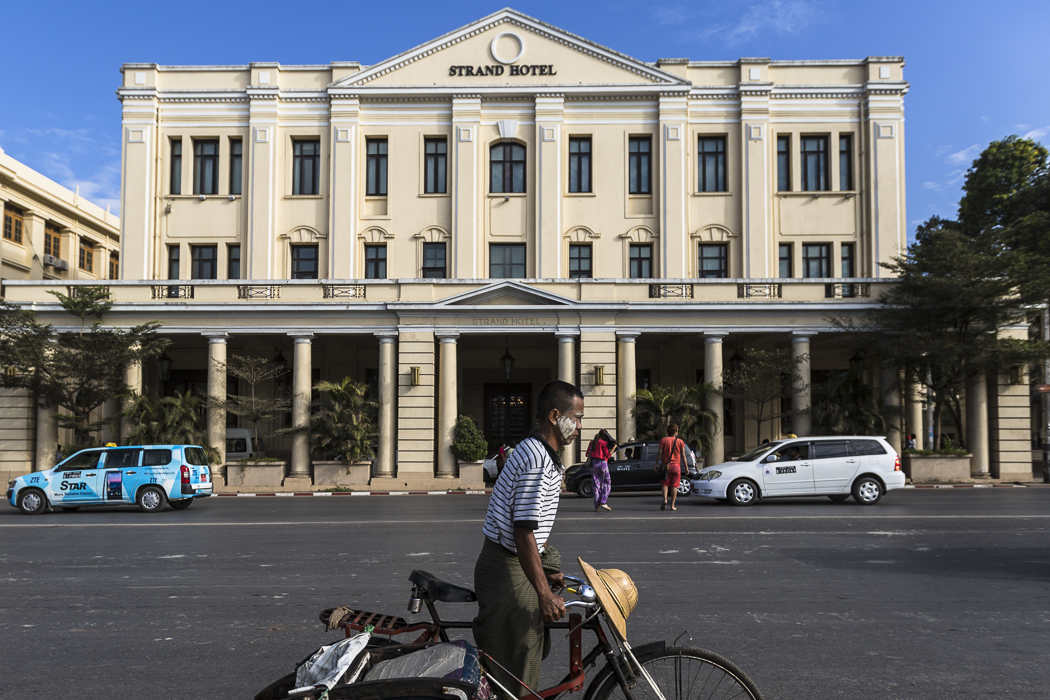
The Strand, Yangon.


The four Armenian brothers, Martin, Arshak, Aviet and Tigran Sarkies, legendary hoteliers, were born in Isfahan, Persia and created outstanding, mind-blowing, Western but Asian-style, colonial hotels, any one of which would make one’s parents proud and be the crowning achievement to a lifetime’s career. Their legacy is our dream.

LIVING THE RANGOON DREAM
The Strand, Yangon.


It’s an almost impossible task to say which is the best, but, for my money, I love the Strand, for it’s in magical Rangoon, the capital of the World’s most enchanting country.  Today Rangoon is called Yangon, which means ‘end of strife’ but I can’t stop saying Rangoon, because, although it means nothing, it’s really evocative.

LIVING THE RANGOON DREAM
Increasing trade made Rangoon prosperous in the mid 19th century. Textile merchant at Bogyoke Market, Yangon.


The brothers became active in the 1860s when world trade was changing and increasing. Steam ships were sailing from Europe. The increased trade made the Indian and Southeast Asian ports prosperous and created a demand for accommodation. Only very basic rooms were available at that time.

LIVING THE RANGOON DREAM
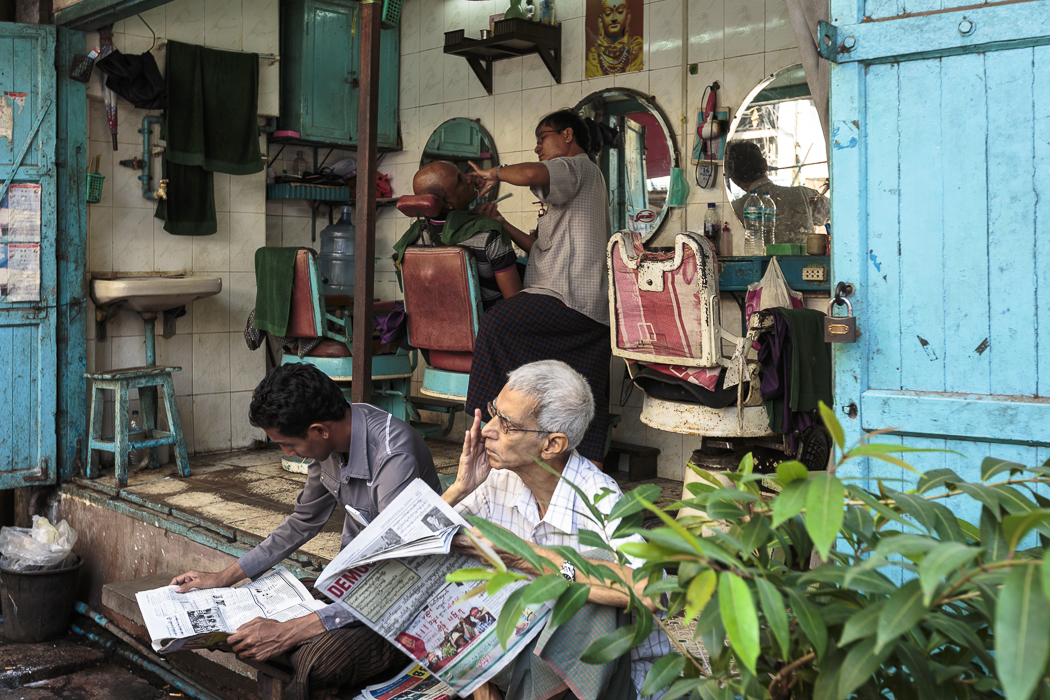
Waiting for a haircut and shave in downtown Yangon.


The first place to attract the attention of the Sarkies brothers’ beady eyes was Penang, the first English settlement east of Calcutta, which was founded by Sir Francis Light in 1786. Martin Sarkies arrived in 1869 and promptly decided to create a luxury hotel that would rival the Ritz in Paris. The four brothers did just that and opened the Eastern Hotel in Georgetown, the capital of Penang, in 1884. The following year they acquired the next-door hotel, the Oriental, and merged the two hotels, the Eastern and the Oriental, and it became known as the E&O.

LIVING THE RANGOON DREAM
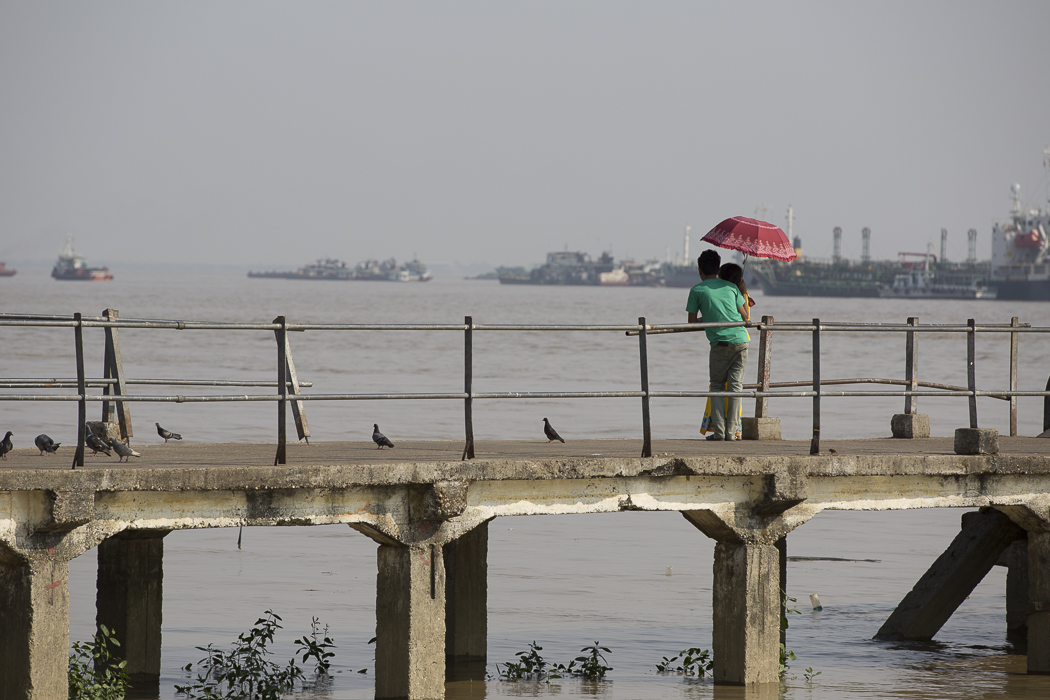
Yangon River.


Not content to rest on their laurels, the brothers travelled down to Singapore, rented a house, made it into a hotel and opened the Raffles in 1887. They now had two hotels but by 1891 they wanted more. It was time to expand and establish another hotel. Rangoon on the banks of the Yangon River, a tributary of the mighty Irrawaddy, looked like the ideal place. Burma was then a province and part of the British Raj and Rangoon was its capital. There were already banks and trade and foreigners looking for accommodation but there were no proper, comfortable, first-class hotels.

LIVING THE RANGOON DREAM
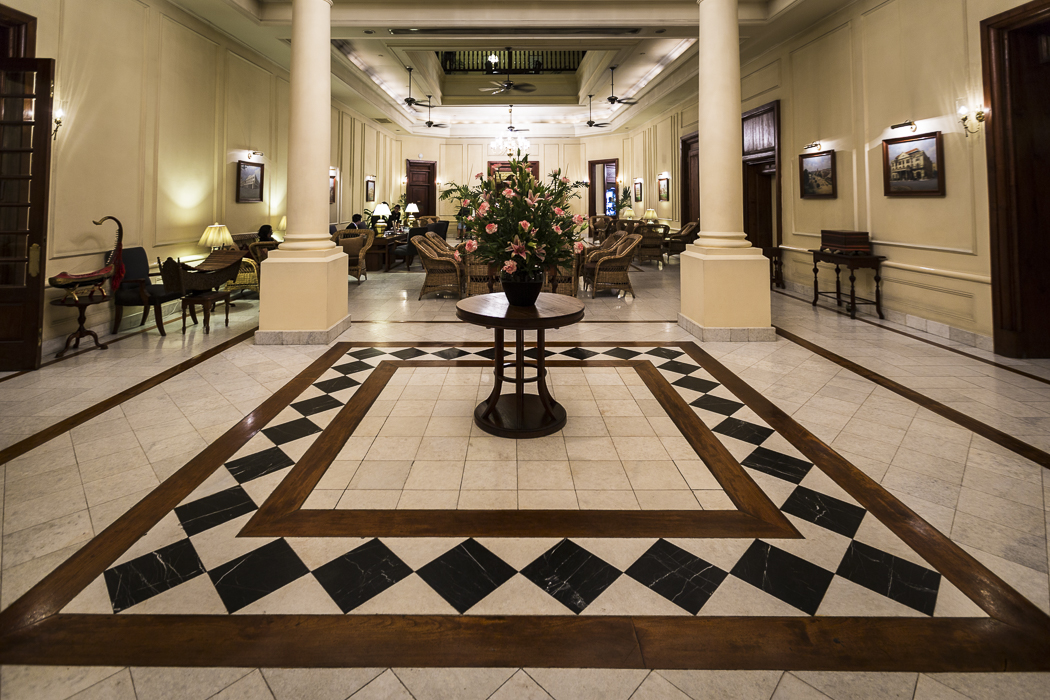
Lobby of the Strand Hotel


The majority of the Burmese population are Buddhist.

The Third Anglo-Burmese War resulted in all of Burma coming under British rule, a nice birthday present for Queen Victoria on 1 January 1886. It was an incredibly rich country, full of gems, rubies, rice, teak, natural resources and oil. As part of the British Empire Burma joined a global and political framework, the like of which had never been seen before, covering approximately a quarter of the globe.

LIVING THE RANGOON DREAM
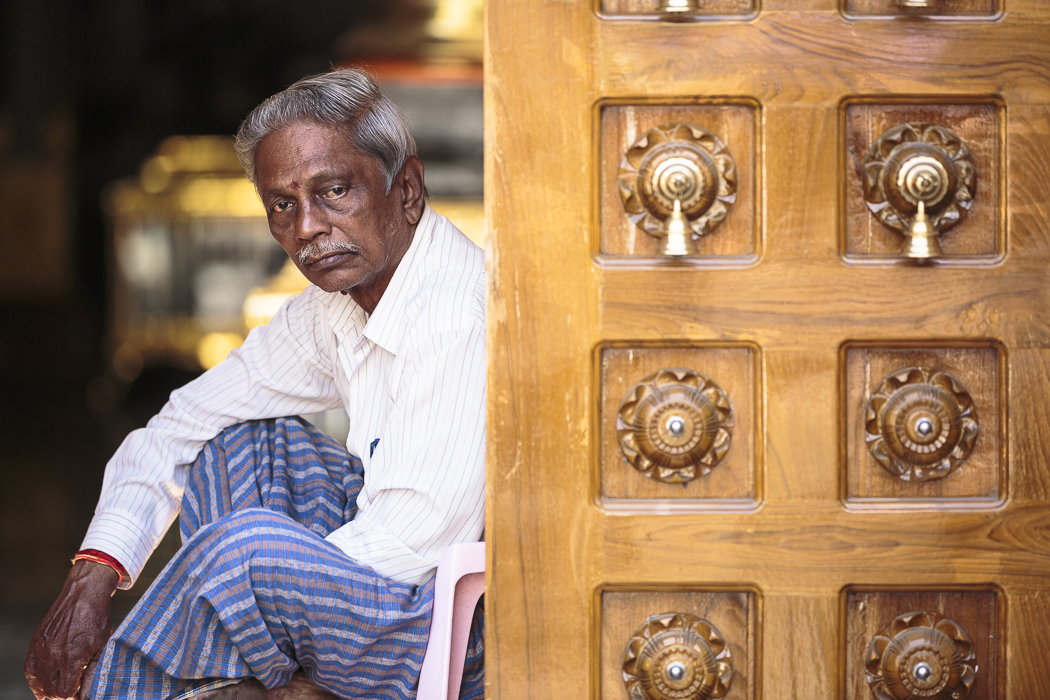
Indian Temple in Yangon.


Under the British, Indians worked as soldiers, civil servants, merchants and moneylenders, but their numbers are now much reduced, about 2% of the population, living mainly in Yangon and Mandalay.

LIVING THE RANGOON DREAM
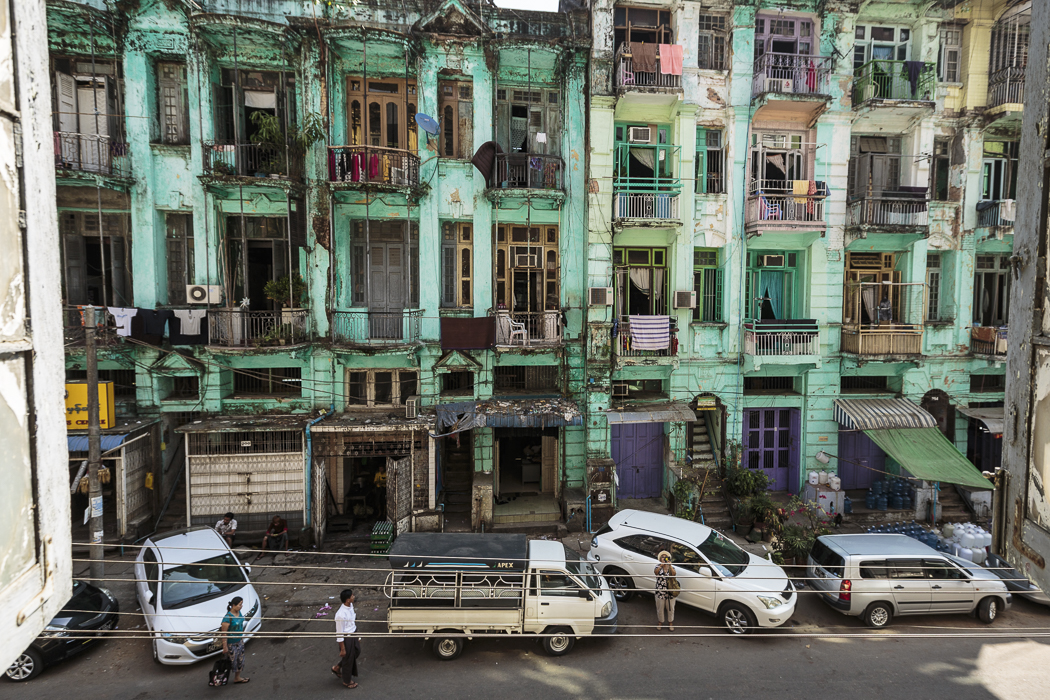
Downtown Rangoon.

Most of the buildings, many of which are architectural masterpieces, often painted green, in Yangon’s densely populated streets are in urgent need of repair, but funds to do it are scarce.

Wonderful, really large, substantial buildings were being constructed in the city’s well laid out grid system. Visitors from all over the World made a beeline for Rangoon to engage in business, attracted by good communications, the rule of law and religious freedom: Baghdadi Jews, Indians, Armenians Germans, French, and others.

LIVING THE RANGOON DREAM
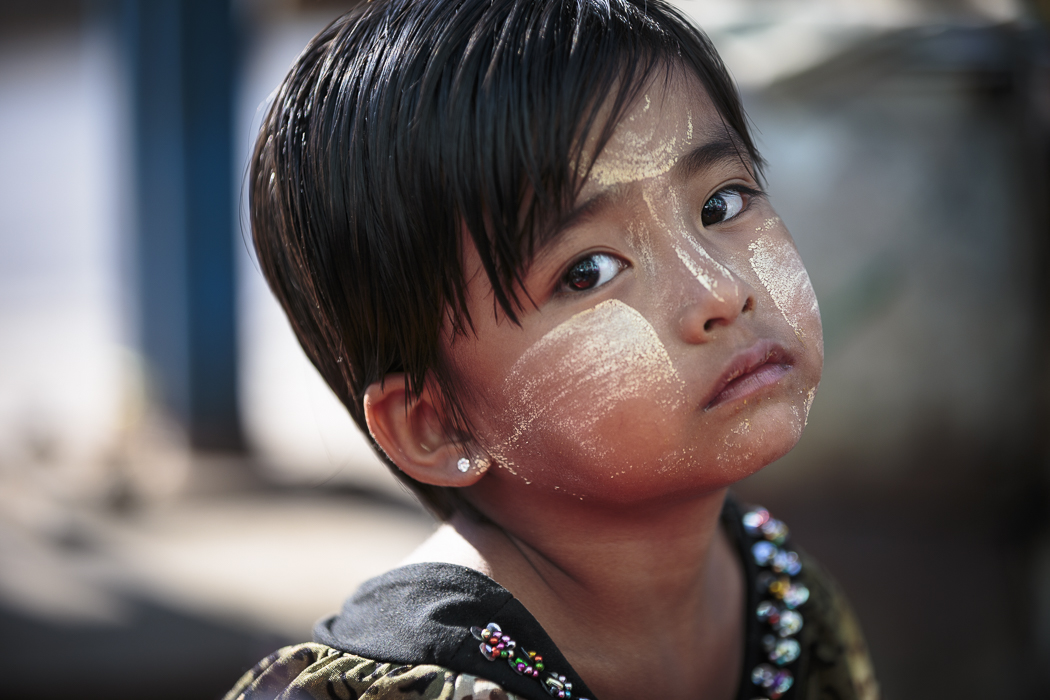
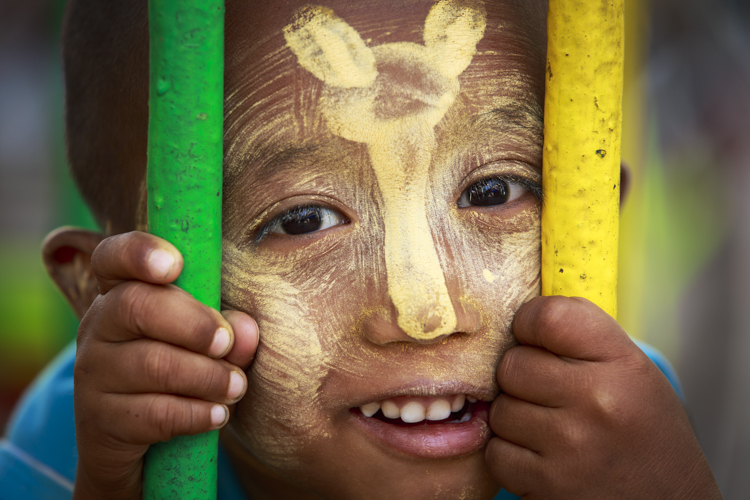
Child wearing Tanaka.
 
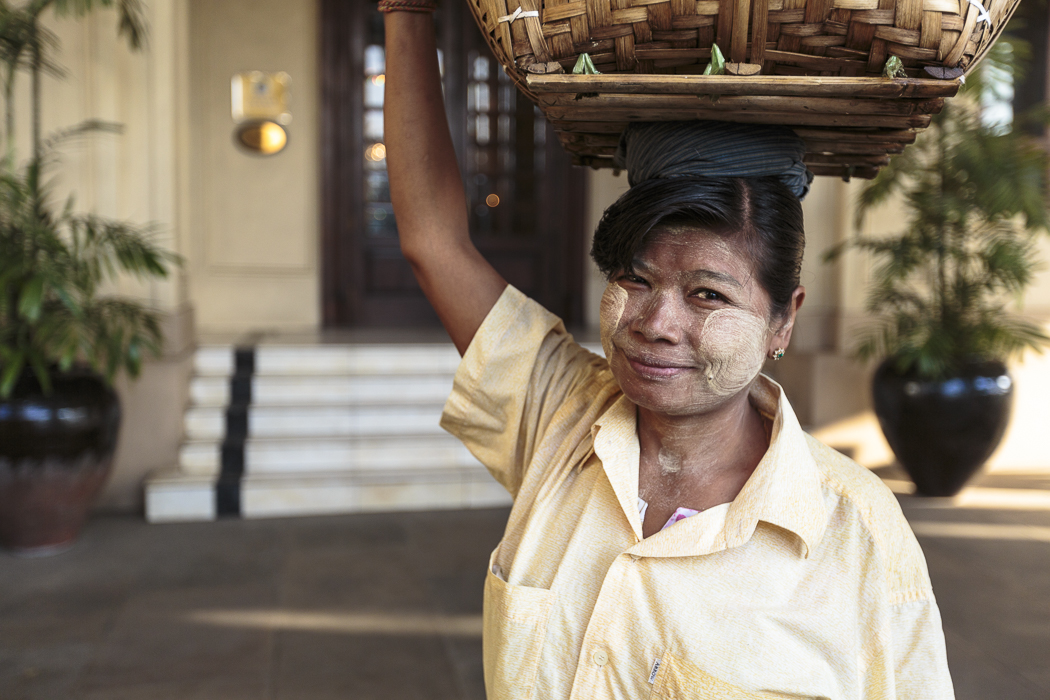
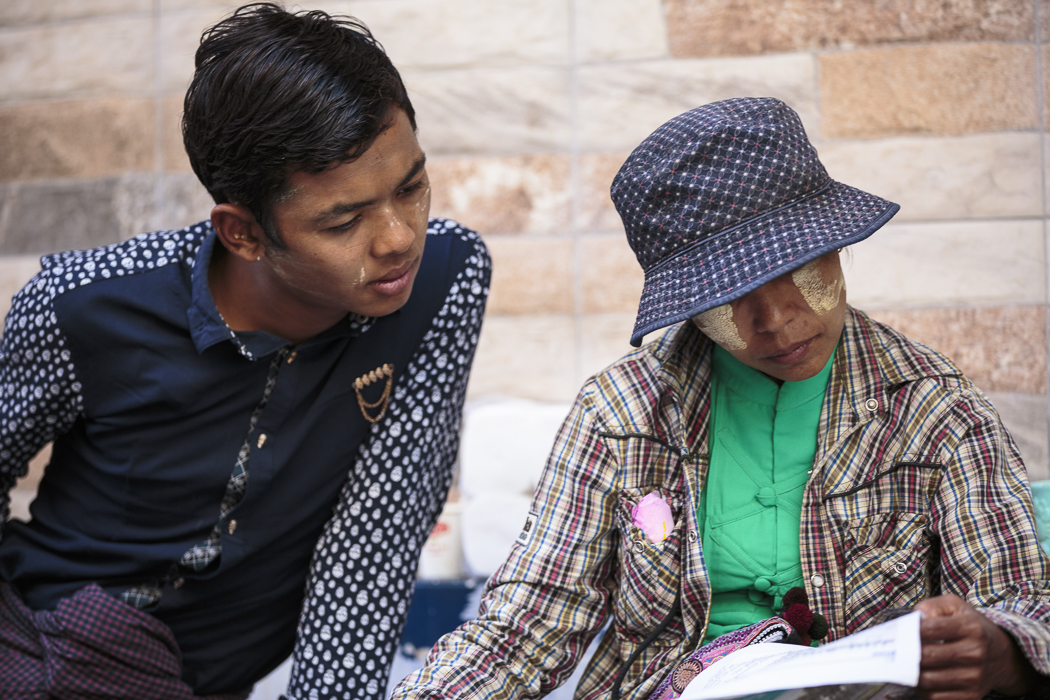
Traditional Burmese life continues as it has done for centuries. Women and children still draw thanakha designs on their cheeks and foreheads. Thanakha is a sandalwood powder, ground on a stone, to protect the skin against the sun.

The brothers liked what they saw and bought an existing hotel on Merchant Street, the road behind Strand Road where the Strand now is, and called it Starkies Hotel, but it was a mid-range hotel and didn’t do well, so they sold it in 1896, and turned their attention to upgrading the Raffles in Singapore. The Raffles refurbishment was completed in November 1899.


LIVING THE RANGOON DREAM
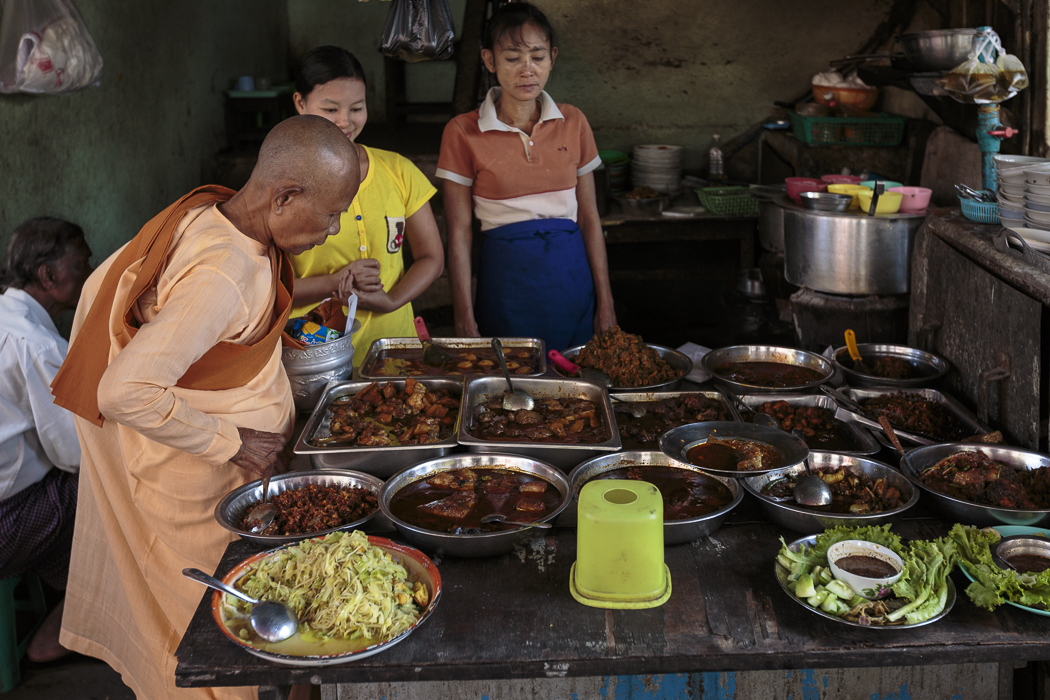
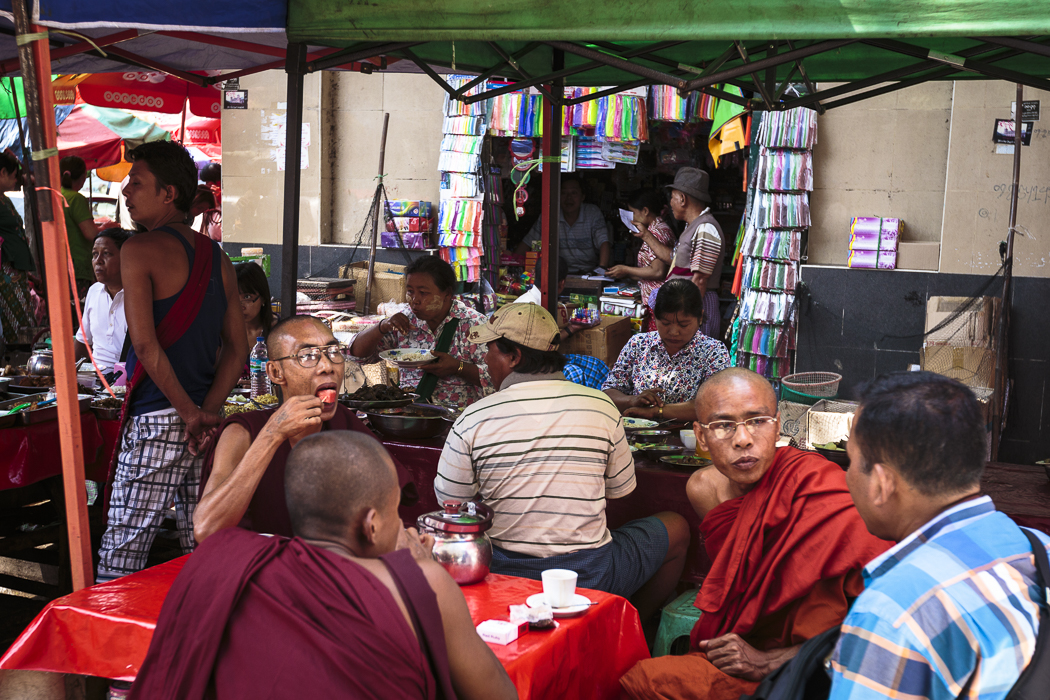
A Burmese Buddhist nun inspects the local food in one of the numerous roadside restaurants in central Yangon.


Aviet had stayed on in Rangoon and heard in December 1899 that a small boarding house on Strand Road, facing the river, was available. It was where the brothers had stayed themselves on first arriving in Rangoon, just opposite the jetty where the steam ships moored and offloaded their passengers. The location was perfect. Their timing was impeccable: a new phenomenon called ‘tourism’ was just beginning. They opened the Strand’s doors in 1901, the year that Queen Victoria died.

LIVING THE RANGOON DREAM
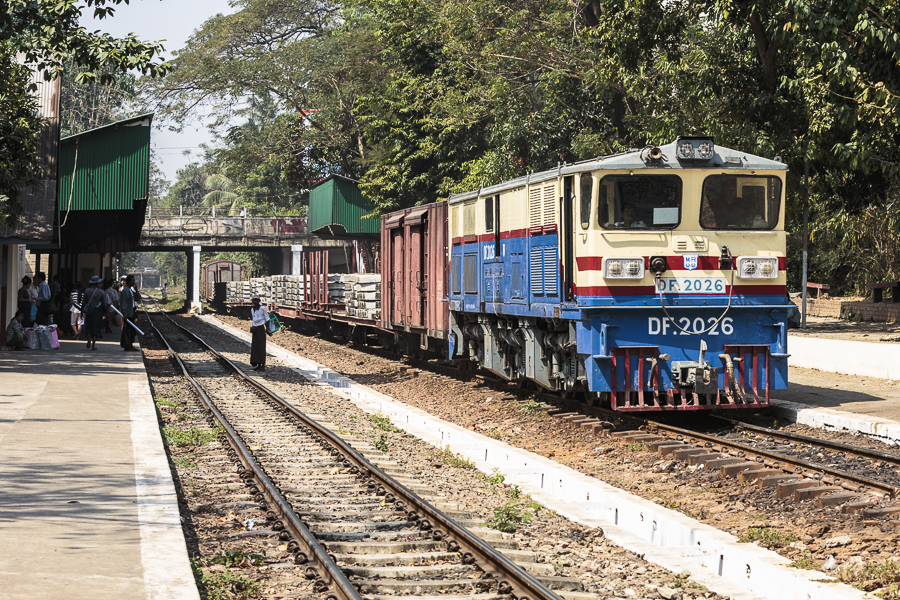
The expanding railway system improved communications.


The expanding railway system improved communications. The country was opening up with an expanding railways system. Burma was moving into the 20th century with the introduction of post offices, trams, electric lamps, telephones, telegrams and cars. The British brought their games: cricket, rowing, hockey, football, billiards and boxing. Clubs, then bastions of European exclusivity, were set up all over Rangoon, strictly reserved for expats, and mainly male hangouts. There were ten times as many European men in Rangoon as women: solace frequently lay in alcohol. It still does.

LIVING THE RANGOON DREAM
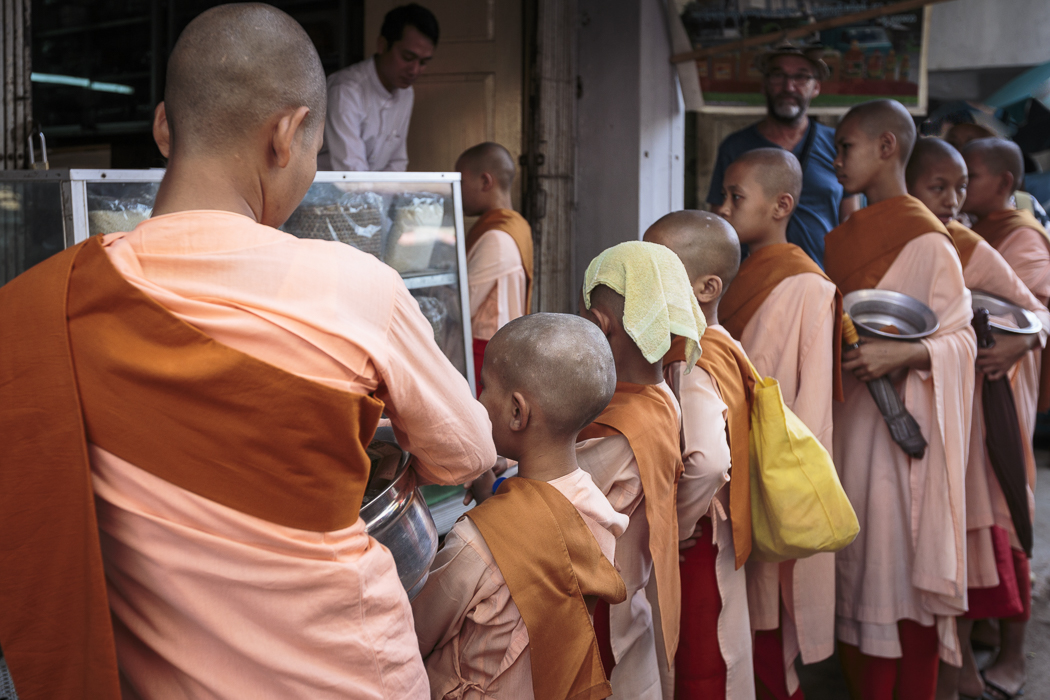
Young Buddhist nuns collect alms.


Although everyone thinks of the Strand as a great British institution, it was actually Armenian from the start. By 1911, with the hotel doing really well, the Starkies brothers were getting itchy feet again. They built a new hotel in Calcutta, the Majestic Hotel, while Lucas Martin Sarkies opened the Oranje Hotel in Surabaya, East Java.

LIVING THE RANGOON DREAM
Distinguished British novelists, Somerset Maugham and George Orwell visited Burma in the early 20th century.


The history of the Strand mirrors the history of Burma itself.  It’s been a roller coaster of a ride. The First World War (1914-1918) put an end to tourism. Burma was not involved but Germans and Austrians were now the enemy of the British and detained and their businesses sold. In 1922 Prince Edward, Prince of Wales, who later abdicated the British throne to marry Mrs Simpson, an American divorcée and a commoner, visited Rangoon. Shortly afterwards, another Brit, Eric Blair, better known as the novelist George Orwell, joined the Indian Imperial Police in Burma for five years, stayed at the Strand and wrote Burmese Days: he was staunchly anti-imperialist.

LIVING THE RANGOON DREAM
Khaing Chin serves wonderful breakfasts in the Strand Café, The Strand, Yangon.
 
The Strand recovered after the war and was doing well, when in 1925 the Sarkies sold it to other Armenians, the Rangoon restaurateur Peter Bugalar Aratoon and his cousin Ae Amovsie. More literary dignitaries stayed and were enchanted by the temples and pagodas: Somerset Maugham, who described his trip in Gentleman in the Parlour and Noël Coward who wrote Mad Dogs and Englishmen,

Mad dogs and Englishmen go out in the midday sun.

The toughest Burmese bandit can never understand it.
In Rangoon the heat of noon is just what the natives shun,
They put their Scotch or Rye down, and lie down…
But mad dogs and Englishmen go out in the midday sun.
 
LIVING THE RANGOON DREAM
Buddhist monks having morning tea in one of the many roadside tea shops in central Yangon.


That roller coaster nosedived again when the Great Depression of 1929 devastated the World economy and tourism slumped. The E&O and Raffles hurt badly. The Raffles declared bankruptcy. The Strand, however, carried on and was saved by the introduction of air travel.  It took a month by steamer from London to Rangoon and now it only took eleven days by plane! Rangoon became an important hub from Europe to Southeast Asia. All went well until the outbreak of the Second World War, then another nosedive, literally.

LIVING THE RANGOON DREAM
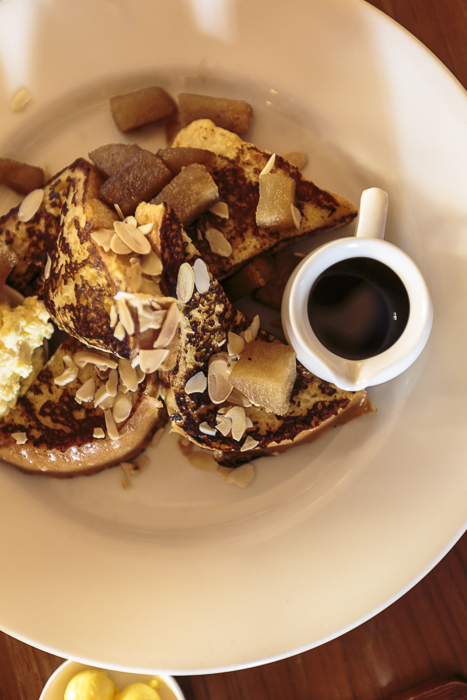
French Toast and Honey at the Strand Café, The Strand, Yangon.
 

Over eighty Japanese planes bombed Rangoon on the first air raid of 23 December 1941 and killed more than 2,000 people. Rangoon was totally unprepared and didn’t even have a warning system. A bomb crashed through the roof of the hotel and badly damaged the lobby. Another fell on the general manager’s floor but didn’t explode. Rangoon was evacuated on 20 February 1942. Approximately 600,000 non-Burmese fled to India by land and sea, making it the then largest migration in history, 80,000 dying on the way.

The Japanese kept on bombing until Rangoon fell on 9 March 1942. The Japanese requisitioned the hotel, renamed it “The Yamato” and gave it to the Imperial Hotel Tokyo Company to manage. The officers kept their horses in the Strand bar. The whole place had to be completely renovated and deloused after the Japanese surrendered on 2 September 1945.


LIVING THE RANGOON DREAM
Ne Win launched a military coup in 1962.


It was an optimistic time. Burma became independent in 1948 after 62 years of British rule. Burmese citizens were finally allowed to go into the hotel. The hotel was hosting receptions and ballroom dancing in 1950 and the first America to Rangoon flight landed in 1952. The hotel was often full and many events were held there. But you can’t control history and there was another nosedive and it was a long one: in 1962 the Burmese General Ne Win launched a military coup and introduced the Burmese Way to Socialism. It was more like the Burmese Way to Destruction. The Burma Economic Development Corporation bought the hotel in 1963 and the rot set in. The Burmese Way to Socialism continued until 1988 and turned one of the most prosperous countries in Asia into one of the World’s poorest.

LIVING THE RANGOON DREAM
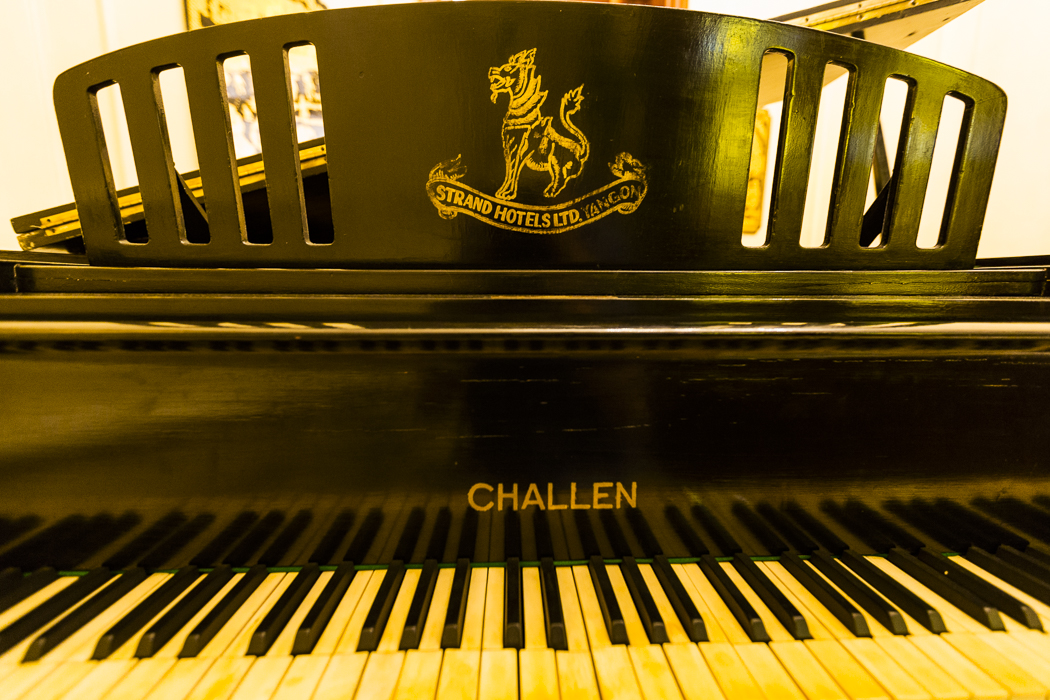
The Strand Baby Grand.


The government owned the hotel, as it did nearly everything else. Industries were all nationalised. The manager, Peter Aratoon, the previous part-owner, did his best to maintain standards until he retired in 1971 but it was a losing battle. Burma became isolated from the rest of the World for half a century. Few people visited and the hotel declined rapidly. The fridges and plumbing ceased to work, water in the bathrooms hardly existed and bats and rats took over the lobby. But the Strand Hotel was a formidable woman and you can’t keep a good woman down.

LIVING THE RANGOON DREAM
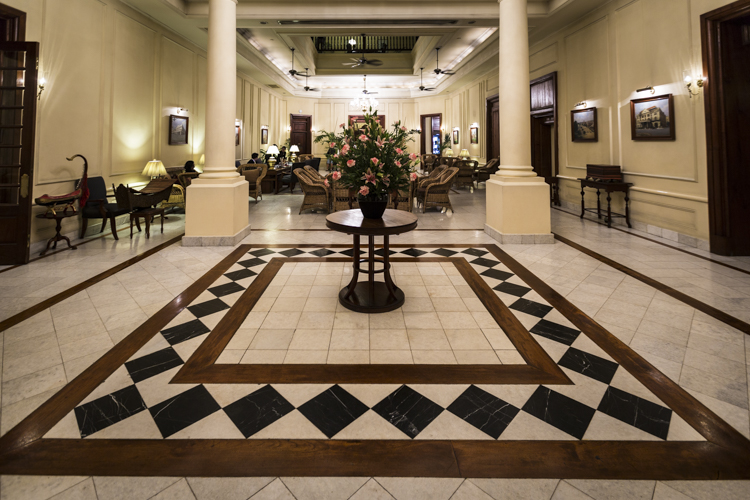
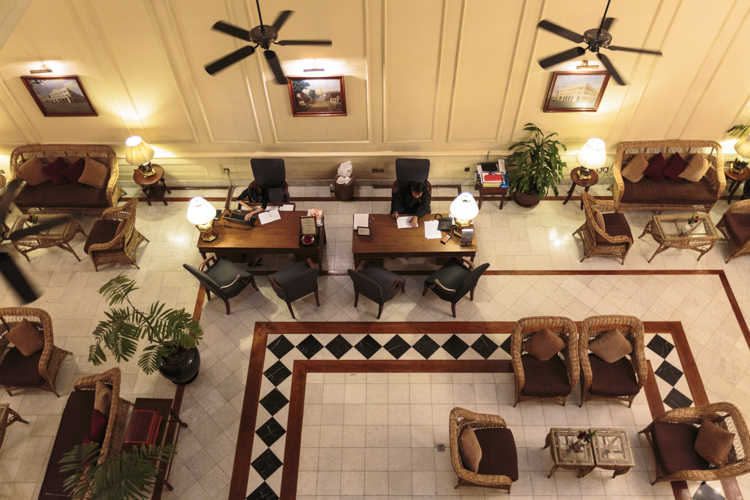
The Lobby Lounge, The Strand, Yangon.


The Strand’s fortunes were to be transformed and, hard though it was to believe in the 1970s and 1980s, the hotel was destined to become one of the grandest hotels in the World. It was in for a spectacular reincarnation when Bernard Pe-Win, the manager of American Express in Yangon (as Rangoon was now called), Adrian Zecha, the leading Asian hotelier, and other foreign investors entered into a 50/50 joint venture with the Burmese government in 1989.

LIVING THE RANGOON DREAM
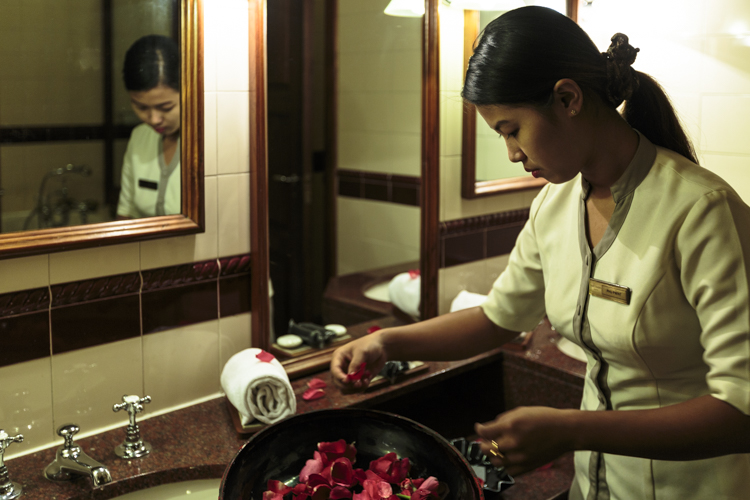
The Spa, The Strand, Yangon.


They closed the hotel for three years and spent millions of dollars, going way over budget, creating thirty-two suites, where previously there were 100 rooms, renovating the hotel from top to bottom, training the staff, and opening on 4 November 1993.

LIVING THE RANGOON DREAM
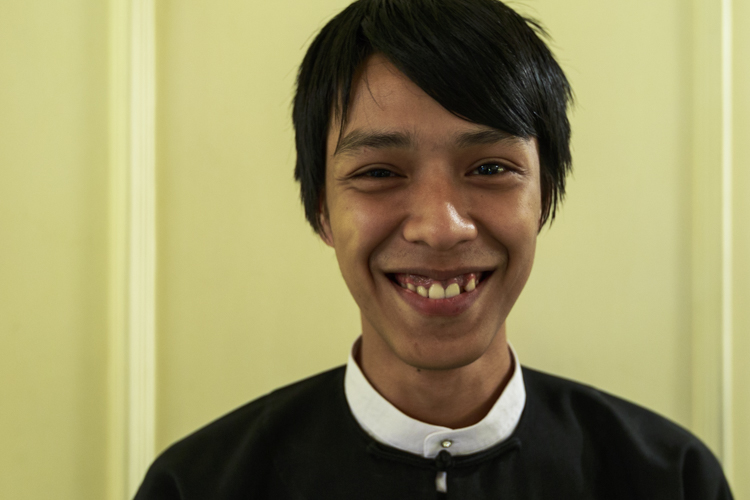
Enthusiastic Kyaw Yar Zar Tun deals efficiently with check ins.


LIVING THE RANGOON DREAM
Kyaw Yar Zar Tun’s Check in Desk, The Strand, Yangon.


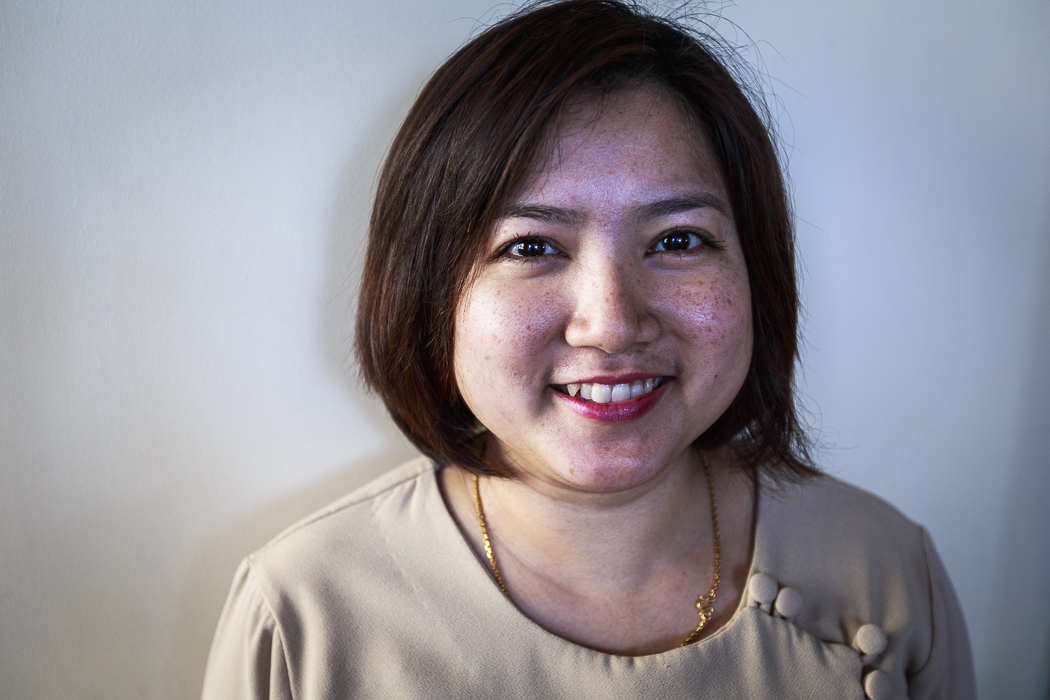
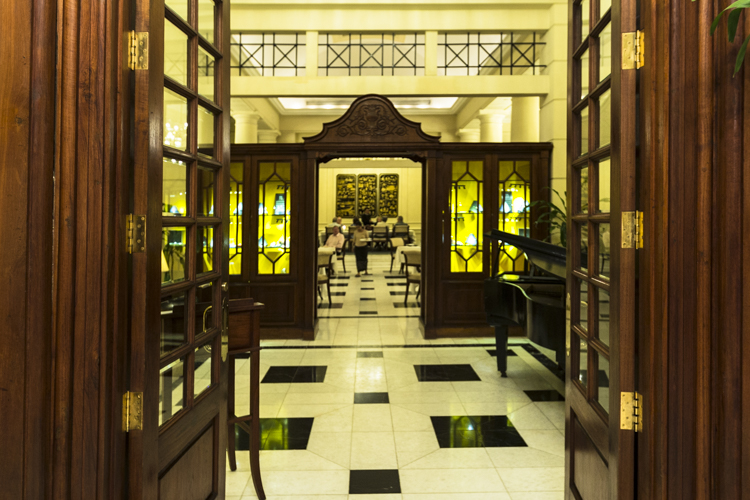
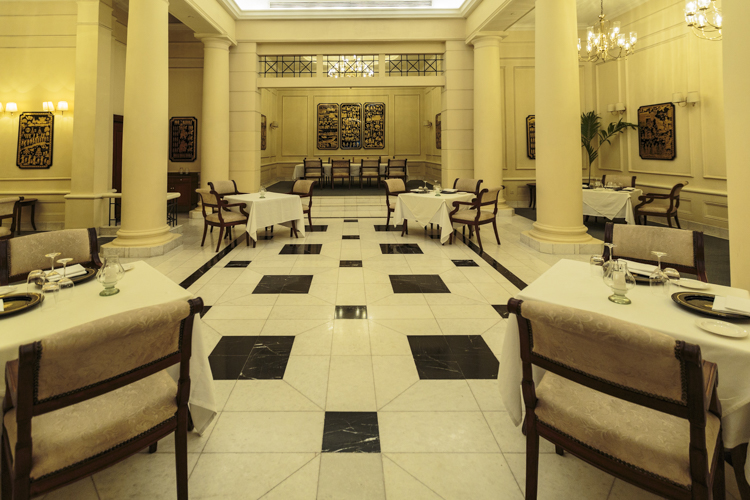
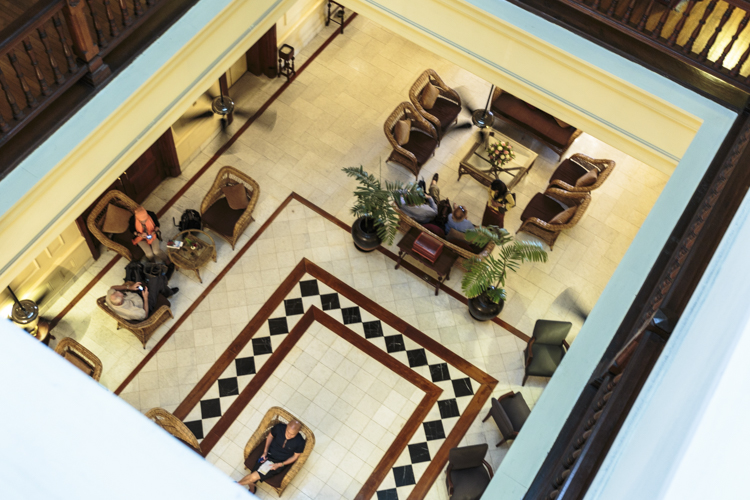
Now, you enter a magnificent, jaw-droppingly beautiful, well-proportioned, black and white marble-tiled lobby, full of flowers, potted plants and rattan furniture, where plentiful, smiling, Burmese-clad staff rush to fulfil your every need, while a Burmese musician plays traditional xylophone softly in the background. If you are lucky, Kyaw Yar Zar Tun will check you in.

LIVING THE RANGOON DREAM
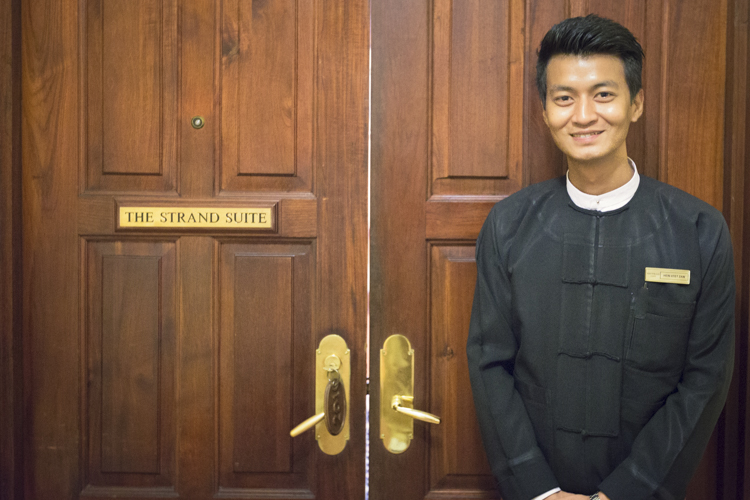
Hein Htet Zaw, 24 hour Butler, Strand Suite, The Strand, Yangon.
 

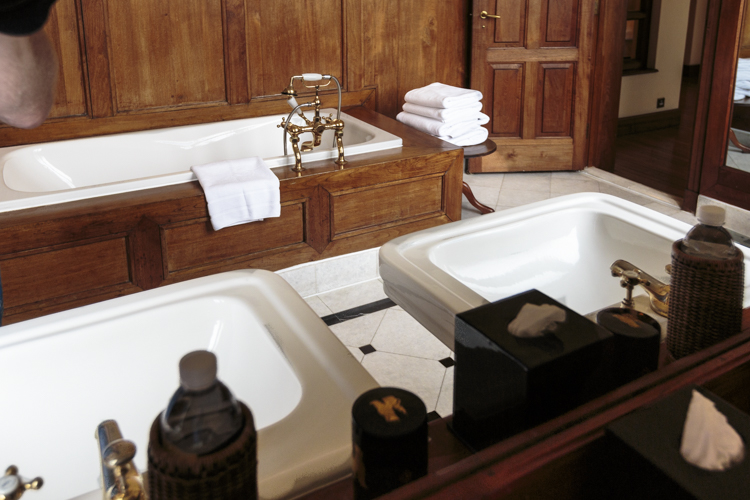
The hotel has 110 tons of teak. The bathrooms are full of marble, old-fashioned taps and water pressure is impressive. The staircases are thickly carpeted in red and decorated with Burmese Kalaga tapestries. And, of course, there’s a Spa.

LIVING THE RANGOON DREAM
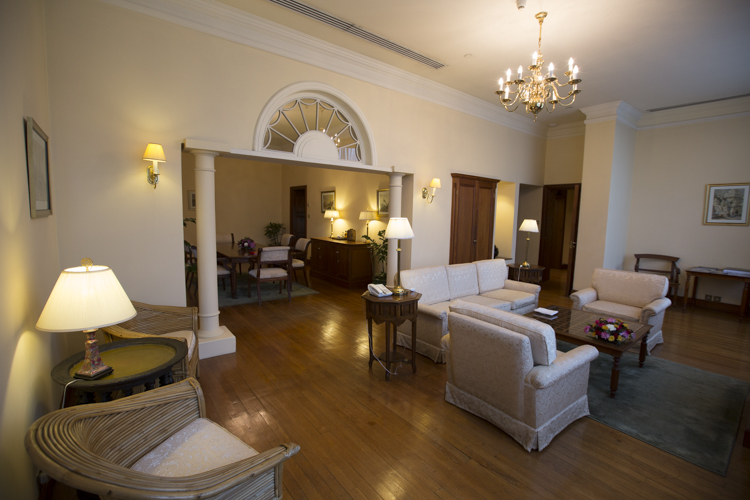
The elegant Strand Suite, The Strand, Yangon.


LIVING THE RANGOON DREAM
The Bathroom, Strand Suite, The Strand, Yangon.
 
LIVING THE RANGOON DREAM
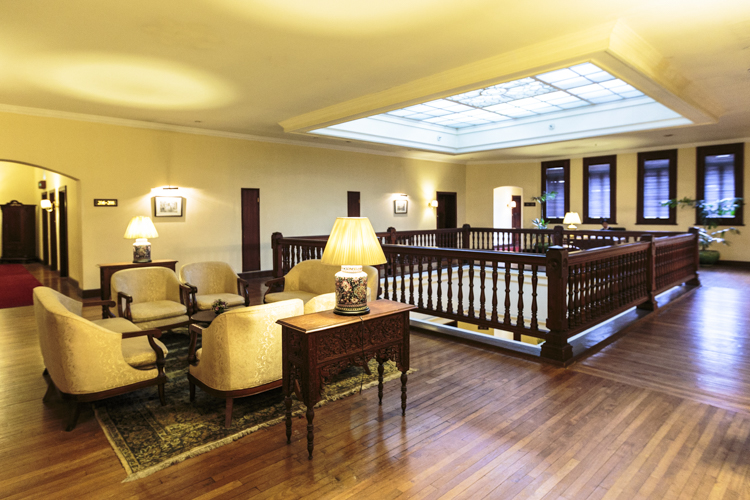
The Upper Floor, The Strand, Yangon.


The hotel is only three stories high and the bedrooms are on the upper two floors, each guest enjoying 24-hours a day butler service. The elegant Strand Suite on the upper floor, where Mick Jagger, Jimmy Carter and other celebrities have stayed, has its own hall, sitting room, dining room, kitchen, study, and separate staff entrance.

LIVING THE RANGOON DREAM
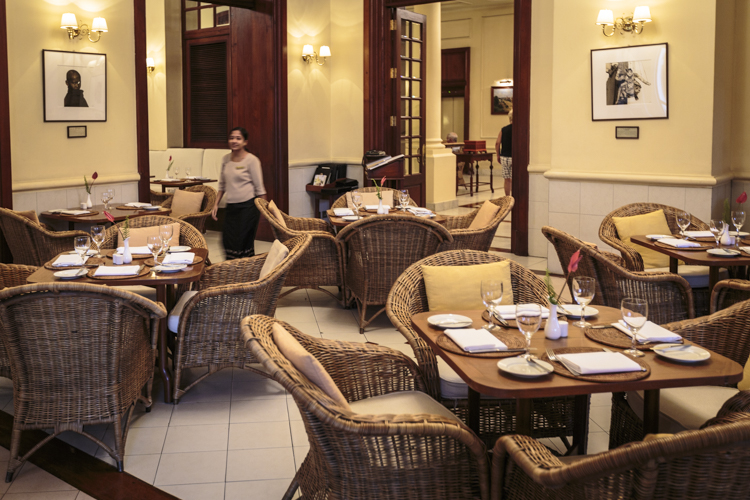
The Strand Café, The Strand, Yangon.


To the left of the entrance is the Strand Café, which serves the best breakfasts in town. Try the wonderful varieties of freshly baked bread, the French toast with honey and the excellent Mohinga, Burma’s most famous dish, a lemongrass and ginger infused rich fish soup with rice noodles, fresh coriander, shallots, fresh lime, crushed dried chilli, crisp fried split chickpeas, spring onions and boiled egg.  Khaing Chin will take your order with a broad smile. The Strand Afternoon Tea is also a great treat.

LIVING THE RANGOON DREAM
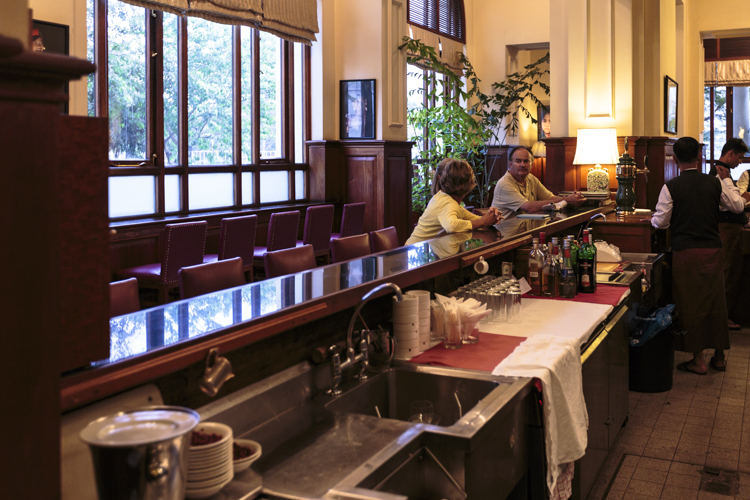
The Strand Bar, The Strand, Yangon.


To the right is the popular Strand Bar, with its billiards table at the rear, and half-priced drinks all Friday evening, and not a Japanese horse in sight.
 
LIVING THE RANGOON DREAM
The Strand Grill Entrance, The Strand, Yangon.


LIVING THE RANGOON DREAM
The Strand Grill, The Strand, Yangon emanates Victorian splendour.

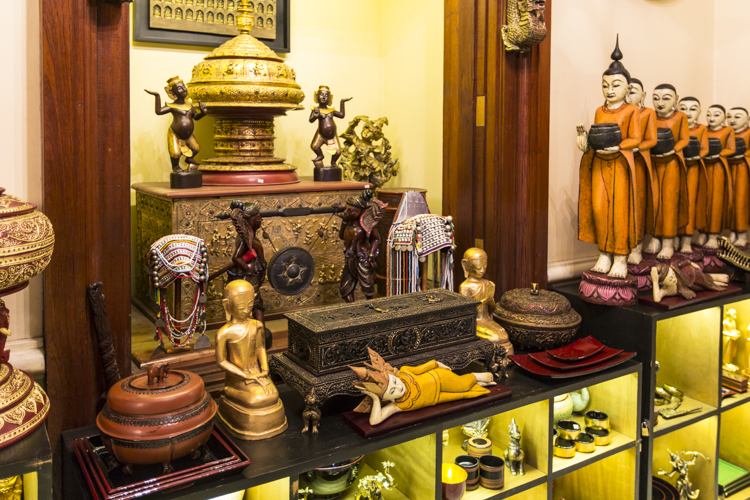
At the far end is the formal restaurant, the Strand Grill, serving Western food and behind is the River Gallery, an interesting modern art gallery, jewelry and craft shops, where everything is mellow and there are no hard sells – and in this section there remains part of the old original hotel, closed for over a quarter of a century. It will shortly be renovated and brought back into the mainstream.

LIVING THE RANGOON DREAM
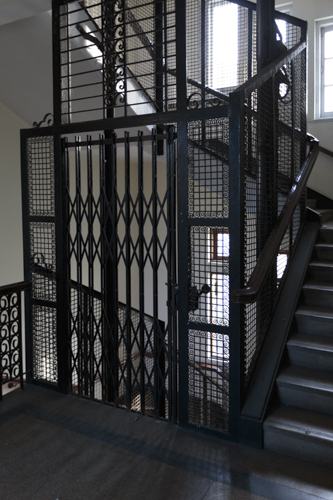
The old Lift, The Strand, Yangon.


The old wrought iron lift is still there, no longer in use, but hopefully will be brought back into service as part of the renovation works.

LIVING THE RANGOON DREAM
The Strand Boutique, The Strand, Yangon.
 

I loved living the dream, but you don’t need to stay. Everyone is very welcome to visit. The smiling staff are, without exception, charming and helpful. Everything, including the internet, worked well. I have a small hotel in Ubud, Bali, and know how difficult it is to keep the show on the road with everything working seamlessly, smoothly and well, so I am very impressed, and am already looking forward to my next trip.

LIVING THE RANGOON DREAM
River Gallery, The Strand, Yangon.


LIVING THE RANGOON DREAM
The Strand Lobby, Yangon.

The Strand is now over a century old, a highly respected grande dame rather than the formidable old woman of yore. It’s currently in the very safe and experienced hands of Philippe Delaloye, the Swiss General Manager. You will see him, tall, handsome and presiding lovingly over the whole affair in the lobby in the mornings, bringing that unbeatable combination of Western and Asian hospitality together in one magnificent creation and making the Strand one of the Great Hotels of the World.


© Text by Ni Wayan Murni, who founded and owns Murni’s Warung, the first international restaurant in Ubud, Bali and Murni’s Houses, Murni’s Warung Shop and Tamarind Spa. Her web site is www.murnis.com and you can contact her on murni@murnis.com

© Photographs by Jonathan Copeland, who is a freelance photographer and writer. His photography web site is www.jonathaninbali.com


The Photographer’s Post-Production Lightroom Video Tutorials

The Photographer’s Post-Production Lightroom Video Tutorials


I am very pleased to report that Gavin Gough has just released a fantastic series of video tutorials on how to use the development capabilities of Lightroom. It is called The Photographer’s Post-Production Lightroom Video Tutorials and concentrates on developing images in the Develop module.

I really cannot praise the approach and content highly enough. I am reveling in putting it into practice. It is a great successor to the Photographer’s Workflow (see review below). To have both at one’s fingertips is a great benefit to any photographer. In fact, I would say they are indispensable.

There are 5 sections, Your Workspace, Colour, Tone, Atmosphere and Final Steps, which are subdivided into 20 short videos (ranging from 5.30 minutes to 15.42 minutes).

In each video Gavin presents a number of his own photographs and discusses how to use Lightroom to achieve the desired effects.

The first section Your Workspace deals with initial preparations before the real developing starts – he refers to a number of useful shortcuts, how to correct lens distortions, cropping and straightening.

Then the fun starts with the second section dealing with Colour. He shows how to ensure that as much detail as possible is retained in the image and remove chromatic aberration which can happen in cases of high contrast and how to decide on white balance, hue, saturation and luminance and finally how to work on split toning to achieve the right atmosphere. As an aside he explains how to create sepia and selenium images.

The third section deals with Tone, namely exposure, explaining how histograms work, tone curves and vignettes. He also teaches you how to create and store your own presets.

Section 4 deals with Atmosphere by explaining clarity and vibrance and a number of useful techniques for portraits, and those tools which can focus in on particular parts of the picture, rather than alter the whole thing. These are the gradient filter, radial filter and local adjustment brushes. In this section he also deals with processing black and white photos and looks at Lightroom’s black and white presets.

The final Section 5 is called Final Steps and deals with sharpening, which I always find difficult, removing dust spots, noise reduction caused by using high ISOs, and finally exporting the image.

To accompany the tutorials there is an ebook, which contains a summary of the final decisions Gavin made to his own photos, fifteen of which you can download yourself and work on and compare the results of your own work to his.

It’s a treasure trove. The Photographer’s Post-Production Lightroom Video Tutorials is at a very reasonable US$69 and can be obtained from http://www.gavingough.com/photo-postproduction

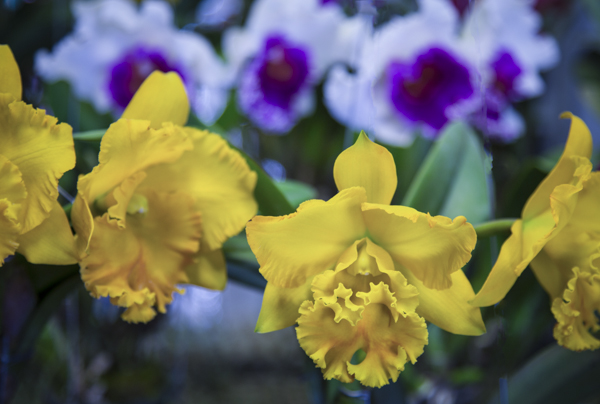
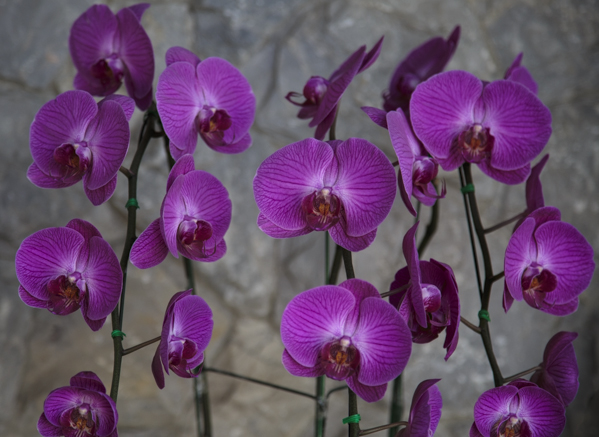
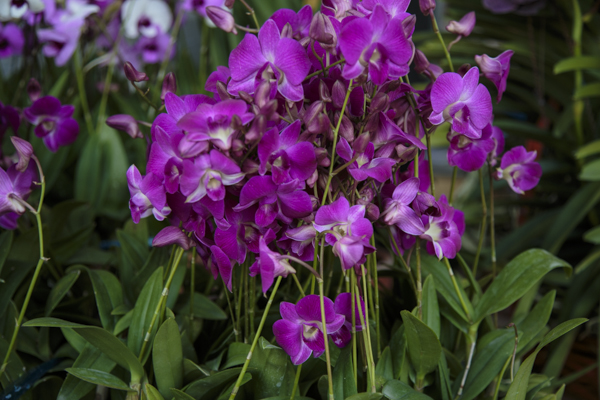
Orchids, Bangkok, Thailand

Orchids, Bangkok, Thailand

Or Tor Kor Market, Bangkok, Thailand has been voted as CNN’s 4th best fresh market in the World.

Located next to Bangkok’s busy Chatuchak weekend market, it is packed with exotic fruits and vegetables that are unique to Thailand, as well as imported specialties from around Asia.

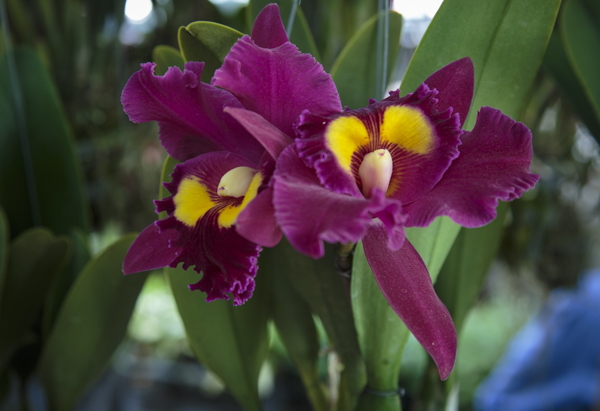
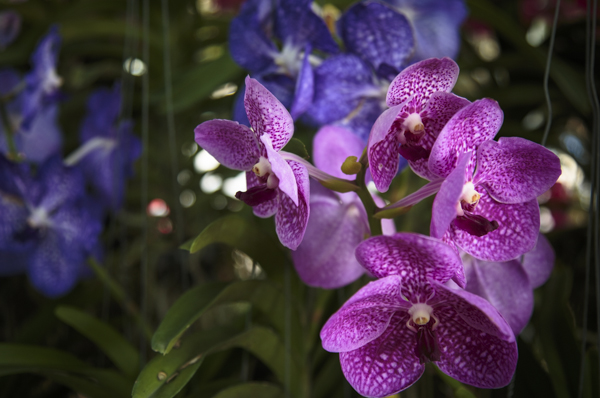
The market is immaculate and brightly lit, but it also has a wonderful garden section, full of orchids, small cacti and other tropical flowers.

Orchids, Bangkok, Thailand

Orchids, Bangkok, Thailand

Orchids, Bangkok, Thailand

Orchids, Bangkok, Thailand

Orchids, Bangkok, Thailand

Orchids, Bangkok, Thailand

Orchids, Bangkok, Thailand: there are more photographs at www.jonathaninbali.com

Happy Jewish New Year!


Happy Jewish New Year!
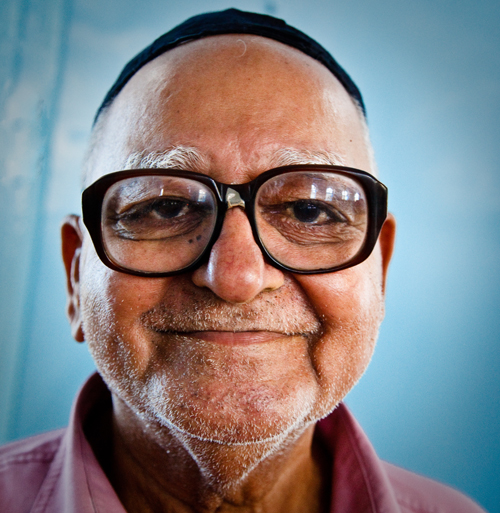
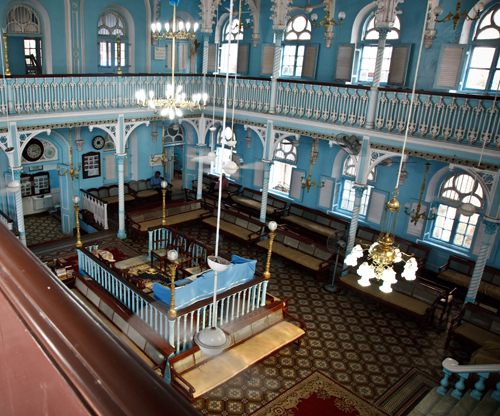
india_mumbai_knesseth_eli_yahoo_synagogue-man-Happy Jewish New YearHappy Jewish New Year!


Every Jewish New Year is special, but this time it is really special as it will never be repeated on this date again, well not for a long time..


The last time Rosh Hashanah came this early was 1899 and the next time will be 2089.


india_mumbai_knesseth_eli_yahoo_synagogue-man-Happy Jewish New YearKnesseth Eli Yahoo Synagogue, Mumbai, India.
 

Even more bizarre is that the first day of Hannukah – Thursday, November 28, 2013 – is also Thanksgiving – and that won’t be repeated until the year 79,811!


india_mumbai_knesseth_eli_yahoo_synagogue-man-Happy Jewish New YearKnesseth Eli Yahoo Synagogue, Mumbai, India.


Shana tovah u’metukah, (Hebrew for “a good and sweet new year”).


There are more photographs on www.jonathaninbali.com

Happy Independence Day, Indonesia

Happy Independence Day, Indonesia

independence-day_ubud

After a long struggle, on 27 December 1949, the Dutch finally recognised Indonesia as an independent state and transferred sovereignty to the Republic of the United States of Indonesia. On 17 August 1950, which was the fifth anniversary of the declaration of Independence, the country was proclaimed the Republic of Indonesia. President Sukarno became the first President of Indonesia and Mohammad Hatta, a highly effective Minangkabau economist from Sumatra, became prime minister.

Indonesia always claimed that the date of independence was 17 August 1945 but the Dutch insisted that the date was 27 December 1949.

In August 2005 the Dutch accepted the 1945 date.

The story of the struggle is told in our book Secrets of Bali, Fresh Light on the Morning of the World, now available as an ebook for immediate downloading.

Happy Independence Day, Indonesia! There are more photographs on www.jonathaninbali.com

Friendly Ubud, Bali, Indonesia

Friendly Ubud, Bali, Indonesia
bali-ubud-policelady-1
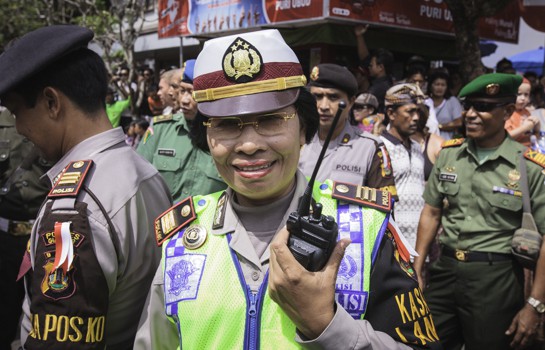
Even the Cops are friendly.

46,000 readers of Conde-Nast Traveler, the world’s premier travel magazine, have just voted Ubud the 9th friendliest city in the World. In 2010 the majority of 25,000 of its readers voted Ubud the “Best City in Asia.”

I’m not sure Ubud is a city, I’m not even sure that it is a town, nevertheless the accolades are very welcome. Only a couple of cities – in Bhutan and Mandalay – beat my home town/city/village in Asia.

Friendly Ubud, Bali, Indonesia. There are more photographs on www.jonathaninbali.com

Queen Sirikit’s Birthday, Bangkok, Thailand
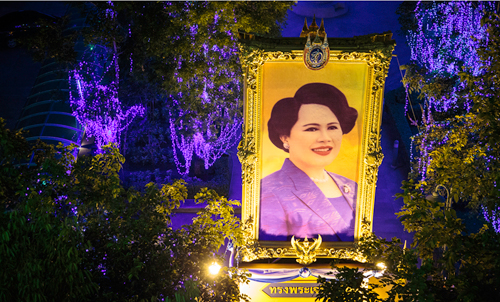
Queen Sirikit's BirthdayQueen Sirikit’s Birthday, Bangkok, Thailand


It’s Queen Sirikit’s 81st birthday today.  She and King Bhumibol left hospital a few days ago and are celebrating in Hua Hin. The rest of the country is celebrating too and the place is full of posters. It’s also Thailand’s Mother’s Day and a national holiday.


Their story is like a fairy tale. On a trip to Paris Bhumibol met the outstandingly beautiful 17-year old daughter of a Siamese diplomat. He could trace his ancestry back to the early 13th century kingdom of Sukhotai. Sirikit was studying classical music, he loved jazz and they spoke French together.

In October 1948 Bhumibol was involved in a bad pile up and she looked after him. They got engaged in July 1949 and married in 1950.

More details in our forthcoming book on Bangkok.

Queen Sirikit’s Birthday, Bangkok, Thailand. There are more photographs on www.jonathaninbali.com

Ambling in Amed, East Bali

Last week we went to Amed.
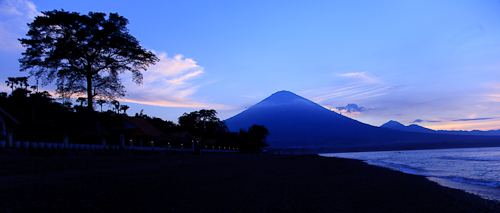
Ambling in Amed

Murni and I were with Southeast Asian textiles’ expert Dr Linda McIntosh and we were on a mission.
 

Ambling in Amed

The mission was to scout out places to bring a small select group of textile enthusiasts to.
 

Ambling in Amed

We needed to find interesting weavers and dyers, who were still using and creating natural dyes, and trying to maintain the old traditions, which are in danger of dying out and disappearing.
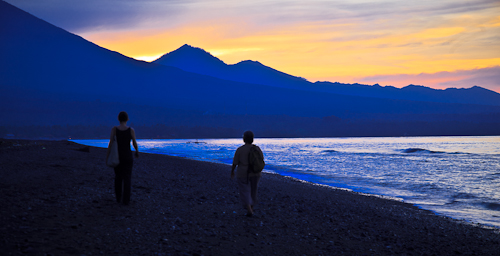
Ambling in Amed

We got up before sunrise and set off in search of textile producers.
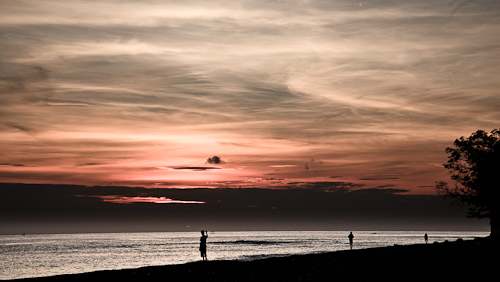
Ambling in Amed

We saw some amazing sights.

Ambling in Amed

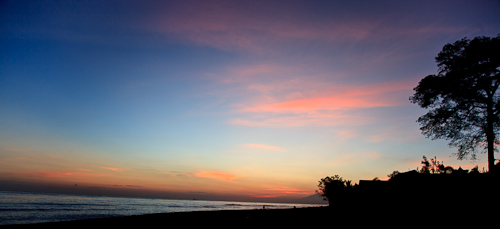
‘To learn the magic of light get up before sunrise and watch’ – Ted Grant – and we did.
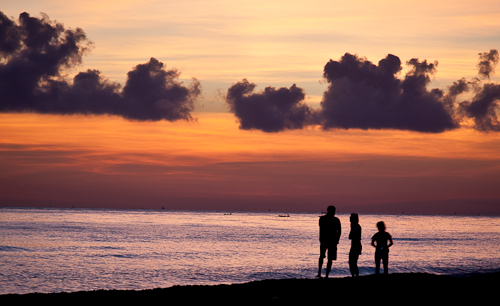
Ambling in Amed

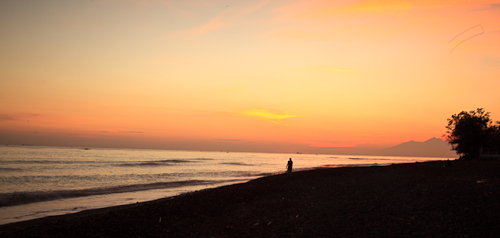
David Young said, ‘It is the photographing of ordinary things, in extraordinary light, which results in extraordinary photographs.’  We stayed 3 days and the light was different everyday and every minute of everyday. It was all extraordinary.
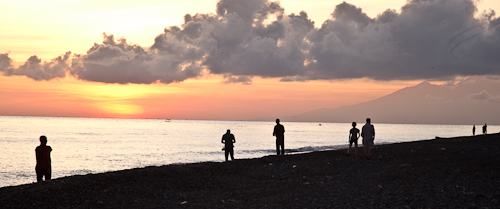
 

Ambling in Amed

Mission accomplished, we have launched and invite those interested in textiles and culture to join Murni’s Textile and Cultural Tour at Murni’s Houses.

Ambling in Amed, East Bali. There are more photographs on www.jonathaninbali.com

A Walk on the Wild Side, Ubud, Bali

It’s easy to get off the beaten track in Ubud.  A Walk on the Wild Side, Ubud, Bali follows.
 

A WALK ON THE WILD SIDE, UBUD, BALI


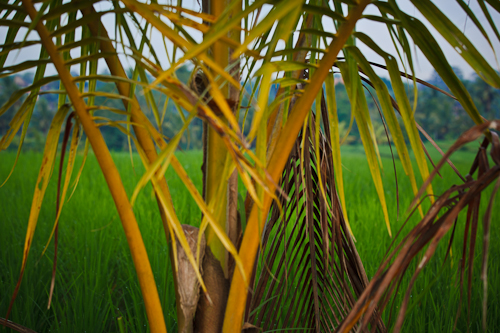
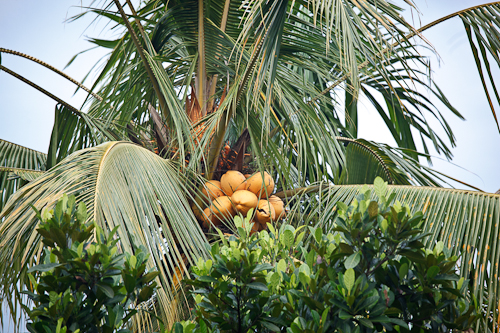
Recently Murni and I took  two of our guests at Murni’s Houses for a walk on the wild side. It only took five minutes to be in the rice paddies and amongst the coconut and palm trees. It’s on our doorstep.
 

A WALK ON THE WILD SIDE, UBUD, BALI


We got up at 7 am. It was already light and the temperature was wonderfully cool.  Wildlife and humans were stirring.

 

A WALK ON THE WILD SIDE, UBUD, BALI


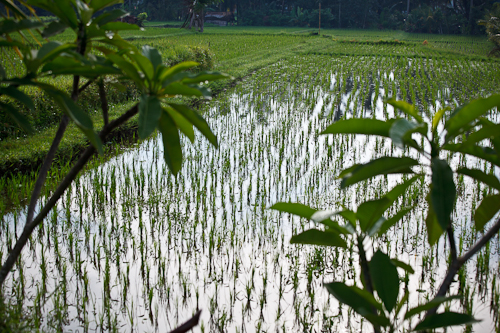
We walked down the slope to the main road, crossed over and we were soon surrounded by a thousand shades of green.
 

A WALK ON THE WILD SIDE, UBUD, BALI


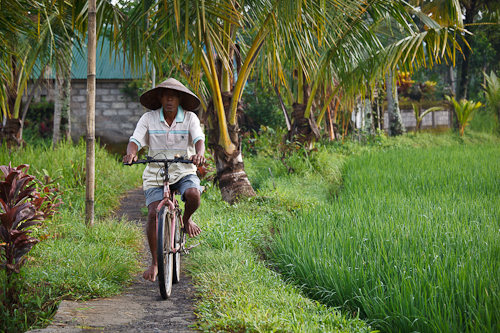
There were people going to work on their bicycles…
 

A WALK ON THE WILD SIDE, UBUD, BALI


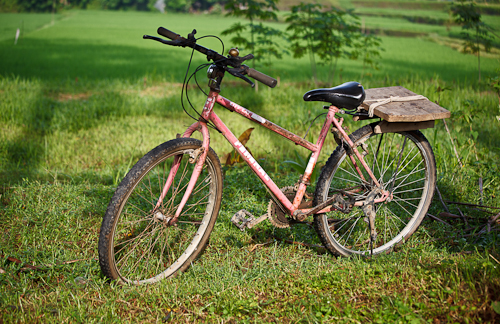
and bicycles just waiting for the owners to take them for a spin.
 

A WALK ON THE WILD SIDE, UBUD, BALI


There were geometric shapes.


A WALK ON THE WILD SIDE, UBUD, BALI

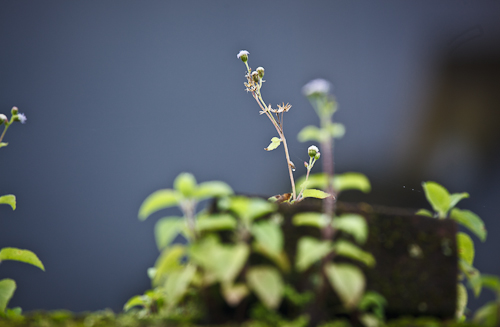
… and if you looked carefully new life was bursting forth.
 

Do you know an actress here who has a great English accent who might like to narrate audio versions of the books?


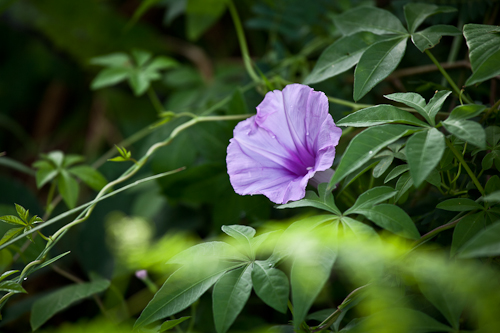
Wildflowers add a touch of colour to the overwhelming green backdrop.
 

Do you know an actress here who has a great English accent who might like to narrate audio versions of the books?


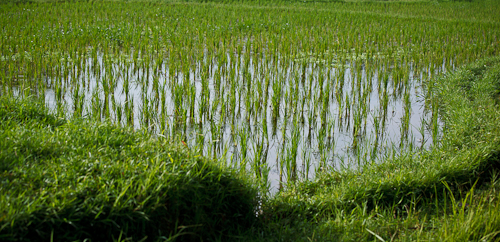
Works of art in the shape of rice paddies reflected the sky above and hard labour below, and centuries of it.
 

Do you know an actress here who has a great English accent who might like to narrate audio versions of the books?


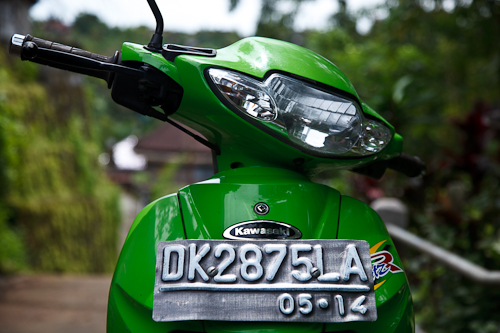
After several hours we were back to the modern world of cars and motorbikes, but at least the first motortbike was green.
 

Do you know an actress here who has a great English accent who might like to narrate audio versions of the books?


There’s more about Rice in Secrets of Bali.


A Walk on the Wild Side, Ubud, Bali. There are more photographs on www.jonathaninbali.com

Mask Ceremony, Ubud, Bali

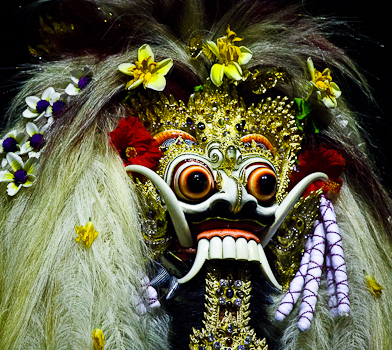
Mask Ceremony, Ubud, Bali. Last month the whole community in Ubud attended an unusual ceremony.
 

Mask Ceremony, Ubud, Bali
Balinese mask

Mask Ceremony, Ubud, Bali.

Balinese masks take many forms and are usually carved from a special,  fine-grained, cream-coloured, light wood called pule (alstonia scholaris), which grows in graveyards. Two of the masks in question came from a pule tree in the graveyard near Murni’s Houses and the other from another graveyard in Peliatan at the other end of Ubud.
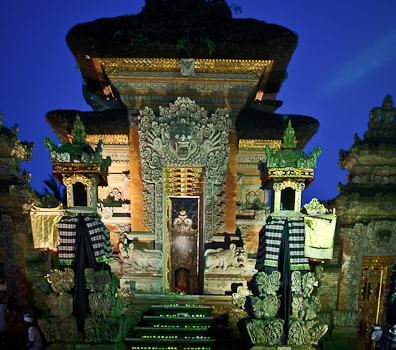
 

Gate to Pura Dalem, Ubud, Bali.


The tree must be ‘pregnant’, that is to say ready and suitable for carving, evidenced by the bark swelling slightly outwards. The mask maker goes to the tree on an auspicious day, presents his offerings and requests the tree’s permission. He then chops a slab of wood with his axe and takes it back and waits for inspiration.

They are kept in special shrines and receive offerings every full and new moon, on Kajeng-Kliwon, which is every fifteen days, and also when they are used. In addition, they get special offerings on a day known as Tumpek Krulut, which occurs every 210 days.
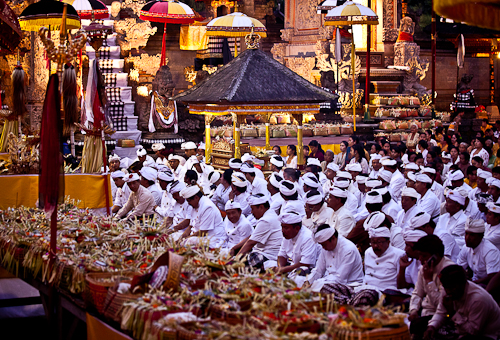
 

Pura Dalem, Ubud, Bali.


The night before the big night the community prayed in Pura Dalem, the temple associated with the dead, and where the masks were kept. In front of them were thousands of offerings.
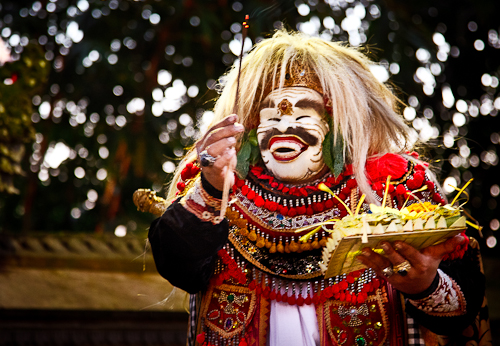
 

Sidakarya dancer at Pura Dalem, Ubud, Bali


Outside the main courtyard was a sole dancer. It was Sidhakarya – the same masked dance as one of the three masks that were the subject of the ceremony.


Balinese masks are of ancient origin and act like a lightning rod in the sense that they attract the spirit of the person to be portrayed. They are the vehicles of the gods and are sacred.
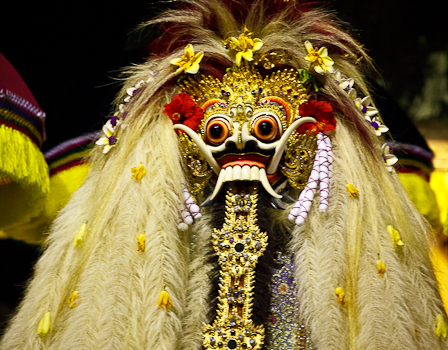
 

White haired Rangda Mask.


There were three masks involved in the ceremony at Pura Dalem. There was Sidhakarya  and two Rangda masks, one white haired and one red-brown haired.
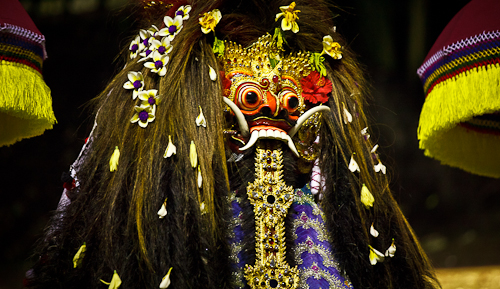
 

Red-brown haired Rangda Mask.


Rangda is the Queen of the Witches, tall and has tusks. Some temples have two Rangda masks, one red and the other white. The red one represents the more dangerous Rangda. The white one stresses her royal birth—some say Rangda is based on the 11th century Princess Mahendradatta.
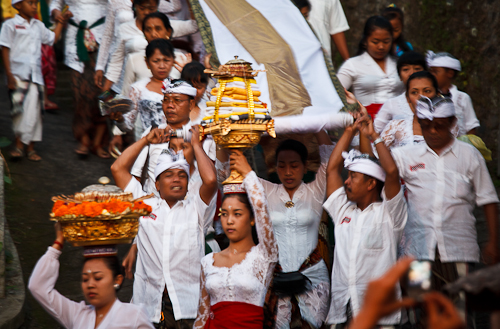
 

Procession to Pura Gunung Lebah, Campuan, Bali.


The night before the main night the masks were carried down to the sacred Wos river in Campuhan for a purification ceremony at the temple known as Pura Gunung Lebah.
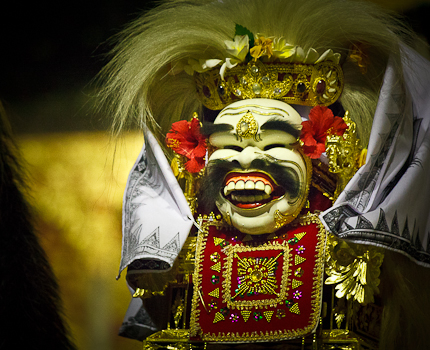
 

Sidhakarya Mask in Pura Gunung Lebah, Campuan, Bali.


The main night involved a procession along the main street of Ubud to the temple in Peliatan as the wood for the other mask came from the graveyard in Peliatan and then they went back to the graveyard in Ubud. It was after midnight and dark. The graveyard was packed and the three masks were surrounded by priests. All lights were turned off and the crowd was asked to leave while the priests stayed with the masks waiting for a sign that the gods approved. Such a sign would be lights falling from the sky. There was approval.


There’s more about Balinese Masks, Ceremonies, Sidhakarya and Rangda in Secrets of Bali.


There are more photographs on www.jonathaninbali.com


Balinese Masks are available at Murni’s Warung Shop and on line.


Mask Ceremony, Ubud, Bali.


Kuningan in Ubud, Bali

Today is Kuningan in Ubud, Bali, which is the last day of the 10 day holiday beginning on Galungan when the gods descend and are present. Today the gods leave Bali.
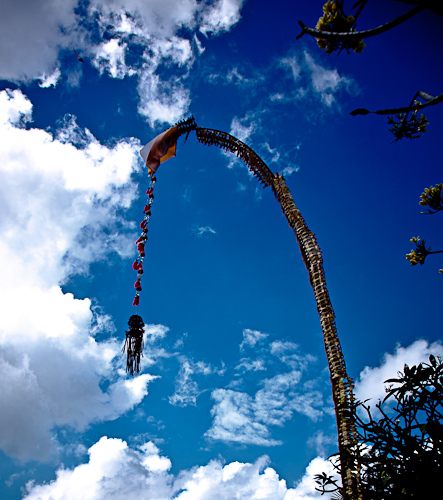
 

Kuningan in Ubud


The roads are decorated, shrines are covered in glorious textiles and statues are dressed.
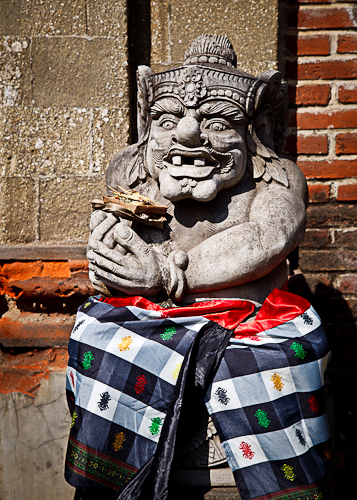
 

Kuningan in Ubud
Kuningan in Ubud


The Balinese pray at their temples and shrines. It’s an  important and happy day.
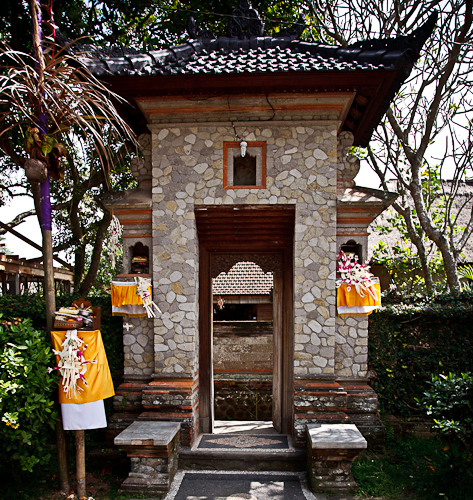
 

Kuningan in Ubud


Murni’s Warung was closed as the Balinese staff are all too busy to work. So I left Murni’s Houses to walk into town for lunch. I looked back at the large Balinese gate and admired the penjor, the large bamboo pole, which is symbolic on many levels, and the offerings stuffed into the niches on either side of the door.
 

Kuningan in Ubud


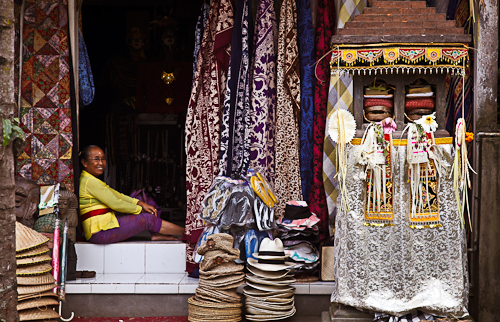
Walking down the main street I photographed a few shrines and the shop where I’ve often bought udeng, the Balinese headdress for men, from the old lady, who also sells hats. She’s always smiling. She had  a rather nice double shrine.
 

Kuningan in Ubud


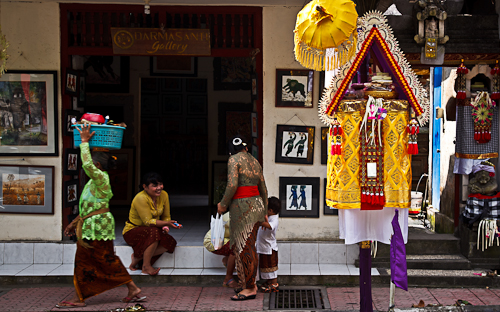
A little further down shop girls were chatting happily as a lady went about her business carrying a plastic container on her head.
 

Kuningan in Ubud


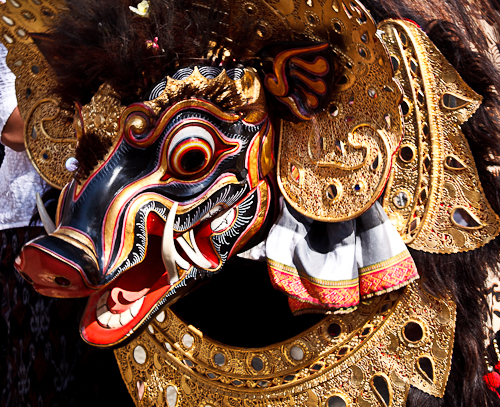
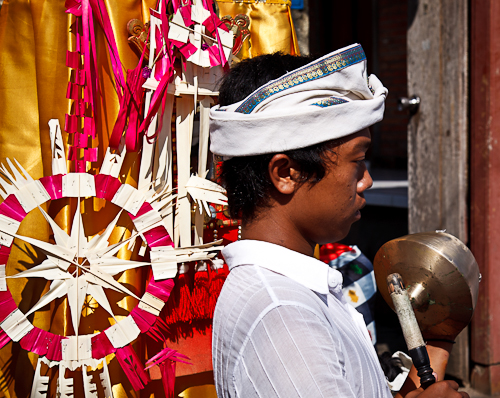
Throughout this period Barongs parade along the streets, always accompanied by umbrellas and music.
 

Kuningan in Ubud


I mentioned in an earlier post that there are different types of Barong. This one is the pig Barong.

I decided to follow it and soon it stopped in front of a house and danced bringing good luck to the family who lived there.
 

Kuningan in Ubud


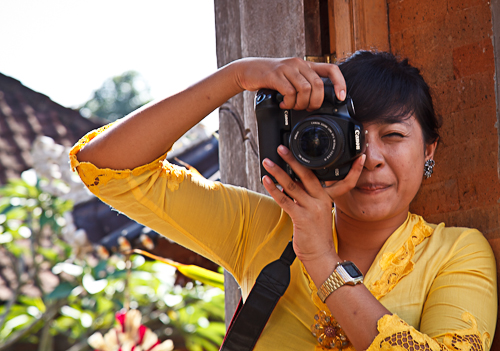
I spotted a Balinese girl photographing me. We became friends and she invited me into her home to see her family temple and meet the family. Photography is like that.

The family temple was a beautiful one with magnificently decorated shrines.

But better than that there were several generations of welcoming people.
 

Kuningan in Ubud


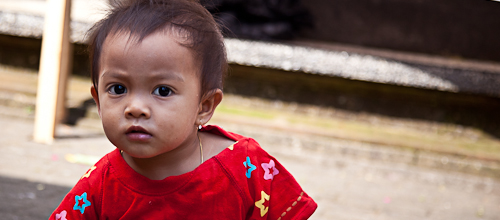
The youngest member was intrigued to see a large, ungainly foreigner wander in.
 

Kuningan in Ubud


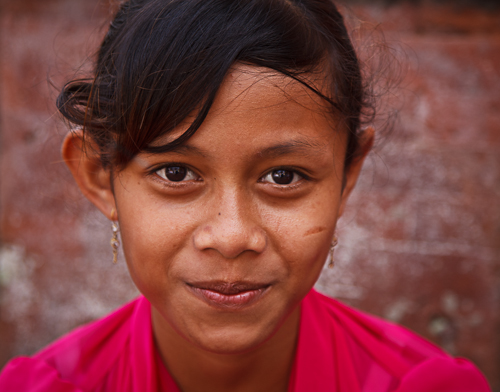
His sister was  more comfortable with the intruder and slightly bemused.
 

Kuningan in Ubud


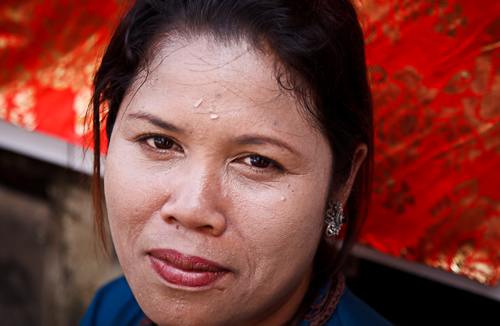
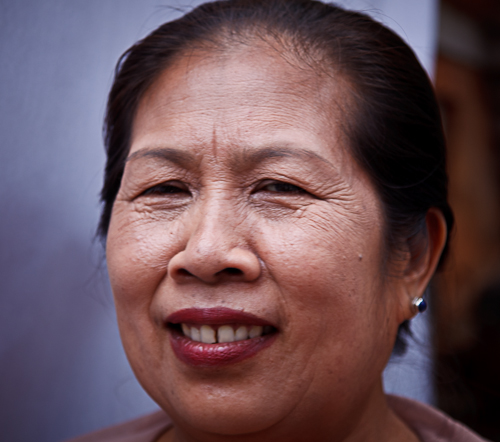
His aunt had eyes that looked right through you and melted your heart.
 

Kuningan in Ubud

His mother was proud and smiley.


Kuningan in Ubud


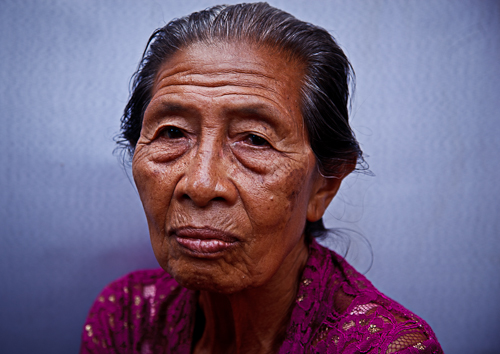
His grandmother had a wonderful, wise and kindly face.
 

Kuningan in Ubud


Her friend was sitting beside her.

There’s more about Galungan, Kuningan and Barongs in Secrets of Bali.


Kuningan in Ubud, Bali.  There are more photographs on www.jonathaninbali.com

New Spa Ceremony in Ubud, Bali
New Spa Ceremony in Ubud


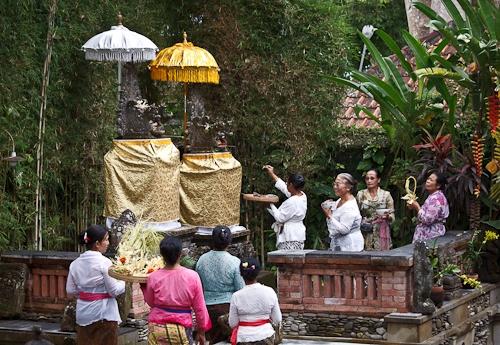
1st June was not just a day, it was an auspicious day, and it was not just an auspicious day, it was a triply auspicious day. Perfect for a New Spa Ceremony in Ubud, Bali.

The Balinese believe in auspicious days. They are coincidence days, rather like Friday 13th.
 

New Spa Ceremony in Ubud


So 1st June was a very good day to have the blessing for the opening of Tamarind Spa at Murni’s Houses, Ubud, Bali.
The weather was glorious, which made it a quadruply auspicious day.
 

New Spa Ceremony in Ubud


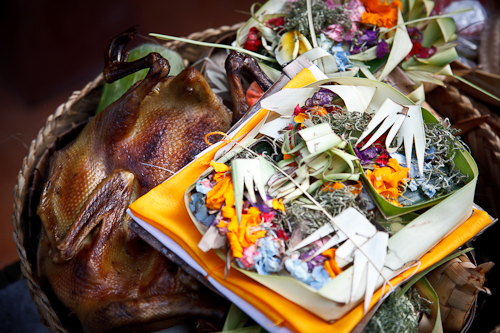
Early in the morning Murni and her family and friends prepared the numerous offerings of fruit and flowers, rice and spices, and I even noticed a cooked chicken.
 

New Spa Ceremony in Ubud


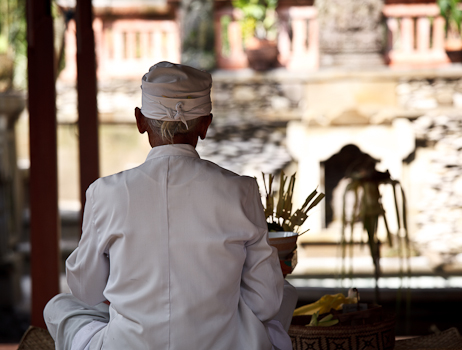
On such days the priests are very busy carrying out ceremonies. We were lucky that he showed up around noon, which made it more challenging for photographs.
 

New Spa Ceremony in Ubud


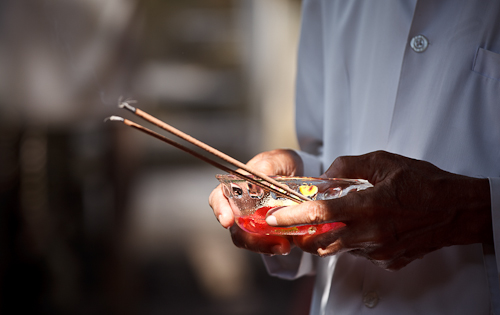
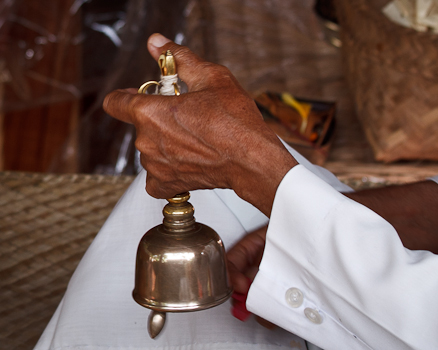
He brought his bell, which resonated throughout, and his mantras, and his mudras, which are sacred hand gestures.


New Spa Ceremony in Ubud


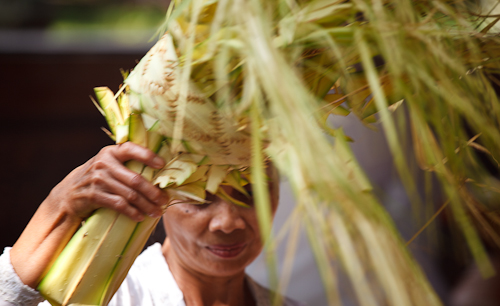
The women sprinkled holy water over every corner of the spa, both inside and out. Balinese Hinduism is not called the holy water religion for nothing.


New Spa Ceremony in Ubud

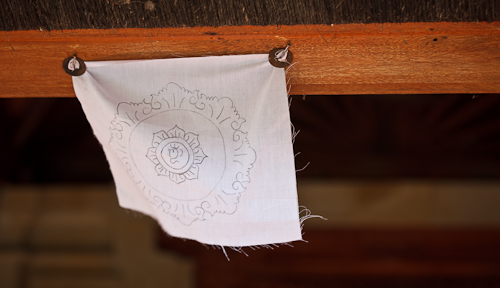
A piece of cloth with magical symbols for protection was attached to the eaves, never to be removed.


New Spa Ceremony in Ubud

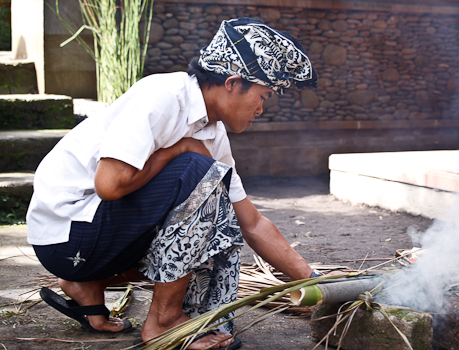
A bamboo pole was burnt over a small fire until it exploded frightening away any malevolent spirits that might have been lurking about.


New Spa Ceremony in Ubud

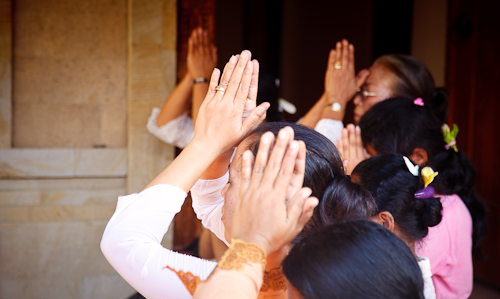
After a couple of hours of mantras, ringing bells, and prayers, the ceremony was over and the spa had received the blessing of the gods and was ready to welcome guests.

There are more photographs of New Spa Ceremony in Ubud, Bali a  on www.jonathaninbali.com


There are chapters on Balinese Hinduism, Balinese Calendars, Balinese Ceremonies and Offerings in Secrets of Bali.

The Tarot Reader of Ubud
The Tarot Reader of Ubud


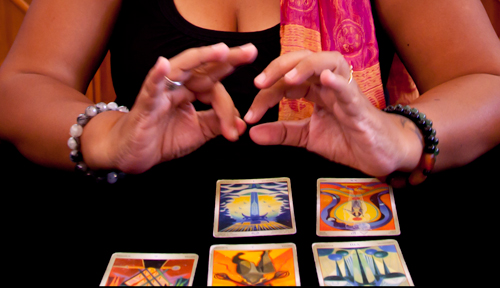
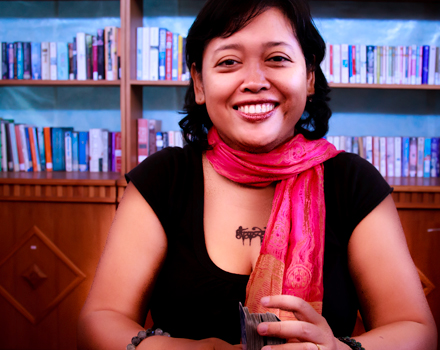
It’s not every day that you meet a tarot reader, and certainly not every day that you meet one  in Ubud, and especially not one who advises top government ministers. Meet The Tarot Reader of Ubud.
 

The Tarot Reader of Ubud


It is not unusual in Asian countries for government decisions to be cleared first by people who have extraordinary powers.
 

The Tarot Reader of Ubud


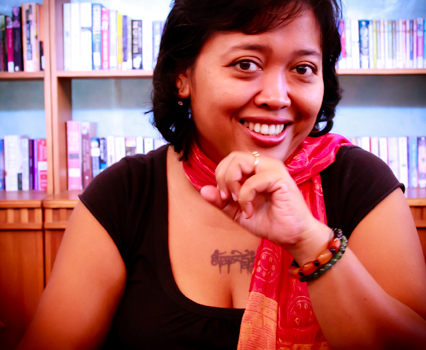
It would be an interesting academic study to research their influence on world events.
 

The Tarot Reader of Ubud


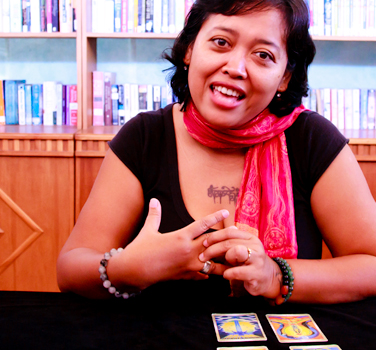
We are extremely lucky to have met Novi, who is very down to earth, a teacher, mother and author (I think in that order).
 

The Tarot Reader of Ubud


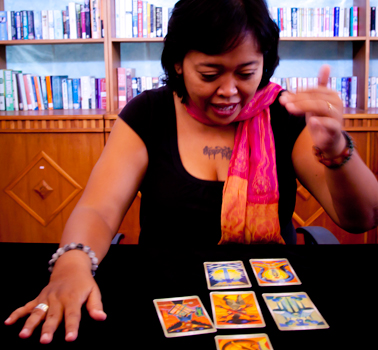
She has agreed to take time out of her hyperactive schedule to give tarot readings to guests staying at Murni’s Houses. She allowed me to pick up the camera as she revealed some extraordinary truths about myself.

There are more photographs of The Tarot Reader of Ubud  on www.jonathaninbali.com

The Barongs of Bali
The Barongs of Bali


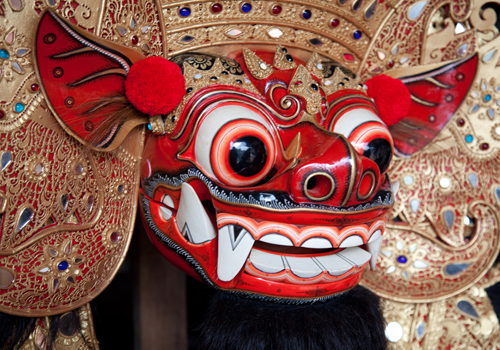
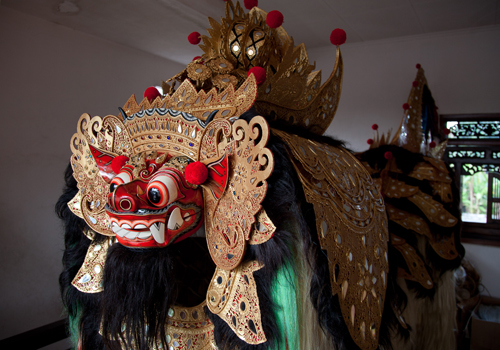
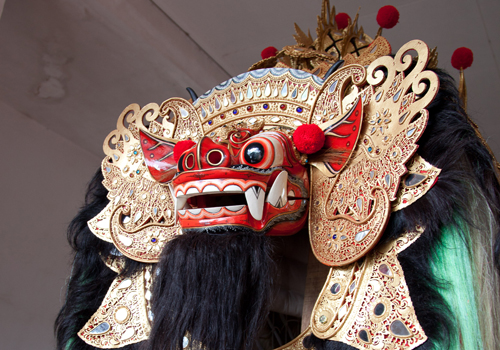
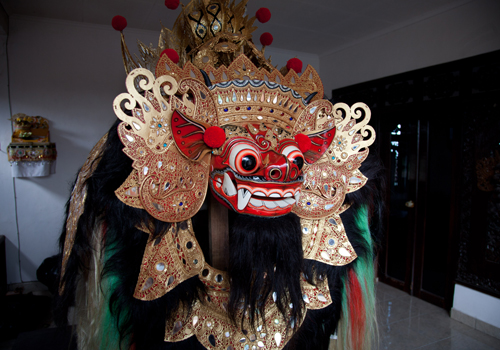
The Barong is unique to Bali and every time you see one it’s exciting. As you can see, they look life-like. They have spirit and come in various forms, the most common one being the Barong Ket. They symbolize Bali. Murni’s Warung Shop was honored to be asked to commission and oversee the making of a Barong Ket for one of the best-known museums in New York. It gave me an opportunity to take these photos.
 

The Barongs of Bali


And writing the book Secrets of Bali gave me the opportunity to research them and now to quote a few sentences from it without asking anyone’s permission except my own.

Walter Spies and Beryl de Zoete observed that Barongs are ‘…at once the most familiar and the most obscure…’ figures in Balinese tradition. Barongs come in many forms, but the most common is like a baroque Chinese lion, the Barong Ket, with big eyes and clacking jaws. It is one of the most sacred masks in Bali and probably every village has at least one.

The Barong protects the village from harmful influences. It parades the streets during every Galungan festival, dancing in front of shops and houses, warding off evil.  The Balinese wait in front of their buildings and bow in reverence when it passes.
 

The Barongs of Bali


Barongs also parade just before Nyepi, at the time of the Balinese New Year. The Barong’s origins are obscure. Two men are inside; one operates the wooden head and lower movable jaw, and the other holds up the back and arched tail… they need to be very strong as the whole costume weighs about 187 pounds (85 kilos).

The beard of human hair from a pre-menstruating girl is the most powerful part. If it is dipped in water, it creates holy water and can cure. The hairy hide, made of palm fibres or the hair of a white horse, is covered with small bells, mirrors and decorations. It takes about three months to make a good quality Barong. When a Barong Ket is old and in shreds, it is ceremonially cremated.
The Barongs of Bali


There are more photographs of The Barongs of Bali on www.jonathaninbali.com

Candi Dasa – East Bali
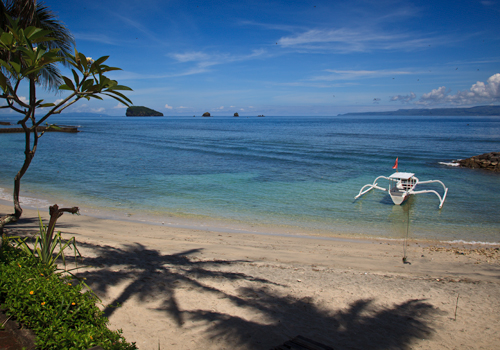
Candi Dasa – East Bali


Even in Bali, it’s sometimes important to get away from it all and Candi Dasa – East Bali is a pretty accessible place.
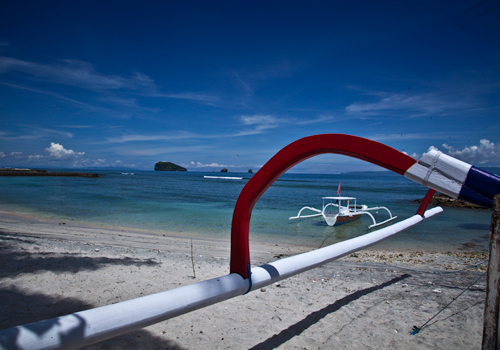
 

Candi Dasa – East Bali


Candi Dasa is a quiet, sleepy seaside town in eastern Bali that rests on the edge of a lagoon.
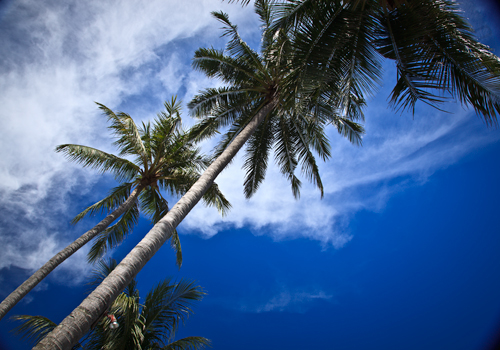
 

Candi Dasa – East Bali


When we come back from Darmaji we like to go to an old-fashioned restaurant on the beach, which has been there forever, overlooking the beach, the shipping boats and huge rocks, where you can see Nusa Penida in the distance.
 

Candi Dasa – East Bali


There are more photographs of Candi Dasa – East Balion www.jonathaninbali.com

Darmaji School – East Bali
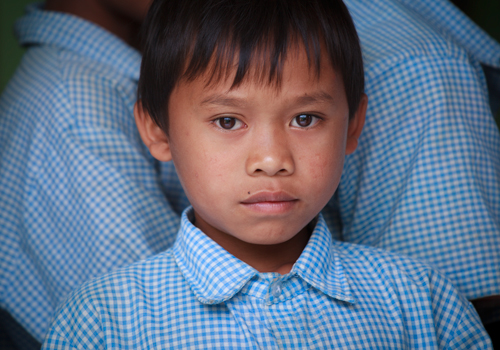
Darmaji School – East Bali


Every year we visit this wonderful school Darmaji School – East Bali with the founders of The Ganesha Foundation, a charity which supports the school under the auspices of the East Bali Poverty Project.
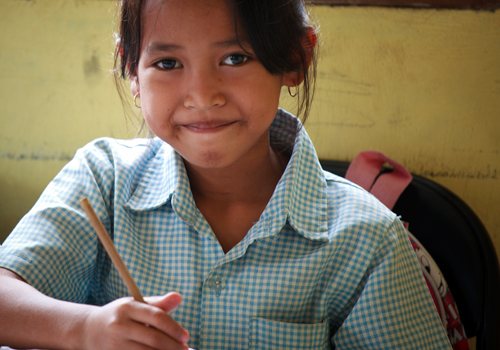
 

Darmaji School – East Bali


Its purpose is to help children receive a basic secular education.
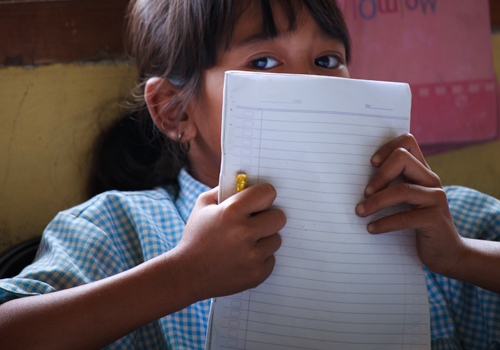
 

Darmaji School – East Bali


The school is in one of the poorest parts, where tourists never visit, in the hamlet of Darmaji between Mount Agung and Mount Abang.
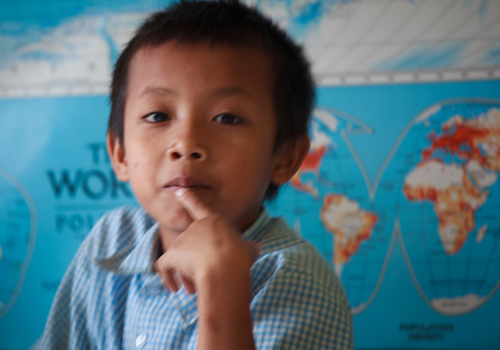
 

Darmaji School – East Bali


If you would like more information, or to make a donation, have a look at www.ganeshafoundation.org.

There are more photographs of Darmaji School – East Bali on www.jonathaninbali.com

Walking Street – Pattaya – Thailand
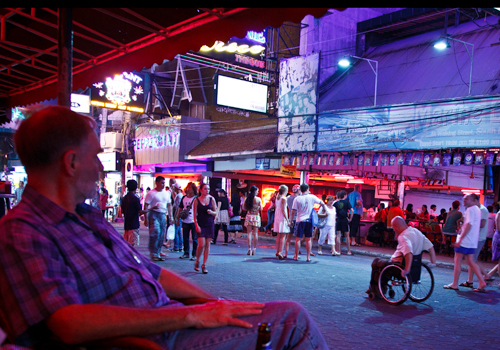
Walking Street – Pattaya – Thailand


Walking Street – Pattaya – Thailand is probably the most exciting street in the world if like to have fun.
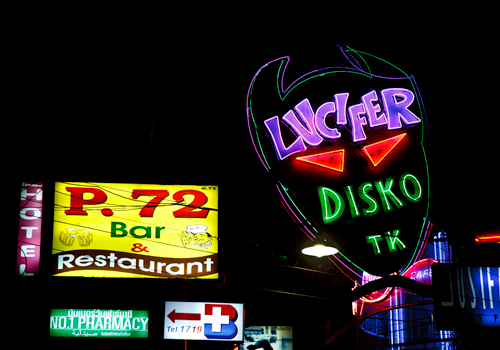
 

Walking Street – Pattaya – Thailand


We went with our friends. We knew what to expect as we’d been there before.
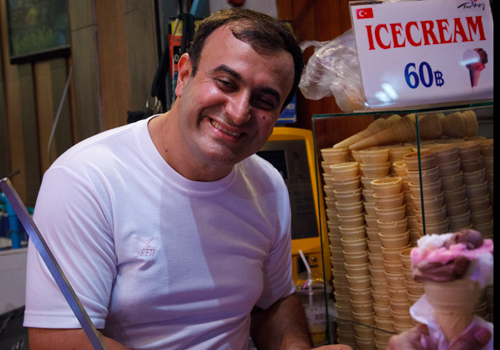
 

Walking Street – Pattaya – Thailand


There are all kinds of entertainment, bars, discos, gogo-dancing, cabaret, restaurants and shows – and many neon lights.
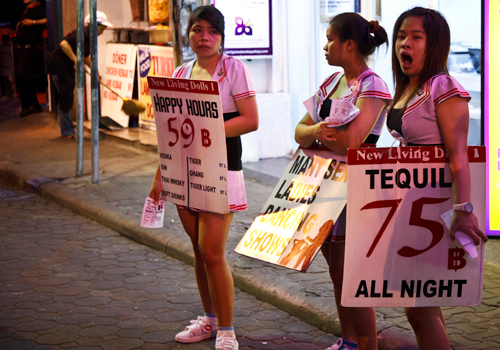
 

Walking Street – Pattaya – Thailand


There are more photographs of Walking Street – Pattaya – Thailand  on www.jonathaninbali.com

The Lady Boys of Pattaya Thailand
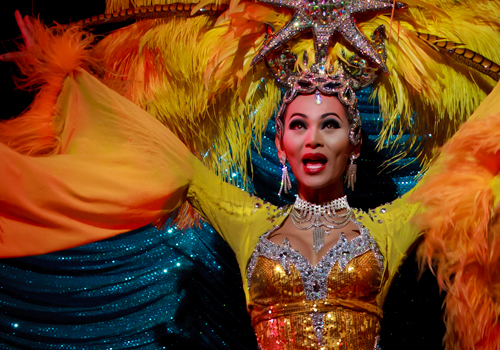
The Lady Boys of Pattaya Thailand, is a famous cabaret show performed by lady-boys, and trans-gender dancers.
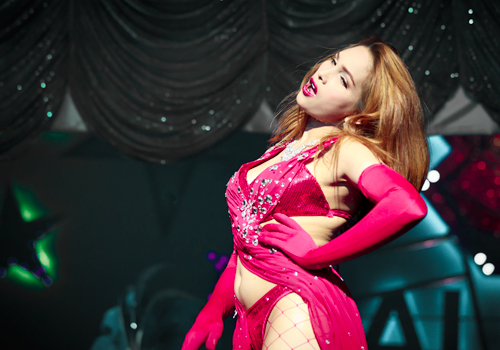
The Lady Boys of Pattaya Thailand


We are lucky to have friends who live in Pattaya and visited for 2 days. On the first night we went to the famous show.
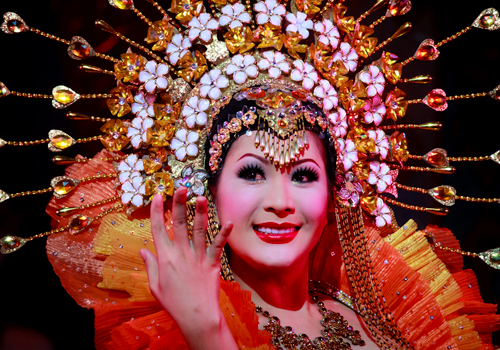
 

The Lady Boys of Pattaya Thailand


It’s hard to believe your eyes. The dancers wear beautiful costumes and it’s difficult to tell that they are not girls.

 

The Lady Boys of Pattaya Thailand


They successfully blend the art of acting, stage design, costumes and sequencing.


There are more photographs of The Lady Boys of Pattaya Thailand on www.jonathaninbali.com