From local hangouts to beach clubs and surf shacks, here’s where to eat on the island
Two decades ago, I spent a year in a remote West Balinese fishing village. I must admit that I struggled with the monotony of local dishes. Yet since then, things have changed massively, as much with the quality and diversity of Balinese/Indonesian dishes as with international cuisine. Wherever you stay on the island, you’ll find a vast selection of well-crafted dishes from all over the world.
You can eat healthily and heartily for less than a pound. Or you can splash out on top-notch culinary masterpieces that would challenge some of the world’s finest chefs – all for a fraction of the price you’d pay in London, New York or Paris.
All our recommendations below have been hand-selected and tested by our resident destination expert to help you discover the best in Bali.
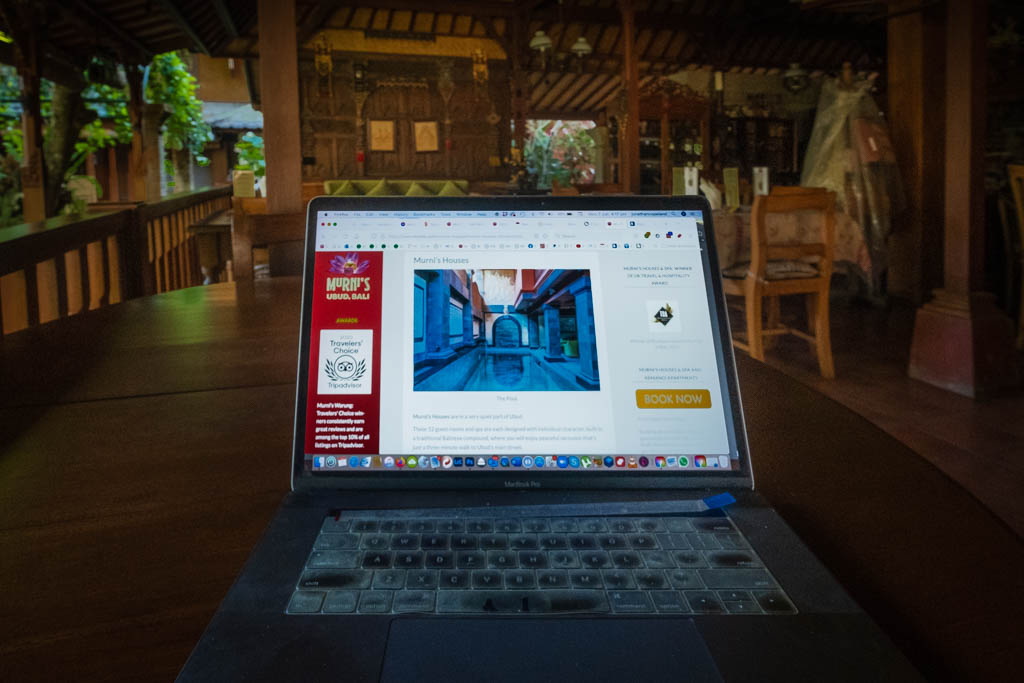
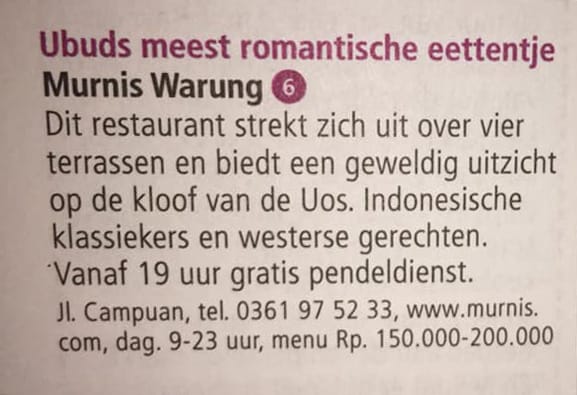
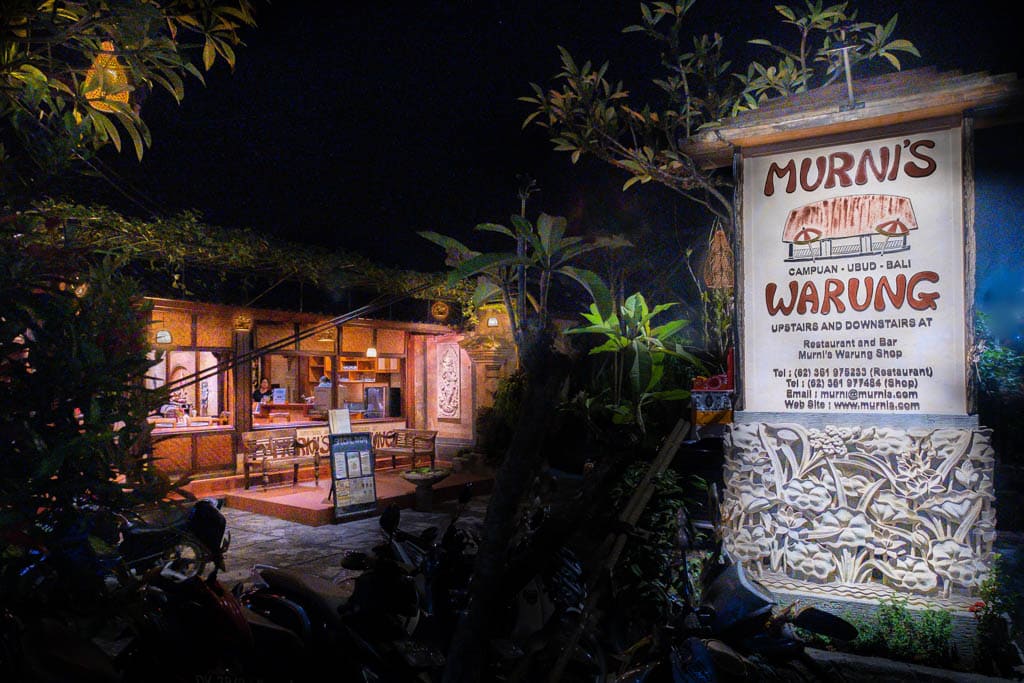
Murni’s Warung has been one of Bali’s emblematic restaurants for decades and remains a favourite lunch venue.
Best for Balinese food
Bali Asli Restaurant
The only thing that could drag your eyes away from the spellbinding Mount Agung view from the terrace will be the beautifully presented Balinese dishes. The scent of spices coming from the kitchen vies with the tropical flowers and the herb garden. For a chance to sample some local variety, order the nasi campur (a local speciality with four accompaniments). Bali Asli might be located off the beaten track, but this spot is a culinary highlight of any trip to the island.
Kaum, at Potato Head, is often considered to be the benchmark against which all other Indonesian fine-dining restaurants on the island are judged. The menu reads like a whistlestop tour taking you right across the world’s biggest island nation. Try babi genyol (a pork dish from Bali), slow-cooked beef rendang (from Sumatra) or, from the extensive vegetarian section, mouth-watering and nutritious moringa leaf broth with young coconut. All ingredients are sourced locally.
Area: Seminyak Price: £££ Reservations: Essential
Murni’s Warung
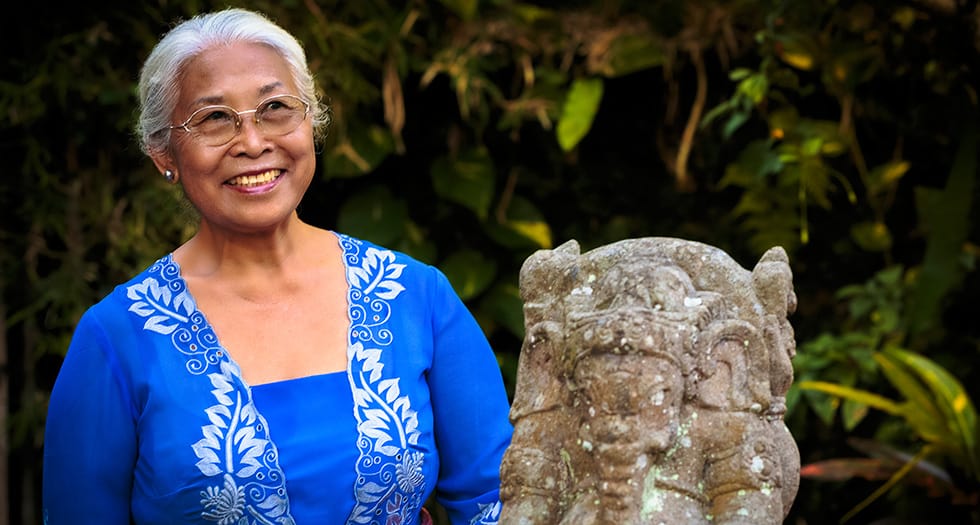
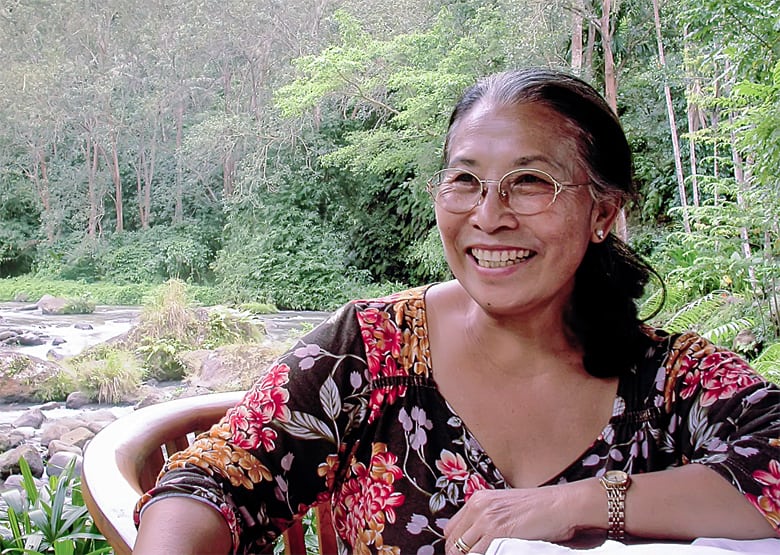
Murni’s celebrated cooking has made her into somewhat of a local legend
Ibu Murni (who claims to have been Ubud’s first woman driver) is perhaps the town’s greatest living legend, and her warung, which recently celebrated its 50th birthday, is located on a semi-open riverside deck opposite the scenic Campuhan Ridge. Try Murni’s tutu ayam (chicken slow-cooked to perfection for at least eight hours) or the bakso ayam (chicken meatball soup). For a refreshing drink after a Campuhan Ridge stroll, go for the fresh apple, turmeric kombucha.
Area: Ubud Price: ££ Reservations: Recommended
Rasta Cafe
Dewi and her husband, Rasta, run Bali’s finest warung (local eatery). Travelling foodies and even the island’s culinary superstars drive out to Medewi specifically to learn the secrets of Dewi’s home-cooking. Don’t miss the fish rendang and, for dessert, the luminously coloured (but entirely natural) dadar gulung Balinese pancakes with local palm sugar. The menu changes depending on what the fishermen bring in that morning – and what Rasta is able to source at the market that day.
Area: Medewi, West Bali Price: £ Reservations: Recommended
AN INSPIRING BALINESE WOMAN, DEMONSTRATES THAT COURAGE AND WISDOM CAN GUIDE US THROUGH THE TOUGHEST OF TIMES
by Myriam Speich, Editor-in-Chief, Instant Karma, The Mindful Traveler, November – December 2023
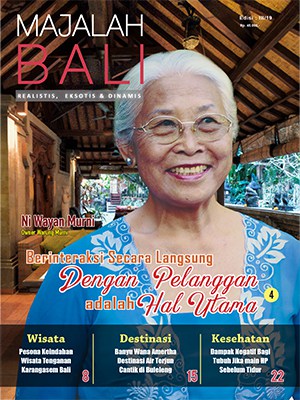
As the first woman to drive a car in Ubud, in a male-dominated world, she was a true pioneer, forging new paths for the women in her community.
When you reach Bali, simply mention Murni’s, and your driver will know your destination. The only question they might pose is whether you’re seeking accommodation, dining, shopping, a spa experience, or perhaps a chance to meet Bali’s most esteemed and hospitable living icon.
Ibu Murni, established Murni’s Warung, an exquisitely beautiful restaurant situated in Ubud, and later the award-winning boutique hotel, Murni’s Houses & Spa – the location for our conversation.
A trailblazer in Ubud, she became the first to open a store specializing in tribal art and antiques. Her thirst for knowledge and adventure and a passion for these artifacts propelled her to embark on extensive journeys outside Bali.
As a result, she achieved the remarkable distinction of being the first Balinese person to showcase Indonesian arts at renowned tribal art and textiles exhibitions in San Francisco.
“Congratulations, Ibu Murni, you filled your life with adventures!”
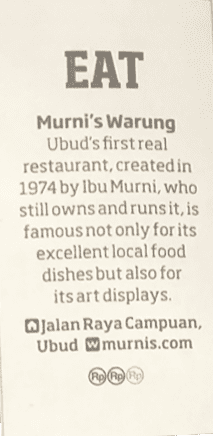
Ubud’s first real restaurant, created in 1974 by Ibu Murni, who still owns and runs it, is famous not only for its excellent food dishes but also for its art displays.
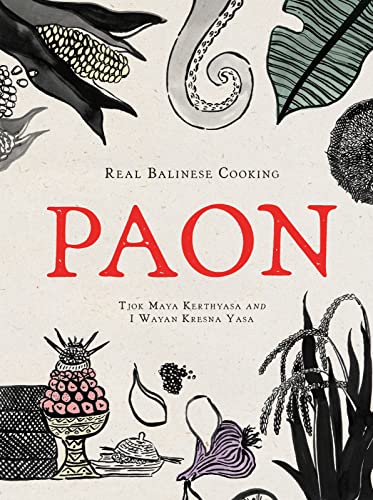
Indonesian-Australian chef and co-author of recently published cookbook Paon
Tjok Maya Kerthyasa takes us on a spice-packed adventure through Bali’s kitchens, sharing her favourite hotels, bars and go-to brunch spots along the way.
Bali is home to a beguiling blend of cultures. Beyond the free-spirited surfers, clean-living nomads and style-conscious students, visitors will discover a tropical paradise rich in ancient traditions, many of which are centred around the gift of food. Intrigued to find out more about a cuisine that both honours its heritage and offers a feast for the senses, we spoke to Balinese-born chef Tjok Maya Kerthysasa. Her new cookbook, Paon, co-written with chef I Wayan Kresna Yasa, who was born on the Balinese island of Nusa Penida, is out now.
Having made it her mission to explore Bali’s kitchens and culinary history, there’s not much Maya doesn’t know about the local scene. Here, she shares her favourite way to spend a Sunday, the essential souvenirs to grab for foodie friends and her go-to restaurant for a low-key lunch.
What about a low-key lunch?
I love Murni’s Warung. It was the first restaurant of its kind in Ubud – my parents have been going there since the late-70s. Ibu Murni, its owner, is known across Bali and beyond for her contributions to traditional food, arts and crafts. Order her nasi campur, a dish of rice with spiced, slow-cooked chicken (known locally as betutu), tofu and tempeh in peanut sauce, and sambal matah, made with finely sliced shallots, garlic, chillies and house-made coconut oil.
Rob Goodfellow Wollongong, New South Wales, The Jakarta Post, October 25, 2021
Throughout the global pandemic, business figure Ni Wayan Murni has been an inspiration to fellow Balinese people. Her landmark restaurant, Murni’s Warung, in the island’s highland village of Ubud-Campuhan, has been one of only a dozen or so restaurants to remain open for business and retain staff.
Before COVID-19, the vast majority of Balinese adults were directly employed in the tourism sector with 60 percent of the Balinese gross domestic product attributed to tourism alone. The collapse of overseas visitors, in particular the number one visitor cohort, Australians, has hit the Island of the gods very hard.
Over the course of the last two years, foreign tourist arrivals plunged from over 6 million to less than a million, with nearly 105,000 Balinese losing their jobs in August 2021 alone. (Six in 10 Indonesians work in the informal sectors, so this figure is likely to be much higher than reported.) As a result, the island’s economy contracted by a staggering 9.3 percent.
As an essential public health measure, the island was largely closed to overseas visitors, instead relying on domestic tourism to keep the economic wheels turning. (This strategy resulted in a “life-saving” turnaround of 2.8 percent for the second quarter of this year.)
Often referred to as “the Ibu of Ubud” and “the mother of modern-day tourism in Bali”, Ibu (Mrs) Murni was one of the very first Balinese to be fully vaccinated against COVID-19. (President Joko “Jokowi” Widodo has credited Bali’s high vaccination rate now 76 percent of the population for the first dose and 65 percent for the second dose—for the decision to reopen.)
Ibu Murni said, “I wanted to be a good example and show my staff and my community that the vaccination was safe. And, of course, we all want to welcome back visitors. In Balinese culture we have a strong sense of ‘we’ and not just ‘me.’ We understand responsibilities and obligations very well. And now we are being rewarded for working together and trusting the experts and the science as we move towards opening up our beautiful island again.”
To survive, Murni’s Warung resized its menu and played to its strengths, the way it began in 1974, serving mainly popular local dishes at local prices. Deliveries became more frequent than they used to be. In the process, her restaurant won Restaurant Guru’s Award for the Best Food Delivery in Ubud! (Her restaurant had earlier won the prestigious Gourmand Award in 2019—just before COVID-19 hit —and her Tamarind Spa at Murni’s Houses was the winner of the 2021/22 Contemporary Spa of the Year award—Indonesia Prestige Awards.)
Last week, the Tourism and Creative Economy Minister, Sandiaga Uno, sent a clear message to the Australian government that Indonesia has taken the necessary steps to welcome back tourists to Bali. On Friday, the Australian prime minister responded.
At an Oct. 22 press conference with the QANTAS boss Alan Joyce (reported in the national newspaper, The Australian), Prime Minister Scott Morrison said the words Ibu Murni and her nearly four million fellow Balinese have been waiting to hear. “I’ll be seeing President Widodo this weekend (at the COP26 United Nation’s sponsored Glasgow Climate Summit), and after at the G20. This [re-opening of Bali to Australian tourists] has been a regular matter that’s come up in our discussions over the course of the pandemic about when we can have travel to Indonesia going again.”
Confirmed in an ABC (the national broadcaster) news bulletin, Joyce reinforced the prime minister’s comments that discussions were underway with the Indonesian government about welcoming fully vaccinated Australians back to Bali with reduced or no quarantine requirements.
On hearing the news, Ibu Murni’s immediate comment was, “This is wonderful. It has really lifted our spirits. Not only does our President understand how difficult life has been in Bali during the pandemic, but now our neighbor Australia understands too and both leaders will meet and work together. This has made us all so happy and optimistic for the future.”
When Australians do return, however, there is a discussion about what positive changes can be made to improve the visitor experience. As Ibu Murni says, “Bapak Luhut (Luhut Panjaitan, the coordinating maritime affairs and investment minister) says, that in the post-pandemic future, there should be a greater emphasis on low ecological impact/high value tourism. I know my friends who have suffered during the pandemic too—like my neighbors at Casa Luna, the extraordinary Blanco Museum across the river from my Warung, and Yanie and Nigel Mason’s multi-award-winning Elephant Safari Park and rescue facility in Taro would agree.”
The “Ibu of Ubud” has clearly been inspired by the prospect of the Indonesian president and the Australian prime minister meeting on the sidelines in Glasgow: to help Bali. She said, “Because Australians are loved and appreciated by the Balinese, and because generations of Australians have fallen in love with Bali, these ‘man-to-man’ discussions can only bring our two neighboring peoples closer together.”
But more than this, Bali is the world’s most recognized tourism brand. And when Bali is doing well—the world is doing well too.
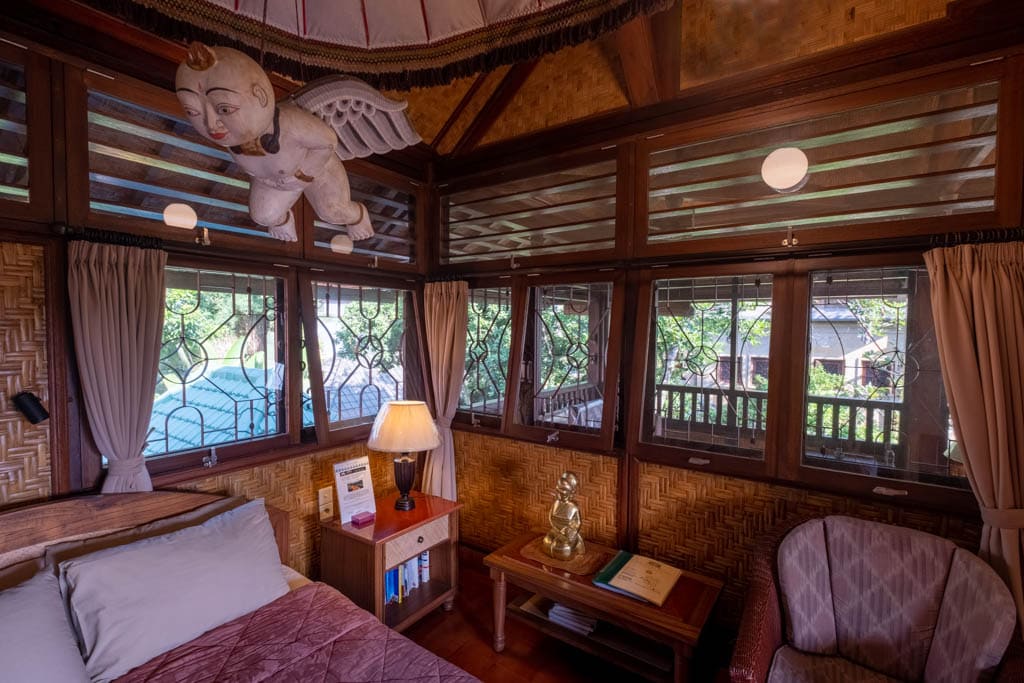
The Room at Murni’s Houses, Ubud, Bali is on the first floor of a two-storey building.
1 bedroom with a double bed.
Option of air conditioning or open windows.
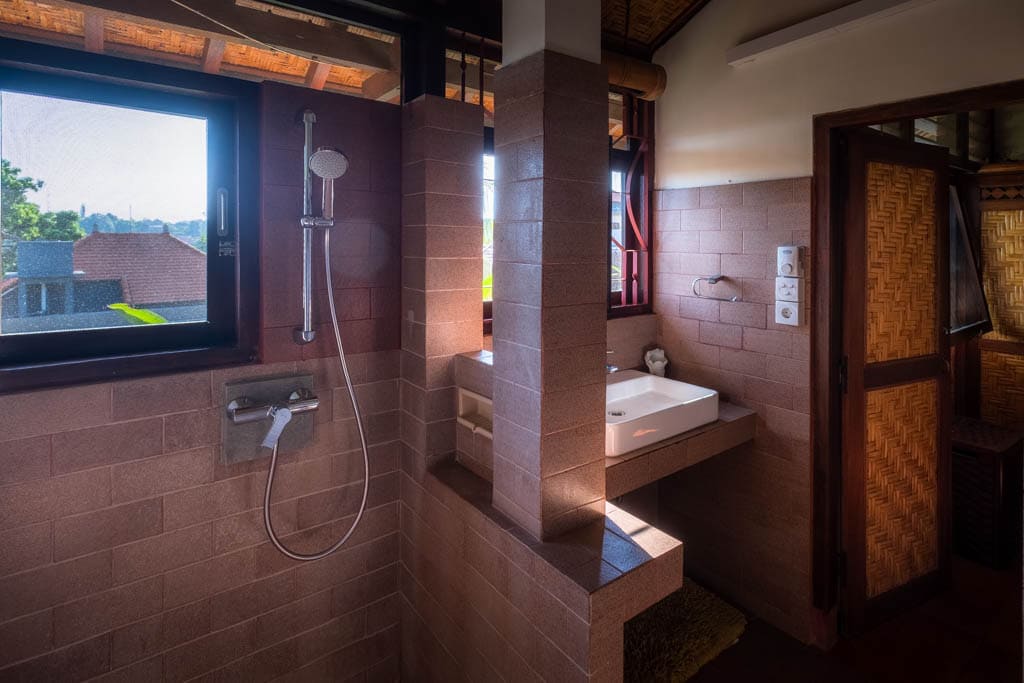
En suite bathroom – shower, basin and WC.
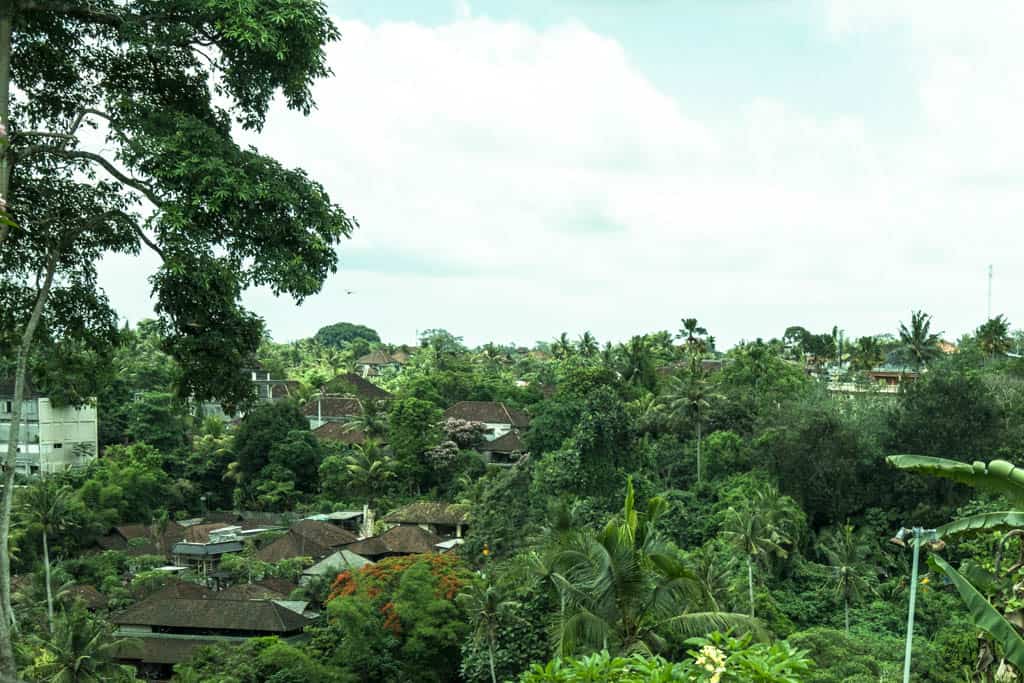
Veranda with a view of the garden.
Electronic Safe.
Private entrance.
Fans throughout.
Fly screens.
Free Fiber Optik Wi-fi (Biznet) throughout.
Free parking.
Free coffee and tea facilities in the room.
Books.
Mini-bar.
Daily housekeeping.
Laundry.
Transport.
Tours, Activities and Classes.
Spa.
Swimming Pool.
Garden.
Dining area.
24 hour security.
Sleeps up to 2 people.
CHSE Certificate.
Contactless payment and check in.
All staff fully vaccinated.
There is a communicating door if The Room and The Suite are booked together.
Bedroom.
Bathroom.
Veranda.
View.
Breakfast
Western, Vegetarian and Balinese options available.
Meals
Murni’s Warung, the first real restaurant in Ubud, which I founded in 1974, is only 5 minutes’ walk and we can deliver meals to your accommodation, if you wish.
Check in and Check Out
Check in: 2 pm.
Check-out: 12 noon.
Pick Up or Drop
You can get a pick up or drop back anywhere, please let me know.
Tours, Classes and Activities
There’s a lot to do in and around Ubud.
You can book any tours, courses or activities (such as photography tours, helicopter tours, chocolate factory tours, cooking classes, Indonesian or Balinese language lessons, Balinese flute lessons, gamelan lessons, white water rafting, elephant safari park trip with a ride on an elephant, Bali Swing, Jungle Buggies, bicycle drive through the villages, climbing a volcano at sunrise, rice paddy trek, bird walks, herbal walk through rice paddies, Ubud walks, tarot reading, Balinese dance classes, batik painting classes, making Balinese offerings, snorkeling or scuba diving or a boat trip to a deserted island). I’ll be happy to do this for you.
By Stephanie Brookes, Indonesia Expat, 20 November 2019
I stood near the rim of Kintamani volcano, taking in the sweeping views of Mount Batur and its expansive crater lake shimmering in the early morning light. Ahead of me lay the 35-kilometre, downhill bicycle ride to Ubud.
I headed off with my cycling guide and, soon enough, we started to weave through small villages, sharing the quiet, scenic roads with the people going about their day. We passed by duck farmers with long bamboo poles, a white flag on top, each with their gaggle of ducks trailing behind them. Vibrant green fields panned out on either side as we rode through the back lanes; many with groups of women threshing rice and sifting the grains with giant bamboo baskets.
We passed lines of beautiful women dressed in bright, ceremonial finery with lacy white tops and brightly coloured sashes, as they made their way to the local village temple. They walked in procession, single file, carrying tall towers of fruit on their heads.
This made for extraordinary photo opportunities. Believe me, you do not see this in downtown Kuta, Nusa Dua, Canggu, or Seminyak.
By travelling at just 10km per hour, I felt like I was able to make intimate contact with the world around me and could see, hear, and feel so much more than I would have in a car or on a motorbike. I could hear temple bells in the distance. The quaint lanes we passed made me feel like I was discovering the authentic Bali, opening up to impromptu moments that might come along.
We stopped in a small village for a break and I got talking to a young Balinese man named Kadek, who was sitting under a makeshift shelter next to a small, ancient, stone temple. He had been clanging away on ancient-looking cymbals, surrounded by an array of other instruments.
“These are all part of our gamelan orchestra,” Kadek explained, pointing to the gongs and drums. He said, “these have been played at our temple ceremonies for many centuries.” I learned that they are still played at weddings and funerals as well as for other rites of passage and ceremonies. Gamelan is mastered by memory, by heart.
Kadek invited me to come back the next day to join his family temple birthday celebration. Not only would I hear the gamelan being played, but I would also meet the shadow puppet master and watch the wayang kulit, the ancient Indonesian art of shadow play. What an offer!
“No need to bring anything,” Kadek stressed. “We have prepared plenty of food, and we welcome guests. It is our great honour to share our customs with foreign guests.” He quickly gave me his Facebook name, we exchanged phone numbers, and I made a promise to return.
It seems that all the conversations you have with Balinese, from the hotel concierge to the local fruit seller, always seem to include some discussion of their culture and tradition. Balinese traditional life is still very much alive outside the main tourist areas of Bali. By basing yourself in the town of Ubud, for example, you get to observe a ritualistic Bali which is steeped in Hindu religious practices. For me, every day seemed to offer another lesson, unravelling slowly and naturally. Bali is, in all essence, a living culture.
The island has over 20,000 temples and shrines. For such a small island (153km x 112km), one is bound to run into a ceremony of some description. All you need to attend a ceremony is a sarong, a long sash, and a top that covers your shoulders. Men wear an additional item, an udeng, the Balinese male headdress.
If you choose to travel around Bali with a driver, these are pretty much a given item, tucked away neatly in the back of the car, at the ready for an impromptu moment. When you catch sight of a line of women walking down a road with offerings on their heads, all you need to do is join the procession at the back, and you will likely end up at a temple where you can participate in the celebrations and experience the culture.
As a foreigner, you’re always welcomed to join a temple prayer session and, if you are lucky, you can also catch temple dancing, and sometimes drama plays being acted out. These ceremonies often go late into the night, many ways past midnight.
My cycle tour finished with lunch, including a traditional Balinese salad with green beans and sprouts (urab), tempe with delicate spices, tantalising spicy, shredded, steamed chicken, satay on bamboo skewers with peanut sauce, and steamed vegetables cooked in coconut cream. This was served on a pile of steaming red rice. Our beverage was my favourite, fresh and young coconut water served in the shell, a natural energy drink and electrolyte replacement. We all hailed our coconut water with a “cheers” to celebrate our accomplishment of completing the ride.
The next day, my body told me it was time to take a rest. I booked in for a three-hour relaxation and rejuvenation treatment at Murni’s Tamarind Spa in Ubud. Locally, Murni is affectionately known as “the Mother of Ubud.” She pioneered tourism in Ubud in the 1970s by setting up her legendary restaurant, Murni’s Warung, where artists, adventurers, and academics hung out, drank mango lassies, ate smashed avocado on toast, and devoured Murni’s famous apple pie.
Murni lovingly presides over her dream creation on the jungle-clad Campuan gorge above the Wos River, and 50 years later, it’s still the same. The award-winning Tamarind Spa is the latest addition to Murni’s businesses and it was under the tamarind tree I discovered my massage therapist, Kartini, was the former personal therapist of the President of Seychelles.
After a welcome drink, cold towel and foot ritual, Kartini started to weave her healing magic on me. This began with an hour-long traditional massage, deeply relaxing, mind soothing, and muscle quenching. This was followed by a fragrant green tea scrub and a yoghurt rubdown. My treatment finished by soaking in a warm bath with orange and red flower petals floating on top. To finish it off, I was served a pot of organic herbal tea and fresh tropical fruit.
The next day, I was on a mission to discover Bali’s secret photography spots. I decided on a David Metcalf Photography tour after reading some rave reviews online. I was collected bright and early, in time for the dramatic 6.00am sunrise over Mount Agung. Next, we ventured to a local traditional market which was teeming with piles of colourful, hot-red chillies, purple dragonfruit, snake fruit, bright green guavas, and pyramids of multi-coloured local spices. Next, we spent time at the river capturing some dramatic morning sun rays through the trees, and had a lovely chat with the local rice farmer.
After that, we headed to a beautiful 10th century water temple which we had entirely to ourselves. Lunch was up next and sumptuous traditional fare of steamed fish wrapped in banana leaves, coconut yellow curried vegetables, traditional Balinese salad with bean sprouts, and rice steamed in bamboo over an open fire. We ate in the home of a beautiful Balinese family. It was a delightful surprise to see a glimmer of gold shining through the thick foliage in the back of the garden, and soon enough, two delightful young dancers appeared.
They performed the Legong dance for us. It turned out these two little girls were temple dancers and loved to take the opportunity to dance for visitors. They were all of five and six years old and danced so elegantly, with beautiful flowing movements infused with pure grace and spirit. It was spellbinding.
What I really loved about my photography day, which also included plenty of one-on-one photo tips, was how immersed I was in Balinese culture all day. We did not see another foreigner all day. My kind of Balinese day.
Next on the agenda was yoga. Wandering the small streets of Ubud, I found myself walking towards “The Sari Organic Pathway,” which was well signposted from the centre of town, wending my way to the Yoga House; a yurt shaped building situated in the rice fields.
Sheila, the owner, offers classes five days a week and refers to them as yoga for everyone. Indeed, it was. As I eased into my gentle flow yoga class, my view was framed by three stunning, volcanic peaks fanning out from the yoga platform. The yoga studio was also surrounded by terraced rice fields that encircled the studio like a living green carpet. By being amongst nature, in the outdoors in this idyllic setting, I felt deeply connected to the yoga philosophy which connects the mind, body and spirit, through breath and movement.
In the late afternoon, I headed off to a remote, rural Bali village, Lokaserena, on the outskirts of Ubud. I was welcomed into the home of Kadek, who is an Ubud Village Plate host. Ubud Village Plate is a local initiative that supports the community and connects travellers over a shared lunch or dinner in the home of a Balinese family.
Cooking classes are offered as well, but I decided on the dinner-only option. On arrival, I was taken on a tour of Kadek’s house, which is part of his larger family compound. He explained the layout of his traditional compound and told me the history behind the ornate carvings and entranceways and the cultural aspects of the directions of the buildings.
Dinner was a succulent affair with sizzling chicken sate on bamboo sticks and steamed tuna baked in banana leaves, accompanied by a pile of fresh vegetables from Kadek’s garden. All was finished off with traditional black rice pudding with fresh coconut cream. We talked late into the night about tradition and customs and I didn’t want to leave.
My next journey of discovery was into the spiritual heart of a timeless temple called Gunung Kawi; my temple of choice, located only 20 minutes out of Ubud. I decided to visit this ancient 10th-century temple complex at 7.00am, which allowed me some solitude and a few quiet, reflective hours before the tourist buses arrived for 9.30am.
By chance, I meet Wayan, the temple sweeper, near the entrance and he offered to take me to some lesser-known parts of the complex. “Come with me. I will show you the way to a waterfall and a hidden temple, and we will pass by some ancient rice fields.” I eagerly took up Wayan’s kind offer, and he explained how the terraced rice fields, which grow right in the temple itself, date back to the 9th century and are now World Heritage-listed.
As we walked along the small path, the misty jungle clung to the edges of the steeply terraced rice fields. Wayan took me on a little trail where we passed by a waterfall on the way to some old meditation caves. Chiselled from the rock, I came to a series of open doorways, which stood in a straight line symbolically representing an open door. “A door to the other world,” Wayan said with a smile. Near the caves was a shrine, which Wayan explained, stood as a representation of King Anak Wungsu, 1050 AD.
I spent the rest of the morning walking in the shadows of a series of seven-metre high temple tombs known as the Queens Tombs. Wayan was excellent company and highly informative.
As Wayan continued with his morning temple sweeping routine, happy to have been interrupted by a lone traveller, I reflected on the beautiful Balinese people I had encountered over the week, whether that be by bicycle, in a Balinese home, or leaning on a broomstick. The famed Island of the Gods breathes with an even rhythm and welcomes the curiosity of a stranger to explore a very pure and authentic Bali.
Le studio à partir de 475 000 Rp jusqu’à 2 500 000 Rp l’appartement pour 5 personnes. Petit déjeuner en option.
A seulement trois minutes de la rue principale d’Ubud, vous pouvez profiter du calme de ce lieu devenu une institution. Cet établissement possède 12 maisons confortables à la décoration traditionnelle balinaise. Certaines maisons comportent deux chambres, un salon, une véranda et deux baignoires. Le salon possède également un lit. Murni’s Houses and Spa appartenait au célèbre pionnier local Murni qui a fondé Murni’s Warung, le premier restaurant international d’Ubud en 1974, ainsi que le magasin Murni’s shop, le premier magasin d’arts tribaux et d’antiquités à Ubud. Les objets d’art ornent les murs et font du Murni’s Houses un véritable musée. Aux maisons, au restaurant et à la boutique s’ajoute un spa où le personnel qualifié vous accueille dans une ambiance propice à la détente.
Just three minutes from the main street of Ubud, you can enjoy the calm of this place becoming an institution. The hotel has twelve comfortable houses with traditional Balinese decoration. Some have two bedrooms, a living room, a veranda and two bathrooms. The lounge also has a bed. Murni’s Houses and Spa belongs to the famous local pioneer Murni who founded Murni’s Warung, Ubud’s first international restaurant in 1974, as well as the Murni’s shop, the first tribal arts and antiques store in Ubud. Art objects adorn walls and make Murni’s Houses a real museum. As well as the houses, the restaurant and the shop, there is Tamarind Spa where qualified staff welcomes you in an atmosphere conducive to relaxation.
Semangat wanita pendiri Warung Murni, memang tidak diragukan lagi. Lihat saja, hasil kerja kerasnya, Warung Murni yang telah berdiri sejak 1974 hingga saat ini mampu bersaing dengan bisnis kuliner lainnya. Ia mengungkapkan, tak mau kalah semangat dengan generasi milineal, namun ia tidak juga menampik para generasi muda memberikan semangat penyegaran dalam dirinya.
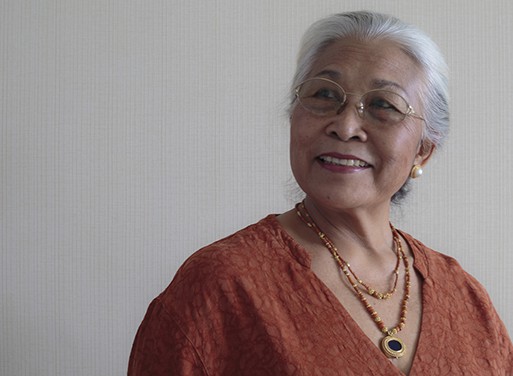
Interview with Ubud’s Leading Lady: Murni is a unique and fast moving Balinese lady who knows how to get things done. She has a contagious smile and a genuine passion for life. FRV had a chat recently while staying at Murni’s Houses in her home town of Ubud.
FRV: They call you the ‘Ibu of Ubud’ … What does ‘Ibu of Ubud’ mean?
Murni: It actually means ‘Mother of Ubud’. There are in fact many Ibus of Ubud and I’m just one of them.
If you had all the money and time in the world, what would you be doing right now?
I’d probably be doing the same things that I’m doing now.
What is that?
I try to create beautiful spaces filled with beautiful objects. After moving from Sanur in 1974 where I had four shops on the beach, I set up Ubud’s first real restaurant just beside the bridge in Campuhan. That was 43 years ago and I’m still running it! I’ve filled it with Asian tribal art pieces I’ve collected over the years, especially in the Lounge Bar, where people often have a drink before dinner or liqueurs afterwards.
Have you always been a collector?
It’s very difficult to be just a collector as the pieces are increasingly rare and expensive, so inevitably you end up being a dealer as well. You try and get better and better examples and sell the others. It’s been very helpful having a tribal art and textiles shop as part of the restaurant.
Why did you build your boutique hotel ‘Murni’s Houses’?
That was in the early 1980s because there was so little guest accommodation available. There was hardly any giving a good degree of comfort and convenience. I was very lucky to get the land, which is only five minutes walk from the centre of Ubud, but set back above the road, so it’s a bit like being in the countryside but still in the middle of Ubud. I like it so much I live there myself. The guests are from all over the world and invariably really interesting and we often have breakfast together. It’s a great way to start the day. Murni’s Warung and the Shop are only a few minutes walk so it suits me fine.
And the spa?
Tamarind Spa happened by chance on the suggestion from a friend. I had a spare building and turned it into spa rooms and employed the very best therapists I could find. I tested them all myself. My plan was to have a massage every day, and now I can’t get in because it’s so busy!
Is that the Tamarind Spa that won the UK Luxury Travel Guide Awards 2017 Contemporary Spa of the Year INDONESIA?
That was an incredible surprise, and of course, we’re all delighted, especially the therapists. They’ve done very well.
I hear you’ve written or co-written books on Balinese culture. Any tips on … Writing books?
Yes, something incomprehensible is what I recommend. The thing about comprehensible books is they are too difficult! Leave that to other people.
You have a website, a Facebook site, a Twitter account, a blog and you’re on Instagram … tell me about your experience with social networking and what advice you would give.
Concentrate on the widgets.
You seem to have a lot on your plate already and we haven’t even talked about Balinese culture. Do you have any current projects?
Well, yes. I seem to have got into long-stay accommodation. There are more and more people staying longer and longer in the Ubud area. I think many of them are digital nomads as they always ask about the internet. I’ve finished two Villas for long-term rentals in Katik Lantang, South Penestanan, where I was born, just 10 minutes away, and right now I’m finishing a large building at Murni’s Houses which will have rooms with and without kitchens, a gallery and a pool – and maybe, if I can squeeze it in, a shop!
As we haven’t talked about Balinese culture, and I know that you are steeped in it, would you like to write a regular column for the magazine on Balinese life and culture?
I’d be delighted and for you I’ll make it comprehensible.
Thank you. Well, Murni. You’ve had an incredible life so far. I’d like to ask you one final question. How would you like to be remembered?
I’m too short at five foot four. I’d like to be remembered as five foot eleven!
Murni is a well-known and much loved personality on the Bali scene and a pioneer of Balinese tourism. During her extraordinary life Murni has lived in Sanur and Ubud and has travelled widely. Everything you could want to know is on her web site.
Secrets of Bali, Fresh Light on the Morning of the World by Jonathan Copeland with Ni Wayan Murni
Published by Orchid Books
Incredibly, ancient Balinese cultural traditions remain richly intact today, in the face of, and alongside, 21st century modernity and a highly developed tourist industry. Yet few visitors ever really begin to understand the colourful pageantry that surrounds them virtually everywhere they travel on the island.
Unpretentious and easily readable in its approach and encyclopaedic in its coverage, Secrets of Bali is the key to this understanding. From Balinese life, religion, festivals and offerings, architecture, music, dance, textiles, dress, carvings and paintings, masks, manuscripts, meals and much, much more, this is the book to which the visitor can turn for the answers.
Each chapter is written both as a part of the overall narrative, and as a ‘stand alone’ reference on the topic addressed.
If you buy only one book in addition to a standard travel guide, this is the volume for you. Simply a ‘must read’ for foreign visitors, residents, and those everywhere who have fallen under the spell of ‘The Morning of the World’.
Jonathan Copeland
Ni Wayan Murni
424 pages
110 line drawings
1 map
Glossary
Bibliography
“In Secrets of Bali Jonathan Copeland and Ibu Murni present a wonderfully fast moving account of Bali – from the outside in and from the inside out. Secrets of Bali places Bali into the warp and weft of the rich tapestry of historical context and ever changing contemporary life. It generously offers us a feast of rare and passionate insights from a man who has so obviously fallen in love with Bali and from a woman who, in so many ways, is Bali.”
Dr Rob Goodfellow Author, journalist and academic, Australia
“From Balinese Gods to Balinese gamelan, difficult subjects are simply explained in this beautifully written and illustrated work.”
Bill Dalton Author of Bali Handbook, USA
“Eloquent, enthusiastic, and jargon-free.”
Dr Angela Hobart Visiting Reader at Goldsmiths College, University of London and Honorary Research Fellow at University College London
“Fortunately for the reader, the author of Secrets of Bali is not in the slightest bit secretive. The outcome is an accessible and wide ranging guide to the island’s culture and history. The casual reader can dip into it to answer specific questions, whereas the enthusiast can read with equal pleasure from cover to cover.”
Professor Michael Hitchcock Deputy Dean (Research and External Relations) Faculty of Business, Arts and Humanities, University of Chichester, England
“In Bali they say…when the durians come down, the sarongs go up.”
Julia Suryakusuma Author of Sex, Power and Nation
“Secrets of Bali is the best book about the island written and published since 1990 …”
Roy Thompson The Bali Times, 18-24 June 2010
“This book will definitely go with me on my next trip to Bali.”
Michael Clugston South China Morning Post, 22 August 2010
“This 412-page book tries to summarize every aspect of Bali. Starting from the creation of the universe from a Hindu approach (the major religion in Bali), Balinese architecture, rituals, and the arts and up to the paradigm shift among the modern Balinese. All are explained in the 60 chapters.”
Ni Luh Dian Purniawati Bali & Beyond, January 2011
“I feel that Secrets of Bali will join the ranks of the definitive and authoritative volumes of reference books for lovers of Bali everywhere.”
Andrew Charles Tropical Life, September – December 2011
“One of the most readable books about Bali, its people and its traditions.”
Lonely Planet Guide to Bali & Lombok, 2015
To order the paperback
Rp 500,000
Email: murni (at) murnis.com
Secrets of Bali, Fresh Light on the Morning of the World
Roy Thompson said “Secrets of Bali is the best book about the island written and published since 1990 …”. That was our last book. This time we decided to concentrate just on Ubud, the cultural heart of Bali, which is a must for most visitors to Bali. I’ve lived all my life in Ubud and for most of it I have been involved in tourism: restaurant, shops, textiles, art, accommodation and spa, so it was right that I should share some of my knowledge. I’ve travelled the world, so I’ve also added some pitfalls and traps and a few warnings.
Ni Wayan Murni
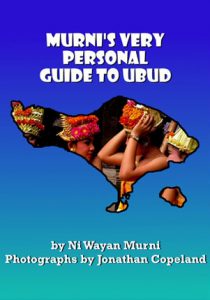
Murni’s Very Personal Guide to Ubud
Stephanie Brookes, Travel Writer wrote “This is all you need to experience the best of Ubud written by Murni, a legendary local insider and cultural expert.”
Published: 24 October 2011
44 Chapters
Bibliography
Words: 23,646
US$2.99
If you don’t have a Kindle, you can read it as a pdf file, and either way you can read the first 10% as a free sample on the Kindle Store on Amazon.
Start reading Murni’s Very Personal Guide to Ubud in under a minute.
“This is all you need to experience the best of Ubud written by Murni, a legendary local insider and cultural expert.”
Stephanie Brookes, Travel Writer
“I loved this guide to Ubud by Ni Wayan Murni with photos by Jonathan Copeland. I have been to Ubud many times, but found new secrets in Murni’s Very Personal Guide to Ubud. It’s true that she toots her own horn a bit, but she has every reason to do that since the places she owns are well worth checking out. And she doesn’t only give information about her own businesses – she also shares so much information about Ubud that it definitely gives travelers many reasons to go there. Well done..”
Kate Benzin
Author of HowTo Find The Heart Of Bali
A Little Gem
“Murni’s Very Personal Guide to Ubud is to the point and for that reason I love it. Instead of having to wade through the more traditional guides, for those wanting to get to the heart of Ubud quickly, grab this one first.
If you do pop into Murni’s Warung, ask if she is about, or to their spa. She is one of the nicest people I’ve had the pleasure to meet and if it wasn’t for this book, I would never have known of her. However, she is famous in Ubud for her entrepreneurial life and the prosperity she has brought to her village.
I have read the previous review and must say I can’t agree that it is true for all people. If you want to read lots of information to try and work out what to do, and you want to spend hours doing it, sure, pick up the wordy Lonely Planet. To say that Murni has just plucked all of this from the Internet is absurd. She has lived in Ubud all her life!
I really value the information in this, it helped me immensely when I first went to Ubud to research it for my own book, there is likely no-one who knows Ubud as well as Murni and Jonathan. For $2.99, this is a little gem and if you want the easy and informative guide to get your head around a city that literally sprawls over mountains and vales, this guide is perfect.”
Clare McAlaney
Author of Things You Need to Know About Bali
Written with the simple traveler in mind
“When I travel, I try to find everything I can about the place in the internet. Sometimes, it gets too confusing when you have to browse through several web sites to get the basic information you need. Murni’s Very Personal Guide to Ubud gave me most of the information I needed on Ubud. Sure, it is subjective but the writer did put a caveat from the start. I’m just a simple traveler who wants to know the mode of transport in Ubud, what are the places I can see in the area, should I activate my roaming or just get a local sim card, etc. The book is very helpful guide for travelers like me and you can’t go wrong with a price equivalent to a cup of coffee in your local coffee shop.”
Jay Rodriguez
Very Enriching
“Who else but Murni to write a guide about Ubud. Anyone who sees Ubud, indeed Bali without any depth of knowledge is missing out on a lot. I first went to Ubud in early 1980, and still go regularly. And I have tramped dusty paths in the evenings to eat at Murni’s over the years. The best places are the places I go on my FEET, and not in a car. Murni, over so many years has gone from being a girl with a simple food stall to writing an app about Ubud. She is all class.”
Janice Brown
Thank You, Murni
“Thank you Murni! You have certainly filled this Ubud guide with information and insights that I have not found revealed elsewhere. I just finished my 3rd visit and was still using your guide to explore this very special area.”
From Tattoos to Textiles, Murni’s Guide to Asian Textiles, All You Need to Know … And More
From Tattoos to Textiles, Murni’s Guide to Asian Textiles, All You Need to Know … And More by Ni Wayan Murni and Jonathan Copeland
From Tattoos to Textiles, Murni’s Guide to Asian Textiles, All You Need to Know … And More unravels the mysteries inherent in the ancient culture of textile making in an easy to read narrative from one of Bali’s most famous textile collectors.
357 pages
Over 270 colour photographs
Glossary
Bibliography
Ni Wayan Murni
Jonathan Copeland
“From Tattoos to Textiles binds together the colourful threads of an extraordinary human story.”
Dr Fiona Kerlogue
Deputy Keeper of Anthropology with responsibility for the Asian and European collections at the Horniman Museum, London, Author of Arts of Southeast Asia and Batik: Design, Style and History
“What a treat to read such a beautiful, flowing, informative and passionate treatise on Indonesian textiles.”
Peter O’Neill OAM Wollongong, New South Wales, Australia
“From Tattoos to Textiles is both easy-to-read and informative.”
Professor Michael Hitchcock Dean, Faculty of Hospitality and Tourism Management, Macau University of Science and Technology, Author of Indonesian Textiles
“This extraordinary book will not only enthral and enlighten readers but also energize the tradition of hand-woven textiles in Southeast Asia.”
Dr Linda McIntosh
Curator for The Jim Thompson House, Bangkok and Curator of The Tilleke & Gibbins Southeast Asian Textile Collection, Bangkok, Author of Ritual Thai Textiles, Status, Myth and the Supernatural and Art of Southeast Asian Textiles: The Tilleke and Gibbins Collection
“From Tattoos to Textiles tells a tale as old as Adam and Eve, as mysterious as Neith the Egyptian goddess, as intriguing as General George Washington, the first President of the United States, making his own clothes, and certainly a great deal more colourful than Chairman Mao’s cotton boiler suits.”
Stephanie Brookes
Travel Writer
“The 357 page eBook From Tattoos to Textiles with 270 color photos, is an informative guide to identifying hand woven ethnic textiles of Indonesia and how to tell the authentic from the fake.”
Bill Dalton
The Frugal Balinist, Bali Advertiser
23 July 2014
Audrey Pipe
5.0 out of 5 stars A Hugely Successfull Collaboration On The A-Z of Asian Textiles
Reviewed in the United Kingdom on 25 January 2014
Verified Purchase
Murni’s passion provides a formidable authority on the subject and Jonathan’s global context and photographs illustrate their creation and beauty
Susan L. Ruddy
5.0 out of 5 stars Excellent primer on Indonesian Textiles
Reviewed in the United States on 26 March 2018
Jonathan Copeland’s book on Indonesian Textiles is the best – maybe only – overview of the amazing textiles of Indonesia that you will ever need. His writing is clear, the photos are illuminating, and it is a superb window through which to look at the myriad cultures of this ever-fascinating island nation.
Forty Delicious Years – 1974-2014, Murni’s Warung, Ubud, Bali, From Toasted Sandwiches to Balinese Smoked Duck
GOURMAND AWARDS 2019
Finalist: A06 Special Awards
Forty Delicious Years – 1974-2014, Murni’s Warung, Ubud, Bali, From Toasted Sandwiches to Balinese Smoked Duck
Jonathan Copeland Rob Goodfellow Peter O’Neill
Email: murni (at) murnis.com
Forty Delicious Years is the story of Bali’s most enduring culinary landmark – Murni’s Warung in Ubud. Narrated by some of the Warung’s most intriguing patrons, with a Preface by Murni herself, the book tells the story of how a humble roadside stall became an institution – in fact a must visit on a magical must visit island.
This easy to read and immensely enjoyable collection of vignettes was published to celebrate the 40th anniversary of Murni’s Warung in February 2014.
“It’s an institution. It’s a favourite, and a hive of memories and friendships. It’s Murni’s Warung.”
Jero Asri Kerthyasa
“It’s not just food and a good time that you get at Murni’s Warung, but a complete sensual experience.”
Professor Michael Hitchcock
“Murni’s Warung … the best clubhouse in the Universe.”
Karen Goodman
“Murni is and always will be one of my favourite mothers in town.”
Janet de Neefe
“For forty delicious years Murni’s Warung has been somewhere to relish life, excellent service, good food, and the company of friends.”
José in den Kleef
Bring your copy to dinner at Murni’s Warung and if Murni is there she will sign it.
If she is not there … then there is still a wonderful menu, which deserves to be worked through course by course by course by course.
Book Reviews
Forty Forte
Murni’s Warung,
Hello Bali, Editor’s Finds, February 2015
If you have been living in Bali for some time, chances are you know and love Murni’s Warungin Ubud. Dating back to the 1970s, Murni’s Warung is a treasured food joint with authentic Balinese food and Campuhan River views. Furthermore, Ibu Murni herself is a beloved figure whose hospitality has earned her many friends and loves over the years. However, if you don’t yet know who Ibu Murni is or where to find Murni’s Warung, it’s high time you do. One of the best ways to do that is to read Forty Delicious Years, a compilation of stories about the warung and the namesake founder told by the warung’s eclectic patrons. It’s an interesting insight into what it’s like to be among the island’s insiders.
Ubud Icon Murni’s Warung Turns Forty
Katrin Figge
Jakarta Globe
4 April 2014
Murni’s Warung remains an Ubud icon 40 years since it was established, with fans crediting its founder as the heart of the place and even of Ubud.
She is often referred to as the “mother of Ubud,” and her restaurant has been a longtime favorite among both travelers and locals: Ni Wayan Murni, a Bali native who recently celebrated the 40th anniversary of Murni’s Warung with the launch of a book that includes personal memories and anecdotes of people who have accompanied her on her journey from the 1970s until today.
Author and photographer Jonathan Copeland, co-editor of “Forty Delicious Years,” as well as a good friend of Murni, said that it felt right to celebrate this milestone “in a more tangible way than simply a T-shirt and party.”
“We didn’t want a book blowing our own trumpet — there are enough of those vanity publications around — but instead a book focussing on the times and life of Murni’s Warung as seen through the eyes of its guests over 40 years,” he said.
It is an approach that gives readers the chance to learn more about Murni and also about Ubud and Bali in general, and particularly how significantly it has changed over the years.
The first thing that needed to be done was to decide on the number of contributors; 40 contributor for 40 years was the logical solution.
“We then compiled a list of colorful, engaging and interesting characters whom we thought we could contact,” Copeland said. “We went through the time-consuming process of trying to track them down. Some were easy to locate but some were impossible to find. We were delighted with the final list as they comprised a wide range of nationalities, occupations and ages which cover the life of Murni’s Warung from day one until the present. They are all busy people with big jobs and we are very grateful for the time they spent on this.”
Murni, who was born in Penestanan, just a few minutes away from Ubud, began selling breakfast snacks before going to school in the 1950s. Less than 20 years later, Murni already owned four shops on Sanur Beach and established Murni’s Warung in Campuhan-Ubud.
Besides traveling the world and collecting Asian antiques and textiles, Murni built Murni’s Houses and Murni’s Villas catering to the growing number of tourists, and recently opened the Tamarind Spa at Murni’s Houses.
In the book, Murni writes that she still finds it incredible to look back at how she started Murni’s Warung — with no more than a bowl of soup and a sandwich.
“I wasn’t a cook and had no knowledge of what Western food was. I had no business plan, no mission statement, and no spreadsheets. I didn’t have electricity or a fridge or an electric oven. I didn’t have staff or suppliers or a car,” she said. “But I did have passion and drive and energy. And I had friends and customers and hard work. Luckily, Murni’s Warung grew and prospered and has been able to serve food and drinks to thousands of people these 40 years.”
Murni also has a very special connection to the restaurant’s location on a gorge above the river Wos, which is sacred to the Balinese people.
“It has been part of my life, going back more than 40 years,” she said. “When I was a very young child […] I played and bathed down there at the river and among the rocks. When I was older, I helped carry rocks up from the river bed to the road for construction use. Later still, after my parents split up, I secretly met my mother below the bridge. I never dreamed that I would be able to buy part of the gorge, live there and go to sleep to the sound of the sacred river crashing over the rocks.”
Copeland, who has worked with Murni on three previous publications, said that not many people can survive in the highly competitive F&B industry, especially these days, when new restaurants pop up everywhere in Bali.
“Restaurants often start out as flavor of the month and fizzle out,” he said. “It is not an easy business and diners are demanding and unforgiving customers who don’t give you a second chance.
“I think it’s easy, in retrospect, to see how Murni’s early success came about,” he added. “In the early days there simply wasn’t a place in Ubud to get good food. Murni’s Warung was a beacon for early travelers to hang out. They spread the word and they still do. But obviously there had to be substance to it. I think the substance is what has made Murni’s Warung remain a favorite for so long. Murni is a perfectionist. She is very concerned about the comfort and happiness of her guests. And she is a traditionalist concerned about the preservation of Balinese culture. Murni’s Warung is a Balinese building with Balinese food served by Balinese waitresses in Balinese dress.”
Dr. Lawrence Blair, an anthropologist, author and filmmaker who has been based in Bali for almost 40 years, was among the warung’s earliest customers and still vividly remembers a quiet Ubud.
“Instead of tourists, there were only a few ‘travelers’ and barely a handful of eccentric resident expats,” he writes in his section in the book. “And the place to meet them was Murni’s Warung. But the first real draw to Murni’s was the discovery that hers was the sole place in Ubud to have mastered that most rare and esoteric art of producing a sunny-side up properly fried egg. Further cause for enthusiasm was when she also became the first person in Ubud to provide natural yoghurt and wild honey with one’s tropical fruit.”
Blair was also witness to some of the illustrious figures who have visited Murni’s Warung over the years, including Richard Branson, Mick Jagger, Richard Gere and Diane Von Furstenberg.
“My only regret is that they weren’t all there at the same time,” Blair wrote.
Australian-born Janet de Neefe, founder of the Ubud Writers and Readers Festival, has also been a regular to Murni’s since the 1980s.
“Many of my fondest memories of Ubud in the Eighties are wrapped up in the walls of this multi-leveled eatery,” she writes in the book. “We’d sip on freshly squeezed lime drinks brimming with crushed ice while slowly eating nasi campur or nasi goreng . Lunchtimes drifted into dinner and it didn’t matter. There was nothing urgent to be done except chat about life, love and cosmic heroes — there were no mobile phones, Internet, e-mails, reality TV, not even Facebook.”
De Neefe, like the other contributors, have always enjoyed the peaceful surroundings as much as the delicious food. But they also all agree that Murni, the heart and the soul of the restaurant — some might even argue, of Ubud — has always been the real draw and the secret of the restaurant’s lasting success.
“Back then, I remember that one of the greatest joys about visiting Murni’s Warung was simply Murni,” de Neefe said. “She used to sit at the front desk and invariably wander up to your table and have a chat. There is so much to love about Murni. Whether it be her heart that’s as big as the moon, her gentle nature, grace or soft humor.”
Forty Delicious Years, 1974-2014
“I enjoyed every chapter of this book. A wonderful collection of stories from long-term residents, many of whom are famous authors, artists and scholars. An entertaining and interesting read of reflections of Murni, the “Mother of Ubud”, who started a humble little restaurant some forty years ago. It’s a journey of loving, living and laughter through these pages. Highly recommended read.”
Stephanie Brookes
Author Indonesia’s Hidden Heritage – Cultural Journeys of Discovery
An Ubud icon – Murni’s Warung is celebrating 40 years of operations with the publication of a new foodie book.
Murni’s Warung, located in what is arguably the cultural capital of Bali, was Ubud’s first international standard restaurant and, on February 20, 2014, it marked 40 years of continual operations.
Celebrating the landmark, The Orchid Press publication “Forty Delicious Years” is the story of Bali’s most enduring culinary landmark—Murni’s Warung in Ubud.
Narrated by some of the Warung’s most noteworthy patrons and with a preface by the legendary Murni, the book tells the story of how a humble roadside food stall became an Ubud institution and a ‘must visit’ on a magical ‘must visit’ island.
According to Ibu Murni, considered by many to be a “Mother of Balinese Tourism”: “The 20th of February in 2014 also happened to be my calendar birthday and, what’s more, this date also fell on the same day as my Balinese birthday. This rarely happens, so it’s was a triple … no, a quadruple celebration.”
Bali Update
6 April 2014
www.balidiscovery.com
FORTY DELICIOUS YEARS IS THE BEST BOOK ON BALI–TAKE A VOYAGE TO THE CULINARY AND SOCIAL HEART OF THE ISLAND OF THE GODS
By Vivienne Kruger on July 7, 2014
Forty Delicious Years is one of the finest books ever produced about the mystical, legendary, god-blessed island of Bali–the sacred, unsullied morning of the world. Bali is a brilliant, bright emerald jewel set in the elongated necklace of 17,000 islands that comprise the brooding, primeval Indonesian archipelago. Anyone who has ever visited my beloved Bali–or is planning a sojourn of personal discovery or food discovery–should bring this book along with them. Forty Delicious Years is an incredibly revealing and intimate masterpiece about Ni Wayan Murni, her gorgeous gorge-side Warung restaurant in Ubud, and the constellation of notable expatriates and international personalities that have made Murni’s Warung their social and culinary home away from home. The tell-almost-all book is filled with the charm and beauty of Murni’s universe, reflected in the anecdotes, accolades, reflections, and stories penned by forty of her often famous, well-known (Mick Jagger) customers and fans. These intensely personal, soul-revealing chapters empower all of us to be expats on Bali for awhile, and experience life as very lucky strangers in an unknown paradise. I lived in Bali for two years, and know first-hand the seductive, permanent pull on the soul by the spiritual, always-god-conscious Balinese and this very fertile, bountiful island sanctuary.
The writing is incredibly alive and spectacular, and is delightfully easy to read and digest. The book takes us into the sanctified world of Balinese cooking, traditional village social life, tinkling gamelan orchestras, and culture–seasoned with Murni’s kindness and career, and deep, longstanding friendships in the community. Situated near the old Dutch suspension bridge in Campuan-Ubud, Murni’s Warung was built from the ground up, and is a legend in its own time. For almost four scrumptious decades, it has been the ultimate place for Ubud expatriates (and tourists alike) to fulfill their most deep-seated Balinese and western dessert fantasies. The stunning, four-level restaurant is carefully decorated with Murni’s exquisite antiques, Balinese stone statuary, Buddha images, and artworks–and enjoys a spellbinding, natural riverside location and view. A visually and spiritually enlightening, five-foot-tall bronze statue of Ganesha the Elephant God symbolically creates prosperity and removes all obstacles in the Lounge Bar of Murni’s Warung. Ordered by Murni as a specially designed commissioned piece in 1997, it took highly esteemed, respected, experienced Balinese artisans-craftsmen five years to complete!
Murni remains an integral part of her village of birth and her island of Bali–and the forty testimonial chapters written by forty different long-time expatriates, visiting Bali scholars, and international adventurers/wayfarers are personal, unique, revealing and priceless. This book is a deep and memorable journey through residence in Bali, religious devotion, ceremonial splendor, and life as an expat (or repeat, Bali-obsessed visitor) eight sacred degrees south of the equator. As a first-hand travel journal collection in its own right, these personal tales of adventure–and longing for the spirituality and benediction of Bali–are amazing. And they all swirl around the wonderful people of Bali, Balinese life, and Murni’s longstanding contributions to and dedication to her community, family, local temples, and the gods. One of the best stories is about a very loyal, Kintamani Bali dog named Dausa–who spent his life lounging on the front steps of Murni’s Warung as Murni’s personal guard dog. He lead a charmed life, and enjoyed such delicious foods as chicken sate sticks and Murni’s highly coveted chocolate chip cookies! A very pampered Balinese dog indeed!
I am an expert on Bali, as well as on traditional Balinese food and food culture, and have complete admiration for this very special new book about one of Bali’s most important and iconic purveyors of Balinese food, art, antiques, and hotel accommodation on the unforgettable island of the gods.
Reviewed by Dr. Vivienne Kruger, Ph.D. Author of Balinese Food: The Traditional Cuisine and Food Culture of Bali. Tuttle Publishing, 2014.
Forty Delicious Years – 1974-2014, Murni’s Warung, Ubud, Bali, From Toasted Sandwiches to Balinese Smoked Duck
The ultimate palms and paradise destination? There are many, and Bali is definitely on the shortlist. But there’s more to the Indonesian island besides white-sand beaches and clear blue water…
For me, the town of Ubud is the best place to base myself. I find myself among the tranquil, terraced rice fields and beautiful mountain scenery … my adventurous week … aimed at exploring and experiencing Bali’s local way of life.
Rejuvenation treatment
The next day, my body tells me it is time to take a rest. I book a three-hour relaxation and rejuvenation treatment at Murni’s Tamarind Spa in Ubud. Locally, Murni is affectionately known as ‘the Mother of Ubud’. She pioneered tourism in Ubud in the 1970s by setting up her legendary restaurant, Murni’s Warung, where artists, adventurers and academics hung out, drinking mango lassies. 42 years later, Murni still lovingly presides over her dream creation on the jungle-clad Campuan Gorge above the Wos River. The stellar-rated Tamarind Spa is the latest addition to Murni’s business. Under a beautiful tamarind tree, I find out that my massage therapist, Kartini, was the former personal therapist of the President of the Seychelles.
After a welcome drink, cold towel and foot ritual, Kartini starts to weave her therapeutic magic on me. She begins with an hour-long traditional massage, deeply relaxing, mind- soothing and muscle-relieving. A full-body exfoliation follows, with a fragrant green-tea scrub and a yoghurt rub down. After that heavenly treatment, my skin feels softer than that of a baby. I end up soaking in a warm bath with multi-coloured flower petals floating on the water’s surface. Finally, after a pot of organic herbal tea and fresh tropical fruit, I leave feeling relaxed as can be.
Places to eat
Murni’s Warung
This four-level open-air restaurant overlooks a jungle- clad ravine and raging river. Not only does the restaurant serve excellent Indonesian and western dishes, it also houses a shop with textiles, jewellery, tribal artefacts and collectables. Try their famous apple pie.
Things to do
Murni’s Tamarind Spa
Located in the heart of Ubud, this beautiful spa in quiet tropical gardens offers aromatherapy massages, traditional Balinese boreh herbal scrubs and more.
When guests asked Murni for advice on where to go or what to do in Ubud or on what to buy, those inquiries gave birth to Murni’s Very Personal Guide to Ubud.
Written by a native Ubud resident – the village of her birth – this eBook sells for only US$2.99 .
Being digital, it can easily be carried around on your portable iPhone, iPad, Android or Kindle.
In a sense, Murni has been researching this eGuide all her life, confiding with her guests what businesses she likes to patronize; what arts and crafts, courses, cultural sites and secret places she recommends and what galleries she supports.
This 120-page guide, with its detailed descriptions and insightful observations, is all you need to experience the very best of what Ubud has to offer. Start reading Murni’s Very Personal Guide to Ubud in under a minute
In Murni’s Podcast, The Spirit of Bali with Ibu Murni, join Clare McAlaney as she shares Murni’s story. Travel back to when she was a child in Bali eking out a living selling weavings, travelling around the hills of the island, to her concern about how the modern age and tourism is ripping out the heart of their culture. This journal will leave you with hope, but also a nagging awareness that something needs to be done, and quickly.
 Murni’s celebrated cooking has made her into somewhat of a local legend