From local hangouts to beach clubs and surf shacks, here’s where to eat on the island
Two decades ago, I spent a year in a remote West Balinese fishing village. I must admit that I struggled with the monotony of local dishes. Yet since then, things have changed massively, as much with the quality and diversity of Balinese/Indonesian dishes as with international cuisine. Wherever you stay on the island, you’ll find a vast selection of well-crafted dishes from all over the world.
You can eat healthily and heartily for less than a pound. Or you can splash out on top-notch culinary masterpieces that would challenge some of the world’s finest chefs – all for a fraction of the price you’d pay in London, New York or Paris.
All our recommendations below have been hand-selected and tested by our resident destination expert to help you discover the best in Bali.
Murni’s Warung has been one of Bali’s emblematic restaurants for decades and remains a favourite lunch venue.
Best for Balinese food
Bali Asli Restaurant
The only thing that could drag your eyes away from the spellbinding Mount Agung view from the terrace will be the beautifully presented Balinese dishes. The scent of spices coming from the kitchen vies with the tropical flowers and the herb garden. For a chance to sample some local variety, order the nasi campur (a local speciality with four accompaniments). Bali Asli might be located off the beaten track, but this spot is a culinary highlight of any trip to the island.
Kaum, at Potato Head, is often considered to be the benchmark against which all other Indonesian fine-dining restaurants on the island are judged. The menu reads like a whistlestop tour taking you right across the world’s biggest island nation. Try babi genyol (a pork dish from Bali), slow-cooked beef rendang (from Sumatra) or, from the extensive vegetarian section, mouth-watering and nutritious moringa leaf broth with young coconut. All ingredients are sourced locally.
Area: Seminyak Price: £££ Reservations: Essential
Murni’s Warung
Murni’s celebrated cooking has made her into somewhat of a local legend
Ibu Murni (who claims to have been Ubud’s first woman driver) is perhaps the town’s greatest living legend, and her warung, which recently celebrated its 50th birthday, is located on a semi-open riverside deck opposite the scenic Campuhan Ridge. Try Murni’s tutu ayam (chicken slow-cooked to perfection for at least eight hours) or the bakso ayam (chicken meatball soup). For a refreshing drink after a Campuhan Ridge stroll, go for the fresh apple, turmeric kombucha.
Area: Ubud Price: ££ Reservations: Recommended
Rasta Cafe
Dewi and her husband, Rasta, run Bali’s finest warung (local eatery). Travelling foodies and even the island’s culinary superstars drive out to Medewi specifically to learn the secrets of Dewi’s home-cooking. Don’t miss the fish rendang and, for dessert, the luminously coloured (but entirely natural) dadar gulung Balinese pancakes with local palm sugar. The menu changes depending on what the fishermen bring in that morning – and what Rasta is able to source at the market that day.
Area: Medewi, West Bali Price: £ Reservations: Recommended
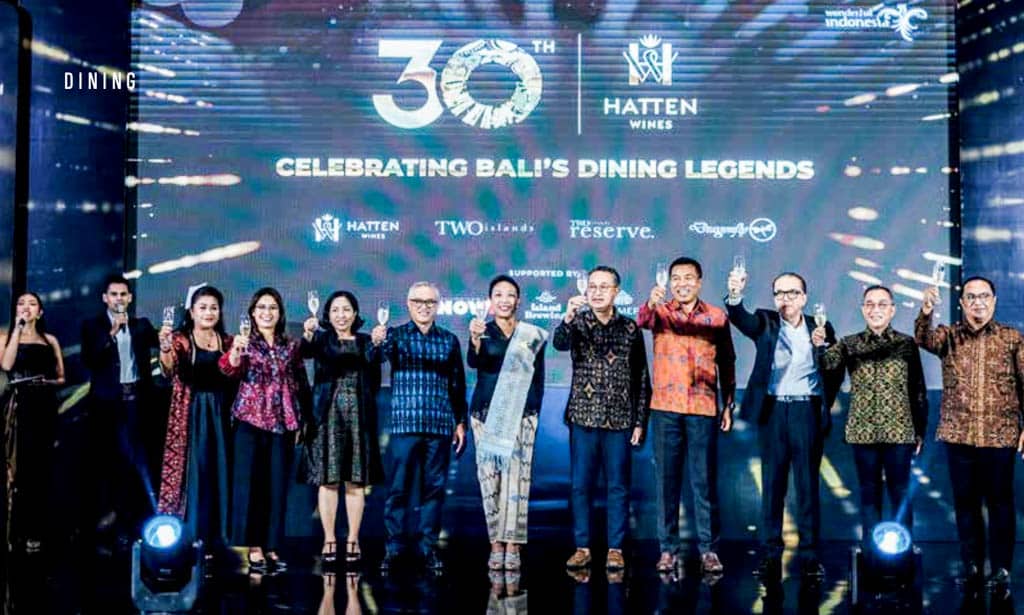
In conjunction with their 30th anniversary, Bali’s original winery, Hatten Wines, celebrated the island’s food and beverage pioneers, creating the Bali Dining Legends Awards.
On Saturday, 7 December 2024, a fabulous gala dinner unfolded at the Meru Convention, a grand ballroom overlooking Sanur Beach. This was a milestone moment for Bali’s first winery, Hatten Wines, who invited partners and the food and beverage community to come together and celebrate an impressive three decades of growing and making Balinese wines.
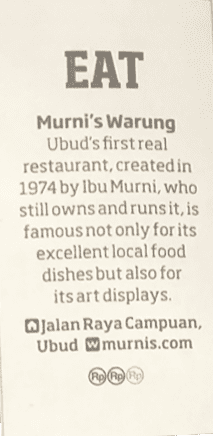
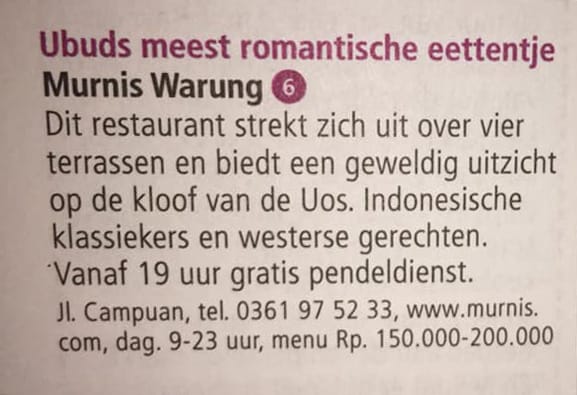
Ubud’s first real restaurant, created in 1974 by Ibu Murni, who still owns and runs it, is famous not only for its excellent food dishes but also for its art displays.
Located next to the old Campuhan Bridge, a five-minute ride from Ubud Central, Murni’s Warung sits peacefully on a river’s hillside, boasting the view of River Wos flowing water. Built from the ground up, the restaurant first opened in 1974 and has been serving food and hospitality for 47 years now.
Owned and run by a Balinese woman, Ni Wayan Murni, the warung has expanded to four open-air levels, complete with shop and lounge bar. However the atmosphere remains the same. Each guest will be immersed in its traditional interior design carefully decorated with exquisite antiques and artworks.
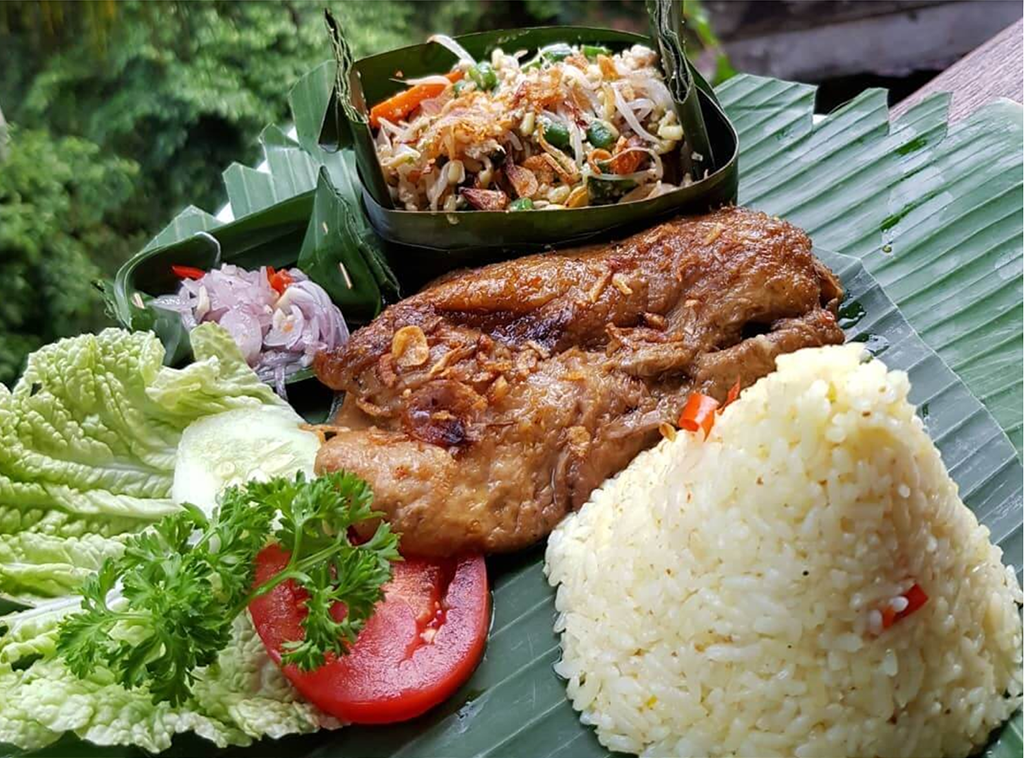
Similarly, the menu has also been expanded to cater to both local and international tastes where guests can find pasta, steak and a hot dog, for example. But you cannot miss the time tested signature dishes, such as Bebek Betutu (Balinese Duck), Murni’s Tutu Ayam, and Nasi Campur.
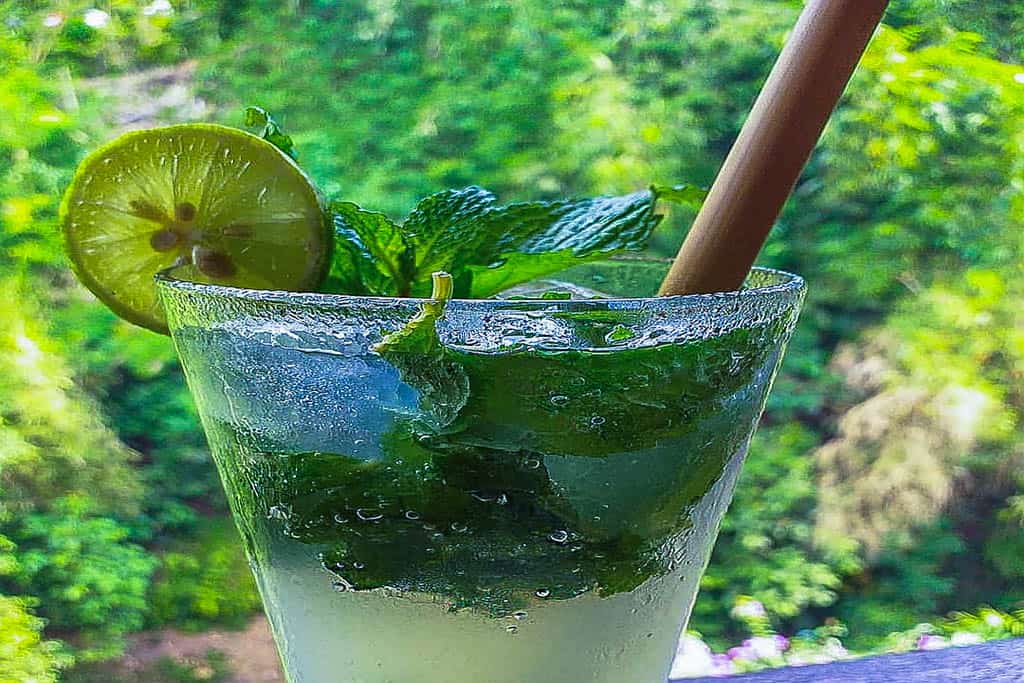
Fresh mint leaves, squeezed lime juice, simple syrup, topped with soda water, with a view of the green Campuhan jungle.
An extremely refreshing thirst quencher (try repeating that 10 times!)
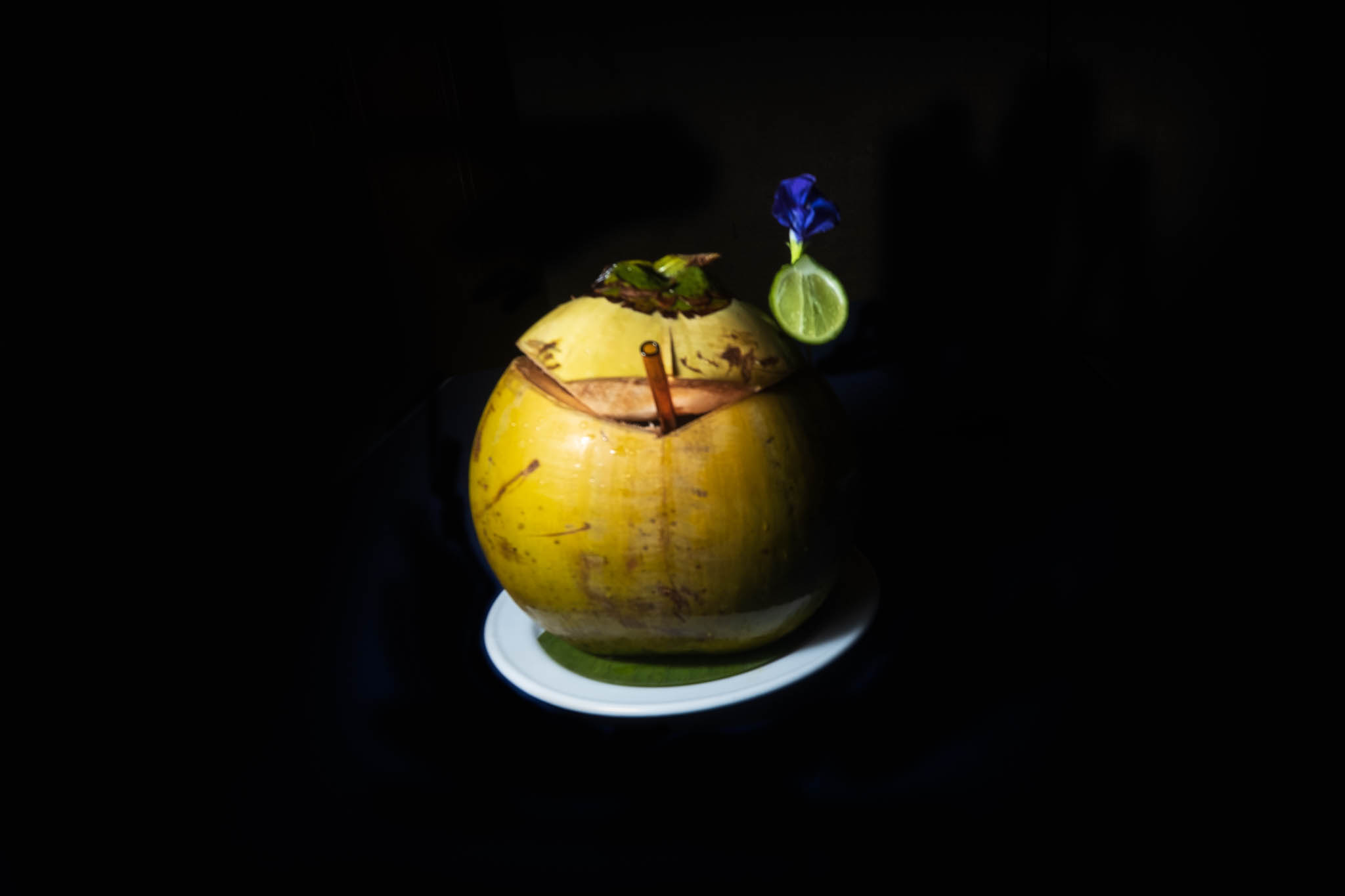
Coconut.
Whole young coconut fresh from the tree.
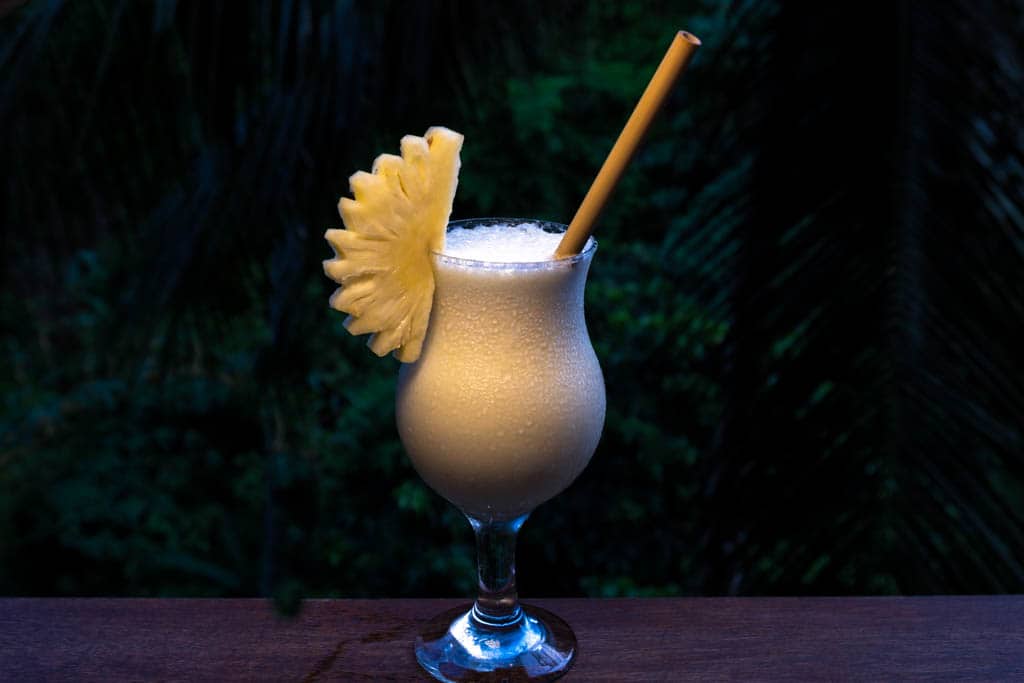
Piña Colada.
Puerto Rico officially declared the Piña Colada as its national drink in 1978.
The cocktail is so popular that 3 bartenders claim to have invented it, all from Puerto Rico, and 2 of them from the same bar. Ramón Pérez says he spent months perfecting it before launching it on 15 August 1952 at the Caribe Hilton Hotel’s Beachcomber Bar in San Juan. But his colleague Ricardo Garcia claims he discovered it. Then Ramón Mingot, bartender at Barrachina, a restaurant, also in San Juan, says he invented it in 1963.
Who cares? It’s a great drink. 10 July is National Piña Colada day. Murni’s Warung makes it from Bacardi, Pineapple Juice, Coconut Milk, and Triple Sec.
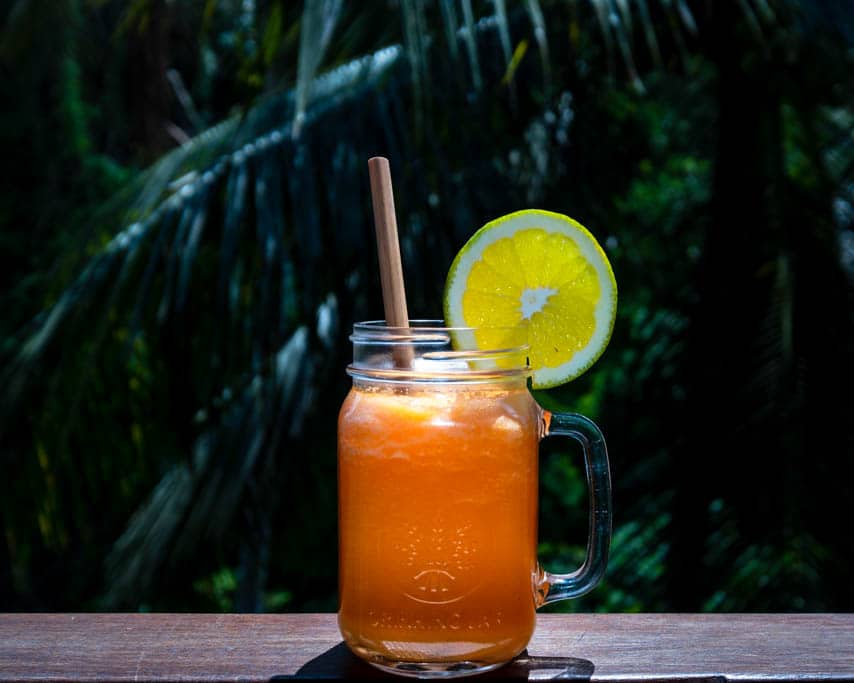
Cold and Flu Buster.
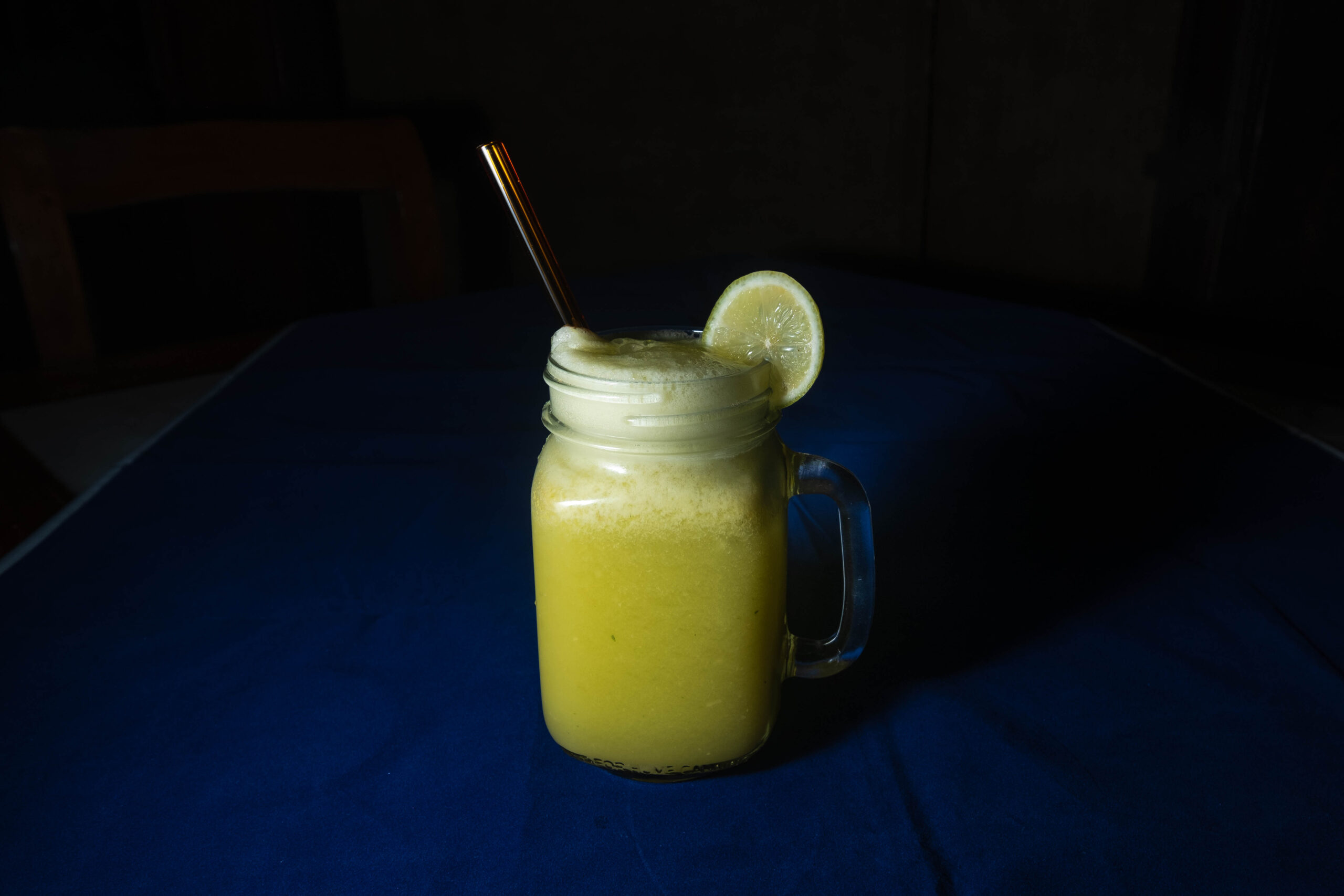
From our Healthy Juices Menu: Tangerine, carrot, apple and lemon.
Super Green Juice.
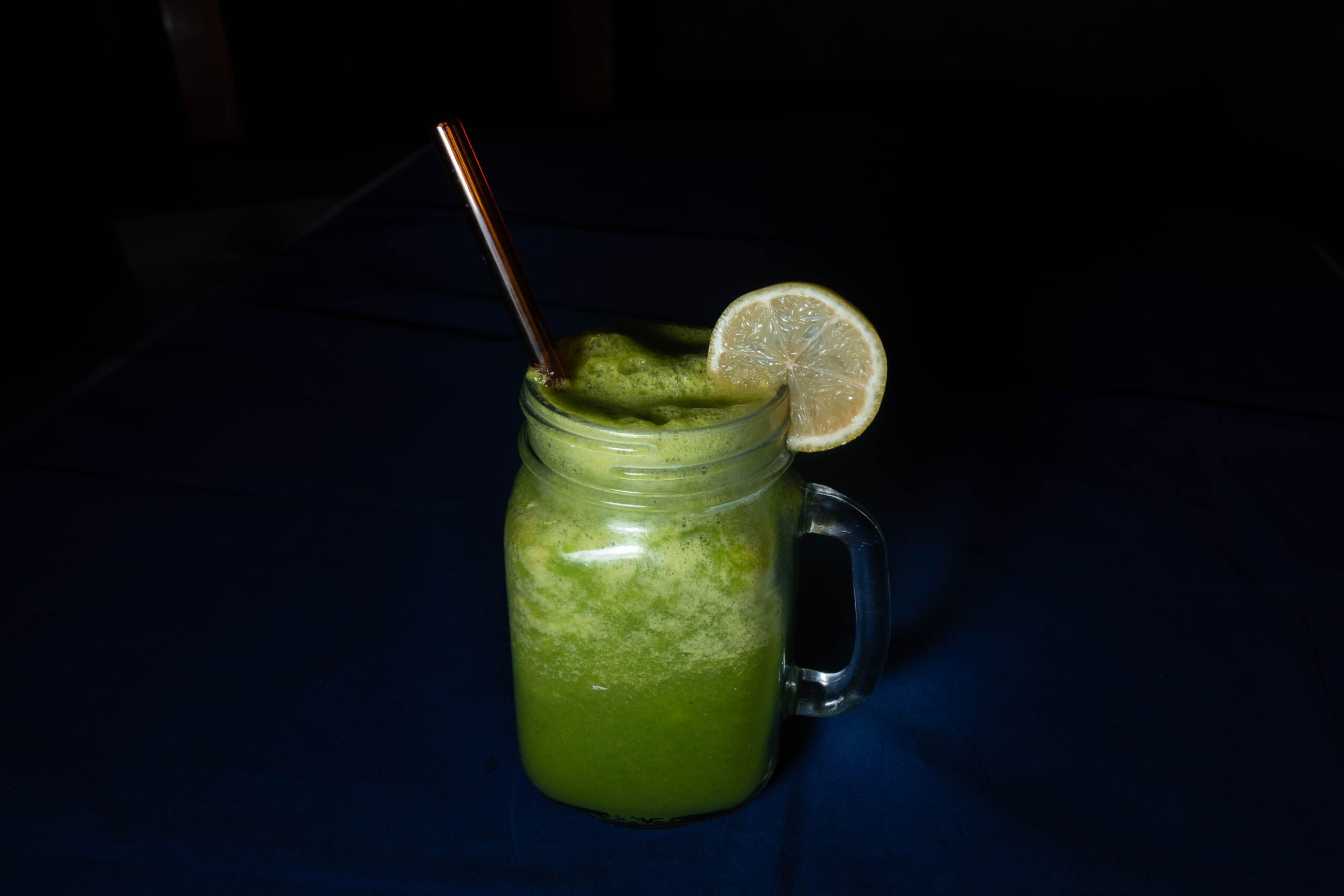
From our Healthy Juices Menu: Cucumber, green vegetable, celery, ginger and lemon juice – helps reduce blood pressure.
Moisturiser.
From our Healthy Juices Menu: Fresh cucumber, ginger, orange – improves skin texture, moisturizer and reduces body heat.
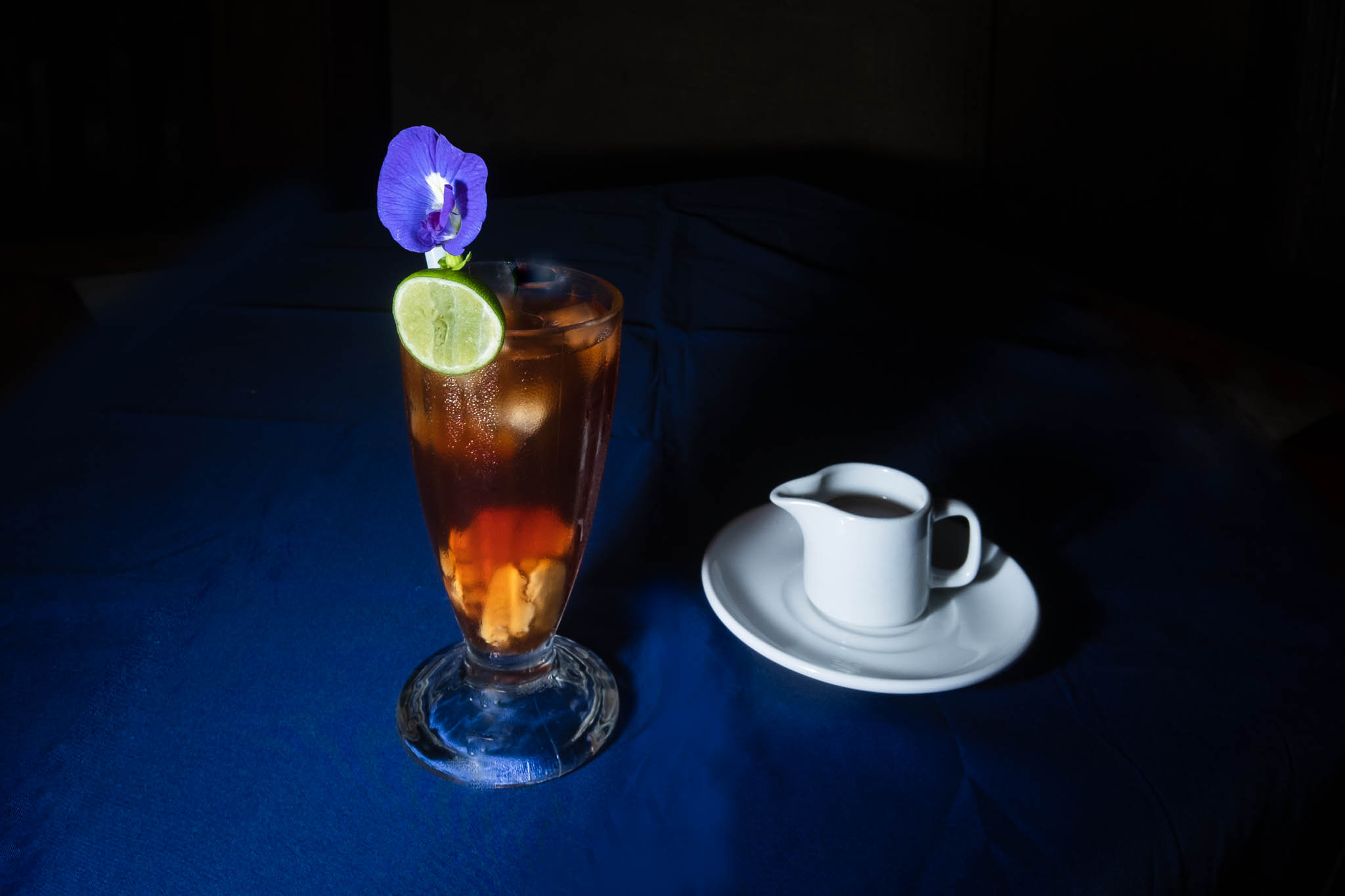
Iced Ginger Tea.
Ginger tea has a long history dating back to China some 5,000 years ago, where it was traditionally used as a health tonic. It’s good for digestion.
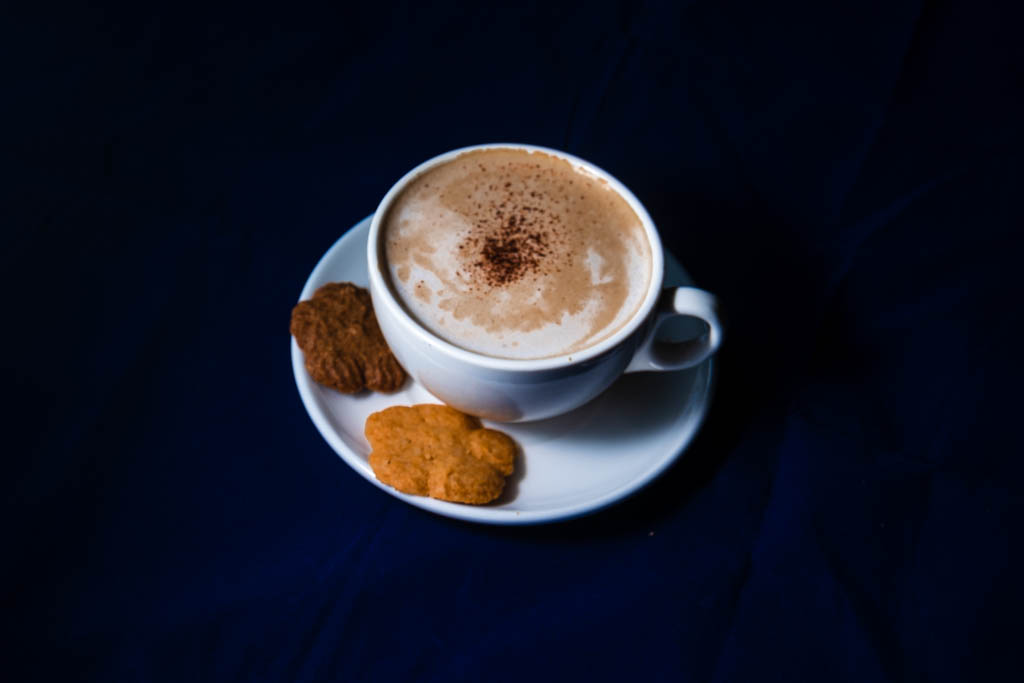
Cappuccino.
Made popular during both World Wars, a cappuccino has a bottom layer of one or two shots of espresso, a middle layer of steamed milk, followed by a thick, airy layer of foam to give a perfect, luxurious, velvety texture.
Vanilla Caramel Light Frappé.
Blended milk, cream, a dash of espresso, caramel and ice.
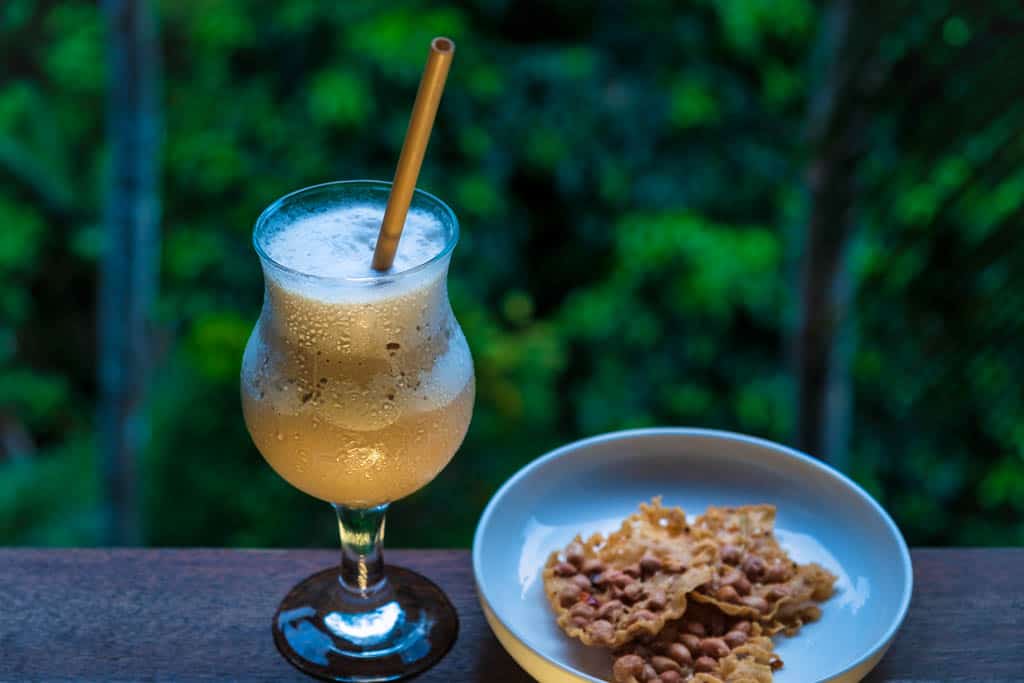
The snack is Rempeyek or ‘Peyek” for short. They are delicious Balinese, crunchy, savoury crackers, studded with peanuts. Peyek is the sound they make when you bite into them! Rempeyek are totally moreish – you can’t just stop at one!
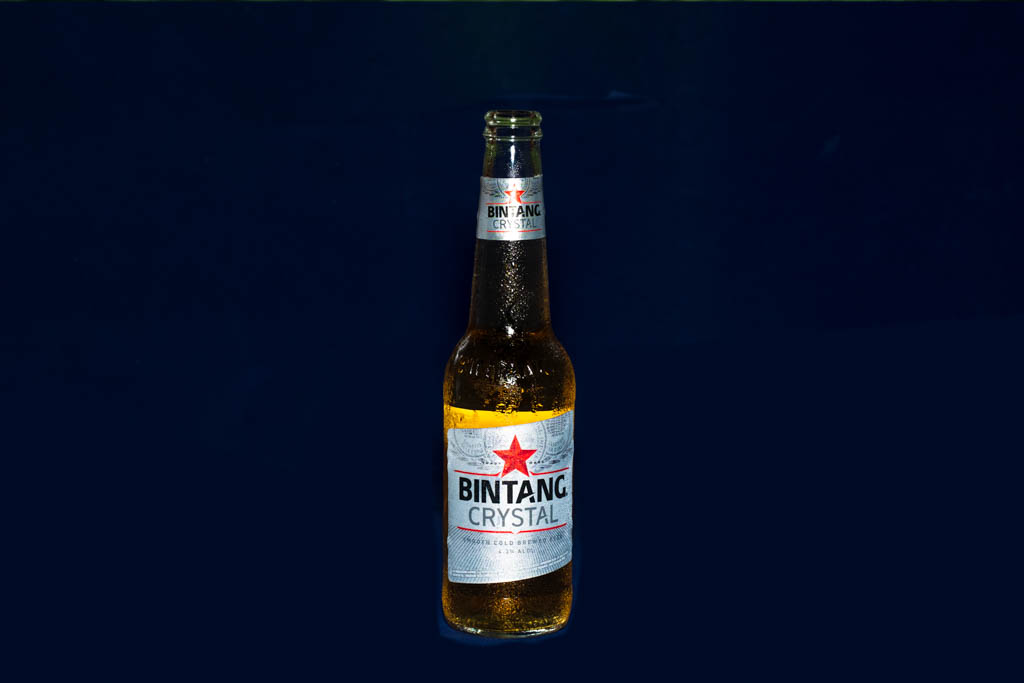
Bintang Crystal.
Bintang Crystal, Bali’s new, less bitter, smoother, cold-brewed beer.
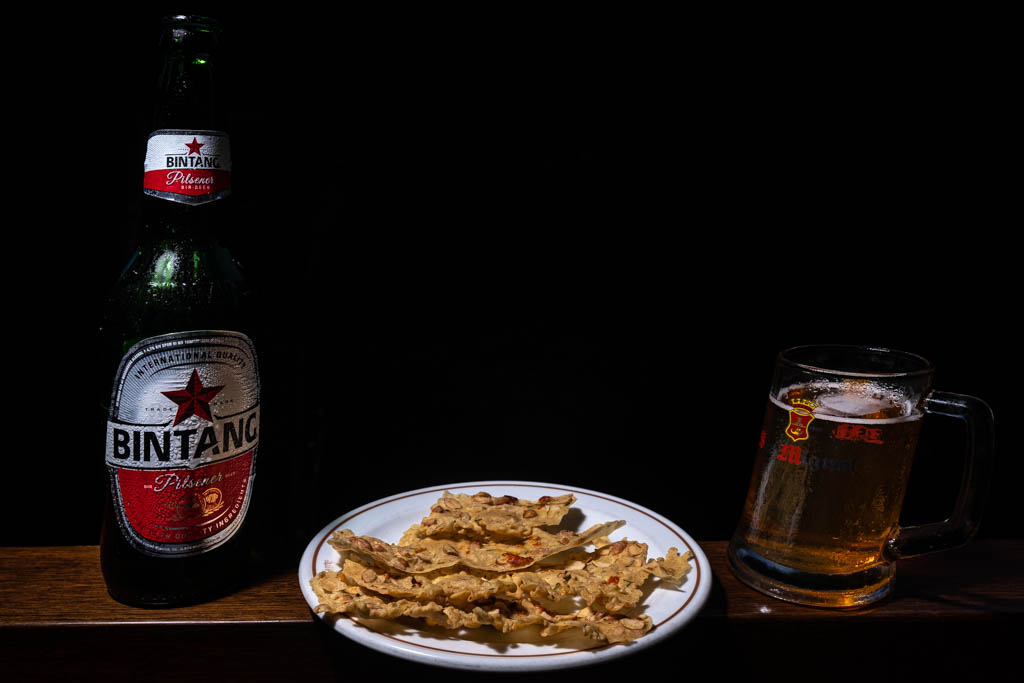
Bintang and Rempeyek.
Bintang means ‘star’ in Indonesian. The star beer was first brewed in Surabaya in 1929 during Dutch colonial rule. In 1957, after Indonesia became independent, it was nationalised until Heineken retook control in 1967. The 4.7% alcohol malty beer is on every menu in Bali. We recommend our crunchy home made delicious Balinese snacks with every mouthful.
Le studio à partir de 475 000 Rp jusqu’à 2 500 000 Rp l’appartement pour 5 personnes. Petit déjeuner en option.
A seulement trois minutes de la rue principale d’Ubud, vous pouvez profiter du calme de ce lieu devenu une institution. Cet établissement possède 12 maisons confortables à la décoration traditionnelle balinaise. Certaines maisons comportent deux chambres, un salon, une véranda et deux baignoires. Le salon possède également un lit. Murni’s Houses and Spa appartenait au célèbre pionnier local Murni qui a fondé Murni’s Warung, le premier restaurant international d’Ubud en 1974, ainsi que le magasin Murni’s shop, le premier magasin d’arts tribaux et d’antiquités à Ubud. Les objets d’art ornent les murs et font du Murni’s Houses un véritable musée. Aux maisons, au restaurant et à la boutique s’ajoute un spa où le personnel qualifié vous accueille dans une ambiance propice à la détente.
Just three minutes from the main street of Ubud, you can enjoy the calm of this place becoming an institution. The hotel has twelve comfortable houses with traditional Balinese decoration. Some have two bedrooms, a living room, a veranda and two bathrooms. The lounge also has a bed. Murni’s Houses and Spa belongs to the famous local pioneer Murni who founded Murni’s Warung, Ubud’s first international restaurant in 1974, as well as the Murni’s shop, the first tribal arts and antiques store in Ubud. Art objects adorn walls and make Murni’s Houses a real museum. As well as the houses, the restaurant and the shop, there is Tamarind Spa where qualified staff welcomes you in an atmosphere conducive to relaxation.
Murni has created a special Romantic Honeymoon Package at Murni’s Houses & Spa.
Stay at Murni’s Houses & Spa with its lovely garden full of sculptures and tribal art objects, which the New York Times said is one of the best small hotels in the world and that was even before Murni improved it!
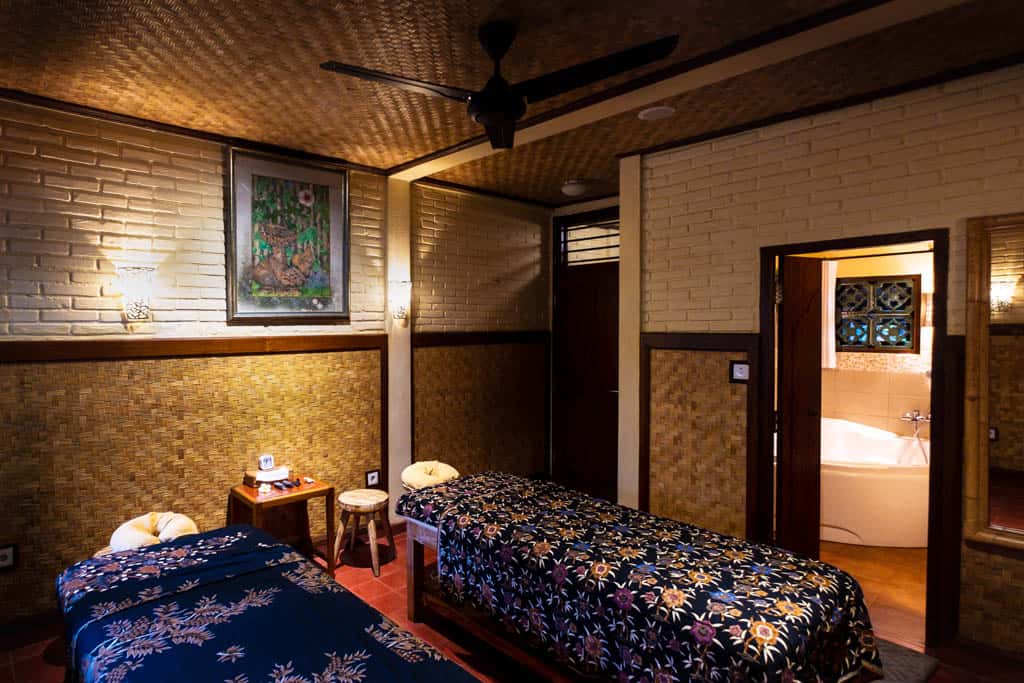
Relax in one of our new luxurious couple’s rooms at the popular Tamarind Spa at Murni’s Houses, which many say is the best spa in Bali, and a spa enthusiast even said was the best spa in the world (and she should know). En suite baths and showers, subdued lighting, individually controlled music, air conditioned.
Dine at the historic Murni’s Warung which was first real international restaurant in Ubud, now celebrating over 50 years, in a stunning, riverside gorge, a real photogenic location, and try Bali’s most famous local dishes.
Everyone knows that Ubud is the cultural capital, but in the last decade it’s also become the foodie capital of Bali , so much so that it could become a United Nations World Tourism Organization Global Gastronomy Destination.
It would be the first in Indonesia, so I was honoured a few days ago, as owner of the first restaurant in Ubud, to be invited to meet the representatives from the WTO and entertain them on the lowest and most romantic level of Murni’s Warung.
They were on a fact finding mission and carrying out interviews with “gastronomy stakeholders, hotels, restaurants, cooks, food festival initiators, local administration, academics, transportation service providers and tourists.” We had a great chat about gastronomy tourism and they stayed more than double their allotted time.
They now have to analyse what they’ve learnt from their visit and make an official recommendation.
If it’s positive, Ubud should receive its title as a Global Gastronomy Destinationin 2020.
If all the big names in the Balinese culinary world started with small warung that expanded organically, Murni’s Warung in Ubud is definitely the first that began as a batik shop. With her American husband Pat, Ni Wayan Murni moved shop to a more strategic location on the side of a main road below the hermitage of the painter Antonio Blanco.
It started with Pat liking Murni’s black glutinous rice porridge, and Murni learning how to make Western-style breakfasts from Pat. Eventually, four tables and 16 chairs were added to the batik shop that had been catering to customers of Antonio Blanco who wanted breakfast and coffee. Murni’s consistent quality means the warung is now a culinary icon in Ubud.
100 Best Foods of Bali
by Bondon Winaro, Lidia Tanod and Harry Nazarudin, Penerbit Jalansutra, 2015
So take a break from the temples, the boutique shopping and the bucket list adventures for a moment, because you’ll want a taste of the best restaurants in Ubud. From gourmet to gastro, vegan to carnivorous, this fascinating neighbourhood has it all (cocktails included!)– no matter your budget or foodie fancy.
Ask for Murni’s when you arrive in Bali and your driver will know right where to take you. Murni opened her little Warung with just one table and two chairs back in 1975, but today, this legendary restaurant sprawls over four open-air levels down the side of a steep valley. Choose to dine by the roadside or by the river – either way you won’t be disappointed as the homemade dishes are on another level, with different specials everyday. Murni’s has attracted a number of high profile clientele over the years, drawing in the celebs with her sweet & sour shrimp, Balinese duck and chicken curry.
This page contains several Videos of Murni’s Warung.
Drew’s Travel Adventures – Biyahe Ni Drew is a popular TV travel show in the Philippines that takes its viewers on an adventure every week.
It is broadcast by GMA News TV and GTV and hosted by actor Drew Arellano and has won many awards.
Murni’s Warung in a Minute!
This video is a very brief overview of what’s available in Murni’s Warung. It is part of a series, including Murni’s Warung Shop, Murni’s Houses and Tamarind Spa at Murni’s Houses.
Brian and Melissa’s Balinese Blessing, Murni’s Warung, Ubud, Bali
We can arrange a Balinese Wedding or Blessing at Murni’s Warung (as well as a Wedding Reception).
Murni’s Warung can accommodate at least 100 people over the four levels. We can also arrange entertainment.
Brian and Melissa from Australia close to renew their wedding vows in formal Balinese dress before a Balinese priest at a wonderful, private ceremony at Murni’s Warung to the sounds of the priest’s bell, the sacred river below and 2 Balinese tingklik players.
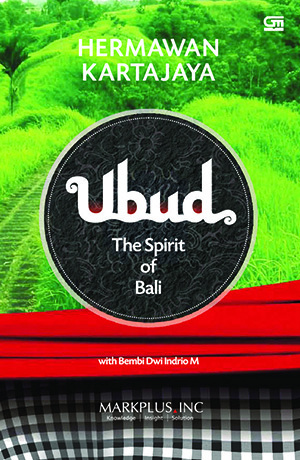
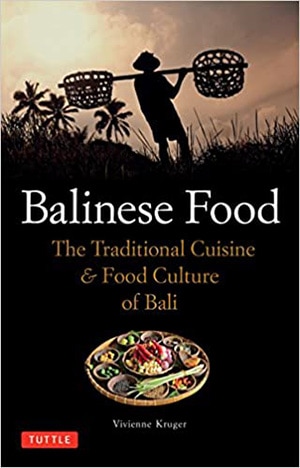
Murni’s Warung‘s fame has meant that it’s been the setting for a couple of works of fiction: Gotton Island and Bali Gods Crying and has also figured prominently in two recent works of non-fiction about culinary tourism and Balinese food: Ubud, The Spirit of Baliand Balinese Food, The Traditional Cuisine & Food Culture of Bali.
Murni’s Warung in Literature
Fiction
Golton Island
Golton Island Douglas Gellatly Smashwords, 2013
The novel is the second of an ebook trilogy following the lives of two gay guys called Richard and Max, who live on Golton Island, Australia.
“Being much nearer to the equator than their own Golton Island, the sun set at about six o’clock and nighttime descended quickly. Max and Richard asked at the reception desk where they could go out for dinner, and were directed to Murni’s Warung, just over the river on the main road. The restaurant is also set on the side of the same ravine and, in daylight, some tables have a view down to the flowing river below. That night, Richard and Max enjoyed an entrée of Lumpia, a deep-fried spring roll served with peanut dipping sauce, followed by Cap Cay, a vegetable stir-fry with everything thrown in together, and then Black Rice Pudding. Bintang beer accompanied their meal. Having made an easy start that day in order to catch their flight, Max and Richard then walked along the dimly lit road and hotel pathways back to their room and slept soundedly cuddled up to each other….
Back in the hotel, they rested and swam in the pool during the afternoon, then that night decided to go back to Murni’s Warung for dinner. As they were concluding their meal, Murni herself came to join them at their table, having introduced herself first. In her friendly way Murni chatted animatedly about her restaurant and her life, a smile often crossing her broad, dark face, her eyes twinkling. “What were things like in Ubud when you were a child?” Richard asked. Murni smiled and said, “Oh, very basic. We had no electricity, no running water, the roads were dirt tracks. No-one had any money and we had to make do with whatever came along.” “What did you do for food?” Max asked. “We ate whatever we could catch or collect. As a bare-footed child, I would catch capung dragon flies, with a sticky substance on the end of a long bamboo pole, and we would cook and eat them. Or I would catch eels in the rice paddies, or shrimps in the river, which we would also cook. And there was always fruit like pisang, bananas, or durians or coconuts.” “And now you’ve got this restaurant,” Richard observed. “Yes, and I hope that you have enjoyed coming here,” Murni said. “What else have you gentlemen being doing while you have been staying in Ubud?” They told her of the various things they had done, including the cooking class, and Murni said, “Thank you for contributing to the economy of this town. We all need as much help as we can get.”
The whole chapter is narrated here by Douglas Gellatly:
Bali Gods Crying
Bali Gods Crying Richard Mann Gateway Books International, 2013
The novel is based on true events in which unscrupulous criminals are threatening Bali’s Hindu religion and civilization. The heroine lives in Ubud.
“Maybe something romantic will happen to you,” said Oz wickedly. Celine was silent, looking around her. They had a late lunch at Murni’s Warung next to an old Dutch suspension bridge across the two rivers of Rsi Markandya in a comfortable lounge decorated like a Balinese antique gallery and overlooking the gorge she had seen from the suspension bridge. “Even your lunch venue has a special meaning,” smiled Oscar. “Murni’s was almost the very first tourist restaurant in Ubud. Sometimes Murni is here and loves to tell visitors about Bali’s culture.” On their way out of the restaurant the French language caught Celine’s eye from a selection of promotional materials on a low side table. “Un Momento Oz,” she called pointing at the table. “I want to see what they have in French.”
…
Celine remembered her way to Murni’s so she went there for a breakfast of eggs, fruit and coffee, much more than her normally frugal, diet conscious fare in France … Outside Murni’s she walked down a slight hill along an asphalt lane romantically overhung with long tendrils of trailing creepers, past the temple housing the statue of Maharesi Markandya that Oz had told her about, turned right and was almost immediately in the rice fields.”
Murni and Murni’s Warung in Literature
Non-Fiction
Ubud, The Spirit of Bali
Ubud, The Spirit of Ubud Hermawan Kartajaya Gramedia, 2009
Chapter 6 The Food Paradise
One of the major attractions of Ubud is its culinary tourism … For the Hindu-Balinese cooking is a form of devotion to Almighty God. Most of the traditional Balinese dishes we know today, such as grilled chicken or roast suckling pig, were formerly prepared for traditional religious ceremonies. These dishes only began to be served in restaurants after tourism became a major industry.
Restaurants began to develop in Bali in the 1970s. Though foreigners have been visiting Bali since the 1930s, there weren’t many restaurants because many of the early visitors were artists who stayed in local people’s homes, where they also took most of their meals. It was only in the 1970s when a greater variety of tourists started coming and the tourism sector in Bali began to expand, that restaurants started appearing one by one…
The restaurants eventually became meeting places where all kinds of people came together and interact, and not simply places to fill one’s stomach. Restaurants are venues for discussions on many topics…
A number of restaurants have become legends among food lovers, both for their food and for other reasons. Below are the stories of a few of these restaurants, some established by native Ubudians and some by expatriates.
Murni’s Warung
Murni’s Warung was probably the first restaurant to become popular among tourists, especially foreigners. It’s located on Jalan Raya Sangginan, directly opposite the old iron bridge from the Dutch colonial days known simply as The Bridge.
The founder and owner of this restaurant is Ni Wayan Murni; this is why it’s called Murni’s Warung. The restaurant has a long history. Ibu Murni started out as a salt trader in the 1950s when she was not yet ten. She had to carry large baskets of salt from her home in the northern part of Ubud to Desa Penestanan, about two kilometers away.
Also, when she was very young, her parents separated. Little Murni went to live with her aunt in Denpasar. There she had to get up at two in the morning and sell food until five, before going off to school.
Some time later, young Murni returned to Ubud and lived with her mother. They had a small shop in Pasar Ubud where they sold products such as beer, soft drinks and batik to foreign tourists. At the time theirs was the only stall in the market that sold beer and soft drinks, so drinks were often purchased from their stall to entertain guests at Puri Ubud. And President Sukarno, who often visited Ubud, once bought some of their batik.
In the early 1970s, Murni opened her own shop on a small plot of land on Jalan Raya Sangginan – the venue of the present restaurant – which she rented from a man called Pak Munut. The shop sold sarongs, carvings and paintings. Ibu Murni was no cook, so it didn’t occur to her to open a food stall. And there was little furniture, just one bamboo table and two chairs.
There was a customer from the United States, one Patrick Moore Scanland, who often asked Ibu Murni to make him sandwiches and beer at the warung. Eventually many other guests wanted the same, and that was the start of Murni’s Warung.
In 1974 Ibu Murni married Patrick. One year later, they bought the land and opened the restaurant, Murni’s Warung. At the same time they opened an antique shop with a collection of art works from all parts of Asia.
Murni’s Warung had, and has, a very loyal clientele. The customers helped promote Murni’s Warung and taught Ibu Murni how to cook Western food. This is how Murni’s Warung became known as the first restaurant in Ubud to offer Western food to tourists.
The architectural design of Murni’s Warung is in traditional Balinese style, with an open air concept. The building has four storeys, going down from street level, as it is built on the banks of the Wos river. There are paintings and statues throughout the restaurant; one of the most interesting portrays the scene around Murni’s Warung in the 1970s.
On one storey, there is a room for special private events. Inside The Lounge Bar there is a large statue of Ganesha. On the lowest level, we can enjoy our food while watching the Wos flowing past.
The favourite dishes here are Nasi Campur Bali (rice with various side dishes), Nasi Goreng (fried rice) and typical Indonesian dishes such as cendol and sweet iced tea. As well as traditional dishes, Murni’s Warung offers many other choices.
In addition to the food, as mentioned earlier, Murni’s Warung has an antique store that sells a variety of souvenirs and antiques from throughout Indonesia: textiles, statues, traditional heirlooms, paintings and so on. Ibu Murni herself often travels abroad and collects antiques from the countries she visits and to display and sell in her shop.
The present building of Murni’s Warung is very different from the original structure built in 1974. The present building is the result of a major renovation in 1992, but the traditional Balinese architecture remains the same.
Balinese Food, The Traditional Cuisine & Food Culture of Bali
Book Review: A Spiritual Journey Into The Culinary World of Bali Jonathan Copeland Jakarta Globe 17 April 2014
What a joy this book is! I love recipe books, but it’s short-lived; I enjoy the pictures for several minutes, read a few pages, and then my eyes glaze over. They are basically books to be used in the kitchen for one recipe at a time. This book, however, is in a different class altogether and designed to be read in its entirety. It’s in its own sui generis category; it has recipes at the end of most of the twenty-one chapters, but it’s a book to be read from cover to cover, yet it could easily be read chapter by chapter, in any order, as they are all self-contained. Every bite-sized chapter is a flowing narrative from a well-stocked brain encompassing Balinese culture, geography and history, while not losing its main focus: food.
As you would expect from a scholar with a PhD in history from Columbia University, the subject matter has been meticulously researched, not from books and articles and other people’s work, but from actually being on the ground and in the markets and in the kitchens of Balinese families, where the Balinese themselves learn their culinary skills, hands on, passed down orally, manually and practically from generation to generation.
Vivienne Kruger has lived in Bali long enough to get it right. That’s no mean feat, as the subject has not been fully studied before.
Yes, there are so-called Balinese recipe books, most, if I’m not mistaken, written by foreigners, and heavily adapted. The dishes have not, until now, been systematically placed in their proper cultural context, which is extremely important for the Balinese, nor has there been any examination of the numerous varieties of each type of recipe, nor have they been given their true Balinese names.
This groundbreaking book is a pleasure to read, not just for its fascinating content, which I learnt a lot from, but for the exuberance, enthusiasm and originality of the language. There’s not a dull sentence in the book. You just can’t wait to read the next phrase.
There are eye-opening and jaw-dropping passages for the general reader as Kruger describes delicacies from the village of Tengkudak in Tabanan district — grasshoppers, dragonflies, eels and live baby bees — and explains how they are caught and cooked. She does not shy away from controversial subjects, such as eating dog and turtle. Parts of it are not for the faint-hearted, but other parts make you want to go out and join the participants, such as the Nusa Lembongan fishermen, who sail their outriggers at 5.30 a.m.
The author quotes Miguel Covarrubias, the great Mexican Bali observer of the 1930s, who wrote the wonderful Island of Bali, and which has inspired all writers since, including myself and my co-author, Ni Wayan Murni, in our book Secrets of Bali, Fresh Light on the Morning of the World. There is, however, no bibliography, which I found strange at first. I can only imagine it’s a reflection of how original the subject matter is; there simply are no other sources.
The author in many, if not most, places mentions the prices of ingredients and dishes. This is interesting and helpful in giving an idea of the relative cost of goods, but it’s already out of date. I’m afraid that with Indonesian inflation currently at over 7 percent, and more for some items, the prices she quotes are on the low side. Furthermore, there are seasonal swings in prices. As every Balinese housewife knows, when a ceremony is approaching where, say, bananas are required to make the offerings, the price of bananas goes up. So, if the author quotes the price of pepper, just take it with a pinch of salt.
Throughout the book Kruger mentions Balinese and Indonesian words and sometimes discusses their derivations. It’s a Herculean task. I was intrigued to read that “satay” comes from the Tamil word for flesh ( sathai ) and that South Indians brought satay to Southeast Asia before Indonesia developed its own tradition. The book is full of interesting titbits like this.
I was hoping that there would be a glossary of all these words for future reference, but I can quite understand the publishers’ reluctance, as it would have doubled the length of the book. Perhaps an accompanying glossary for future publication would be worth considering. The book contains 47 recipes in all, 11 of which came from Murni’s own restaurant, Murni’s Warung, in Ubud. Mr Dolphin of Warung Dolphin in Lovina also contributed a number of recipes. Kruger adds an introduction to each recipe, with a detailed and usually very personal commentary.
I think my favorite, though, is from a village priest (pemangku), I Made Arnila of the Ganesha (Siwa) Temple in Lovina.
Holy Water from a sacred spring or river, or regular purified drinking water – Pour the water into a metal container that holds holy water (sangku).
Take small, bright pink bougainvillea flower petals from the offering trays around the central Lingga shrine (at a Siwa temple) and drop them into the sangku. This means that Siwa gives power. Fragrant, greenish-yellow blossoms from the Ylang-ylang, an East Indian tree (Cananga odorata) can be used instead of bougainvillea.
Light an incense stick and place it in the offering tray beneath the Lingga.
The pemangku sits on the floor to pray or stands and recites three holy mantras for holy water:
Mantra Ganesha Mantra Guru Gayatri Mantra Mantra Durga
The pemangku distributes the fresh holy water to worshippers at temple ceremonies.
I don’t think many readers will be qualified to use the recipe for holy water, but I am sure most will enjoy this book enormously; I certainly did.
The author was interviewed for the Indonesia Expat magazine.
Vivienne Kruger: Balinese Food Bill Dalton Indonesia Expat 6 May 2014
Considered a leading authority on the culinary arts of Bali, Vivienne’s book Balinese Food: The Traditional Cuisine and Food Culture of Bali was published by Tuttle in April 2014.
What inspired you to get into food writing?
I started out writing articles about a prominent Balinese restaurateur, Ni Wayan Murni, the owner of Murni’s Warung in Ubud. While researching her fabulous restaurant and the foods on her menu, my interests took an unexpected turn into traditional Balinese cooking—and I just kept going!
What’s so special about Balinese Food?
Balinese food is singular among the leading cuisines of the world. Dedicated to the gods and fuelled by an array of fresh spices, it’s inextricably bound to the island’s Bali-Hindu religion, culture and community life. The Balinese cook with love, art, reverence and exactitude. My book bears witness to Bali’s time-honoured, authentic village cuisine as well as its spectacular ceremonial feasts when food is carved, etched and painted into the rich spiritual shapes and divine colours of holy temples and imposing royal palaces. Curious strangers can only gape in awe, respect and admiration as they struggle to learn how to make these intricate food offerings.
We always reply to emails – and the form – within 24 hours, usually more quickly, often immediately. If you don’t get a reply using the form, something has gone wrong, so please email us.
To call Murni’s Warung directly to make a booking:
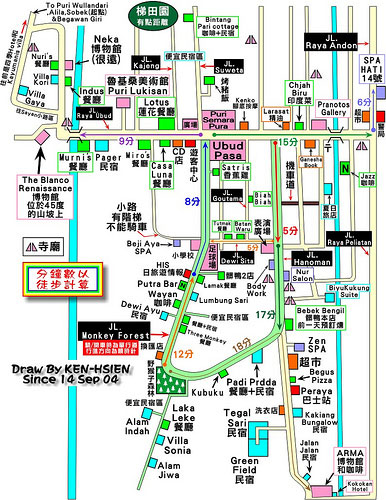
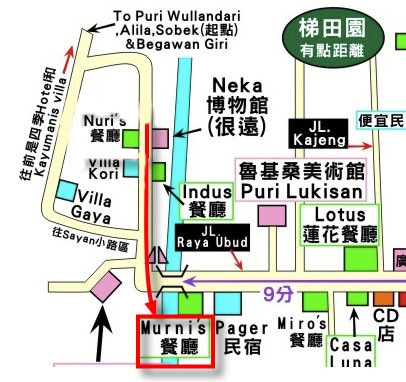
Murni’s Warung is just 5 minutes walk from the town centre.
From the town centre, start on the side of the main road where the market is, opposite the palace, and go towards Murni’s Warung.
Go past Jalan Bisma.
Go past the ramp at the aqueduct on the main road opposite the temple – continue and we are on the left hand side before the bridge. You will see our hand-carved sign.
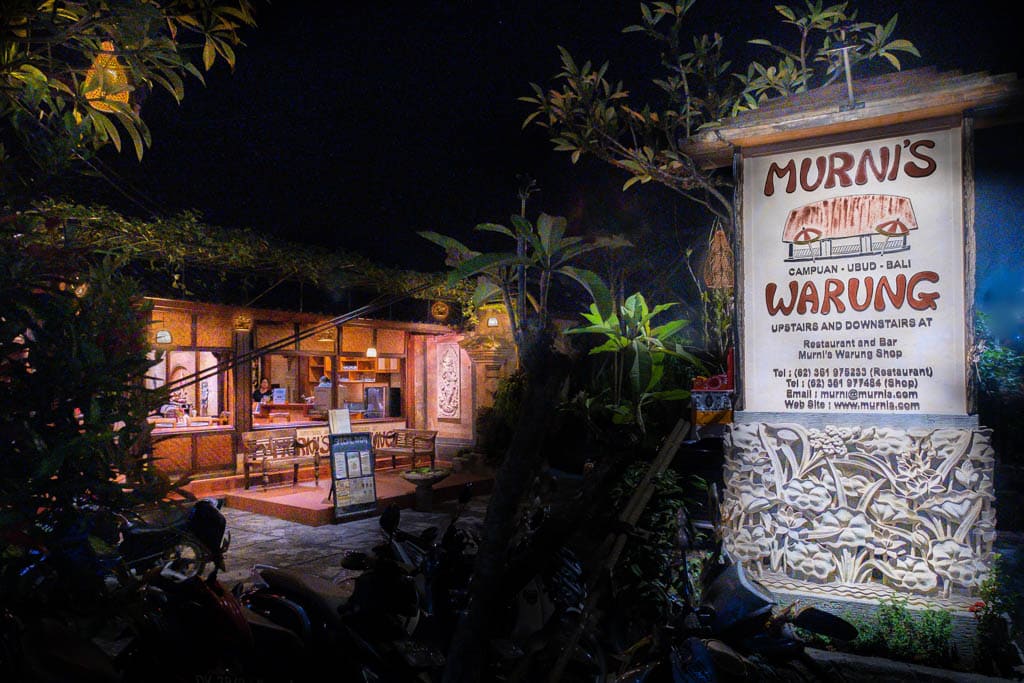 Murni’s celebrated cooking has made her into somewhat of a local legend