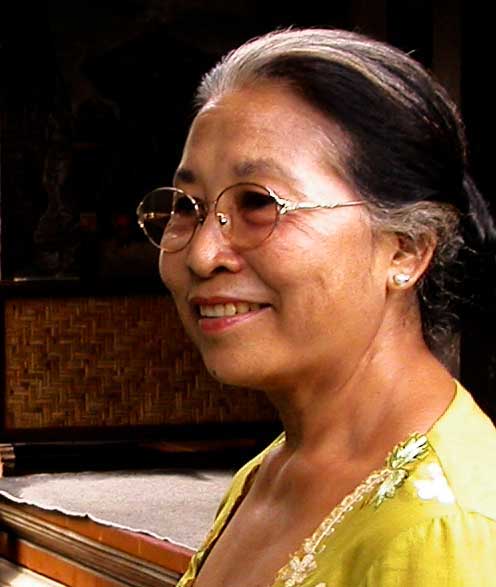
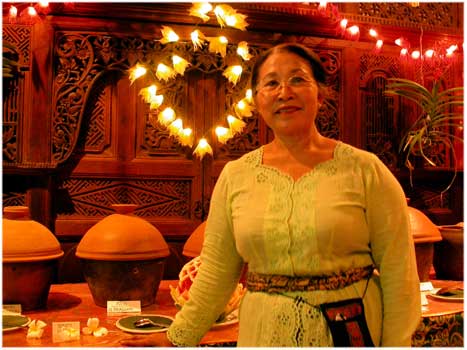
For me, that moment came on my third day in Ubud, sitting across from a remarkable woman named Ni Wayan Murni, a plate of fried bananas between us, listening to her tell me the story of her life. By the time I left Bali, I understood that finding Murni’s Houses had been one of the great strokes of luck of my traveling life.
From local hangouts to beach clubs and surf shacks, here’s where to eat on the island
Two decades ago, I spent a year in a remote West Balinese fishing village. I must admit that I struggled with the monotony of local dishes. Yet since then, things have changed massively, as much with the quality and diversity of Balinese/Indonesian dishes as with international cuisine. Wherever you stay on the island, you’ll find a vast selection of well-crafted dishes from all over the world.
You can eat healthily and heartily for less than a pound. Or you can splash out on top-notch culinary masterpieces that would challenge some of the world’s finest chefs – all for a fraction of the price you’d pay in London, New York or Paris.
All our recommendations below have been hand-selected and tested by our resident destination expert to help you discover the best in Bali.
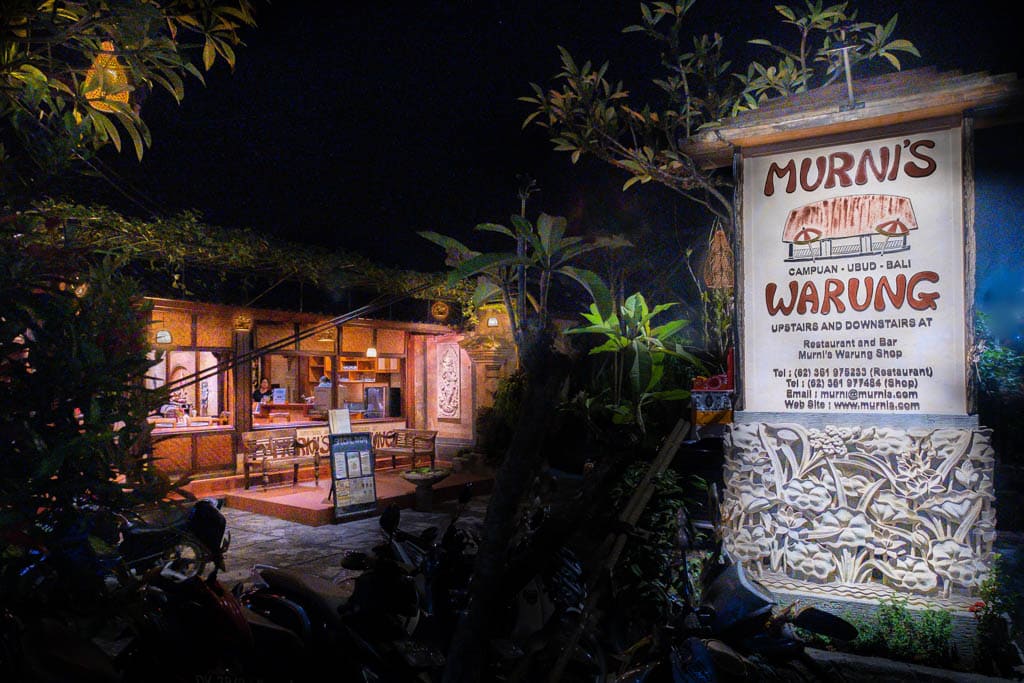
Murni’s Warung has been one of Bali’s emblematic restaurants for decades and remains a favourite lunch venue.
Best for Balinese food
Bali Asli Restaurant
The only thing that could drag your eyes away from the spellbinding Mount Agung view from the terrace will be the beautifully presented Balinese dishes. The scent of spices coming from the kitchen vies with the tropical flowers and the herb garden. For a chance to sample some local variety, order the nasi campur (a local speciality with four accompaniments). Bali Asli might be located off the beaten track, but this spot is a culinary highlight of any trip to the island.
Kaum, at Potato Head, is often considered to be the benchmark against which all other Indonesian fine-dining restaurants on the island are judged. The menu reads like a whistlestop tour taking you right across the world’s biggest island nation. Try babi genyol (a pork dish from Bali), slow-cooked beef rendang (from Sumatra) or, from the extensive vegetarian section, mouth-watering and nutritious moringa leaf broth with young coconut. All ingredients are sourced locally.
Area: Seminyak Price: £££ Reservations: Essential
Murni’s Warung
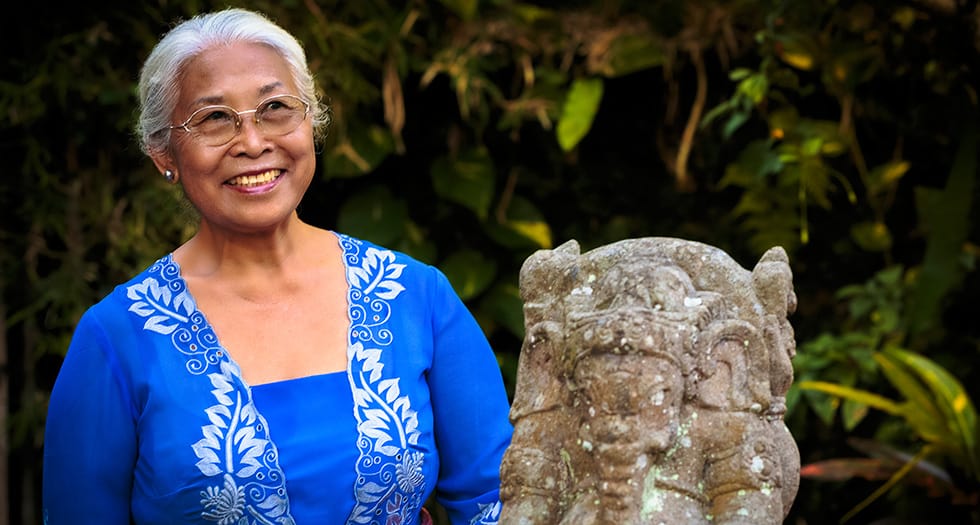
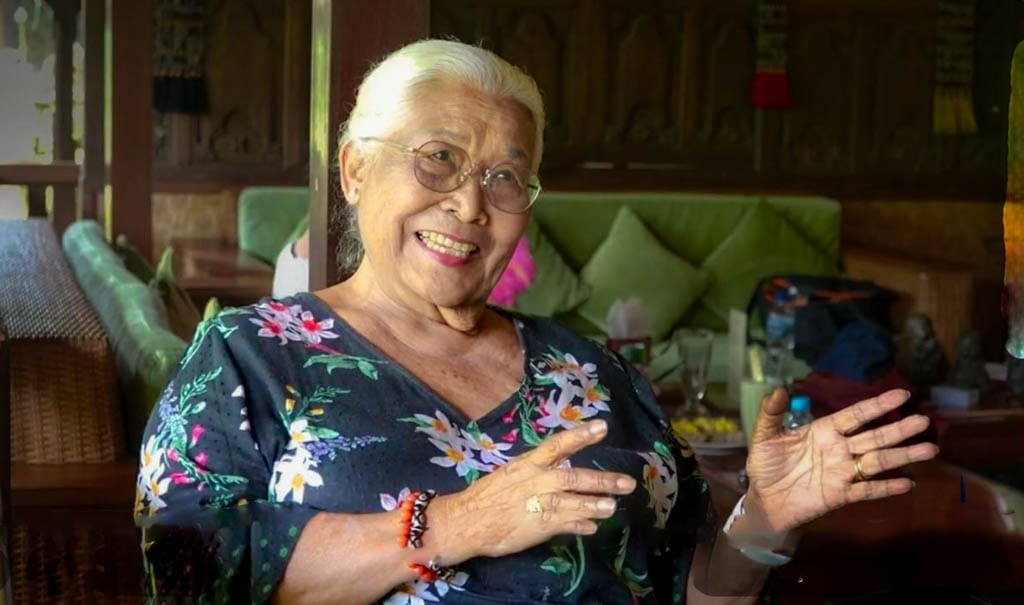
Murni’s celebrated cooking has made her into somewhat of a local legend
Ibu Murni (who claims to have been Ubud’s first woman driver) is perhaps the town’s greatest living legend, and her warung, which recently celebrated its 50th birthday, is located on a semi-open riverside deck opposite the scenic Campuhan Ridge. Try Murni’s tutu ayam (chicken slow-cooked to perfection for at least eight hours) or the bakso ayam (chicken meatball soup). For a refreshing drink after a Campuhan Ridge stroll, go for the fresh apple, turmeric kombucha.
Area: Ubud Price: ££ Reservations: Recommended
Rasta Cafe
Dewi and her husband, Rasta, run Bali’s finest warung (local eatery). Travelling foodies and even the island’s culinary superstars drive out to Medewi specifically to learn the secrets of Dewi’s home-cooking. Don’t miss the fish rendang and, for dessert, the luminously coloured (but entirely natural) dadar gulung Balinese pancakes with local palm sugar. The menu changes depending on what the fishermen bring in that morning – and what Rasta is able to source at the market that day.
Area: Medewi, West Bali Price: £ Reservations: Recommended
In conjunction with their 30th anniversary, Bali’s original winery, Hatten Wines, celebrated the island’s food and beverage pioneers, creating the Bali Dining Legends Awards.
On Saturday, 7 December 2024, a fabulous gala dinner unfolded at the Meru Convention, a grand ballroom overlooking Sanur Beach. This was a milestone moment for Bali’s first winery, Hatten Wines, who invited partners and the food and beverage community to come together and celebrate an impressive three decades of growing and making Balinese wines.
The spirit of Bali, which intertwines traditional values and customary laws within a universal framework of harmony, will continue to draw visitors long seeking enlightenment in this troubled world.
Rob Goodfellow
15 November 2024
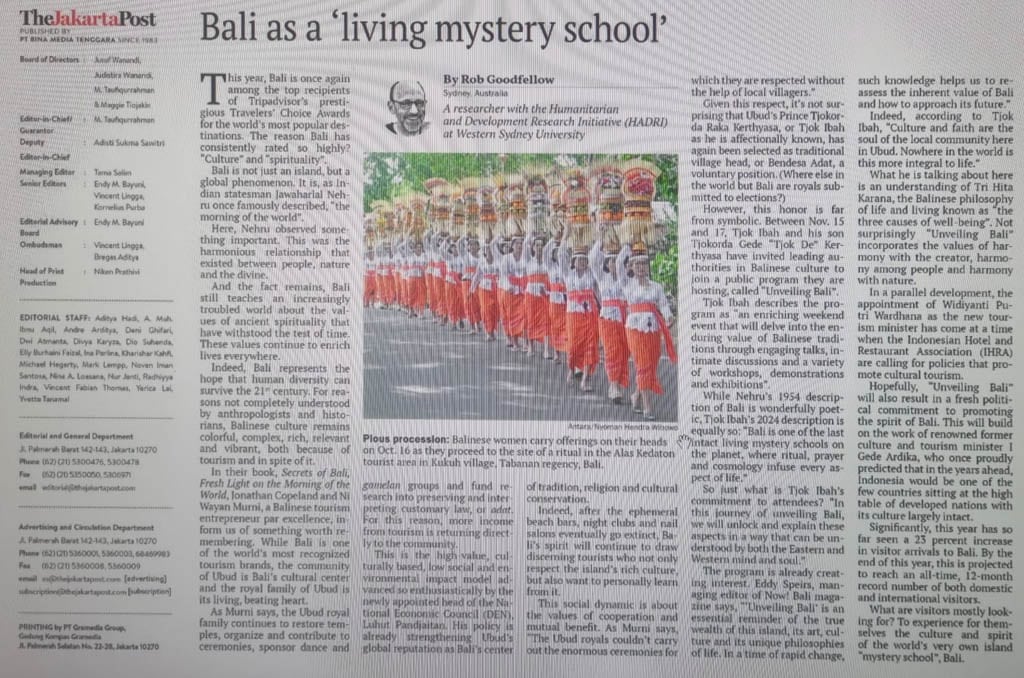
This year, Bali is once again among the top recipients of Tripadvisor’s prestigious Travelers’ Choice Awards for the world’s most popular destinations. The reason Bali has consistently rated so highly? “Culture” and “spirituality”.
Bali is not just an island, but a global phenomenon. It is, as Indian statesman Jawaharlal Nehru once famously described, “the morning of the world”.
Here, Nehru observed something important. This was the harmonious relationship that existed between people, nature and the divine.
And the fact remains, Bali still teaches an increasingly troubled world about the values of ancient spirituality that have withstood the test of time. These values continue to enrich lives everywhere.
Indeed, Bali represents the hope that human diversity can survive the 21st century. For reasons not completely understood by anthropologists and historians, Balinese culture remains colorful, complex, rich, relevant and vibrant, both because of tourism and in spite of it.
In their book, Secrets of Bali, Fresh Light on the Morning of the World, Jonathan Copeland and Ni Wayan Murni, a Balinese tourism entrepreneur par excellence, inform us of something worth remembering. While Bali is one of the world’s most recognized tourism brands, the community of Ubud is Bali’s cultural center and the royal family of Ubud is its living, beating heart.
As Murni says, the Ubud royal family continues to restore temples, organize and contribute to ceremonies, sponsor dance and gamelan groups and fund research into preserving and interpreting customary law, or adat. For this reason, more income from tourism is returning directly to the community.
This is the high-value, culturally based, low social and environmental impact model advanced so enthusiastically by the newly appointed head of the National Economic Council (DEN), Luhut Panjaitan. His policy is already strengthening Ubud’s global reputation as Bali’s center of tradition, religion and cultural conservation.
Indeed, after the ephemeral beach bars, night clubs and nail salons eventually go extinct, Bali’s spirit will continue to draw discerning tourists who not only respect the island’s rich culture, but also want to personally learn from it.
This social dynamic is about the values of cooperation and mutual benefit. As Murni says, “The Ubud royals couldn’t carry out the enormous ceremonies for which they are respected without the help of local villagers.” Given this respect, it’s not surprising that Ubud’s Prince Tjokorda Raka Kerthyasa, or Tjok Ibah as he is affectionally known, has again been selected as traditional village head, or Bendesa Adat, a voluntary position. (Where else in the world but Bali are royals submitted to elections?)
However, this honor is far from symbolic. Between Nov. 15 and 17, Tjok Ibah and his son Tjokorda Gede “Tjok De” Kerthyasa have invited leading authorities in Balinese culture to join a public program they are hosting, called “Unveiling Bali”.
Tjok Ibah describes the program as “An enriching weekend event that will delve into the enduring value of Balinese traditions through engaging talks, intimate discussions and a variety of workshops, demonstrations and exhibitions.”
While Nehru’s 1954 description of Bali is wonderfully poetic, Tjok Ibah’s 2024 description is equally so: “Bali is one of the last intact living mystery schools on the planet, where ritual, prayer and cosmology infuse every aspect of life.”
So just what is Tjok Ibah’s commitment to attendees? “In this journey of unveiling Bali, we will unlock and explain these aspects in a way that can be understood by both the Eastern and Western mind and soul.”
The program is already creating interest. Eddy Speirs, managing editor of Now! Bali magazine says, “‘Unveiling Bali’ is an essential reminder of the true wealth of this island, its art, culture and its unique philosophies of life. In a time of rapid change, such knowledge helps us to reassess the inherent value of Bali and how to approach its future.”
Indeed, according to Tjok Ibah, “Culture and faith are the soul of the local community here in Ubud. Nowhere in the world is this more integral to life.”
What he is talking about here is an understanding of Tri Hita Karana, the Balinese philosophy of life and living known as “the three causes of well-being”. Not surprisingly “Unveiling Bali” incorporates the values of harmony with the creator, harmony among people and harmony with nature.
In a parallel development, the appointment of Widiyanti Putri Wardhana as the new tourism minister has come at a time when the Indonesian Hotel and Restaurant Association (IHRA) are calling for policies that promote cultural tourism.
Hopefully, “Unveiling Bali” will also result in a fresh political commitment to promoting the spirit of Bali. This will build on the work of renowned former culture and tourism minister I Gede Ardika, who once proudly predicted that in the years ahead, Indonesia would be one of the few countries sitting at the high table of developed nations with its culture largely intact.
Significantly, this year has so far seen a 23 percent increase in visitor arrivals to Bali. By the end of this year, this is projected to reach an all-time, 12-month record number of both domestic and international visitors.
What are visitors mostly looking for? To experience for themselves the culture and spirit of the world’s very own island “mystery school”, Bali.
The writer is a researcher with the Humanitarian and Development Research Initiative (HADRI) at Western Sydney University.
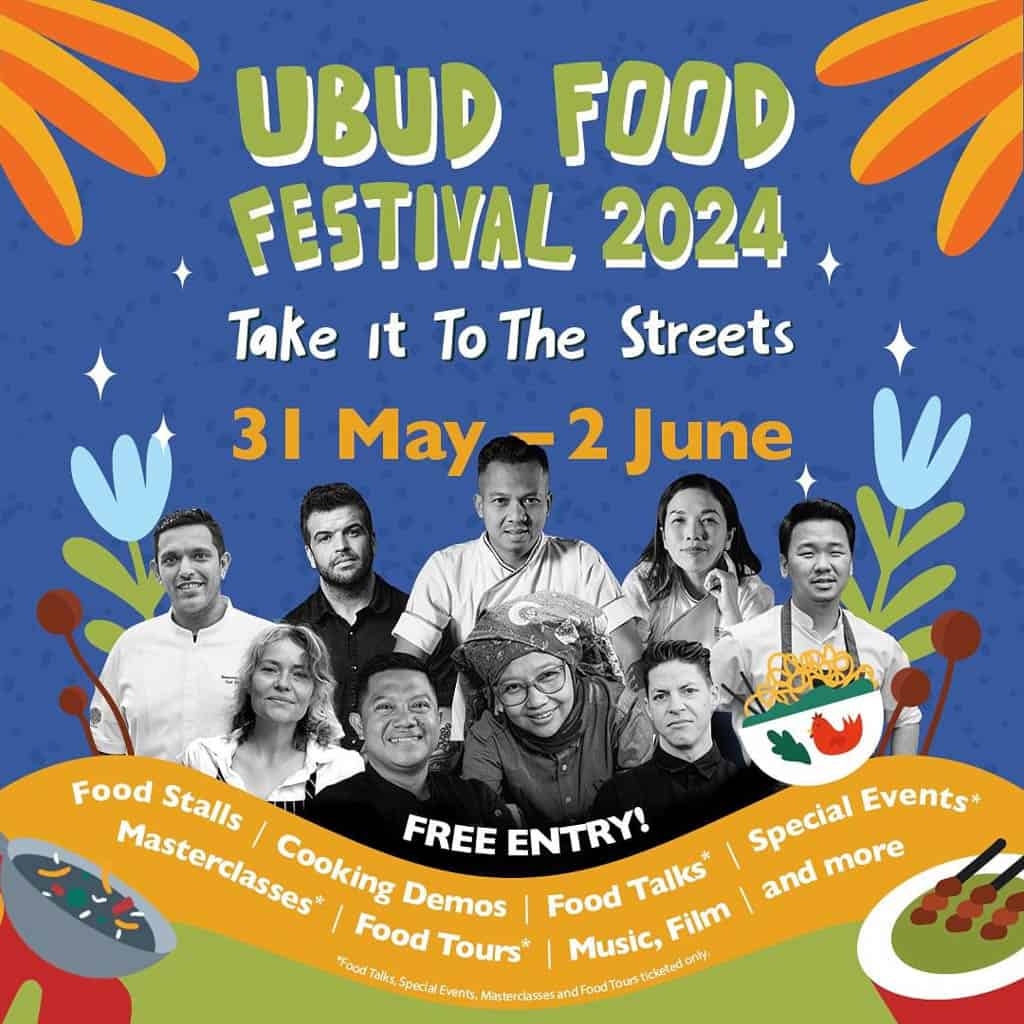
I am deeply honoured by the Lifetime Achievement Award presented by Janet de Neefe at the Ubud Food Festival, 2024.
And I am also very pleased and flattered by the news coverage.
The Nusantara Bulletin reported,
‘Bali’s living legend, Ni Wayan Murni, was honored with the 2024 Festival Lifetime Achievement Award. Her iconic warung, established in 1974, had become a renowned refuge for travelers and a testament to her unwavering commitment to Balinese heritage.
Murni’s vision not only left a lasting impact on Bali’s culinary and hospitality landscape but also deeply touched countless visitors with her warmth and passion for sharing the beauty of her homeland,” Janet DeNeefe remarked with heartfelt admiration.’
Antara (Indonesian News Agency) were kind to say,
‘A living legend from Bali, Ni Wayan Murni, was named the recipient of the 2024 Lifetime Achievement Award. Murni’s Warung, which was founded in 1974, has become a top destination for travelers, both from within and outside the country.’
Radio Republik Indonesia said,
‘Legenda hidup dari Bali, Ni Wayan Murni, dinobatkan sebagai penerima Lifetime Achievement Award 2024. Warung miliknya, yang didirikan pada tahun 1974, dengan cepat menjadi destinasi bagi para pelancong—baik dari dalam maupun luar negeri. Seiring berjalannya waktu, warisannya juga berkembang dengan pendirian perusahaan-perusahaan yang masing-masing mencerminkan komitmennya terhadap warisan budaya Bali.
Visi Murni tidak hanya memberikan dampak jangka panjang pada lanskap kuliner Bali, tetapi juga menyentuh banyak orang dengan kehangatan dan semangatnya untuk berbagi keindahan tanah airnya,” kata Pendiri & Direktur Ubud Food Festival Janet DeNeefe.’
Tribun Bali said,
‘Janet mengaku tertarik dengan kisah legenda hidup asal Bali, Ni Wayan Murni, peraih Lifetime Achievement Award 2024 yang mana warung yang berdiri sejak tahun 1974, menjadi destinasi para turis domestik dan mancanegara yang warisan cita rasa turun – temurun higga bisa dinikmati masa kini.
Visinya (Murni,-Red) tidak hanya memberikan dampak jangka panjang pada lanskap kuliner Bali, tetapi juga menyentuh banyak orang dengan kehangatan dan semangatnya untuk berbagi keindahan tanah airnya,” beber dia.’
AN INSPIRING BALINESE WOMAN, DEMONSTRATES THAT COURAGE AND WISDOM CAN GUIDE US THROUGH THE TOUGHEST OF TIMES
by Myriam Speich, Editor-in-Chief, Instant Karma, The Mindful Traveler, November – December 2023
As the first woman to drive a car in Ubud, in a male-dominated world, she was a true pioneer, forging new paths for the women in her community.
When you reach Bali, simply mention Murni’s, and your driver will know your destination. The only question they might pose is whether you’re seeking accommodation, dining, shopping, a spa experience, or perhaps a chance to meet Bali’s most esteemed and hospitable living icon.
Ibu Murni, established Murni’s Warung, an exquisitely beautiful restaurant situated in Ubud, and later the award-winning boutique hotel, Murni’s Houses & Spa – the location for our conversation.
A trailblazer in Ubud, she became the first to open a store specializing in tribal art and antiques. Her thirst for knowledge and adventure and a passion for these artifacts propelled her to embark on extensive journeys outside Bali.
As a result, she achieved the remarkable distinction of being the first Balinese person to showcase Indonesian arts at renowned tribal art and textiles exhibitions in San Francisco.
“Congratulations, Ibu Murni, you filled your life with adventures!”
Rob Goodfellow Wollongong, New South Wales, The Jakarta Post, October 25, 2021
Throughout the global pandemic, business figure Ni Wayan Murni has been an inspiration to fellow Balinese people. Her landmark restaurant, Murni’s Warung, in the island’s highland village of Ubud-Campuhan, has been one of only a dozen or so restaurants to remain open for business and retain staff.
Before COVID-19, the vast majority of Balinese adults were directly employed in the tourism sector with 60 percent of the Balinese gross domestic product attributed to tourism alone. The collapse of overseas visitors, in particular the number one visitor cohort, Australians, has hit the Island of the gods very hard.
Over the course of the last two years, foreign tourist arrivals plunged from over 6 million to less than a million, with nearly 105,000 Balinese losing their jobs in August 2021 alone. (Six in 10 Indonesians work in the informal sectors, so this figure is likely to be much higher than reported.) As a result, the island’s economy contracted by a staggering 9.3 percent.
As an essential public health measure, the island was largely closed to overseas visitors, instead relying on domestic tourism to keep the economic wheels turning. (This strategy resulted in a “life-saving” turnaround of 2.8 percent for the second quarter of this year.)
Often referred to as “the Ibu of Ubud” and “the mother of modern-day tourism in Bali”, Ibu (Mrs) Murni was one of the very first Balinese to be fully vaccinated against COVID-19. (President Joko “Jokowi” Widodo has credited Bali’s high vaccination rate now 76 percent of the population for the first dose and 65 percent for the second dose—for the decision to reopen.)
Ibu Murni said, “I wanted to be a good example and show my staff and my community that the vaccination was safe. And, of course, we all want to welcome back visitors. In Balinese culture we have a strong sense of ‘we’ and not just ‘me.’ We understand responsibilities and obligations very well. And now we are being rewarded for working together and trusting the experts and the science as we move towards opening up our beautiful island again.”
To survive, Murni’s Warung resized its menu and played to its strengths, the way it began in 1974, serving mainly popular local dishes at local prices. Deliveries became more frequent than they used to be. In the process, her restaurant won Restaurant Guru’s Award for the Best Food Delivery in Ubud! (Her restaurant had earlier won the prestigious Gourmand Award in 2019—just before COVID-19 hit —and her Tamarind Spa at Murni’s Houses was the winner of the 2021/22 Contemporary Spa of the Year award—Indonesia Prestige Awards.)
Last week, the Tourism and Creative Economy Minister, Sandiaga Uno, sent a clear message to the Australian government that Indonesia has taken the necessary steps to welcome back tourists to Bali. On Friday, the Australian prime minister responded.
At an Oct. 22 press conference with the QANTAS boss Alan Joyce (reported in the national newspaper, The Australian), Prime Minister Scott Morrison said the words Ibu Murni and her nearly four million fellow Balinese have been waiting to hear. “I’ll be seeing President Widodo this weekend (at the COP26 United Nation’s sponsored Glasgow Climate Summit), and after at the G20. This [re-opening of Bali to Australian tourists] has been a regular matter that’s come up in our discussions over the course of the pandemic about when we can have travel to Indonesia going again.”
Confirmed in an ABC (the national broadcaster) news bulletin, Joyce reinforced the prime minister’s comments that discussions were underway with the Indonesian government about welcoming fully vaccinated Australians back to Bali with reduced or no quarantine requirements.
On hearing the news, Ibu Murni’s immediate comment was, “This is wonderful. It has really lifted our spirits. Not only does our President understand how difficult life has been in Bali during the pandemic, but now our neighbor Australia understands too and both leaders will meet and work together. This has made us all so happy and optimistic for the future.”
When Australians do return, however, there is a discussion about what positive changes can be made to improve the visitor experience. As Ibu Murni says, “Bapak Luhut (Luhut Panjaitan, the coordinating maritime affairs and investment minister) says, that in the post-pandemic future, there should be a greater emphasis on low ecological impact/high value tourism. I know my friends who have suffered during the pandemic too—like my neighbors at Casa Luna, the extraordinary Blanco Museum across the river from my Warung, and Yanie and Nigel Mason’s multi-award-winning Elephant Safari Park and rescue facility in Taro would agree.”
The “Ibu of Ubud” has clearly been inspired by the prospect of the Indonesian president and the Australian prime minister meeting on the sidelines in Glasgow: to help Bali. She said, “Because Australians are loved and appreciated by the Balinese, and because generations of Australians have fallen in love with Bali, these ‘man-to-man’ discussions can only bring our two neighboring peoples closer together.”
But more than this, Bali is the world’s most recognized tourism brand. And when Bali is doing well—the world is doing well too.
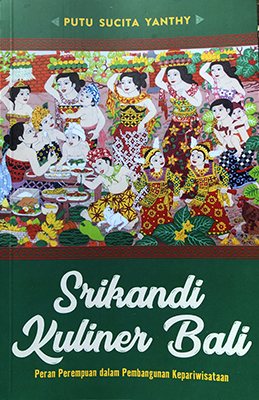
Heroines of Balinese Cuisine – Srikandi Kuliner Bali
Peran Perempuan dalam Pembangunan Kepariwisataan
by Putu Sucita Yanthy
Cakra Media Uatama, 2021
Ni Wayan Murni
Wayan Murni adalah salah satu pioner kuliner Bali di Ubud. Dedikasinya diwali tahun 1974 dan usahnya yang terkenal dengan nama Murni’s Warung telah dan tetap menjadi bagian dari perkembangan pariwisata Ubud dalam hampir lima dekade. Sebagai mother of Ubud, Murni telah menunjukkan bahwa peempuan memliki kesempatan untuk mejadi seorang perimpin dan sosok yang menginspirasi. Sekitar tahun 1960-an berjualan kain dari Ubud ke Sanur dengan berspeda. Ia biasa berjualan di Sanur sektiar kawasan Bali Beach tidak setiap hari ia datang ke Sanur, hanya ketika ia mendapat kabar bahwa ada wisatawan yang datang begitupun di Ubud. Warung Murni pada awalnya menyajikan sandwich, nasi goreng, dan minuman dingin, untuk memperoleh bahan-bahan tersebut Bu Murni harus ke Denpasar berutama untuk memeli es Ketika listrik masuk Ubud pada tahun 1978, Warung Murni akhirnya bisa menyediakan beer dingin dan memikiki kulkas.
Informasi mengenai Wayan Murni sangat mudah ditemukan karena dalam website resmi Warung Murni tersedia berbagai info dari berbagai sumber tentang Murni. Pada saat penelitian ini berlangsung Bu Murni sedang menjalankan perawatan di Thailand menurut informasi yang didapat dari manajer dan staff di Warung Murni. Untuk tetap menampilkan biografi Wayan Murni maka informasi diperoleh dari para staff dan manajer Murni’s Warung.
Wayan Murni lahir di Penestanan, sebelum emiliki Murni’s Warung. Bu Murni hidup dalam kemiskinan. Bu Murni tidur dikandang babi, ayam, mencari kayu bakar, memanjat pohon kelapa, durian dan mangga. Bu Murni juga bekerja disawh seperti buruh panen padi, mangumpulkan keong sawah, sampai mangangkat pasir dan batu dari sungai Wos, dalam kutipan artikel Murni – A Tourism Pioner oleh Al Hickey pada majalah Bali Advertiser 2011 menceritakan seperti berikut.
During the poverty striken early years of Indonesia’s post was independence in the 1950s, Murni slept with the pigs and the chickens, cut firewood, and climbed trees for coconuts, durians and mangos. She trapped rice paddy eels, river shrimps and catfish and collected snails along the tiny dirt track that was later to becme Jalan Bisma. To help feed the family she helped her father sell a fruit flavoured ice drink (es hlm) from the back of his bicycle. There was also heavy labor, even for small girls, carrying sand and rocks on her head from the river to sell on the road to big trucks rumbling by. (Bali Advertiser, 2011).
Bu Murni sebelum menirikan warung Murni adalah seorang penjual kain di Sanur, tahun 1960-an Bu Murni memiliki tiga warung sekaligus yang menjual tekstile dan barang-barang antik. Bu Murni merintis usahanya tidak dimulai dari usaha kuliner yang sangat populer dikalangan wisatawan mananegara ini tetapi berawal dari menjual kain-kain sarung Bali dan benda-benda antik yang dikumpulkannya.
Kadek Santosa, manajer Murni’s Warung juga menyampaikan hal yang sama pada mulanya Bu Murni tidak secara khusus membuka warng makan seperti sekarang. Menurut caritanya, Bu Murni dulu mengontrak tanah di dekat jembatan, ia berjualan macam-macam di warungnya. Hingga akhirnya Bu Murni bertemu Patrick Moore Scanland yang kemudian menjadi suami kedua Bu Murni. Bu Murni menbeli tanah yang dikontraknya dan membuka Murni’s Warung hingga sekarang ini. Warung menjadi sangat rami dan dikunjungi oleh orang-orang yang datang dari berbagai penjuru dunia,bahkan Janet de Neefe juga menulis Warung Murni adalah tempat di Ubud sering didatangi saat melakukan penelitian tentang makanan Bali.
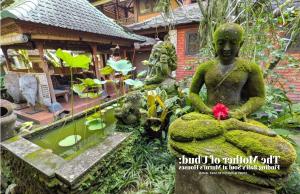
The Jakarta Post tahun 2001 menyebut Ibu Murni sebagai ‘The Mother of Ubud’ dalam Artkel ini diungkap bahwa semua orang yang datang ke Ubud pasti kenal dengan Bu Murni dan tentu saja makanan yang disjikan di warung yang bagi wisatawan adalah obat bagi wisatawan yang mengalami home sick. Dalam artikel ini Rob Goodfellow menulis:
By the mid-1970s Murni had returned to Ubud where she created the first real restaurant in the area – Murni’s Warung. Ever since it has been one of the places to go in Bali. Today Murni’s Warung employs over 60 staff and continues to serve patrons from all over the world. It has been called the most romantic restaurant in Ubud.
Warung Murni adalah tempat berkumpulnya para wisawatan pada waktu inu, tidak hanya digemari oleh orang lokal warungnya juga dikunjungi oleh para seniman, penulis, pelukis yang diantaranya adalah Charlie Chaplin, Noel Coward, Barbara Hutton, the Woolworths’ heiress, Colin McPhee, the ethno-musicologist, Jane Belo, anthrpologist, Vicki Baum novelist, Margaret Mead, Gregory Bateson anthropolgists. Pada buku yang berjudul Forty Delicious Years 1974-2014 tercatat 40 tokoh yang bebicara tentang Murni’s Warung dua di antaranya adalah Professor Michael Hitchcock dan Janet de Neefe yang mengungkapkan kesannya terhadap Ibu Murni dan Murni’s Warung.
Murni’s Warung
Warung Murni dibuka sejak tahun 1974 terletak tepat di timur Jembatan Campuhan dan dibanguntepat di atas Sungai Wos. Lokasi ini dulunya adalah tempat Warung Murni, pemilik Murni’s Warung semasa muda bekerja mengangkut pasir dan batu disungai untuk dibawa kedratan. Murni’s Warung dibangun oleh Wayan Murni yang kemudian diperluas dengan bantuan suaminya Pat, tamilan warung pada awalnya sangat sedrhana. Alat-alat seadanya behkan yang ada hanya meja tempat Wayan Murni meletakkan barang dagangannya.
Warung Murni memang diakui sebagai pelopo pariwisata Ubud menurut Anak Agung Brahmantya Kepala Dinas Pariwisata Gianyar.
Murni’s Warung adalah salah satu warung yang menginspirasi perkembangan warung makan dan restoran di Ubud, ada Warung Teges, dulu berlokasi di depan Puri Ubud, tapi yang banyak didatangi wistawan kala itu ya Murni’s Warung yang punya standar internasional.
Anak Agung Brahmantnya mengungkapkan kehadiran Murni’s Warung telah meninspirasi perkembangan kuliner di kawasan Ubud. Sebagai warung dengan standar internasional warung Murni telah berhasil mengharirkan kuliner-kuliner Bali yang disajikan lebih menarik dan kue-kue ala Barat. Janet de Neefe menuliskan dalam bukunya menu-menu Warung Murni mengingatkan masakan rumahnya bila pada waktu tertentu ia sangat ingin makan makanan dengan menu western dan hanya Murni yang dapat membuatkannya.
Kuliner yang disajikan beragam seperti kuliner khas Bali, yaitu ayam betutu Murni dan nasi campr Murni serta berberapa kuliner khas seperti Tomyam dan kreasi Ibu Murni sendiri yang enyajikan pilihan kuliner nusantara. Panorama Sungai Campuhan dapat langsung dinikmati karena warung ini yang semula hanya dibangun satu lantai untuk warung dan gallery kini bangunan tersebut terbagi menjadi tiga lantai lagi, yaitu Dining Bar dan Lounge serta satu bangunan Dining terpisah yang langsung menghadap ke sungai. Warung yang dibuka dari pukul 09.00 sampai 11.00 malam tampak sangat antik karena dihiasi oleh ornamne-ornmane yang membangkitkan kesan klasik. Berberapa patung antik juga menghiasi bengunan warung ini. Salah satunya patung Ganesha dengan tinggi mencapai 2 meter yang dipanjang di lounge menambah kesan klasik dan religius.
Warung dengan kapasitas 100-150 orang dilengkapi dengan fasilitas wifi, begitu juga beberapa lokasi untuk berfoto sehingga sering juga dijadikan sebagai tempat untuk pengambilan foto prewedding oleh berberapa pasangan yang meikah di Bali. Munurut Kadek Santosa, manajer Warung Murni, pengunjung yang datang sebagian besar adalah wisatawan yang merupakan sahabat atau kolega Ibu Murni sendiri yang berasal dari berbagai negera seperti Australia, Thailand, Ingris, dan China, pada buku yang ditulis untuk memperingati 40 tahun Warung Murni, 40 orang sahabat diantaranya Professor Michael Hitchcock dand Jero Asri Keryhyasa. Begitu juga pengungjung lokal terlihat tidak sedikit datang serta menikmati sajian kuliner dan tentunya gallery benda-benda antik koleksi Ibu Murni.
Ketika memasuki lantai satu Warung Murni, hal pertama yang dapat dinikmati adalah pemandangan Sungai Campuhan. Kue-kue khas Warung Murni juga tertata tentu sangat menggugah selera untuk dipesan sebagai hidangan penutup. Warung didekorasi dengan benda-benda seni koleksi Ibu Murni, patung-patung dan ukiran pada dinding. Lantai dua adalah lounge yang selasai direnovasi pada tahun 2002. Sebah patung Ganesha yang ukurannya settinggi orang dewasa dihiasa dengan kalung bunga seperti manyambut setiap pengunjung yang datang ke warung. Lantai 3 sering digunakan sebagai tempatuntuk mengadakan acara resepsi pernikahan, pesta ulang tahun dengan kapasitas 50-60 orang. Pada lantai 4, warung dibangun di atas sungai sehinggi suara gemericik air dan pemandangan yang eksotis dari hhijaunya tebing-tebing sungai dapat dinikmati dengan bebas oleh pengunjung yang datang. Sejak berdiri empat dekade. Murni’s Warung sudah berjasa dalam mendukung pariwista Ubud, sambil memperkenalkan jenis-jenis kuliner lokal yang bersanding dengan masakan Barat dan Asia.
Semangat wanita pendiri Warung Murni, memang tidak diragukan lagi. Lihat saja, hasil kerja kerasnya, Warung Murni yang telah berdiri sejak 1974 hingga saat ini mampu bersaing dengan bisnis kuliner lainnya. Ia mengungkapkan, tak mau kalah semangat dengan generasi milineal, namun ia tidak juga menampik para generasi muda memberikan semangat penyegaran dalam dirinya.
If all the big names in the Balinese culinary world started with small warung that expanded organically, Murni’s Warung in Ubud is definitely the first that began as a batik shop. With her American husband Pat, Ni Wayan Murni moved shop to a more strategic location on the side of a main road below the hermitage of the painter Antonio Blanco.
It started with Pat liking Murni’s black glutinous rice porridge, and Murni learning how to make Western-style breakfasts from Pat. Eventually, four tables and 16 chairs were added to the batik shop that had been catering to customers of Antonio Blanco who wanted breakfast and coffee. Murni’s consistent quality means the warung is now a culinary icon in Ubud.
100 Best Foods of Bali
by Bondon Winaro, Lidia Tanod and Harry Nazarudin, Penerbit Jalansutra, 2015
Interview with Ubud’s Leading Lady: Murni is a unique and fast moving Balinese lady who knows how to get things done. She has a contagious smile and a genuine passion for life. FRV had a chat recently while staying at Murni’s Houses in her home town of Ubud.
FRV: They call you the ‘Ibu of Ubud’ … What does ‘Ibu of Ubud’ mean?
Murni: It actually means ‘Mother of Ubud’. There are in fact many Ibus of Ubud and I’m just one of them.
If you had all the money and time in the world, what would you be doing right now?
I’d probably be doing the same things that I’m doing now.
What is that?
I try to create beautiful spaces filled with beautiful objects. After moving from Sanur in 1974 where I had four shops on the beach, I set up Ubud’s first real restaurant just beside the bridge in Campuhan. That was 43 years ago and I’m still running it! I’ve filled it with Asian tribal art pieces I’ve collected over the years, especially in the Lounge Bar, where people often have a drink before dinner or liqueurs afterwards.
Have you always been a collector?
It’s very difficult to be just a collector as the pieces are increasingly rare and expensive, so inevitably you end up being a dealer as well. You try and get better and better examples and sell the others. It’s been very helpful having a tribal art and textiles shop as part of the restaurant.
Why did you build your boutique hotel ‘Murni’s Houses’?
That was in the early 1980s because there was so little guest accommodation available. There was hardly any giving a good degree of comfort and convenience. I was very lucky to get the land, which is only five minutes walk from the centre of Ubud, but set back above the road, so it’s a bit like being in the countryside but still in the middle of Ubud. I like it so much I live there myself. The guests are from all over the world and invariably really interesting and we often have breakfast together. It’s a great way to start the day. Murni’s Warung and the Shop are only a few minutes walk so it suits me fine.
And the spa?
Tamarind Spa happened by chance on the suggestion from a friend. I had a spare building and turned it into spa rooms and employed the very best therapists I could find. I tested them all myself. My plan was to have a massage every day, and now I can’t get in because it’s so busy!
Is that the Tamarind Spa that won the UK Luxury Travel Guide Awards 2017 Contemporary Spa of the Year INDONESIA?
That was an incredible surprise, and of course, we’re all delighted, especially the therapists. They’ve done very well.
I hear you’ve written or co-written books on Balinese culture. Any tips on … Writing books?
Yes, something incomprehensible is what I recommend. The thing about comprehensible books is they are too difficult! Leave that to other people.
You have a website, a Facebook site, a Twitter account, a blog and you’re on Instagram … tell me about your experience with social networking and what advice you would give.
Concentrate on the widgets.
You seem to have a lot on your plate already and we haven’t even talked about Balinese culture. Do you have any current projects?
Well, yes. I seem to have got into long-stay accommodation. There are more and more people staying longer and longer in the Ubud area. I think many of them are digital nomads as they always ask about the internet. I’ve finished two Villas for long-term rentals in Katik Lantang, South Penestanan, where I was born, just 10 minutes away, and right now I’m finishing a large building at Murni’s Houses which will have rooms with and without kitchens, a gallery and a pool – and maybe, if I can squeeze it in, a shop!
As we haven’t talked about Balinese culture, and I know that you are steeped in it, would you like to write a regular column for the magazine on Balinese life and culture?
I’d be delighted and for you I’ll make it comprehensible.
Thank you. Well, Murni. You’ve had an incredible life so far. I’d like to ask you one final question. How would you like to be remembered?
I’m too short at five foot four. I’d like to be remembered as five foot eleven!
Murni is a well-known and much loved personality on the Bali scene and a pioneer of Balinese tourism. During her extraordinary life Murni has lived in Sanur and Ubud and has travelled widely. Everything you could want to know is on her web site.
“What a wonderful surprise to meet such a dear old friend on the web! Ni Wayan Murni is an international treasure! Murni’s kindness, warmth, gracious hospitality and genuine caring for her community, family, guests and friends around the world have endeared her to all of us who have had the great pleasure of knowing her.”
Treasures of Bali, A Guide to Museums in Bali written and edited by Richard Mann Gateway Books International, 2006
Murni’s in Bali
Murni was the first person to have a proper gallery of antiques, textiles, costumes, old beads, tribal jewelry, stone carvings, masks and other ethnic pieces in Ubud. She started her shop at the same time as her famous restaurant, Murni’s Warung, overlooking the Campuan River in 1974. She is Balinese and understands Balinese culture thoroughly.
Her sources are the best and she is still the first person that dealers generally visit when they come to Bali from the other islands in Indonesia. Murni travels extensively collecting unique treasures from as far afield as Afghanistan, Turkmenistan, Cambodia, Thailand, Vietnam, Burma, China and Laos. Those she doesn’t keep herself find their way into her shop. Many of her pieces are museum quality but she also has reproductions to suit every budget.
Part of the pleasure is to meet Murni herself and chat about her lifetime of collecting. Her Villas and restaurant are decorated with items from her personal collection.
Murni’s Warung and Shop
at the Campuan Bridge
Campuan-Ubud
Bali
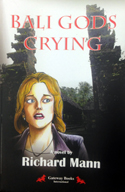
The novel is based on true events in which unscrupulous criminals are threatening Bali’s Hindu religion and civilization. The heroine lives in Ubud.
“Maybe something romantic will happen to you,” said Oz wickedly.
Celine was silent, looking around her.
They had a late lunch at Murni’s Warung next to an old Dutch suspension bridge across the two rivers of Rsi Markandya in a comfortable lounge decorated like a Balinese antique gallery and overlooking the gorge she had seen from the suspension bridge.
“Even your lunch venue has a special meaning,” smiled Oscar. “Murni’s was almost the very first tourist restaurant in Ubud. Sometimes Murni is here and loves to tell visitors about Bali’s culture.” On their way out of the restaurant the French language caught Celine’s eye from a selection of promotional materials on a low side table.
“Un Momento Oz,” she called pointing at the table. “I want to see what they have in French.” .
…
Celine remembered her way to Murni’s so she went there for a breakfast of eggs, fruit and coffee, much more than her normally frugal, diet conscious fare in France … Outside Murni’s she walked down a slight hill along an asphalt lane romantically overhung with long tendrils of trailing creepers, past the temple housing the statue of Maharesi Markandya that Oz had told her about, turned right and was almost immediately in the rice fields.”
The novel is the second of an ebook trilogy following the lives of two gay guys called Richard and Max, who live on Golton Island, Australia.
“Being much nearer to the equator than their own Golton Island, the sun set at about six o’clock and nighttime descended quickly. Max and Richard asked at the reception desk where they could go out for dinner, and were directed to Murni’s Warung, just over the river on the main road.
The restaurant is also set on the side of the same ravine and, in daylight, some tables have a view down to the flowing river below. That night, Richard and Max enjoyed an entree of Lumpia, a deep-fried spring roll served with peanut dipping sauce, followed by Cap Cay, a vegetable stir-fry with everything thrown in together, and then Black Rice Pudding. Bintang beer accompanied their meal. Having made an easy start that day in order to catch their flight, Max and Richard then walked along the dimly lit road and hotel pathways back to their room and slept soundly cuddled up to each other.
…
Back in the hotel, they rested and swam in the pool during the afternoon, then that night decided to go back to Murni’s Warung for dinner. As they were concluding their meal, Murni herself came to join them at their table, having introduced herself first. In her friendly way Murni chatted animatedly about her restaurant and her life, a smile often crossing her broad, dark face, her eyes twinkling.
“What were things like in Ubud when you were a child?” Richard asked.
Murni smiled and said, “Oh, very basic. We had no electricity, no running water, the roads were dirt tracks. No-one had any money and we had to make do with whatever came along.”
“What did you do for food?” Max asked.
“We ate whatever we could catch or collect. As a bare-footed child, I would catch capung dragon flies, with a sticky substance on the end of a long bamboo pole, and we would cook and eat them. Or I would catch eels in the rice paddies, or shrimps in the river, which we would also cook. And there was always fruit like pisang, bananas, or durians or coconuts.”
“And now you’ve got this restaurant,” Richard observed.
“Yes, and I hope that you have enjoyed coming here,” Murni said. “What else have you gentlemen being doing while you have been staying in Ubud?”
They told her of the various things they had done, including the cooking class, and Murni said, “Thank you for contributing to the economy of this town. We all need as much help as we can get.”
“Murni’s Warung is justly famous. It was the first warung to cater for the tourist trade, and since then has maintained its standards and trade. Murni has an uncanny eye for beautiful and rare objects and she has established her own signature shop at the top of the hill from the Campuhan bridge (where her warung is located). The shop is a museum in itself, each object with a history and a provenance. Her textiles are first rate, as are the old Javanese gold ornaments, now rare indeed. Murni loves to travel, and has friends all over the world. Ask for her, but she may well be up the Nile, in Brazil, or at the opera in London.”
UBUD, Bali (JP): I was having dinner with an international businesswoman based in Singapore. I asked if she knew Murni’s Warung in Bali. Without blinking she said, “Know Murni? Of course I know Murni! Everyone knows Murni. She is a legend. Travelers to Bali call her the Ibu (mother) of Ubud”. In October this year I traveled to Ubud to meet this living legend.
Murni was born just after World War II in the village of Penestanan-Ubud. Her life reflects the history of Ubud itself. Her family has always been closely involved with international travelers. Her mother cooked for Walter Spies, the German aristocrat painter, who lived during the 1930s in a thatched cottage overlooking rice terraces in the neighboring village of Campuan.
At this time, (much like today), anyone who was anyone visited Ubud and they all at some time ate Murni’s mother’s food: Charlie Chaplin, Noel Coward, Barbara Hutton, the Woolworths’ heiress, Colin McPhee, the ethno-musicologist and his anthropologist wife, Jane Belo, Vicki Baum, the novelist, Margaret Mead and Gregory Bateson the pioneering anthropologists.
Some say Miguel Covarrubias, the Mexican painter and ethnologist, was so inspired by the food in Ubud that he decided to write the still widely read and influential book Island of Bali, published in 1937.
Colin McPhee likewise decided to stay and live in Ubud where he studied Balinese gamelan music. He wrote a marvelous book, A House in Bali, which has just been re-printed in paperback. Murni’s great aunt looked after him too. She is still alive and well and living in Ubud.
In the 1950s it was in Murni’s village of Penestanan that Arie Smit, a Dutch painter founded a school of art called “The Young Artists of Penestanan”, which has profoundly influenced the development of the avante garde art for which the area is now known. Again, Murni’s family was involved.
During the 1960s Ubud was not the bustling tourist center it is today. Murni would get up at 4 a.m. every morning and cycle downhill to Sanur on the south coast of Bali and sell her textiles to visiting cruise ship passengers.
If it was a bad day she had to put her goods back on her head, and cycle home up the hill to Ubud. However, before long she had four shops and counted the Rolling Stones’ Mick Jagger as one of her regular clients. He is still a customer of Ibu Murni shops today…and he’s still getting satisfaction.
By the mid-1970s Murni had returned to Ubud where she created the first real restaurant in the area – Murni’s Warung. Ever since it has been one of the places to go in Bali. Today Murni’s Warung employs over 60 staff and continues to serve patrons from all over the world. It has been called the most romantic restaurant in Ubud. You can hear the sound of rushing water in the narrow jungle gorge that has formed from the convergence of the River Wos and its tributary. Here locals and visitors, writers, artists and dancers, all enjoy the atmosphere, the exotic cuisine, and, most importantly, each other’s company.
Murni’s shops, Kunang-Kunang I and II and the Warung Shop are all in Ubud’s main street. They have been imitated but never surpassed for quality, authenticity and value. Her international clients think of Murni so highly that they call to check if she’s in Bali before they book their flights. It is little wonder that many of her friends are important people from the United States. The New York Times has in fact named Murni’s Houses as one of the best small hotels in the World.
Murni’s latest venture is the creation of Villa Kunang-Kunang. This is about 15 minutes outside Ubud, on the road up to the landmark Mount Batur. Kunang-Kunang means “firefly” in the Indonesian language. Here Ibu Murni has built two fabulous villas, which are said to have the best views in Bali. The Villas look out over the ancient rice fields and are set in 3 hectares of beautifully landscaped tropical gardens.
Hidden away is a curved swimming pool, which merges into breathtaking views of the emerald-green rice terraces. There are fishponds, water lily ponds, lotus ponds, and the sounds of running water everywhere.
In addition, there are 33 Buddha statues lovingly placed around the gardens. The Villas are furnished with a mix of contemporary and antique Balinese and Indonesian furniture in Murni’s inimitable style. There is even a book specially written for her guests on Balinese life and culture.
There are walks along the rice terraces and, if Ibu Murni has time, she takes her friends and guests along trails where tourists never go, explaining the tropical trees, flowers and plants. Along the way she stops to introduce her guests to local people they would never otherwise get an opportunity to meet.
What continues to inspire Ibu Murni is her strong faith in the importance of maintaining Balinese culture, as living and unique. This is combined with her genuine desire to extend friendship and hospitality to others and to show visitors to the Island a special piece of the real Bali.
Ibu Murni is a well-known character in Ubud as owner of Murni’s Warung, Murni’s Villas and many other enterprises but it wasn’t always like this.
Murni
Back in the 1950s, life was hard. Murni’s parents split up and at the age of 6 or 7 years she was sent to live with an authoritarian aunt in Denpasar. She made her get up every morning at 2 am to prepare and sell food.
After she had sold everything, she was then allowed to go to school. Murni went back to Ubud when she finished elementary school, and lived with her mother in Ubud market. Life was still very hard; helping her mother eke out a living.
On the three days each week that the market was open, she carried a load of salt from Ubud to Penestanan and on the other days sold warm beer and sarungs to tourists and locals. When the market closed at 5 pm, she had to walk to Padang Tegal to help her mother’s sister pound rice.
Tourism increased after the opening of the international airport and, from1965 to 1974, she lived in Sanur where she opened several shops on the beach.
Her major break occurred in 1974 when she bought some land in Ubud and opened Murni’s Warung. Initially, she sold only clothes and paintings but after marrying her American husband, things started to improve when she realised that by selling Western food, she could attract more business.
Being married to a foreigner caused a lot of problems and for some time, the only member of her family who would speak to her was her father, but she persevered with the business.
From a very small enterprise with no electricity or refrigeration, Ibu Murni has moved on to become one of Ubud’s most successful entrepreneurs but it hasn’t changed her. She has never forgotten her origins and she is one of the kindest people I know.
A visit to Murni’s Warung is a delightful experience as the food is excellent and inexpensive and you will also experience the stunning views over the river from any of the four levels on which the restaurant is built.
Many people in this country have achieved success after starting from humble beginnings but they have mostly become arrogant and egocentric. Murni is one of the rare exceptions and I feel proud to consider her as a friend.
Ni Wayan Murni: Ubud’s First Restaurateur. Ni Wayan Murni is a pioneer of tourism in Bali. She is the owner of Murni’s Warung, the Kunang-Kunang shops, Murni’s Villas and Murni’s Houses. Murni opened Ubud’s first restaurant in 1974 and it remains first in the hearts of many residents today. Murni is also an avid collector of antiques and beautiful objects, and many of the finest works of craftsmanship turn up at Murni’s shops in Ubud.
What is your background?
I come from a long line of hard-working Balinese ladies. I think I must be a reincarnation of one of them. I was born in the small village of Penestanan, just after the war. My mother was from Penestanan and my father was from Campuan, the neighbouring village. I lived in Penestanan until I was 5 years old and then we moved to Campuan. My restaurant and shops are in Campuan, so I haven’t really come very far!
What was your early childhood like?
Very hard, like it was for all Balinese in the Fifties and Sixties. Until I was 4 years old, my mother used to carry me on her hip as she went from house to house offering salt, dried fish and things like that. She wasn’t selling; she was bartering. In those days she used to offer her goods in return for rice. I think I learnt to bargain watching her at that young age. My parents split up when I was 7 and I went to live with my aunt in Denpasar. When I was 12, I returned to my mother in Ubud.
What was the first enterprise you started?
I made my first money when I was living with my auntie. I had to get up at 2 am to make cakes for morning coffee. Then I had to go to the houses of the Balinese and Chinese families in Denpasar and sell the cakes. The money went to my aunt, but if I sold all the cakes, she gave me 5 rupiah. I had to save 2 rupiah for my school books, which left me 3 rupiah for lollipops.
As I said, when I was 12, I went back to Ubud and lived with my mother. She was then a very successful business woman. I worked with her in the market for 2 or 3 years and started my first business in 1961, cycling down to Sanur to sell batik to the tourists. That started my love of textiles and beautiful things.
How did you discover which products or services appealed specifically to the tourist market?
I watched their eyes. If they opened their eyes wide, they liked the goods and I had a buyer. It was then just a matter of price. I always give very fair prices, so my customers come back. I still have customers from those days. I also discovered that quality is more important than anything. People remember quality. As regards to the restaurant, I think I just knew instinctively that cleanliness, friendly service and good lavatories are really important.
How many businesses do you own right now?
Far too many. I should be retired by now. Apart from the restaurant and shops, there’s Murni’s Villas and Murni’s Houses. We’ve also got into the wedding business. Weddings and honeymoons in Murni’s Villas are very popular. I really enjoy those. My web site, www.murnis.com, is also thriving. It’s probably the largest Bali web site and growing all the time.
Of all your different enterprises, which gives you the most satisfaction?
Hard to say. I like different aspects of all of them. I love meeting old and new friends in the restaurant. I enjoy the shops, showing people my collections and exchanging ideas about textiles and antiques. I also get a lot of pleasure travelling, not just abroad, but also in this country.
Which business is the most difficult to run?
Easy! The restaurant, but it’s a lot of fun.
What difficulties (or strokes of good luck) did you encounter in the early days starting Murni’s Warung?
It’s pretty difficult running a restaurant with no electricity or refrigeration. I did that for 6 years. It’s also difficult getting up at 4 in the morning to go down to Denpasar to get supplies and back in time to serve breakfast. Thank God those days are over.
I had many strokes of luck. I met really nice people in the restaurant who taught me fabulous recipes and we had great laughs trying them out. Many are still on the menu. Every day I meet interesting people from all over the world who teach me a lot about antiques and handicrafts.
What makes Murni’s Warung different from other similar restaurants in Ubud?
I built the first restaurant in Ubud, so I was able to choose the best spot. The location and atmosphere are very special. It sits on a gorge overlooking the Campuan river, which you can hear rushing below. It’s a sacred river. I don’t think any restaurant is quite so romantic. I also keep everything traditionally Balinese – from the food and décor to the costumes of the waiters and waitresses.
How do you relieve stress?
I play the gamelan really hard!
What is the most valuable antique object you own?
Myself!
What would you like to be doing now?
Having dinner with Walter Spies in Mrs Balbir’s Indian restaurant in Bangkok.
Note: Murni’s web site: www.murnis.com, is one of Bali’s leading online resource centres. She plays the gamelan in a ladies gamelan group in Ubud.
 Murni’s celebrated cooking has made her into somewhat of a local legend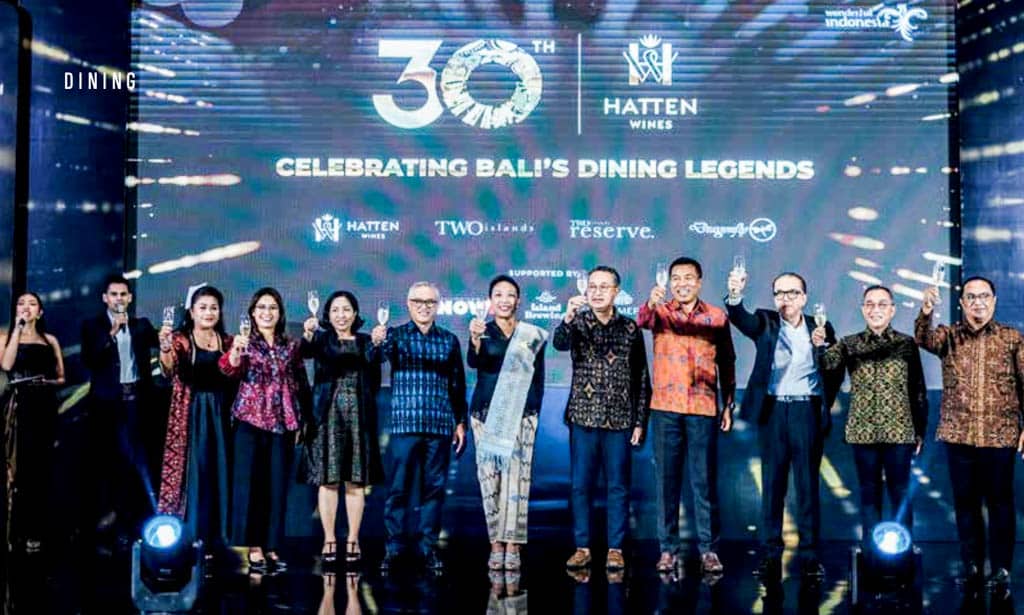

 In their book,