Antique Kris Hilts (or Handles)
The kris is a double edged dagger, tapering to a point, either straight or wavy, which originated in Java, and is a distinctive part of Indonesian culture. Traditionally it is accepted that Panji, the warrior king of Java, who ruled in the 10th century, was the inventor and first wearer of the kris. He is also credited with inventing the wayang puppet drama.
The earliest definite date for the kris is the 14th century, about 1361, where it is found on a relief of Bima forging a kris with his bare hands, with several tools beside him, and the kris on his knee, on the Sukuh temple, on the slope of the Lawu mountain, Surakarta, Central Java, but they must have existed before that and probably for over 1,000 years.
Tomé Pires, the Portuguese diplomat and apothecary, wrote in 1515 in his Suma Oriental, the first European description of the Malay Archipelago, that ‘every man in Java, rich or poor, must have a kris in his house, and a lance and a shield, and no man between the ages of twelve and eighty may go out of doors without a kris in his belt.’ He visited Java, Sumatra and Maluku.
In 1613 Iskandar Muda,the Sultan of Aceh in north Sumatra, sent a kris to King James I of England: ‘a creese wrought with gold, the hilt thereof being of beaten gold’.
The kris could represent its owner. If a bridegroom could not go to the mosque in Java to take his marriage vows, he could send his kris. This happened when a prince or a chief married a commoner, or took a second or third wife.
Islam forbids the use of images, so human figures were disguised, with a body but no face. Krisses made in Bali and Madura are the most beautiful, made of wood, ivory, gold, silver or iron, and often grotesquely carved like a wayang (puppet). Many Balinese krisses have a Hindu god.
Every kris has a spirit of its own which must be compatible with the owner so that misfortune does not befall him. Possession of some krisses is equated with royal power. Ceremonial exchanges of gifts between rulers often involved krisses. It still plays a part in Balinese marriage ceremonies.
The hilt (ukiran) has 2 or sometimes 3 segments:
1. The hilt itself which may be made of a variety of materials in a wide variety of shapes, wood, metal, ivory or bone are all used,
2. a shaft ring (mendak) between the hilt itself and the blade (wilah), and
3. a bowl-shaped ornament (selut) sometimes encloses the lower part of the hilt.
Showing all 15 results
-
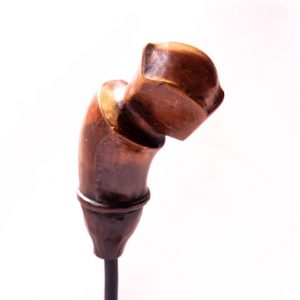
Antique Kris Handle 1
Read More -
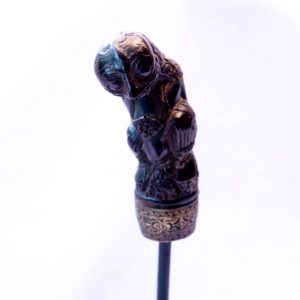
Antique Kris Handle 2
Read More -
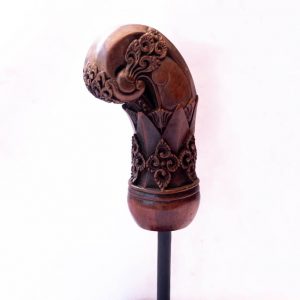
Antique Kris Handle 3
Read More -
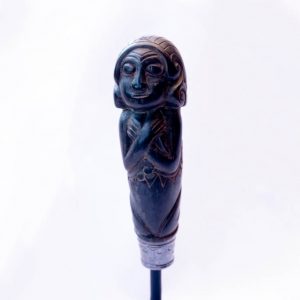
Antique Kris Handle 4
Read More -
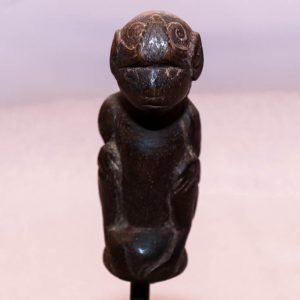
Antique Kris Hilt 10
Read More -
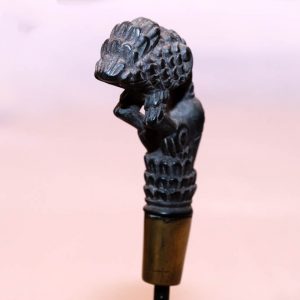
Antique Kris Hilt 11
Read More -
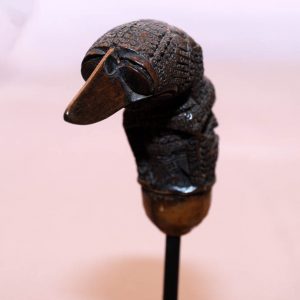
Antique Kris Hilt 12
Read More -
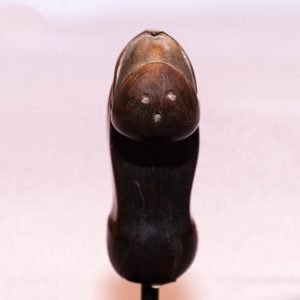
Antique Kris Hilt 13
Read More -
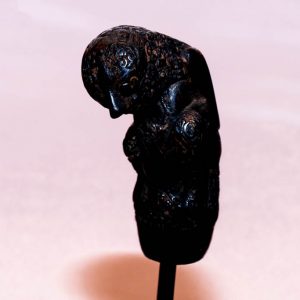
Antique Kris Hilt 14
Read More -
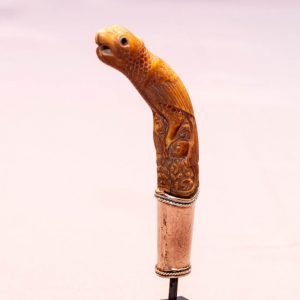
Antique Kris Hilt 15
Read More -
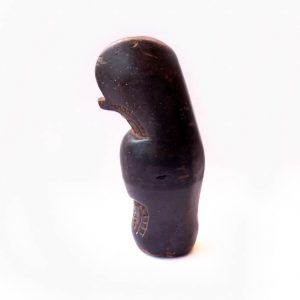
Antique Kris Hilt 5
Read More -
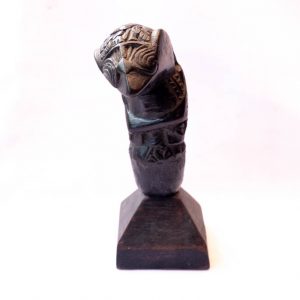
Antique Kris Hilt 6
Read More -
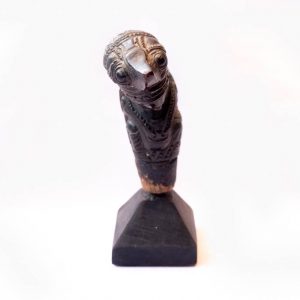
Antique Kris Hilt 7
Read More -
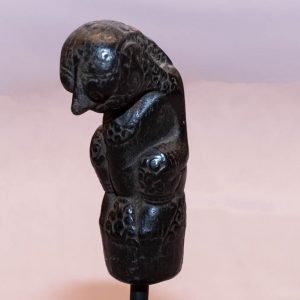
Antique Kris Hilt 8
Read More -
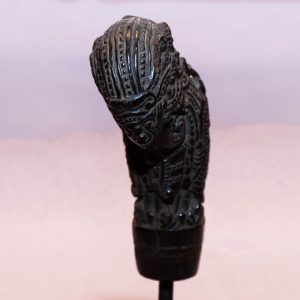
Antique Kris Hilt 9
Read More