Product Description
Antique Yao Priest’s Ceremonial Painting 4: Dragon Bridge of the Great Tao SOLD
Material: Bamboo or mulberry bark paper, paint from natural or chemical dyes
Style: Yunnan, China
Size: Height 387 cm, Width 19 cm
Order Number: MHSAYPCP4
Many visitors to Northern Thailand will have seen Yao people. The women wear turbans and a flowing gown with a red woolly collar and hand embroidered trousers. They carry their youngest child on their backs in a decorated cloth babycarrier. The men wear indigo jackets with silver buttons.
They are scattered in many parts of South China, Vietnam, Thailand and Laos and practise slash and burn agriculture, producing mainly rice for themselves and maize for their poultry and pigs. They also grow opium.
The Yao are a very ancient minority. During the last 1,000 years they have migrated slowly from central China to the southern provinces and from there to north Vietnam, northern Thailand and northern Laos.
Reference to Yao was made first in a T’ang dynasty (618-906 AD) document – mo yao – meaning ‘not subject to compulsory service’. It probably indicates a settlement following a Yao rebellion. The mo was dropped during the Sung dynasty (960-1279 AD).
They broke up into several groups and sub-groups. They speak four main languages. The largest segment, about two-thirds of the Yao population, are the Mien and Mun language speakers.
They practise the Taoist religion. For their ceremonies the priests require a number of ritual objects, which are considered sacred and made by highly qualified people.
The high priests, the Masters of the Tao, also need certain clothes, tunic, cotton belt, skirt, trousers, leggings and a hat. The hat is normally woven from human hair in patterns.
Mien Fang, Taoist ceremonial paintings are scrolls which are hung on walls of chapels in the priest’s house during ceremonies. Sometimes they are displayed outside. A strip of wood is sometimes inserted at the top to help it hang. They are an essential part of the ceremonies and represent Taoist deities. They are used instead of bronze or wooden images, which are very few. They are religious and not decorative. Each painting has a position and ritual function to play in a ceremony. If it is not required, it is not displayed. A full set comprises 17 and they are hung vertically (except for the horizontal Dragon Bridge of the Great Tao).
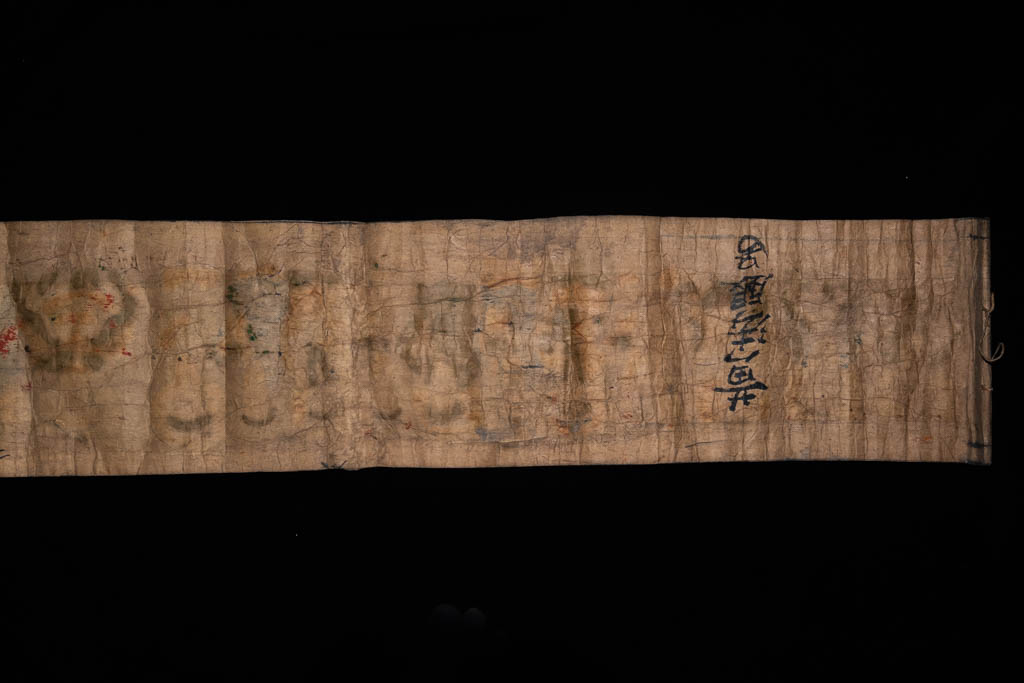
Sometimes the back of the painting, or within the painting itself, are notes about the owner, the maker, the date, the price and prayers. The Yao use Chinese characters for this.
Ideally the priest was also a painter but if not a Chinese painter could make them, copying old ones. It was a sacred activity carried out in a special room in the client’s house. The artist and client and room had to be purified and the originals which were being copied kept spiritually clean as they were the abodes of the gods. The pictures have to radiate devotion and piety.
The outline is traced in black and then filled in in colour. A final coating of glue is usually applied at the end to make the colours glow. Usually there are about three layers of paper joined together.
On completion of the painting, rituals are carried out. The initial one is the opening of the eyes, that is bringing the gods to inhabit the painting through the eyes. There are two more ceremonies at yearly intervals before they can be used. If the painting is sold, the eyes are closed and the new owner performs a new ceremony to open them again. If they are too damaged for further use, the gods are invited to leave and they are deconsecrated in a ceremony and may be sold afterwards.
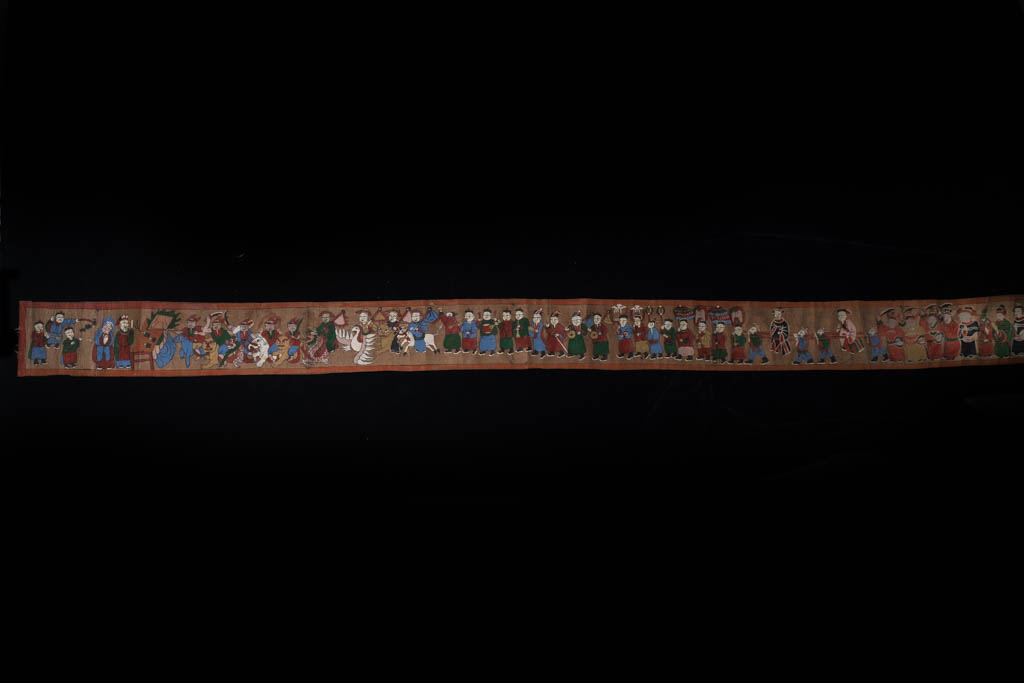
The larger ones are about 140 cm x 50 cm and the shorter ones are about 50 cm x 25 cm. The horizontal Dragon Bridge of the Great Tao, depicting the whole pantheon coming in procession to fetch the soul of the deceased Yao priest to bring it to heaven, can be about 250 cm x 20 cm. When not being used, they are kept rolled up in a box near the house altar.
Old paintings are rare because they are fragile and some have been destroyed by Christian missionaries and Communists. Respect is paid to them.
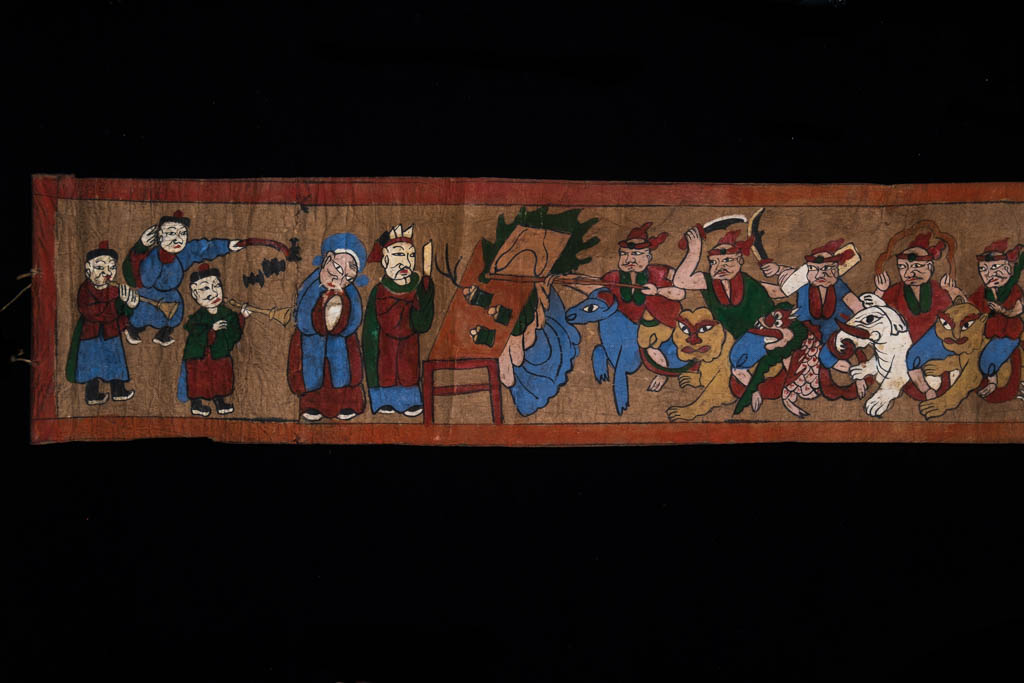
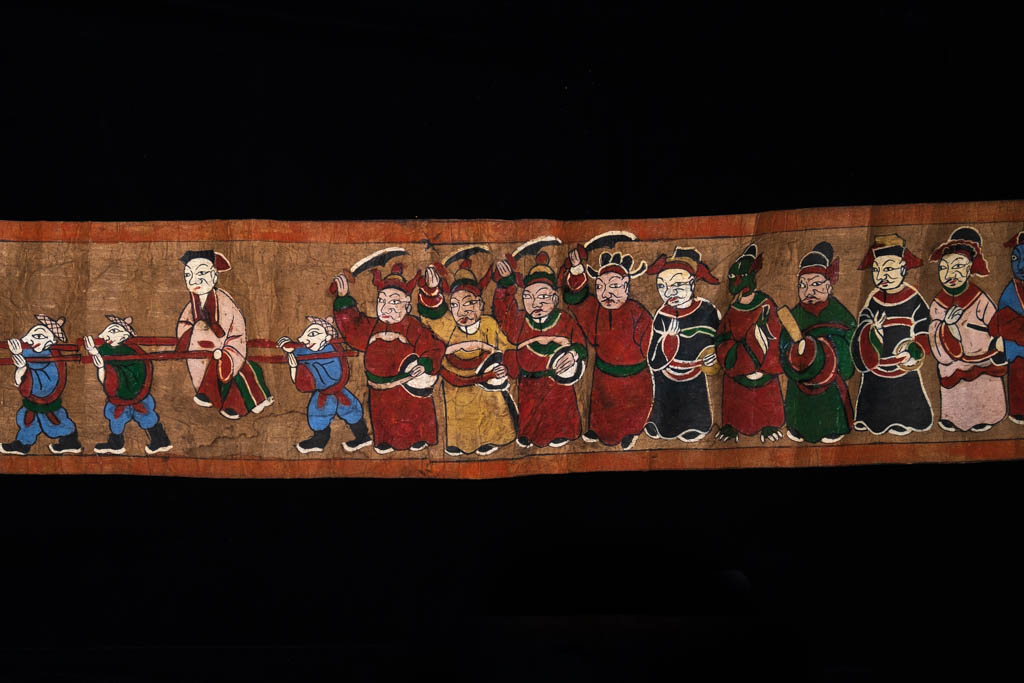
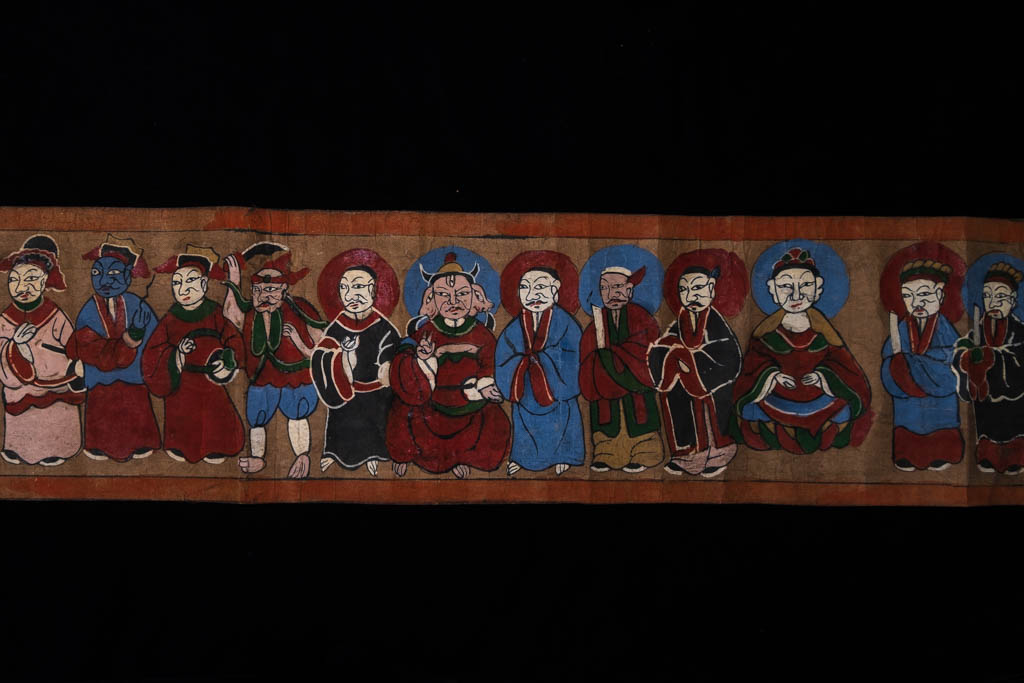
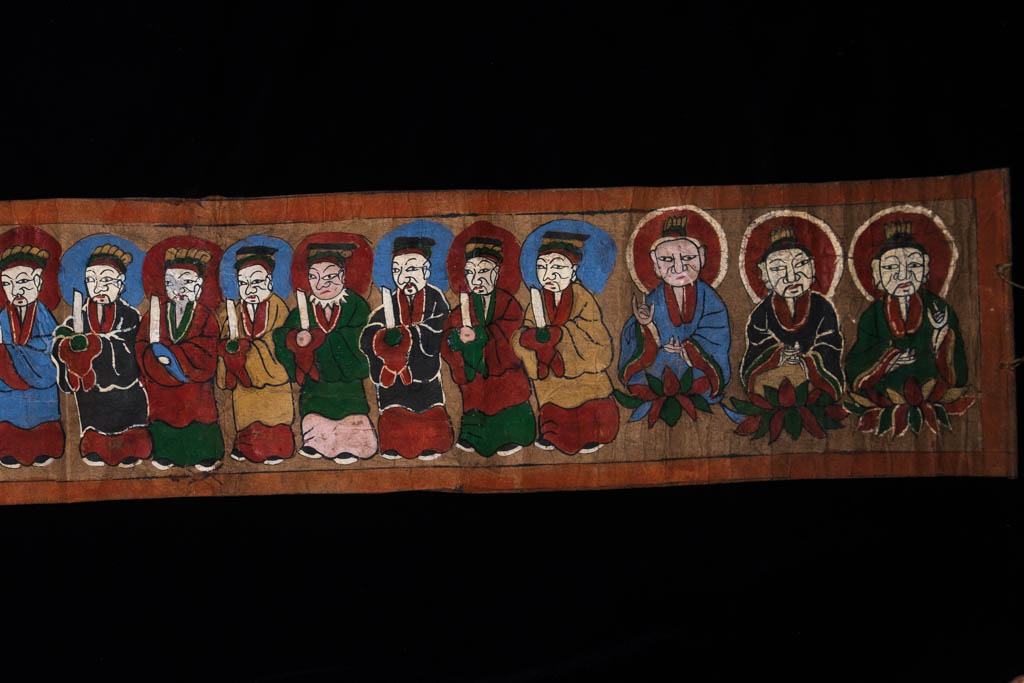
This Dragon Bridge of the Great Tao is called by the Yao Tom To Luang Tsiou. It is displayed above the other scrolls and is only used when the soul of a fully fledged Taoist priest is sent to Heaven. It is suspended horizontally from the lintel of the front door down to the floor in the middle of the room, forming a symbolic bridge from Heaven to Earth. The ceremony is held some months after his death and burial. His seal is burnt as an offering to prove his identity.
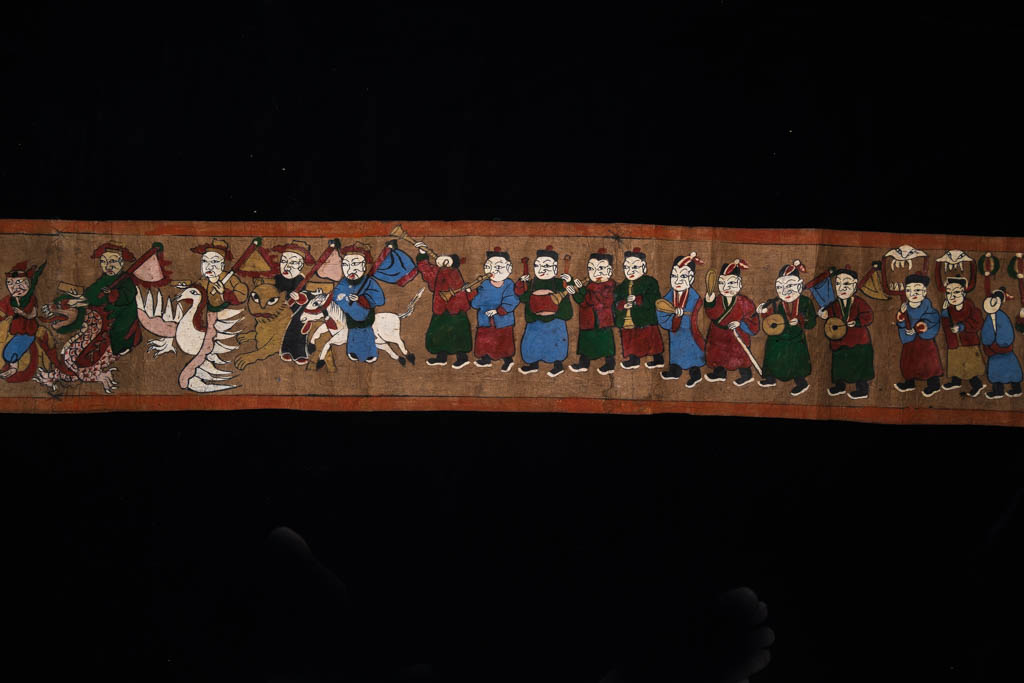
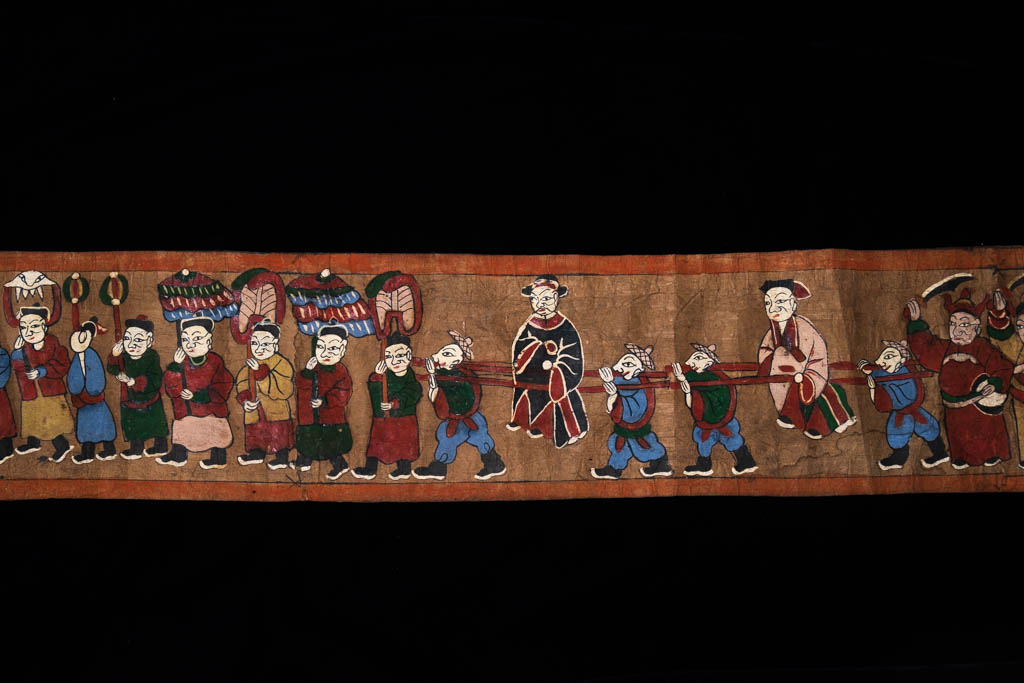
It is in 3 parts. On the extreme left, the part at floor level, a group of Yao priests welcomes the long procession of gods. In the middle is the deceased priest and his wife carried on the same sedan chair. At the end, nearest Heaven, are theThree Pure Ones, wearing robes, top knots and halos. They are called Tot Ta (the oldest), Leng Si (the most revered) and Leng Pu (the youngest) and came from Heaven and imparted their knowledge to humans. There are priests wearing hats woven from human hair. There are musicians playing oboes and cymbals. Music accompanies rituals. There are people carrying parasols and flags.
Early – mid 20th century.
There are examples in The Yao, The Mien and Mun Yao in China, Vietnam, Laos and Thailand, Jess G. Pourret, River Books, 2002, pages 215-243 and Yao Ceremonial Paintings, Jacques Lemoine, White Lotus, 1982.
Please ask for the price (or make an offer).