Murni’s Lounge Bar – Ubud’s most haunting watering hole
Ian Lloyd Neubauer
Travel and Leisure Asia
January 2014
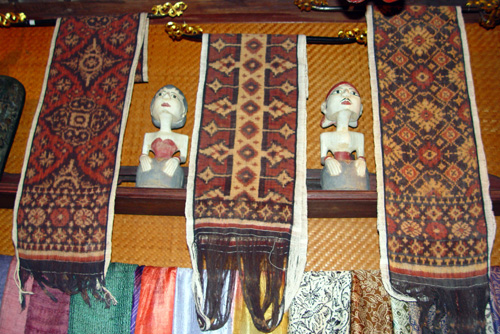
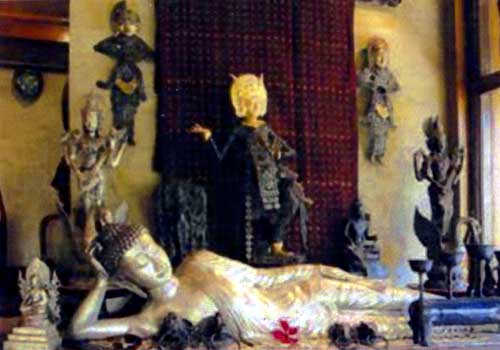
“Set above a gentle bend in the Agung River, Murni’s Warung holds the estimable title of being the village’s first real restaurant. Like something out of a Rudyard Kipling novel, the Lounge Bar on the second floor is crammed with museum- quality antiques, including a 400-year-old plate of armor and a Sumatran sarcophagus. Soft jazz music, old-fashioned cocktails and the sounds of the jungle lurking outside make this Ubud’s most haunting watering hole.”
Eat, Pray, Shop
A one-time haven for hippies, the village of Ubud in Bali’s southern highlands now caters to more sophisticated travelers too.
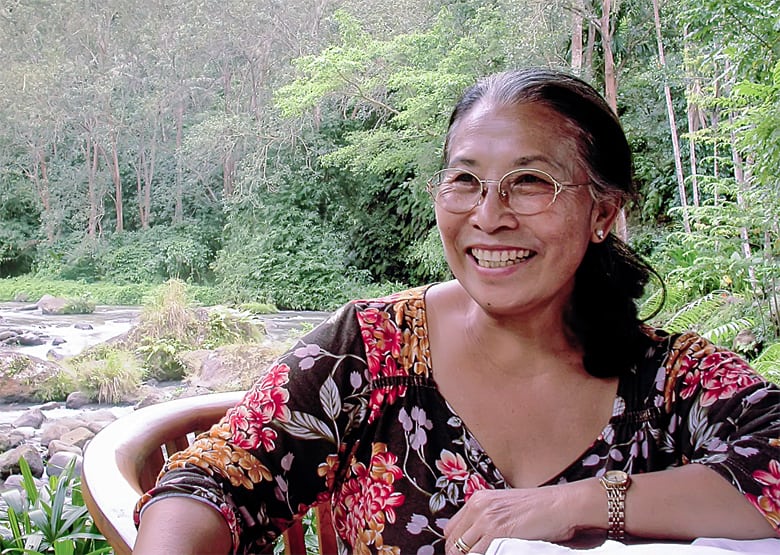
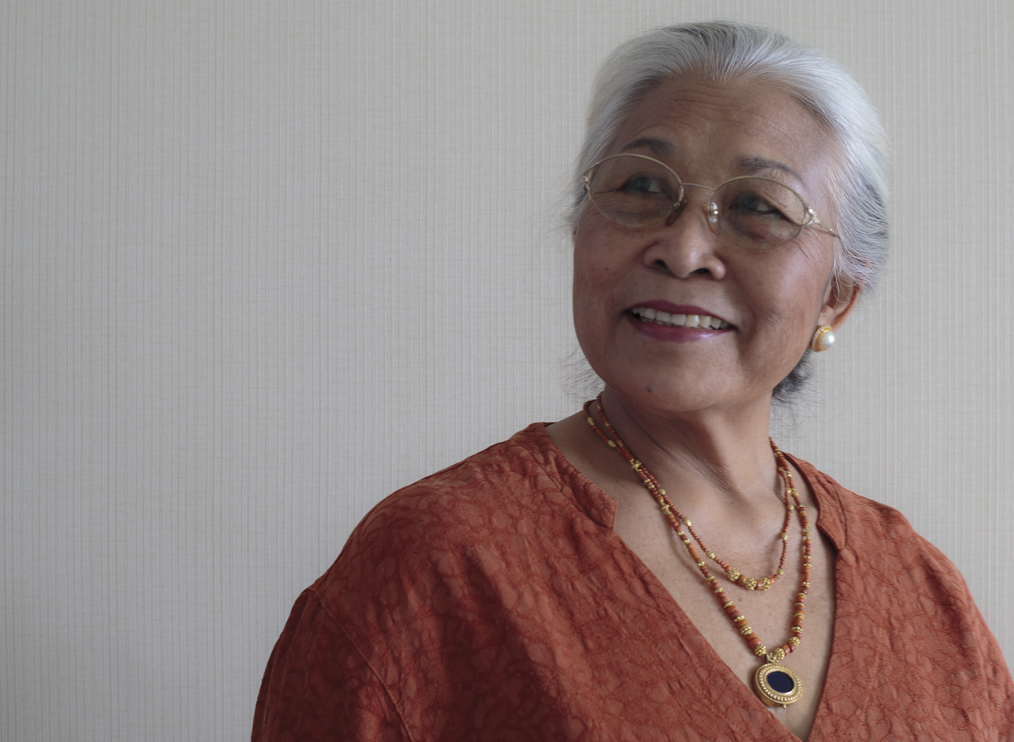
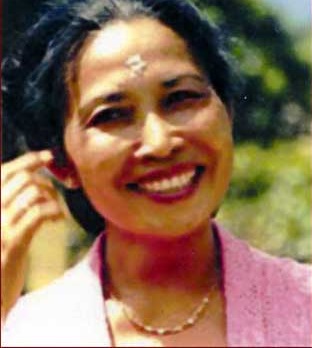
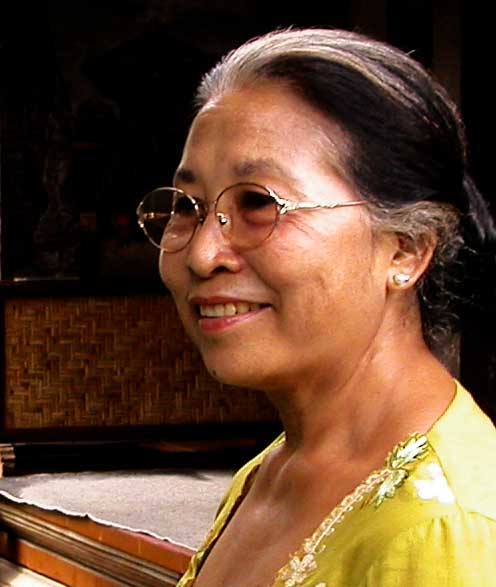
She is often referred to as the “mother of Ubud,” and her restaurant has been a longtime favorite among both travelers and locals: Ni Wayan Murni, a Bali native who recently celebrated the 40th anniversary of Murni’s Warung with the launch of a book that includes personal memories and anecdotes of people who have accompanied her on her journey from the 1970s until today.
Author and photographer Jonathan Copeland, co-editor of “Forty Delicious Years,” as well as a good friend of Murni, said that it felt right to celebrate this milestone “in a more tangible way than simply a T-shirt and party.”
“We didn’t want a book blowing our own trumpet — there are enough of those vanity publications around — but instead a book focussing on the times and life of Murni’s Warung as seen through the eyes of its guests over 40 years,” he said.
It is an approach that gives readers the chance to learn more about Murni and also about Ubud and Bali in general, and particularly how significantly it has changed over the years.
The first thing that needed to be done was to decide on the number of contributors; 40 contributor for 40 years was the logical solution.
“We then compiled a list of colorful, engaging and interesting characters whom we thought we could contact,” Copeland said. “We went through the time-consuming process of trying to track them down. Some were easy to locate but some were impossible to find. We were delighted with the final list as they comprised a wide range of nationalities, occupations and ages which cover the life of Murni’s Warung from day one until the present. They are all busy people with big jobs and we are very grateful for the time they spent on this.”
Murni, who was born in Penestanan, just a few minutes away from Ubud, began selling breakfast snacks before going to school in the 1950s. Less than 20 years later, Murni already owned four shops on Sanur Beach and established Murni’s Warung in Campuhan-Ubud.
Besides traveling the world and collecting Asian antiques and textiles, Murni built Murni’s Houses and Murni’s Villas catering to the growing number of tourists, and recently opened the Tamarind Spa at Murni’s Houses.
In the book, Murni writes that she still finds it incredible to look back at how she started Murni’s Warung — with no more than a bowl of soup and a sandwich.
“I wasn’t a cook and had no knowledge of what Western food was. I had no business plan, no mission statement, and no spreadsheets. I didn’t have electricity or a fridge or an electric oven. I didn’t have staff or suppliers or a car,” she said. “But I did have passion and drive and energy. And I had friends and customers and hard work. Luckily, Murni’s Warung grew and prospered and has been able to serve food and drinks to thousands of people these 40 years.”
Murni also has a very special connection to the restaurant’s location on a gorge above the river Wos, which is sacred to the Balinese people.
“It has been part of my life, going back more than 40 years,” she said. “When I was a very young child […] I played and bathed down there at the river and among the rocks. When I was older, I helped carry rocks up from the river bed to the road for construction use. Later still, after my parents split up, I secretly met my mother below the bridge. I never dreamed that I would be able to buy part of the gorge, live there and go to sleep to the sound of the sacred river crashing over the rocks.”
Jonathan Copeland, who has worked with Murni on three previous publications, said that not many people can survive in the highly competitive F&B industry, especially these days, when new restaurants pop up everywhere in Bali.
“Restaurants often start out as flavor of the month and fizzle out,” he said. “It is not an easy business and diners are demanding and unforgiving customers who don’t give you a second chance.
“I think it’s easy, in retrospect, to see how Murni’s early success came about,” he added. “In the early days there simply wasn’t a place in Ubud to get good food. Murni’s Warung was a beacon for early travelers to hang out. They spread the word and they still do. But obviously there had to be substance to it. I think the substance is what has made Murni’s Warung remain a favorite for so long. Murni is a perfectionist. She is very concerned about the comfort and happiness of her guests. And she is a traditionalist concerned about the preservation of Balinese culture. Murni’s Warung is a Balinese building with Balinese food served by Balinese waitresses in Balinese dress.”
Dr. Lawrence Blair, an anthropologist, author and filmmaker who has been based in Bali for almost 40 years, was among the warung’s earliest customers and still vividly remembers a quiet Ubud.
“Instead of tourists, there were only a few ‘travelers’ and barely a handful of eccentric resident expats,” he writes in his section in the book. “And the place to meet them was Murni’s Warung. But the first real draw to Murni’s was the discovery that hers was the sole place in Ubud to have mastered that most rare and esoteric art of producing a sunny-side up properly fried egg. Further cause for enthusiasm was when she also became the first person in Ubud to provide natural yoghurt and wild honey with one’s tropical fruit.”
Blair was also witness to some of the illustrious figures who have visited Murni’s Warung over the years, including Richard Branson, Mick Jagger, Richard Gere and Diane Von Furstenberg.
“My only regret is that they weren’t all there at the same time,” Blair wrote.
Australian-born Janet de Neefe, founder of the Ubud Writers and Readers Festival, has also been a regular to Murni’s since the 1980s.
“Many of my fondest memories of Ubud in the Eighties are wrapped up in the walls of this multi-leveled eatery,” she writes in the book. “We’d sip on freshly squeezed lime drinks brimming with crushed ice while slowly eating nasi campur or nasi goreng . Lunchtimes drifted into dinner and it didn’t matter. There was nothing urgent to be done except chat about life, love and cosmic heroes — there were no mobile phones, Internet, e-mails, reality TV, not even Facebook.”
De Neefe, like the other contributors, have always enjoyed the peaceful surroundings as much as the delicious food. But they also all agree that Murni, the heart and the soul of the restaurant — some might even argue, of Ubud — has always been the real draw and the secret of the restaurant’s lasting success.
“Back then, I remember that one of the greatest joys about visiting Murni’s Warung was simply Murni,” de Neefe said. “She used to sit at the front desk and invariably wander up to your table and have a chat. There is so much to love about Murni. Whether it be her heart that’s as big as the moon, her gentle nature, grace or soft humor.”
Worlds on a plate A fusion revolution is firing up Ubud’s fine dining scene
Ian Lloyd Neubauer
The Australian Financial Review, 17-21 April 2014
“An hour’s drive, but a million metaphorical miles away from the crowded beaches of southern Bali, the village of Ubud has long been cherished by travellers as a place to tune in and drop out, practise meditation or yoga, recharge with spa treatments or immerse oneself in velvet green jungle surrounds. In sync with the zeitgeist, Ubud’s culinary scene has focused around neighbourhood warungs – curry houses, satay grills and noodle shops run by charismatic village women.
“The warung is an extension of the home, where the cooking is done by mothers and grandmothers, where the food is practical and the recipes have been passed down through generations,” says Janet Deneefe, the Australian author of the definitive Indonesian cookbook Bali – The Food of My Island Home. Warungs are still as popular as ever and eating at one is an indispensable part of every visit to Ubud. But, in recent years, the village has seen an influx of gastronomes such as Deneffe, who have paired European culinary techniques with the flavours of Bali to create a fine-dining scene writ large. Here are venues that stand out…:
Murni’s Warung
Set in a jungle-clad gorge overlooking the Wa River, Murni’s Warung was Ubud’s first real restaurant. “When tourists first started coming to Ubud in the 60s, there was nowhere for them to sit down for a meal,” says Murni, who like many Indonesians goes by one name only. “The warungs closed after lunch. But I thought I could offer more. So I made friends with an American girl who gave me the recipe for apple pie, cheesecake and guacamole. At first, I didn’t even know what these were. We never had this food in Indonesia!”
The cakes at Murni’s are still as comforting as ever, though for a real taste of Ubud, order the bebek betutu – Balinese duck. Marinated overnight in Indonesian herbs and spices, and served with finely chopped vegetables, a pyramid of yellow rice and confit sauce, the meat literally melts in your mouth…”
If you have been living in Bali for some time, chances are you know and love Murni’s Warung in Ubud. Dating back to the 1970s, Murni’s Warung is a treasured food joint with authentic Balinese food and Campuhan River views. Furthermore, Ibu Murni herself is a beloved figure whose hospitality has earned her many friends and loves over the years.
However, if you don’t yet know who Ibu Murni is or where to find Murni’s Warung, it’s high time you do. One of the best ways to do that is to read Forty Delicious Years, a compilation of stories about the warung and the namesake founder told by the warung’s eclectic patrons. It’s an interesting insight into what it’s like to be among the island’s insiders.
Ce vieux restaurant, tenu par une Balinaise, fut le rendez-vous des branchés des années 1975-1980. Dans un superbe cadre (descendre les terrasses successives accrochées à la gorge pour arriver tout en bas, dans un bain de fraîcheur et de végétation), Murni concocte depuis des décennies une cuisine indonésienne et thaïe à la fois authentique et travaillée (elle a hérité des recettes de sa mère et de sa grand-mère), à base d’ingrédients frais et de qualité. On peut aussi goûter aux lasagnes, aux hamburgers et aux salades, mais surtout aux gâteaux maison simplement divins. Pains et yaourts maison.
Murni, qui est également le propriétaire de Murni’s Houses et du Spa Tamarind, ouvra le premier restaurant d’Ubud en 1974 dans un petit coin de jungle sur les bords de la rivière Wos. Ce lieu est incontournable pour de nombreux expatriés, visiteurs, artistes, écrivains et photographes. Le menu est international, varié et savoureux, notamment le célèbre canard fumé balinais et autres spécialités locales. Très bons desserts. Dinez sur un des quatre étages et surplombez la rivière, flânez dans la boutique Murni’s Warung Shop et venez écouter du jazz au Lounge Bar décoré avec la collection personnelle d’art tribal asiatique et d’antiquités de Murni.
“I feel as if I grew up in Bali, as I went there so often as a teenager and young woman. Murni’s is a veritable Aladdin’s cave of luscious Asian objets d’art, furniture and textiles. It’s a wonderful place to shop and there is a great restaurant attached.”
Jane Rutter is Australia’s best-known flautist and one of the most versatile; she performs in the classical, jazz and pop arenas.
Jane Rutter’s Favourite Places in the World
The Australian, 8 December 2007
Favourite Places in the World
Murni’s Warung Shop
“Murni’s Warung Shop at Murni’s Warung, Jalan Raya, Ubud, beside the Campuan bridge, tel 972146. Traditional arts and crafts from all over the archipelago, as well as overseas, assiduously collected by Murni who has formidable fine arts credentials and seasoned sophisticated taste. If she’s around Murni will sign the best-selling Secrets of Bali, Fresh LIght on the Morning of the World by Jonathan Copeland and Ni Wayan Murni. You can download her ebook Murni’s Very Personal Guide to Ubud from her web site. [Note from Murni: you can also download Secrets of Bali from the web site.]
Bali, The Ultimate Guide to the World’s Most Spectacular Tropical Island, Linda Hoffman, Tuttle Publishing, 2012
Carol Walker Travel Today Egypt, September/October 2004
Years before I first saw geringsing, I had heard stories of this famous, supposedly magical textile of East Bali. Experts on Southeast Asian weaving assumed a reverent tone whenever speaking of this fabled cloth. Even the name — pronounced “GRINGsing,” with a rolled “r” — sounded like an incantation.
Bali’s magical textile geringsing is back at the market.
Made only in the village of Tenganan, a tiny insular community whose strict rituals and religious beliefs differ from those of even their closest neighbors, a single piece of geringsing can take five to fifteen years to produce. The cloth is used in various rites and is believed by villagers to offer magical protection from harm. It is also worn by both men and women, in the form of belts, wrapped skirts and hip cloths.
Because of its rare and painstaking method of production, along with its muted, natural colors, the cloth is both distinctive and beautiful. But over the years, fewer villagers were engaging in the grueling production process, and geringsing had become increasingly rare.
If you wanted to see geringsing, much less purchase it, you had to go to Tenganan itself, about 65 kilometers from Denpasar, Bali’s capital city. In the late 1980s, I finally did visit Tenganan and held an antique piece of geringsing in my very own hands.
Ironically, as vivid as the experience was, the look of the cloth barely made an impression. I viewed it inside a dark hut, but I recall the feel: It was surprisingly coarse and papery, and the threads — more loosely woven than I had expected — made a faint whispery noise as I unfolded it. A villager stood nearby ready to stop me if I handled it too roughly.
Did the geringsing have a magical effect? Probably, because I came close to purchasing it — and with a price tag of $2,000, it was far more than I could afford. Of course, that same piece today would probably be worth more than $10,000, so perhaps it would have been a wise investment. But I didn’t have a clue about geringsing. I vaguely knew that it was double ikat, but didn’t appreciate what that meant.
To understand double ikat, you have to know what ikat is — and before that, resist dyeing. Resist dyeing is a technique in which the textile’s design is marked on cloth or threads with wax, mud, or any substance that repels dye. The material is then colored and the resisting substance removed, leaving a motif in the original hue of the threads, surrounded by the color of the dye. This process can be repeated several times to create a design.
For ikat, the dye is kept from penetrating by tying fibers in knots around small bundles of the warp or weft (vertical and horizontal) threads. Sound painstaking? It is. Now imagine dyeing both the warp and weft threads in such a way as to produce distinct patterns when they are woven together on a hand-loom. That is double ikat, a technique so difficult that despite Indonesia’s sumptuous tradition of making fabulous textiles, the Bali Aga — the ethnic group inhabiting Tenganan — are the only people in the entire archipelago to practice it.
Once you’ve developed an eye for ikat, it is unmistakable. When both warp and weft are variegated, the overall effect is striking. The colors are always shades of cream, reddish-brown, brown, and blue-black, produced by dyeing and overdyeing with colors made from local roots and indigo. The weave is a loose tabby, a simple over-under-over-under weave.
The mechanics of geringsing are scarcely the whole story. The complexities of the Bali Aga’s belief system make anthropologists ecstatic. The holy book of the Tengananese states that the Bali Aga are of divine origin. Accordingly, their central purpose is to honor their gods, demons and ancestors through rituals, and even clothing.
Through the years, I continued to dream, hopelessly I thought, of owning a piece of this mythical cloth. So this spring I was stunned to see several examples of genuine geringsing available for about $100 and up, at Murni’s Warung Shop in Ubud, Bali.
To my astonishment and delight, the clerk told me that Ibu Murni, a well-known connoisseur of fine textiles, had convinced five Tegananese women to weave geringsing for her. Their knowledge and expertise creates beautiful results. However, the work is so demanding that perhaps only one in four cloths is of top quality.
My only decision was which one to buy. The clerk offered to measure me so that I could select a piece of the correct size to wear as a chest cloth, but I declined, preferring to make my choice based on a combination of motif, size, and price. Now, my very own geringsing hangs in my home where I can admire it every day. It’s been close to twenty years since I first heard about geringsing. It was worth the wait.
Carol Walker Travel Today Egypt, September/October 2004
Everything from traditional Balinese and other Indonesian designs to tourist-oriented novelty pieces is sold in Bali. Likewise, quality and price cover a wide spectrum. Types of authentic Balinese textiles include:
Ikat – Also called endek in Bali, where the pattern is resist-dyed into the weft rather than the warp.
Songket – This cloth has patterns added through supplementary weft threads, usually gold.
Perada – Plain, striped, or checked cloth with designs painted on with gold paint, leaf, or dust.
Poleng – A black and white check pattern that is used extensively for decorating temples and stone statues, not usually sold in tourist shops.
Bebali – Colorful striped, checked, or plaid cloths. (Do not confuse this with poleng.)
Similar textiles are indigenous to other Indonesian islands, and only a practiced eye can know the place of origin by looking. But why let this deter you? The best songkets are often Sumatran. Batik (not an indigenous Balinese technique) from Java is usually the finest.
Buying Textiles in Bali
New, modern designs can be just as beautiful as the old and the Balinese happily wear sarongs of old and new motifs, Balinese and non-Balinese design, to their ceremonies.
To know what you’re looking at, ask the shopkeeper. Just be careful to frame your questions neutrally. Vendors will try to please you with the “right” answer, so don’t ask eagerly “is this a Balinese ikat?” Instead, try an offhand “where is this cloth from originally?”
As to quality, if you’re not sure of your ability to judge and you care about getting the best, visit Murni’s Warung Shop on Ubud’s main street. You’ll get honest answers, fair fixed prices, and a selection of the best textiles from throughout Indonesia and elsewhere. This is the only store recommended for geringsing.
Murni used the profits of her Warung Shop, her famously successful Warung, and Murni’s Houses – to return to and indulge her first love: wonderful works of traditional art created by the diverse peoples of the Indonesian archipelago.
Murni
In 1988, she leased (and subsequently purchased) an empty plot of land near the Warung on Jalan Raya Campuan to build her antique shop, Kunang-Kunang I. Capitalizing on its popularity, she bought more land two years later and constructed a second shop, Kunang-Kunang II, next to Pura Dalem temple on Jalan Raya Ubud.
In keeping with Murni’s love of art and beauty, Kunang-Kunang II’s exterior is a handsome, peak-roofed, wooden edifice with two lava stone statues draped in black and white poleng cloth on the landing step – all framed in glorious Balinese greenery. Murni, a consummate, avid collector, personally does all the buying for these three stylish, upscale boutiques, which offer fine works of Indonesian, Southeast Asian, and Far East Asian craftsmanship in a sedate atmosphere tailored to western tastes and behavior.
Murni travels overseas each year, partly for business and partly for pleasure – she does not make a distinction between the two. In 2001 she established good relationships with traders of Central Asian goods, resulting in a fine new collection of beads, textiles, clothes and costumes from Afghanistan, Uzbekistan and Turkmenistan.
Ubud armed Murni with formidable fine arts credentials and an exquisite, seasoned, sophisticated sense of taste. Murni’s knowledge of and ability to select and scout out collector-quality antiques have made her both personally famous and professionally trusted around the globe as a leading art buyer. Each piece of original artwork in her outlets has been personally smiled on and chosen by Murni to please and excite her customers.
Murni caters to everyone from budget tourists to museum curators from abroad to an impressive roster of international celebrities: Mick Jagger of the Rolling Stones is still a repeat client of “Ibu Murni’s” shops today.
Art Treasures of Ubud
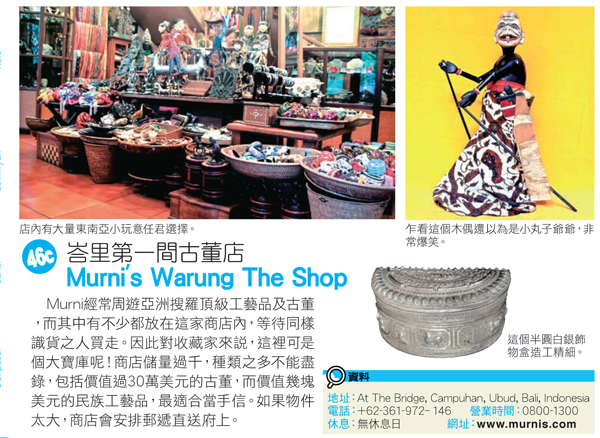
Enter any of her three portals and admire a wide-ranging treasure chest of highly sought-after masks, wood carvings, stone sculptures, tribal art, ceramics, pottery, puppets, woven basketry, paintings, ikat cloth, textiles, furniture, silver and gold jewelry, precious stones, and beads, that have transformed these impressive emporia into legitimate art galleries in their own right.
Indonesian art pieces find their way into Murni’s shops from Bali, Java, Flores, Kalimantan, Lombok, Sumba, Sulawesi, Sumatra, East and West Timor and the Moluccas. The intrinsic beauty of these regional specialties is rooted in each area’s historical and religious traditions, wealth of creative genius and in the archipelago’s stupendous natural endowment of malleable raw materials.
Wrought in richly dyed colors and unique organic textures, skilled (often remote) native workers have produced some of the world’s most coveted handicrafts: Murni has them all. A prime example is the visually intricate and spiritually stunning five-foot-high bronze statue of Ganesha the elephant god in the Lounge Bar of Murni’s Warung. Commissioned by Murni in 1997, it took experienced Balinese craftsmen five years to complete!
Step inside Kunang-Kunang I and Kunang-Kunang II (kunang-kunang means fireflies in Bahasa Indonesia) and feast on Balinese paintings, which depict scenes of traditional village life, rural markets, rice planting and harvesting, local fishermen, temple festivals and naked Balinese beauties bathing in the river. Gasp at a sunken Spanish galleon’s cargo of rich, artistically designed (often aristocratic) gold rings, bracelets, earrings and pendants from Central Flores, Central Sulawesi and East and West Sumba, and fine gold necklaces prized by Nias island village chiefs.
Jump over to East Java for multi-colored, striped, “Majapahit” glass rainbow beads dating back to the ninth century and copper batik stamps used for hand printing designs and patterns on batik textiles. The jumble of enticing objets d’art includes horse and Buddha candleholders, totemic figurine lamps, bronze pigs (an absolute favorite), boxes made in the Moluccas of cloves, rattan utility boxes from Lombok with carved lizard and frog lid decorations, and hand-woven, cotton beaded bags from West Timor, traditionally used to contain betel chew ingredients.
You no longer need to travel to Bali to make purchases or order from Kunang-Kunang I and Kunang-Kunang II. Murni offers a beautifully presented, photo-illustrated online shop www.murnis.com where you can enjoy an exciting, antique-browsing adventure and a precious, vicarious voyage back to Ubud – the cultural heartland of the island of the gods!
ShopSmart: Bali & Lombok, edited by Jane Marsden, 2006
I often get asked by people writing books if I would be happy for my restaurant and shops to be reviewed. Of course I say I’d be delighted. Shortly after that I’m told that the cost is so many millions of rupiah per square inch. These so-called reviews turn out to be advertisements masquerading as independent critiques. That is very common. So, the first and most important thing to say about this new book, ShopSmart, is that it does not have any paid advertisements in it. There are over 1,000 contributed by just seven long term residents of Bali.
What about the content? Although it holds itself out as a shopping guide, which it primarily is, the book is actually much more than that. It contains useful introductory sections to life in Bali and Lombok with sections on history, geography, art, religion, festivals and celebrations. So for a very short visit to Bali or Lombok this maybe all you need. Throughout the book various hotels are mentioned and described, so it could also suffice as a guide as to where to stay.
Not every shop in Bali – or Lombok – is covered but all the main players and some lesser known, are profiled. Each area has a good introduction. It is then divided into smaller areas or streets with details of shops, hotels and restaurants, and maps showing where they are. This part of the book would be very useful if you were in one of those areas and wanted to walk around and have a view of what was available. As well as detailed profiles of places, it also cross-refers to the other section. The other section (482 pages) is the heart of the book, where shopping is classified according to the type of goods and services.
There are twenty seven categories and some are quite esoteric.They range from antiques and artifacts to stonecarvings, supermarkets and tailors and textiles.
Each category has an introduction and good tips on how to shop for that particular item. When shopping for antiques and artifacts: take frequent breaks to eat, drink and think. When buying pearls: a fake pearl can be detected by biting on it; an imitation pearl will glide across your teeth, while the layers of nacre on a real pearl will feel chalky and gritty. If you are looking at pictures, check out the hidden details – whether a canvas has been properly mounted, whether a drawing or pastel has been done on acid free paper so it won’t discolour with age. Shopping is a pretty exhausting business in Bali, which can be very hot, so the final section will be very welcome to most people. It’s the Après-Retail Details – a small selection of bars, clubs and restaurants, which are subject to the same standard of meticulous and independent reviews.
I know I will use this book myself and therefore have no hesitation in recommending it to others. It is the only one of its kind in Bali and Lombok.
Treasures of Bali, A Guide to Museums in Bali written and edited by Richard Mann Gateway Books International, 2006
Murni was the first person to have a proper gallery of antiques, textiles, costumes, old beads, tribal jewelry, stone carvings, masks and other ethnic pieces in Ubud. She started her shop at the same time as her famous restaurant, Murni’s Warung, overlooking the Campuan River in 1974. She is Balinese and understands Balinese culture thoroughly.
Her sources are the best and she is still the first person that dealers generally visit when they come to Bali from the other islands in Indonesia. Murni travels extensively collecting unique treasures from as far afield as Afghanistan, Turkmenistan, Cambodia, Thailand, Vietnam, Burma, China and Laos. Those she doesn’t keep herself find their way into her shop. Many of her pieces are museum quality but she also has reproductions to suit every budget.
Part of the pleasure is to meet Murni herself and chat about her lifetime of collecting. Her Villas and restaurant are decorated with items from her personal collection.
Murni’s Warung and Shop
at the Campuan Bridge
Campuan-Ubud
Bali
The First Antique Shop in Bali – Murni’s Warung Shop
Sky Publishing Guide to Bali 2013-14 Hong Kong
Murni is always travelling around Asia in search of top quality arts, crafts and antiques. She generously put some of her collection in the shop for sale. It is definitely a treasure spot for those antique lovers!
The First Antique Shop in Bali – Murni’s Warung Shop stocks countless items. The price ranges from a few dollars to US$300,000.
Post service is available for huge items.
The First Antique Shop in Bali – Murni’s Warung Shop
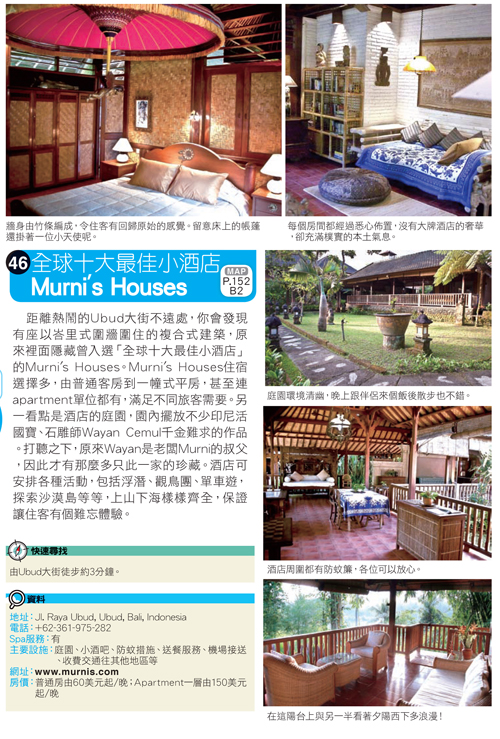
“Lovers of old Ubud will relish the four guest-houses of Murni’s, hidden in the nice garden of a cosy Balinese compound on the edge of rice fields – there is no signboard, so you may need to ask for directions. Everything is made to make guests feel at home in peaceful seclusion, yet it is within walking distance from Ubud’s main street. Gourmets will appreciate the great breakfasts, with Murni’s famous home-made yoghurt.”
Nancy Royden
The Sentinel Newspaper
27 January 2010
It was my good fortune earlier this month to go to the small city of Ubud. Its natural beauty, friendly people, exotic views, culinary delights, rice terraces and spiritual aspects fascinated me.
As I stood outside my room at Murni’s Houses and said to myself, “everyone should see a place like this before they die.”
Highly spiritual Bali is described aptly by Ni Wayan Murni, of Murni’s Houses and other travel-related facilities in the Ubud area, as highly spiritual.
“The vital thing to appreciate is that there is hardly any division between the religious and the secular world. God is everywhere and in all things,” she wrote on her Web site, murnis.com.
Preparation for the trip started months ago when I booked a flight for about $1,500 with Japan Airlines, and later, a jaunt was taken to a medical travel office in Annapolis for immunizations.
For five days, my goals were to see and experience as much as possible in this land of the gods.
After landing at the airport in Denpasar, I was met by a driver from Murni’s Houses and taken to the place I would call home for my short duration in Bali. He was extremely friendly and made me feel welcome in his country.
A magical place.
Murni and her husband, Pat, own and operate the guest houses, where I stayed, as well as a warung (store) with a four-level restaurant in the Ubud-Campuhan area. They also maintain Villa Kunang-Kunang, a 10-minute drive outside Ubud.
To me, Murni’s Houses was a magical place to stay, especially at night when insects chirped and animals howled outside as I slept. The first night, the loud noises frightened me but by the last night, I couldn’t wait to hear all the wonderful sounds just beyond the door.
The bottom portion of the house was similar to American homes, but the top was different. It was screened to allow air from outside to circulate throughout. The huge, decorative and colorful umbrella and painted wooden angel above the bed provided a nice sight to wake up to each morning.
Each morning at Murni’s, breakfast was a much-anticipated thing. The plain yogurt with different types of fresh fruit and honey was divine. Coupled with tea, it was the perfect way to greet a new day.
Stunning views of the palm trees beyond the guest houses, and sights of statues and shrines on the grounds of Murni’s is a photographer’s delight.
Ubud
About a three-minute walk down two streets is the fascinating town of Ubud, a place known for artists, temples, very good food, batik items, and a wide variety of stores.
One place with several interesting areas is the temple Pura Taman Kemuda Saraswati on Ubud’s main street. Every part of this temple has different things to see and possibly photograph, with very stunning bright colors, coupled with the terracotta color of main portions of the temple dedicated to the goddess of art and learning, Saraswati.
Feast for the eyes
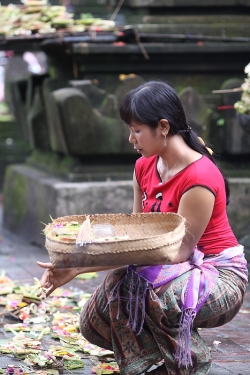
One of my favorite memories from my visit to this temple is a woman who was on her knees, bowing to pray. It was a beautiful sight in a lovely place, with the Café Lotus and large, pink lotus flowers nearby.
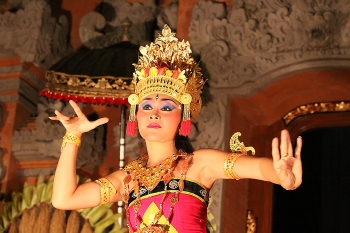
Another highlight of a trip to Bali was the talented dancers in their breathtakingly beautiful costumes.
The Legong “Jobog” and Ramayana dances by the Bina Remaja Troupe at the Ubud Palace Court Yard in downtown Ubud were a feast for the eyes.
The Legong dance is based on the story of two brothers, kings Subali and Sugriwa, who are turned into monkeys. They wind up fighting and eventually recognize each other as brothers, according to the dance’s program.
The Ramayana dance features Rama, Sita and her brother Laksamana, who enter the jungle of Dandaka for a journey and are discovered by demonic minister Maricha of Alengka Kingdom.
Petulu Village
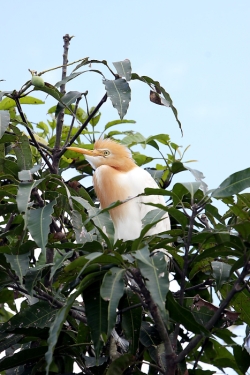
Another interesting site in the Ubud area is the Petulu Village, where the white herons live. There are three different types of herons residing in this village.
The herons arrived in Petulu in 1965. A large ceremony was held at the pura desa, or village temple, shortly following their descent.
A pamphlet explains: “It came as a surprise to the villagers the herons arrived after their ceremony and consider it as a blessing from God. In order to encourage the herons to live in Petulu and increase their population, the villagers make special ceremonies called memendak kokokan.
Motorbike tour
Thanks to my motorbike guide who took me to the village, I have some treasured photos of these gorgeous birds, some of them with the orange-colored necks. One of them gracefully spreads its wings in a photo.
I Nyoman took me to Santi Agrowisata in Gianyar. It is an awesome coffee and tea plantation operated by I Wayan Sudarana, who is most welcoming to tourists from all over the world.
I Wayan treated me like an honored guest, as I sampled some of the best drinks I’ve ever experienced – Bali coffee, Bali cocoa, lemongrass tea and ginger tea.
Natural beauty
Since a few days have now passed since I returned from the trip, I think about the natural beauty of the Ubud area and the things that make it so wondrous – the dancers, the folklore, multitude of craftsmen, the music, the orchids and the temples.
I remember my new friends and hope their beautiful surroundings in Ubud/Campuhan will never change due to development to strip the land of its natural beauty.
As Gede, I Wayan, I Nyoman, the folks at Murni’s and others showed me hospitality, peace and gave me wonderful memories, I wish them the same in return.
I wish for the exotic sounds of animals and birds to continue and all the array of traditional things they treasure to carry on for generations to come.
“Central Ubud. Murni’s Houses, Jalan Raya (up the ramp opposite Pura Dalem on the main street, left at the top, 2nd gate on the right), 4 delightful units [now 6], a 5 minute walk from the center, peaceful, traditional, clean, and very reasonably priced. Beautifully furnished by Murni in Balinese style. Well-kept gardens and the excellent Tamarind Spa in the grounds. Pick up, drop, activities, tours, and classes can all be arranged. US$60-115, includes Murni’s Big Breakfast.”
Bali, The Ultimate Guide to the World’s Most Spectacular Tropical Island, Linda Hoffman, Tuttle Publishing, 2012
Aussie brides choose Bali to wed over any other destination. Ian Lloyd Neubauer reveals the island’s most popular venues to say I do.
Hip, Hitched, Hooray
Ian Lloyd Neubauer The Sydney Morning Herald 10 March 2013
Set in a velvet-green valley in south-central Bali, Ubud is the spiritual capital of the island. Like something out of a Rudyard Kipling novel, the town is overflowing with Hindu temples – thousands in fact.
Don’t miss the lotus pond-ensconced Pura Saraswati temple, which is next door to a Starbucks, or the Gunung Kawi archaeological park half an hour out of town. And while it’s a no-brainer destination for Hindu weddings, this moss-covered fairytale of a place is also a popular destination for Christian weddings.
The best place to have a meal is Murni’s Warung. A four-story open-air eatery and bar overlooking a jungle-clad bend of the Campuan River, it was the first restaurant to open in Ubud, way back in 1974.
A few blocks away is Murni’s Houses, a traditional Balinese compound with four temple-like houses and an award-winning day spa set in a pixie’s garden.
“Why get married in Ubud? For starters it’s more traditional and authentically Balinese,” says owner Murni who, like many Indonesians, goes by one name only.
“And it’s cooler than the coast, which can be very hot. But the main difference is the scenery – many people like the backdrop of rice terraces for the ceremony.
“I’ve lost count of how many weddings we’ve done over the years,” Murni says. “I enjoyed them all, but the most memorable was the first, as I wasn’t sure we could do it. I was more nervous than the bride.
“We set the place up beautifully for the wedding by the pool: lots of tropical flower arrangements, tall Balinese umbrellas, ritual offerings and an antique table for the wedding book. Then it poured down. We quickly had to change everything, and then have the ceremony in my living room.
“But it all went well. And it gave us the confidence we could do weddings well, because we could deal with the unexpected.”
One of the World’s Top 10 Small Hotels Murni’s Houses
Just a stone’s throw away from Ubud Main Street, you will find a complex surrounded by a Balinese wall. Inside this secret garden nestles Murni’s Houses, which was once selected as one of the world’s top 10 small hotels by foreign media.
Murni’s Houses offer a wide variety of accommodation, ranging from normal guest room, house to apartment unit. Highlight is the lush and pleasant garden, where is also home to many precious sculptures by Indonesian living treasure Wayan Cemul.
The hotel provides various activities, including scuba diving, bird watching, bicycle tour and many more. Guests are promised to have a fun and unforgettable stay here.
Murni’s Houses and Spa appartenait au célèbre pionnier local Murni qui a fondé Murni’s Warung, le premier restaurant international d’Ubud en 1974 ainsi que le magasin Murni’s shop, le premier magasin d’arts tribaux et d’antiquités à Ubud. Cet établissement possède sept maisons confortables à la décoration traditionnelle balinaise. Chaque maison comporte deux chambres, un salon, une véranda et deux baignoires extérieures. Le salon possède également un lit. Les objets d’art ornent les murs et font de ce lieu un véritable musée. A seulement trois minutes de la rue principale d’Ubud, vous pouvez profiter du calme de ce lieu devenu une institution. Aux maisons, au restaurant et à la boutique s’ajoute un Spa (Tamarind) où le personnel qualifié vous accueille dans une ambiance propice à la détente.
Murni’s Houses and Spa est un lieu typiquement balinais construit par le célèbre pionnier Murni qui est également à l’origine de Murni’s Warung, le premier restaurant international d’Ubud en 1974 et de Murni’s Warung Shop, la première boutique d’arts tribaux d’Ubud. Le lieu possède sept hébergements confortables où vous pourrez profiter paisiblement du calme et de la solitude à seulement trois minutes à pieds de la rue principale d’Ubud. Tamarind Spa possède d’excellent thérapeutes, qualifiés et capables de vous relaxer. Un journaliste du New York Times en voyage dans la région décrivit Murni’s Houses comme l’un des dix plus beaux petits hôtels du monde.
I read this 130 page 10-step guide from ebook cover to ebook cover. Over the last few years I’ve read everything I could get my hands on – and there’s quite a lot to get your hands on – concerning Lightroom. I can easily say that this latest ebook, The Photographer’s Workflow by Gavin Gough is the best, in my opinion, by far. He writes in a very personal style; you have the feeling that he’s right there with you, telling you all he knows, as simply as possible, not holding anything back, and eager to pass on his knowledge.
He’s actually a wonderful photographer and teacher. Not just that, his background as a Systems Analyst, well versed in computers, enables him to explain just enough of the technical side that is necessary to know what you’re doing and why and fortunately not get bogged down with unnecessary detail.
Lightroom is a masterful program and Gavin goes through each step in the process extremely comprehensively and clearly. He leaves no stone unturned. It’s so easy to take hundreds, even thousands, of photographs a week, actually a day, even an hour, that we quickly become overwhelmed. It’s vital to have a well thought-out logical system that can be applied to every photograph from beginning to end. That’s what this book is about, and it’s not just the theory. Gavin generously explains his own personal workflow, honed over a decade of taking photographs for the likes of Lonely Planet and Getty Images, and gives us his own presets for each step, so that we can do exactly as he does. Whether we can take as good photographs at the outset is, of course, another matter. As he says, you can’t make a silk purse out of a sow’s ear.
In addition to the text, there are clear video tutorials and photographic examples. The ebook is more or less divided into two parts – the first part deals with data management, the vital need to back up everything, and why, the naming of files and folders, Lightroom’s system of flags, ratings and labels, and colour management. He recommends software that helps – some of which is free. And he explains how to configure Lightroom so that it gives the best service. He describes his own gear and what he takes on an assignment – with a lot of helpful tips, such as carrying superglue and elastic hair bands. He even advises on which way up to pack your camera.
Then he gets into what to do with the images once they have been taken, importing them into Lightroom, easing the chore of metadata, explaining smart collections (which I’ve never really understood properly and am looking forward to putting into practice), and, to me the best part, actually developing the images. Gavin has some very helpful – and wise – advice concerning lens corrections, perspective corrections and cropping before explaining the controls for exposure, white balance, contrast, hue, saturation, luminance, vignettes, tone curves, sharpening and noise reduction. He kindly provides presets for all of these, as well as several brush presets. Brush presets are used when you just want to alter part of the image and not the whole.
Finally, there is a chapter on exporting the image – which could be to a hard disk, CD, DVD, blog, Facebook, email, or web site. He explains what the appropriate image size and resolution should be.
I have no doubt that whether you are starting out with Lightroom or an experienced professional you will find this ebook highly useful. I wish it had been available when I started out myself using Lightroom. You will enjoy the really clear explanations and diagrams. At less than the price of a pub lunch, a mere US$30, it’s an incredible bargain. And who could not warm to a man who writes, The time has come to get into the nitty gritty of data management, you lucky sausage.
To buy the ebook The Photographer’s Workflow by Gavin Gough and be reading it in under a minute: Click here to visit Gavin Gough.