Product Description
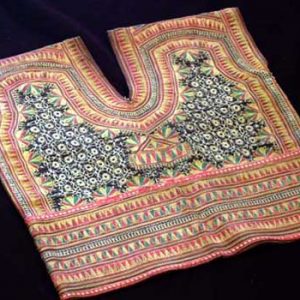
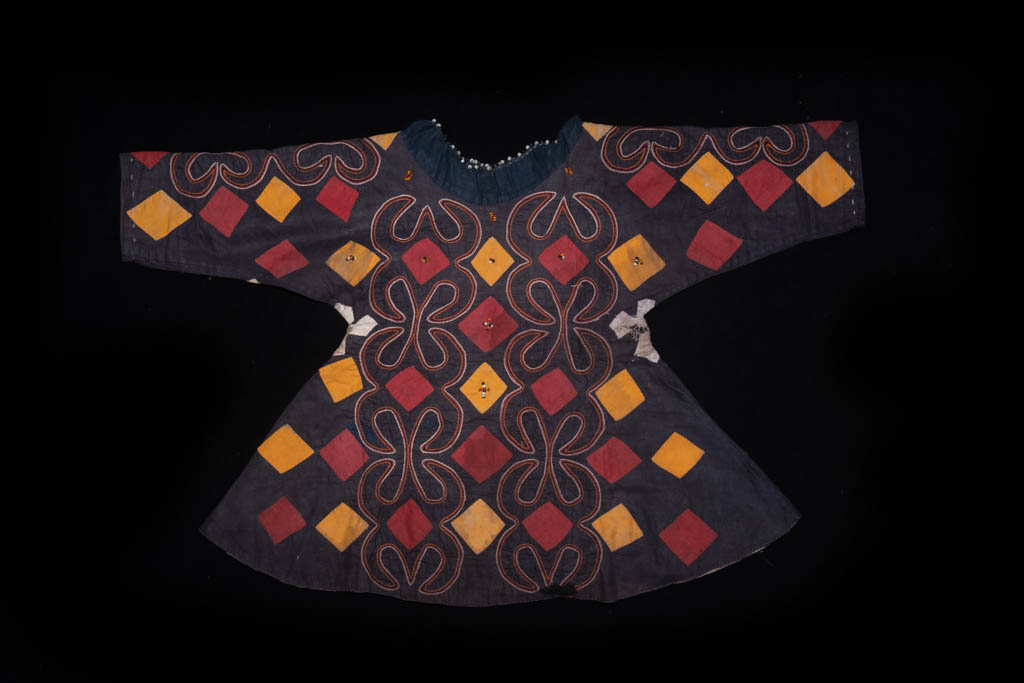
Antique Sulawesi Ladies Tunic
Material: Bark cloth lining, beads
Style: Central Sulawesi, Indonesia
Size: Height 56 cm, Width 88 cm (arm to arm)
Order Number: MHSASLT1
Plant fibres and leaves have been used to make clothes from Neolithic times and isolated Southeast Asian groups in Burma, the islands of Enggano and Mentawai off the west coast of Sumatra, and Luzon, Palawan and Mindanao in the Philippines, were wearing them into the 20th century. In some places they are still used as ritual clothing, for example in the island of Buru in Indonesia, by shamans in Borneo and dancers in some Bali Aga villages in Bali. Many of the groups were nomadic hunters, but when they settled down to agriculture used thread and cloth.
The use of bark cloth (nunu) has largely disappeared now, but continues to be used in the northern parts of central Sulawesi for delicate ceremonial garments and sturdy everyday clothes for women. Originally tunics for Sulawesi women were made from bark cloth and later were made from cotton and bark cloth retained as a lining.
The ladies tunic is from the Kaili people of Central Sulawesi. The motif from the north-west region of central Sulawesi is the petondu, the buffalo motif depicted as a diamond or star with curling embroidered points, resembling a buffalo’s horns. Buffalos are prized in Sulawesi.
There is a small restoration under the arm.
There is a similar example from the Australian National Gallery in Textiles of Southeast Asia, Tradition, Trade and Transformation, Robyn Maxwell, Periplus Editions, 2003, page 40.
19th century.
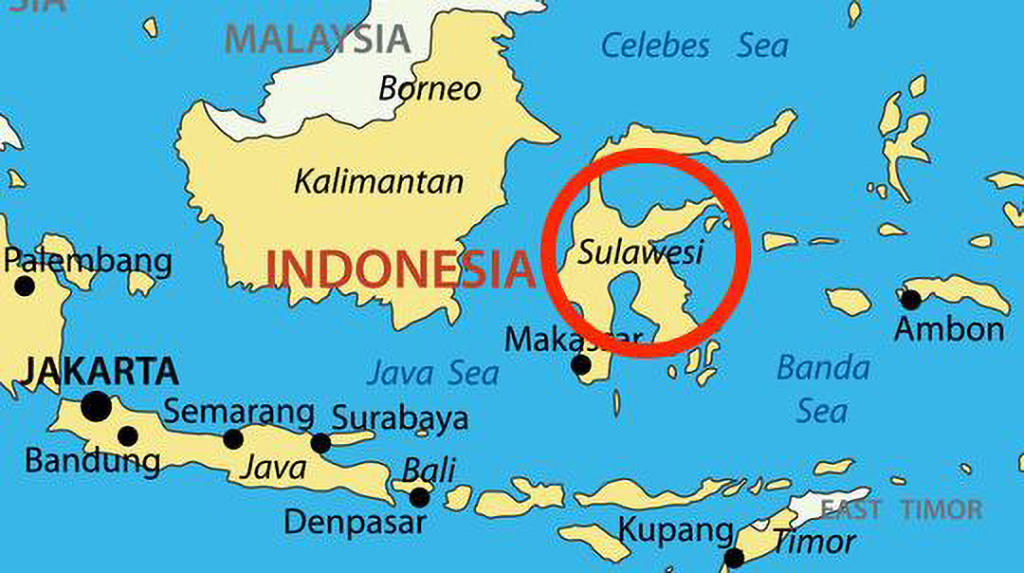 Map of Sulawesi.
Please ask for the price (or make an offer).