Tag Archives: ubud

Bali – Volcanoes and Beyond

By Stephanie Brookes,  Indonesia Expat,  20 November 2019

I stood near the rim of Kintamani volcano, taking in the sweeping views of Mount Batur and its expansive crater lake shimmering in the early morning light. Ahead of me lay the 35-kilometre, downhill bicycle ride to Ubud.

 
I headed off with my cycling guide and, soon enough, we started to weave through small villages, sharing the quiet, scenic roads with the people going about their day. We passed by duck farmers with long bamboo poles, a white flag on top, each with their gaggle of ducks trailing behind them. Vibrant green fields panned out on either side as we rode through the back lanes; many with groups of women threshing rice and sifting the grains with giant bamboo baskets.
 
We passed lines of beautiful women dressed in bright, ceremonial finery with lacy white tops and brightly coloured sashes, as they made their way to the local village temple. They walked in procession, single file, carrying tall towers of fruit on their heads.
 
This made for extraordinary photo opportunities. Believe me, you do not see this in downtown Kuta, Nusa Dua, Canggu, or Seminyak.
 
By travelling at just 10km per hour, I felt like I was able to make intimate contact with the world around me and could see, hear, and feel so much more than I would have in a car or on a motorbike. I could hear temple bells in the distance. The quaint lanes we passed made me feel like I was discovering the authentic Bali, opening up to impromptu moments that might come along.
 
We stopped in a small village for a break and I got talking to a young Balinese man named Kadek, who was sitting under a makeshift shelter next to a small, ancient, stone temple. He had been clanging away on ancient-looking cymbals, surrounded by an array of other instruments.
 
“These are all part of our gamelan orchestra,” Kadek explained, pointing to the gongs and drums. He said, “these have been played at our temple ceremonies for many centuries.” I learned that they are still played at weddings and funerals as well as for other rites of passage and ceremonies. Gamelan is mastered by memory, by heart.
 
Kadek invited me to come back the next day to join his family temple birthday celebration. Not only would I hear the gamelan being played, but I would also meet the shadow puppet master and watch the wayang kulit, the ancient Indonesian art of shadow play. What an offer!
 
“No need to bring anything,” Kadek stressed. “We have prepared plenty of food, and we welcome guests. It is our great honour to share our customs with foreign guests.” He quickly gave me his Facebook name, we exchanged phone numbers, and I made a promise to return.
 
It seems that all the conversations you have with Balinese, from the hotel concierge to the local fruit seller, always seem to include some discussion of their culture and tradition. Balinese traditional life is still very much alive outside the main tourist areas of Bali. By basing yourself in the town of Ubud, for example, you get to observe a ritualistic Bali which is steeped in Hindu religious practices. For me, every day seemed to offer another lesson, unravelling slowly and naturally. Bali is, in all essence, a living culture.
 
The island has over 20,000 temples and shrines. For such a small island (153km x 112km), one is bound to run into a ceremony of some description. All you need to attend a ceremony is a sarong, a long sash, and a top that covers your shoulders. Men wear an additional item, an udeng, the Balinese male headdress.
 
If you choose to travel around Bali with a driver, these are pretty much a given item, tucked away neatly in the back of the car, at the ready for an impromptu moment. When you catch sight of a line of women walking down a road with offerings on their heads, all you need to do is join the procession at the back, and you will likely end up at a temple where you can participate in the celebrations and experience the culture.
 
As a foreigner, you’re always welcomed to join a temple prayer session and, if you are lucky, you can also catch temple dancing, and sometimes drama plays being acted out. These ceremonies often go late into the night, many ways past midnight.
 
My cycle tour finished with lunch, including a traditional Balinese salad with green beans and sprouts (urab), tempe with delicate spices, tantalising spicy, shredded, steamed chicken, satay on bamboo skewers with peanut sauce, and steamed vegetables cooked in coconut cream. This was served on a pile of steaming red rice. Our beverage was my favourite, fresh and young coconut water served in the shell, a natural energy drink and electrolyte replacement. We all hailed our coconut water with a “cheers” to celebrate our accomplishment of completing the ride.
 
The next day, my body told me it was time to take a rest. I booked in for a three-hour relaxation and rejuvenation treatment at Murni’s Tamarind Spa in Ubud. Locally, Murni is affectionately known as “the Mother of Ubud.” She pioneered tourism in Ubud in the 1970s by setting up her legendary restaurant, Murni’s Warung, where artists, adventurers, and academics hung out, drank mango lassies, ate smashed avocado on toast, and devoured Murni’s famous apple pie.
 
Murni lovingly presides over her dream creation on the jungle-clad Campuan gorge above the Wos River, and 50 years later, it’s still the same. The award-winning Tamarind Spa is the latest addition to Murni’s businesses and it was under the tamarind tree I discovered my massage therapist, Kartini, was the former personal therapist of the President of Seychelles.
 
After a welcome drink, cold towel and foot ritual, Kartini started to weave her healing magic on me. This began with an hour-long traditional massage, deeply relaxing, mind soothing, and muscle quenching. This was followed by a fragrant green tea scrub and a yoghurt rubdown. My treatment finished by soaking in a warm bath with orange and red flower petals floating on top. To finish it off, I was served a pot of organic herbal tea and fresh tropical fruit.
 
The next day, I was on a mission to discover Bali’s secret photography spots. I decided on a David Metcalf Photography tour after reading some rave reviews online. I was collected bright and early, in time for the dramatic 6.00am sunrise over Mount Agung. Next, we ventured to a local traditional market which was teeming with piles of colourful, hot-red chillies, purple dragonfruit, snake fruit, bright green guavas, and pyramids of multi-coloured local spices. Next, we spent time at the river capturing some dramatic morning sun rays through the trees, and had a lovely chat with the local rice farmer.
 
After that, we headed to a beautiful 10th century water temple which we had entirely to ourselves. Lunch was up next and sumptuous traditional fare of steamed fish wrapped in banana leaves, coconut yellow curried vegetables, traditional Balinese salad with bean sprouts, and rice steamed in bamboo over an open fire. We ate in the home of a beautiful Balinese family. It was a delightful surprise to see a glimmer of gold shining through the thick foliage in the back of the garden, and soon enough, two delightful young dancers appeared.
 
They performed the Legong dance for us. It turned out these two little girls were temple dancers and loved to take the opportunity to dance for visitors. They were all of five and six years old and danced so elegantly, with beautiful flowing movements infused with pure grace and spirit. It was spellbinding.
 
What I really loved about my photography day, which also included plenty of one-on-one photo tips, was how immersed I was in Balinese culture all day. We did not see another foreigner all day. My kind of Balinese day.
 
Next on the agenda was yoga. Wandering the small streets of Ubud, I found myself walking towards “The Sari Organic Pathway,” which was well signposted from the centre of town, wending my way to the Yoga House; a yurt shaped building situated in the rice fields.
 
Sheila, the owner, offers classes five days a week and refers to them as yoga for everyone. Indeed, it was. As I eased into my gentle flow yoga class, my view was framed by three stunning, volcanic peaks fanning out from the yoga platform. The yoga studio was also surrounded by terraced rice fields that encircled the studio like a living green carpet. By being amongst nature, in the outdoors in this idyllic setting, I felt deeply connected to the yoga philosophy which connects the mind, body and spirit, through breath and movement.
 
In the late afternoon, I headed off to a remote, rural Bali village, Lokaserena, on the outskirts of Ubud. I was welcomed into the home of Kadek, who is an Ubud Village Plate host. Ubud Village Plate is a local initiative that supports the community and connects travellers over a shared lunch or dinner in the home of a Balinese family.
 
Cooking classes are offered as well, but I decided on the dinner-only option. On arrival, I was taken on a tour of Kadek’s house, which is part of his larger family compound. He explained the layout of his traditional compound and told me the history behind the ornate carvings and entranceways and the cultural aspects of the directions of the buildings.
 
Dinner was a succulent affair with sizzling chicken sate on bamboo sticks and steamed tuna baked in banana leaves, accompanied by a pile of fresh vegetables from Kadek’s garden. All was finished off with traditional black rice pudding with fresh coconut cream. We talked late into the night about tradition and customs and I didn’t want to leave.
 
My next journey of discovery was into the spiritual heart of a timeless temple called Gunung Kawi; my temple of choice, located only 20 minutes out of Ubud. I decided to visit this ancient 10th-century temple complex at 7.00am, which allowed me some solitude and a few quiet, reflective hours before the tourist buses arrived for 9.30am.
 
By chance, I meet Wayan, the temple sweeper, near the entrance and he offered to take me to some lesser-known parts of the complex. “Come with me. I will show you the way to a waterfall and a hidden temple, and we will pass by some ancient rice fields.” I eagerly took up Wayan’s kind offer, and he explained how the terraced rice fields, which grow right in the temple itself, date back to the 9th century and are now World Heritage-listed.
 
As we walked along the small path, the misty jungle clung to the edges of the steeply terraced rice fields. Wayan took me on a little trail where we passed by a waterfall on the way to some old meditation caves. Chiselled from the rock, I came to a series of open doorways, which stood in a straight line symbolically representing an open door. “A door to the other world,” Wayan said with a smile. Near the caves was a shrine, which Wayan explained, stood as a representation of King Anak Wungsu, 1050 AD.
 
I spent the rest of the morning walking in the shadows of a series of seven-metre high temple tombs known as the Queens Tombs. Wayan was excellent company and highly informative.
 
As Wayan continued with his morning temple sweeping routine, happy to have been interrupted by a lone traveller, I reflected on the beautiful Balinese people I had encountered over the week, whether that be by bicycle, in a Balinese home, or leaning on a broomstick. The famed Island of the Gods breathes with an even rhythm and welcomes the curiosity of a stranger to explore a very pure and authentic Bali.
Petit Futé 2020 Bali


Petit Futé 2019 Bali Recommended hotel

Murni’s Houses & Spa

Jalan Raya Ubud
✆ +62361975165
www.murnis.com

Le studio à partir de 475 000 Rp jusqu’à 2 500 000 Rp l’appartement pour 5 personnes. Petit déjeuner en option.

A seulement trois minutes de la rue principale d’Ubud, vous pouvez profiter du calme de ce lieu devenu une institution. Cet établissement possède 12 maisons confortables à la décoration traditionnelle balinaise. Certaines maisons comportent deux chambres, un salon, une véranda et deux baignoires. Le salon possède également un lit. Murni’s Houses and Spa appartenait au célèbre pionnier local Murni qui a fondé Murni’s Warung, le premier restaurant international d’Ubud en 1974, ainsi que le magasin Murni’s shop, le premier magasin d’arts tribaux et d’antiquités à Ubud. Les objets d’art ornent les murs et font du Murni’s Houses un véritable musée. Aux maisons, au restaurant et à la boutique s’ajoute un spa où le personnel qualifié vous accueille dans une ambiance propice à la détente.

Just three minutes from the main street of Ubud, you can enjoy the calm of this place becoming an institution. The hotel has twelve comfortable houses with traditional Balinese decoration. Some have two bedrooms, a living room, a veranda and two bathrooms. The lounge also has a bed. Murni’s Houses and Spa belongs to the famous local pioneer Murni who founded Murni’s Warung, Ubud’s first international restaurant in 1974, as well as the Murni’s shop, the first tribal arts and antiques store in Ubud. Art objects adorn walls and make Murni’s Houses a real museum. As well as the houses, the restaurant and the shop, there is  Tamarind Spa where qualified staff welcomes you in an atmosphere conducive to relaxation.

Petit Futé 2020 Bali

Romantic Honeymoon Package

Fall in love all over again!

Murni's Romantic Honeymoon PackageMurni's Romantic Honeymoon PackageMurni's Romantic Honeymoon PackageMurni’s Romantic Honeymoon Package


Murni has created a special Romantic Honeymoon Package at Murni’s Houses & Spa.

Murni's Houses The SuiteStay at Murni’s Houses & Spa with its lovely garden full of sculptures and tribal art objects, which the New York Times said is one of the best small hotels in the world and that was even before Murni improved it!

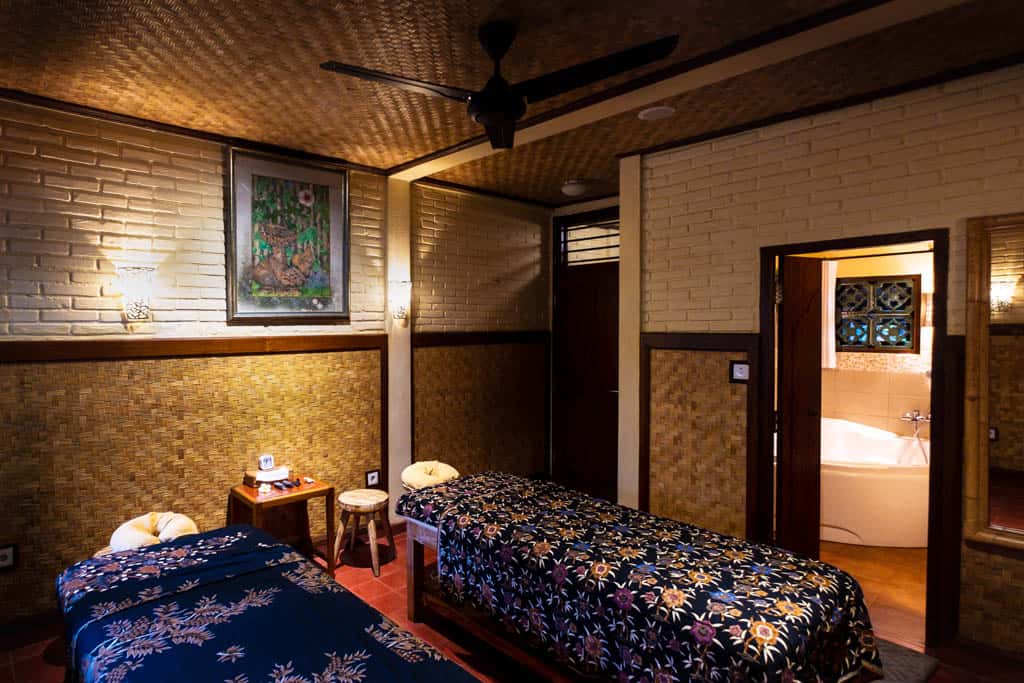
Tamarind Spa at Murni's HousesRelax in one of our new luxurious couple’s rooms at the popular Tamarind Spa at Murni’s Houses, which many say is the best spa in Bali, and a spa enthusiast even said was the best spa in the world (and she should know). En suite baths and showers, subdued lighting, individually controlled music, air conditioned.

Murni's WarungDine at the historic Murni’s Warung which was first real international restaurant in Ubud, now celebrating over 50 years, in a stunning, riverside gorge, a real photogenic location, and try Bali’s most famous local dishes.

Murni’s Romantic Honeymoon Package includes:

  • Pick Up at the Airport.
  • Tropical Welcome Drink.
  • 3 Nights in The Suite at Murni’s Houses.
  • Murni’s Big Breakfast.
  • Honeymoon Package at the Award Winning Tamarind Spa (3.5 hours).
  • All Day Tour (up to 8 hours).
  • Our Ebook: Murni’s Bali Tours, Where to Go, What to do and How to do it.
  • Romantic Candlelit Dinner at Murni’s Warung.
  • Honeymoon Cake.
  • Drop at the Airport.

IDR 9,999,999 per couple.

In many cultures, including Chinese and Japanese, the number 9 is considered lucky, often associated with longevity, good fortune, and success.

NOTE:

We can change the type of room (if you wish) and add nights at Murni’s Houses (subject to availability).

Reviews for Murni’s Houses in Magazines, Papers and Books

To book

Book Nowand please mention the Romantic Honeymoon Package

or

Email: murni (at) murnis.com

Romantic Honeymoon Package

Those Were The Days

Those Were The Days

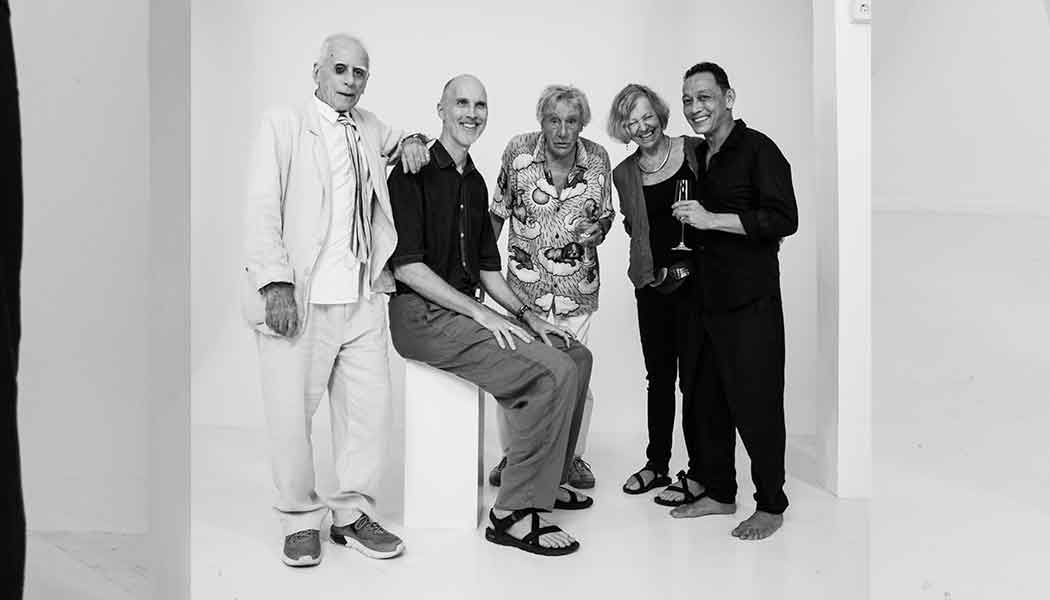
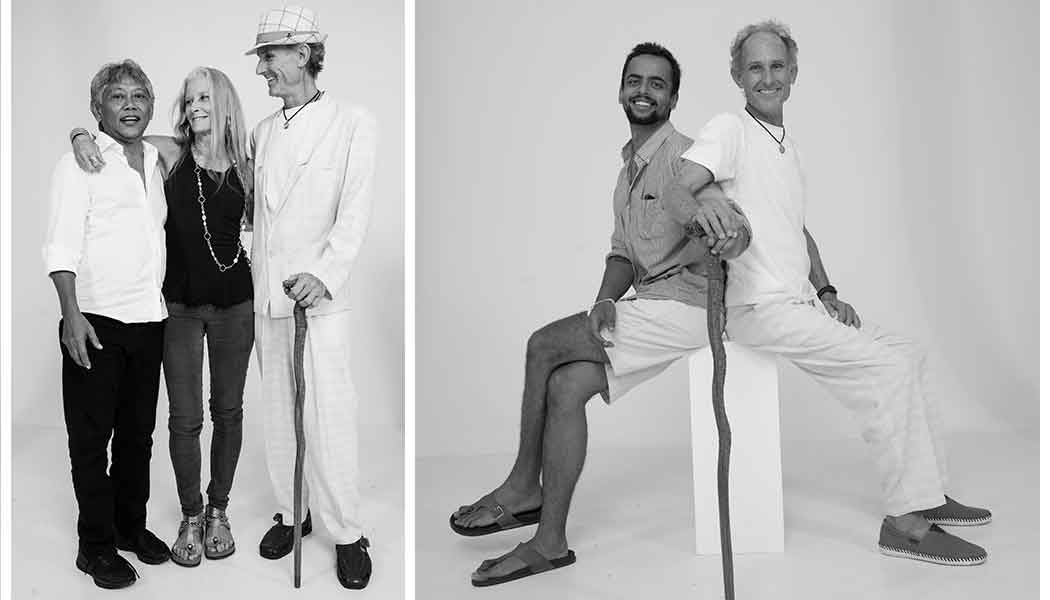
Why did you come to Bali? We asked Diana Darling to dissect a generation of island refuseniks who made the move more than three decades ago. Images: Oscar Munar. Styling by Angie Anggoro.

The Yak, May 2019

Those Were The Days

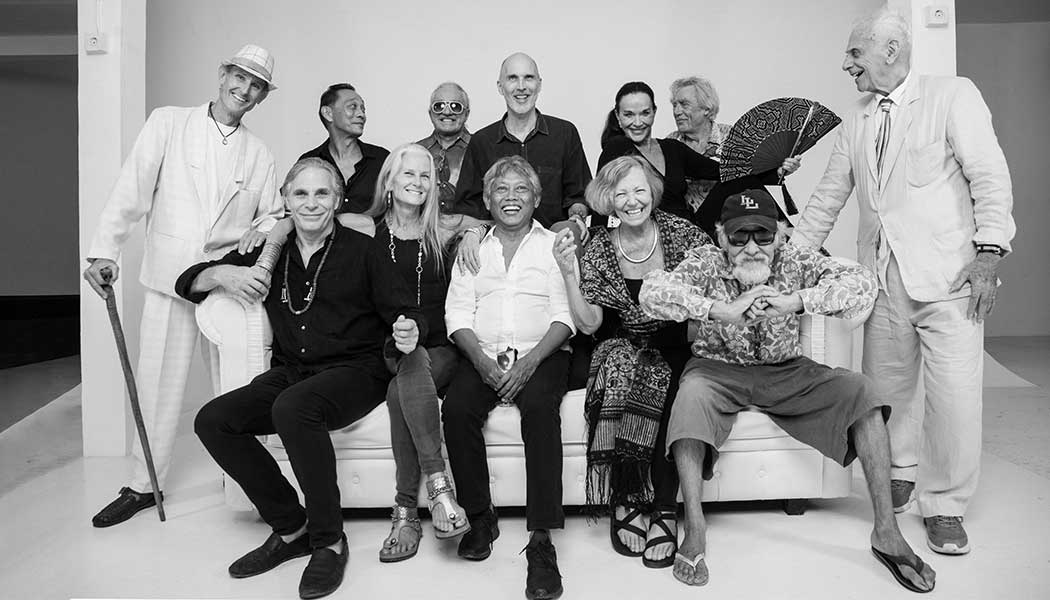
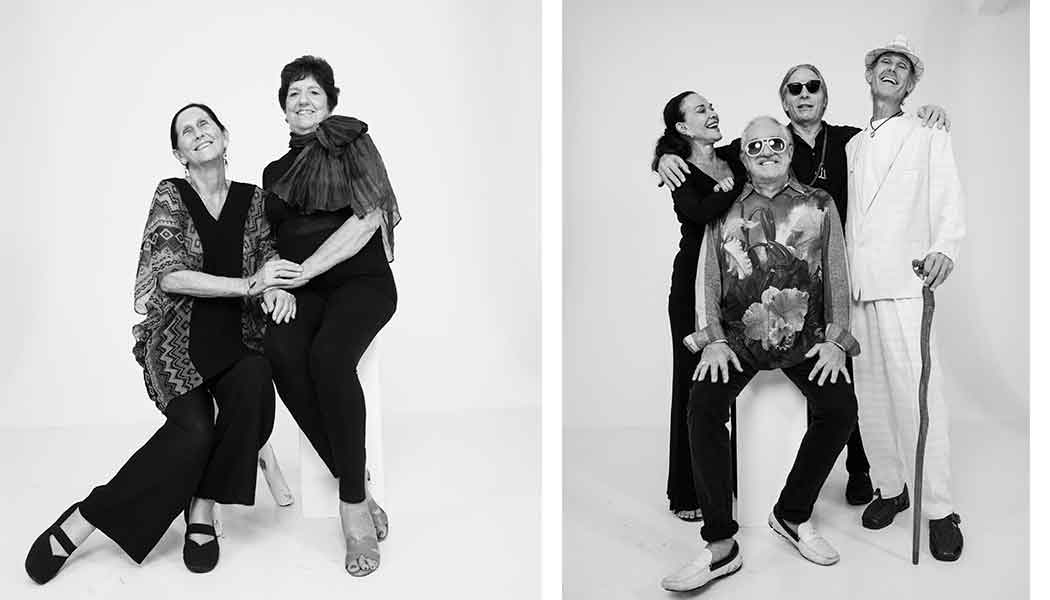
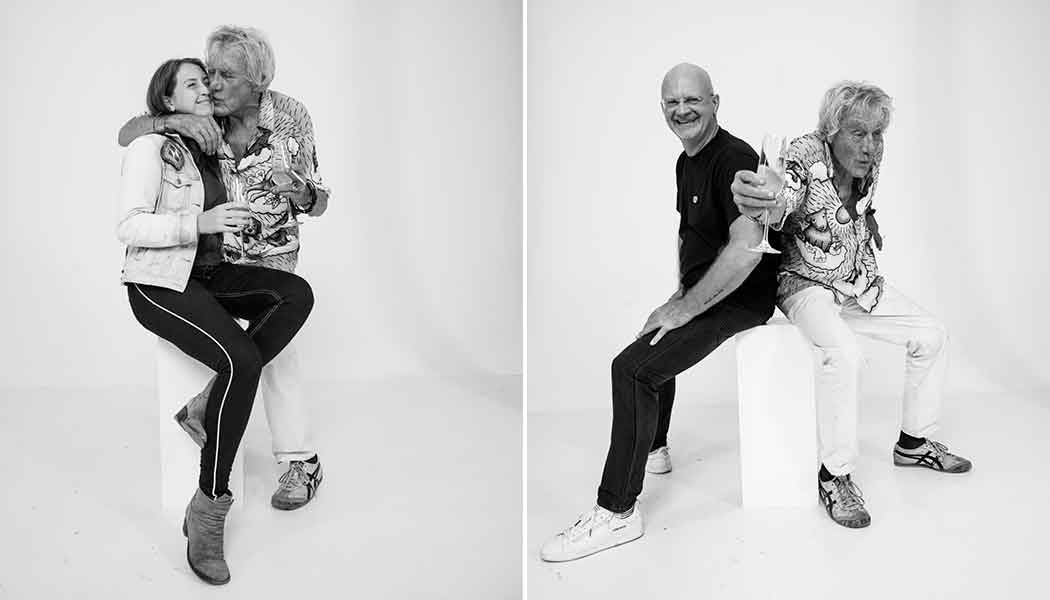
Seated, left to right: Bruce Carpenter Collector and connoisseur of Indonesian tribal art. Cynthia Hardy Muse, businesswoman and co-visionary with her husband John. Amir Rabik Entrepreneur and host to the stars. Jean Howe California-sunshine carrier and co-founder of Threads of Life. Leonard Lueras Writer, publisher, and consumer-researcher for Bintang beer. Standing, far right: Arthur Karvan Founder of the famous Arthur’s club in Sydney; designer of fashion fabrics and boutique residences Standing, left to right, back row: Emerald Starr Chocolate entrepreneur and developer of spiritual resorts in bamboo. Pintor Sirait Sculptor in steel and expert best friend. Milo Fashion designer, devoted son, and celebrity host. William Ingram Co-founder and chronicler of Threads of Life; former computer geek. Ananda Hart Painter and socialite; former Hollywood movie star super-hero. Ian van Wieringen Painter; expert on long-legged beauties.

FOR one thing, we were young. Even so, most of us already had a past. Some of us had recently been in the movies or bereaved or divorced or bankrupt or had just got out of jail. Most of us had been travelling for a while – often rough, sometimes dangerously.

Everyone was good at something, although some hadn’t yet discovered what it was. Everyone was looking for something, even if they didn’t know exactly what it was.

Some were looking for a sort of perpetual high, where the air was always gentle and there was always someone cool down the beach or at the next table, and no one would bother you about who you were or how you spent your days and nights, and if you ran out of money it was easy to make some more, if only enough for the next week.

Some of us were just looking for something to do. Some of us were looking for a cheaper place to do what we were already doing. Some of us were looking for each other. None of us would have said at the time that we were looking for ‘healing’.

Those Were The Days

We were all sorts of people – actors, scholars, con artists, filmmakers, fashion mavens, lawyers, fortune-tellers, potters, musicians, mystics, chefs, beach bums, heiresses, poseurs, photographers, traders, painters, stockbrokers, surfers, dancers, published and unpublished poets, and publishers, too. Some were good at taking rich people around the archipelago. Everyone had a go at designing something; some made a fortune at it.

John Hardy had legendary success designing jewellery when he teamed up with his wife Cynthia. “He had the ideas, I had a business model,” she once said. Neiman Marcus, a high-end retailer, saw one of his silver key chain ornaments and said, basically, “Can you make us a gazillion of these as earrings?” They did, and John Hardy became a worldwide luxury brand.

Before the late Linda Garland became “the bamboo queen”, she designed nice things for the home, made by Balinese artisans. Her genius lay in persuading rock stars and tycoons that they needed these things. She decorated homes for David Bowie and Sir Richard Branson. Everyone who was important adored her.

And the much-missed Madé Wijaya, né Michael White – who famously arrived in Bali in 1973, having jumped ship and swum ashore in a storm – designed beautiful gardens for resorts and moguls all over Southeast Asia. But his brilliance was his uncanny understanding of Bali.

Each of us had a private Bali, peopled with Balinese friends and families, who gave us a place to live and opened up worlds to us, introduced us to young craftsmen and old sorcerers, took us to holy places, and showed us the way to behave around ‘the gods’. They taught us the gamelan tuning systems and how to carve masks and make them come alive in the dances.

Those Were The Days

Perhaps we took our Balinese friends on tour to New York or India. We helped with their medical bills, and many put the children of their Balinese families through school. When our Balinese friends died, we went to their house; later we gathered in a corner of the graveyard, smoking kreteks with the gong orchestra.

As expats, we were not nearly as nice to each other as we were to our Balinese friends; but then, unlike the Balinese, life among us was unstructured. Some people were extroverts and threw ‘full moon parties’ where everybody had to wear white.

Others were introverts and avoided foreigners, often irritating other expats by punctuating their speech with Balinese slang.

We used to gather at places like Murni’s, Mak Beng, the Tandjung Sari, the Blue Ocean and Madé’s Warung. We got our mail at the poste restante of the local post office. (The late Shane Sweeney, a seminal expat, once waited for months for an important letter, only to find it filed under “M”, for “Mr.”) We shared tailors and sent each other presents with our driver, if we had one. When we started having children, some expats started schools, and later organic farmer’s markets. All the expat kids had Balinese children’s rites. Madé Wijaya said of the sons of Linda Garland and Amir Rabik that they had full Anak Agung wardrobes.

Those Were The Days

Snob appeal was varied, depending who you were. For some it was simply a matter of making a pile of money and spending it on building a fabulous house. For others it was having chic Balinese friends – venerable dance masters or priests or artists, or princelings in the government. In some circles, it was cool to be able to read Balinese script or to be treated for black magic. Status symbols also varied. Everyone appreciated heirloom keris and rare Balinese textiles, and a few could wear these things with flair. What you drove, on the other hand, was never a big deal. It was more impressive to have a driver who could negotiate the bureaucracy and possibly wrangle snakes.

Those Were The Days

Anthropologically, we felt a tribal kinship of oppression under Indonesia’s murky immigration laws; and we were serially polygamous. Our culture prized achievement and gratification. There was no point in being political, because we were foreigners and could be expelled on a whim. But as we got older, people became engaged with problems facing society and the environment, and many expats now work with Balinese in charitable foundations.

Today, as the group shot here shows, the early expats are still sexy. The man-eating divas may have gone vegan, but the fire of life is still blazing.

Petit Futé 2019 – Murni’s Warung

Petit Futé 2019 sur Murni’s HousesMurni’s Warung, Jalan Raya, Ubud
✆ +62 361 975233 www.murnis.com

Au niveau du pont de Campuhan.

Ouvert tous les jours de 9h à23h. Plats àpartir de 45 000 Rp.
Demandez Murni’s àvotre arrivée à Bali et votre chauffeur saura oùvous emmener. Car tout le monde connait la proprietaire des lieux, la personne la plus charmante d’Ubud vous diront meme certains.

Murni concocte depuis des decennies une cuisine indonesienne et thaïet àla fois authentique et travaillé(elle a heritédes recettes de sa mere et de sa grand- mere), àbase d’ingredients frais et de qualite. Le warung fut le rendez-vous des branches des annees 1975-1980. Dans un superbe cadre (descendre les terrasses successives accrochees a la gorge pour arriver tout en bas, dans un bain de fraicheur et de vegetation). Les gateaux maison sont simplement divins. Murni’s Warung est une institution!

Petit Futé 2019 – Murni’s Warung

Tamarind Temptations – A Spa in Ubud, Bali

Tamarind Temptations – A Spa in Ubud, Bali

by Stephanie Brookes, 2 October 2018

Stephanie Brookes is a travel writer and blogger with tales from Indonesia and beyond.

Tamarind Temptations – A Spa in Ubud, BaliIt can take a lot of searching to find a perfect spa in Ubud as there are so many choices. You can seek out the five-star, high-end establishments, set in hanging gardens and on cliff tops, but they often come at a price that is over the top.  On the other hand, you may be tempted by the numerous signs that greet you at every street corner in Ubud catering for the budget-minded with US$8 massages, which are of variable quality. The place will most likely be noisy. You will often just be separated from the next person by a hanging sheet. And forget about the hygiene!

Choosing a spa around the mid-range means finding somewhere with a soothing ambience where treatments are affordable.  The minute I went through the tall Balinese gate of Tamarind Spa at Murni’s Houses, I knew I had found a winner.

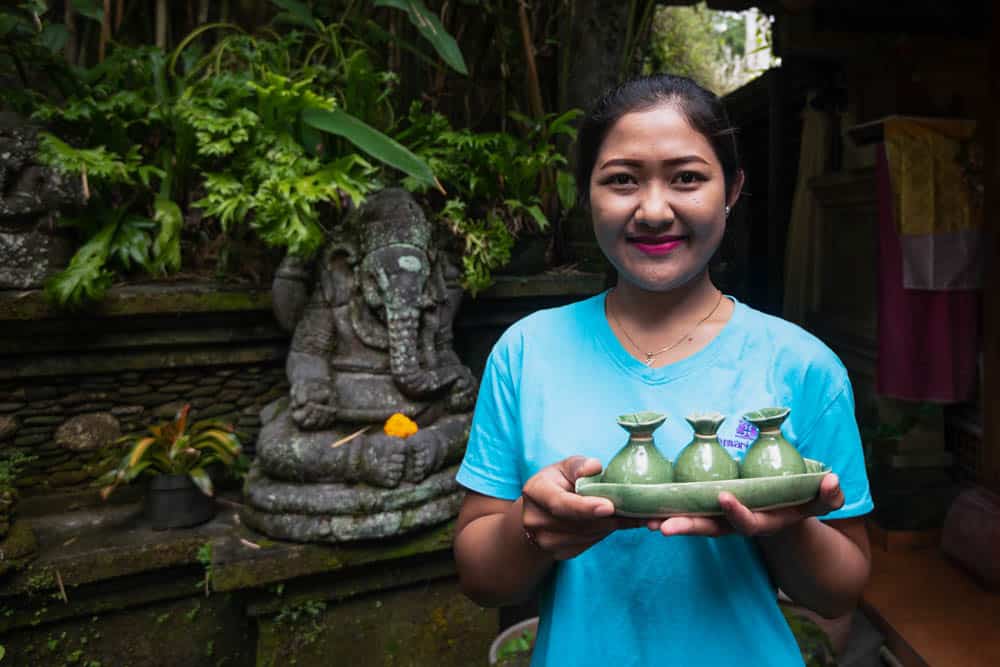
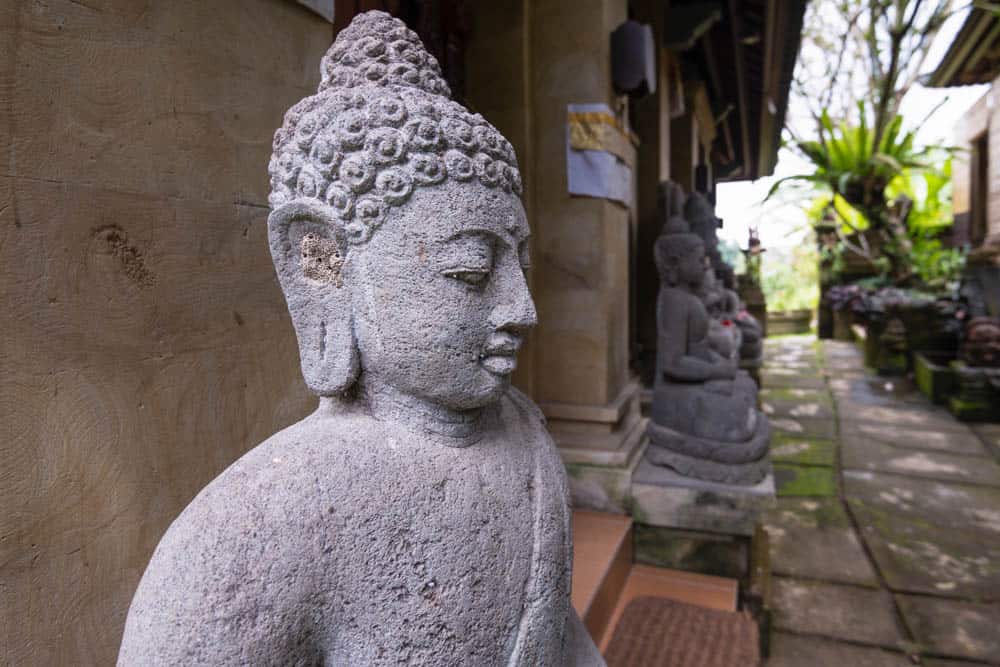
Walking into Tamarind Spa is like finding the old, authentic Bali. The Spa is set in a beautiful Balinese compound. The tropical gardens and elegant fountains and water features create a serene setting, as the sound of water is your constant companion. Nature abounds. The exquisitely carved Ganeshas and Buddhas are a reminder that you have come to a place of peace – a beautiful haven of relaxation and divine connection. Make sure you look for the tamarind tree in the garden. The spa was named after this tree.
Tamarind Temptations – A Spa in Ubud, BaliTamarind Spa and the adjacent Murni’s Houses are historic landmarks in Bali and the owner, Murni, is a bit of a legend in Ubud and beyond.  In fact, a book has been written about her –  Forty Delicious Years 1974-2014.

She is well known for her famous restaurant Murni’s Warung, which is located a short walk down the hill from the Spa. It was established over 40 years ago in Campuan, located at the old Dutch bridge, 5 minutes from central Ubud, with stunning views over the jungle gorge.

Tamarind Spa is a small, intimate facility. The professional therapists that take care of you have been trained, under Murni’s guidance, by a team of expert spa trainers from around the world. Most of them have worked at 5-star hotels in Bali and abroad. The wide range of treatments incorporate Balinese tradition and skills.

Word has spread about Tamarind Spa so, for example, in 2017 and 2018 awards included:  Winner of UK Luxury Travel Guide Awards: Winner of Contemporary Spa of the Year, Indonesia, 2017 and Winner of Luxury Spa of the Year, Indonesia, 2018.

So how do you earn such prestigious awards? Murni explained, “The most important part of establishing a spa is the extensive research that must go into trying and testing the best of Bali’s masseurs and masseuses. This challenge took me one year.”

From personal experience, I recommend the indulgent Tamarind Spa Romantic Package. Mine started with a ritual flower petal footbath, followed by a heavenly one-hour massage delivered by the most intuitive hands, and by people who understand the complexities of the human body. They were able to balance the pressure points and create a gentle flow, resulting in an ultimate therapeutic experience. After the massage I had a foot reflexology treatment which helped with balancing my energy centres, creating a harmony of mind, body and soul.  At this point, I was floating.

Next, came a luxurious Honey Seed Scrub. This left my skin feeling soft and smooth.  Following the scrub, the paste was washed away under a warm shower, and I got to step into a gorgeous bath, filled with petals.  As I floated among hundreds of petals, I was served a refreshing pot of organic tea and a platter of fresh tropical fruits.

Apart from the package, the Spa offers many other treatments. I added on another treatment – a facial.  This turned out to be one of the best facials I have ever had. The natural ingredients used included honey, yogurt, white clay, cucumber and rose water. They were mixed by the therapists themselves. After my facial, my skin felt rejuvenated, and I was feeling radiantly alive.

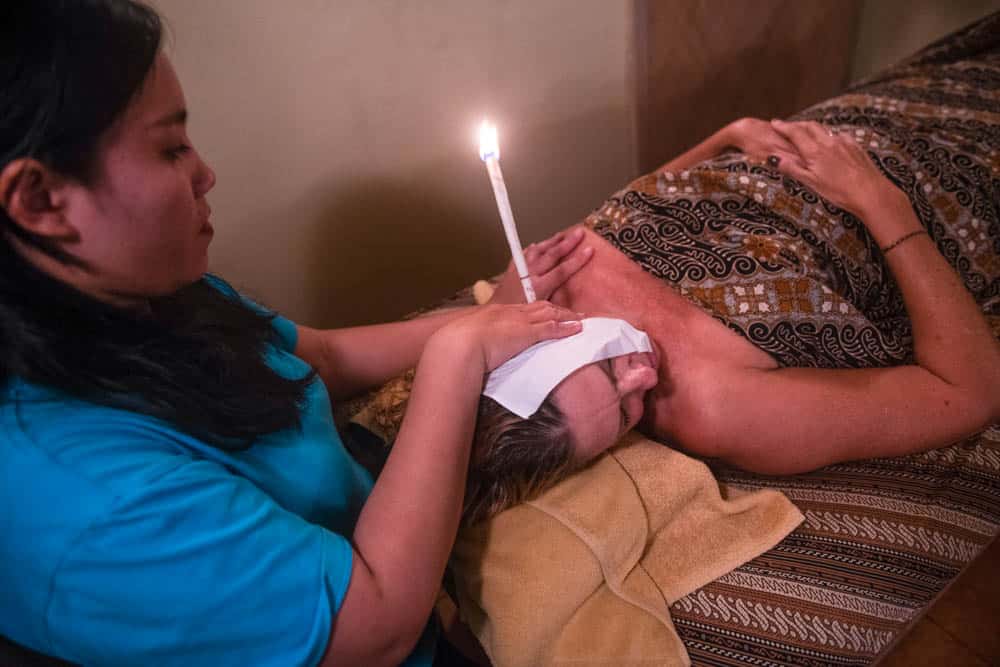
Tamarind Temptations – A Spa in Ubud, BaliEar candling is also on the Spa menu. I was way overdue for one and so added this to my pampering regime. Okay, so this was now a one-day spa experience and I was up for that.  Ear candling safely removes excess wax and other debris from inside the ears and leaves you feeling very balanced and for some people results in better hearing.  My ear candling treatment at the Spa was combined a deep relaxation neck massage. What a bonus!

Meals are available in the beautiful, quiet garden setting of Murni’s Houses.  I took advantage of that, as after my 4 hours of treatments, I was ready for a nutritious lunch.

With the combination of very high standards and the beautiful Balinese ambience, it is no wonder Tamarind Spa is an award-winning spa, and I would put it on the top of your list of things to do in Ubud.

Tips – What to Know

–    Do not eat a heavy meal before a massage.

–    Arrive 10 minutes early and rest on one of the lovely spa lounges overlooking the gardens.  Relax into your spa treatment.

–    To maximise detoxifying effects, drink plenty of water afterwards and try to avoid caffeine, nicotine and alcohol for the next 24 hours. After, make a plan to rest and allow your body to feel the healing effects of your treatment.

–    A specialised Children’s Package (age 5-12) includes a chocolate scrub and 4 other treatments and finishes with ice-cream.

Tamarind Temptations – A Spa in Ubud, Bali

Bali is The Top Destination in Asia

Bali is The Top Destination in Asia

Bali is The Top Destination in AsiaBali is The Top Destination in Asia – the Number 1 Travelers’ Choice by Trip Advisor 2018 – and the Number 4  Destination in the World after Paris, London and Rome.

Trip Advisor say “The artistic capital of Ubud is the perfect place to see a cultural dance performance, take a batik or silver-smithing workshop, or invigorate your mind and body in a yoga class.”

There’s actually a lot more than that. For example we arrange the following for our guests: photography tours, helicopter tours, chocolate factory tours, cooking classes, Indonesian or Balinese language lessons, white water rafting, elephant safari park trip with a ride on an elephant, Bali Swing, Jungle Buggies, bicycle drive through the villages, climbing a volcano at sunrise, rice paddy trek, bird walks, herbal walk through rice paddies, tarot reading, Balinese dance classes, batik painting classes, making Balinese offerings, snorkeling or scuba diving or a boat trip to a deserted island.

For photos (including the one shown here), which are for sale, go to http://www.jonathaninbali.com

For the book Secrets of Bali, Fresh Light on the Morning of the World – go to https://www.murnis.com/ebooks/secrets-of-bali/

Bali is The Top Destination in Asia

Demons in Bali

Demons in Bali

Demons in Bali

Murni’s Houses, my boutique hotel in Ubud, hosted a gaggle (is that the right word?)  of excitable photographers from Austria, Australia and England last week, drawn by the prospect of huge, scary, colourful demons of Bali awaiting them on the streets in various stages of creation.

Demons in BaliThe ogoh-ogoh are inventive and frightening. There is always a black, hooded, faceless angel of death. There are usually dragon-like figures and mythical creatures. In the early days the artists were inspired by Balinese folklore but latterly Hollywood characters have come to the fore, some sporting Mohawk hairstyles.

Demons in Bali

The ogoh-ogoh are symbols of demonic spirits, made from wood and bamboo, covered with papier-mâché and Styrofoam, and painted with garish colours. They can reach 10 feet (3 metres) high and the same wide.

Demons in Bali

In the evening of Balinese New Year’s Eve, these huge grotesque statues, with lights aglow, accompanied by loud gamelan music, are paraded by their makers on wide bamboo platforms around the village. They are remarkably life like.

Demons in Bali

After the parade they are usually burned at the village crossroads, but recently, as they are really works of art, some have been kept for display in community halls, temples, hotels, and private houses, admired as works of art. The ‘tradition’ became popular in the 1980s.

For (better quality) photos, which are for sale, go to http://www.jonathaninbali.com

For the book Secrets of Bali, Fresh Light on the Morning of the World – go to https://www.murnis.com/ebooks/secrets-of-bali/

For 3 frightening slideshows of Ogoh-Ogoh in Bali:

Demons in Bali


Murni’s Very Personal Guide to Ubud

Murni’s Very Personal Guide to Ubud

Look Inside


Murnis-Very-Personal-Guide-to-UbudMurni’s Very Personal Guide to Ubud
by

Ni Wayan Murni (author)

Jonathan Copeland (photographer)


Roy Thompson said “Secrets of Bali is the best book about the island written and published since 1990 …”.  That was our last book. This time we decided to concentrate just on Ubud, the cultural heart of Bali, which is a must for most visitors to Bali. I’ve lived all my life in Ubud and for most of it I have been involved in tourism: restaurant, shops, textiles, art, accommodation and spa, so it was right that I should share some of my knowledge. I’ve travelled the world, so I’ve also added some pitfalls and traps and a few warnings.
Ni Wayan MurniNi Wayan Murni

Murni’s Very Personal Guide to Ubud

Stephanie Brookes, Travel Writer wrote “This is all you need to experience the best of Ubud written by Murni, a legendary local insider and cultural expert.”

Published: 24 October 2011

44 Chapters

Bibliography

Words: 23,646

US$2.99

If you don’t have a Kindle, you can read it as a pdf file, and either way you can read the first 10% as a free sample on the Kindle Store on Amazon.

Start reading Murni’s Very Personal Guide to Ubud in under a minute.


“This is all you need to experience the best of Ubud written by Murni, a legendary local insider and cultural expert.”

Stephanie Brookes, Travel Writer


“I loved this guide to Ubud by Ni Wayan Murni with photos by Jonathan Copeland. I have been to Ubud many times, but found new secrets in Murni’s Very Personal Guide to Ubud. It’s true that she toots her own horn a bit, but she has every reason to do that since the places she owns are well worth checking out. And she doesn’t only give information about her own businesses – she also shares so much information about Ubud that it definitely gives travelers many reasons to go there. Well done..”

Kate Benzin

Author of HowTo Find The Heart Of Bali


A Little Gem

“Murni’s Very Personal Guide to Ubud is to the point and for that reason I love it. Instead of having to wade through the more traditional guides, for those wanting to get to the heart of Ubud quickly, grab this one first.

If you do pop into Murni’s Warung, ask if she is about, or to their spa. She is one of the nicest people I’ve had the pleasure to meet and if it wasn’t for this book, I would never have known of her. However, she is famous in Ubud for her entrepreneurial life and the prosperity she has brought to her village.

I have read the previous review and must say I can’t agree that it is true for all people. If you want to read lots of information to try and work out what to do, and you want to spend hours doing it, sure, pick up the wordy Lonely Planet. To say that Murni has just plucked all of this from the Internet is absurd. She has lived in Ubud all her life!

I really value the information in this, it helped me immensely when I first went to Ubud to research it for my own book, there is likely no-one who knows Ubud as well as Murni and Jonathan. For $2.99, this is a little gem and if you want the easy and informative guide to get your head around a city that literally sprawls over mountains and vales, this guide is perfect.”

Clare McAlaney

Author of Things You Need to Know About Bali


Written with the simple traveler in mind

“When I travel, I try to find everything I can about the place in the internet. Sometimes, it gets too confusing when you have to browse through several web sites to get the basic information you need. Murni’s Very Personal Guide to Ubud gave me most of the information I needed on Ubud. Sure, it is subjective but the writer did put a caveat from the start. I’m just a simple traveler who wants to know the mode of transport in Ubud, what are the places I can see in the area, should I activate my roaming or just get a local sim card, etc. The book is very helpful guide for travelers like me and you can’t go wrong with a price equivalent to a cup of coffee in your local coffee shop.”

Jay Rodriguez


Very Enriching

“Who else but Murni to write a guide about Ubud. Anyone who sees Ubud, indeed Bali without any depth of knowledge is missing out on a lot. I first went to Ubud in early 1980, and still go regularly. And I have tramped dusty paths in the evenings to eat at Murni’s over the years. The best places are the places I go on my FEET, and not in a car. Murni, over so many years has gone from being a girl with a simple food stall to writing an app about Ubud. She is all class.”

Janice Brown


Thank You, Murni

“Thank you Murni! You have certainly filled this Ubud guide with information and insights that I have not found revealed elsewhere. I just finished my 3rd visit and was still using your guide to explore this very special area.”

Sharon J. Larson

Murni’s Very Personal Guide to Ubud

Forty Delicious Years – 1974 – 2014

Forty Delicious Years – 1974-2014, Murni’s Warung, Ubud, Bali, From Toasted Sandwiches to Balinese Smoked Duck

Gourmand Awards

GOURMAND AWARDS 2019

Finalist: A06 Special Awards

Look Inside

Forty-Delicious-Years-Forty Delicious Years – 1974-2014, Murni’s Warung, Ubud, Bali, From Toasted Sandwiches to Balinese Smoked Duck

Jonathan Copeland
Rob Goodfellow
Peter O’Neill


Email: murni (at) murnis.com

Forty Delicious Years is the story of Bali’s most enduring culinary landmark – Murni’s Warung in Ubud. Narrated by some of the Warung’s most intriguing patrons, with a Preface by Murni herself, the book tells the story of how a humble roadside stall became an institution – in fact a must visit on a magical must visit island.

This easy to read and immensely enjoyable collection of vignettes was published to celebrate the 40th anniversary of Murni’s Warung in February 2014.

line
 

“It’s an institution. It’s a favourite, and a hive of memories and friendships. It’s Murni’s Warung.”

Jero Asri Kerthyasa

“It’s not just food and a good time that you get at Murni’s Warung, but a complete sensual experience.”

Professor Michael Hitchcock

“Murni’s Warung … the best clubhouse in the Universe.”

Karen Goodman

“Murni is and always will be one of my favourite mothers in town.”

Janet de Neefe

“For forty delicious years Murni’s Warung has been somewhere to relish life, excellent service, good food, and the company of friends.”

José in den Kleef

line


Bring your copy to dinner at Murni’s Warung and if Murni is there she will sign it.

If she is not there … then there is still a wonderful menu, which deserves to be worked through course by course by course by course.
 

Book Reviews

line
 

Forty Delicious Years - 1974 - 2014

Forty Forte

Murni’s Warung,

Hello Bali, Editor’s Finds, February 2015


If you have been living in Bali for some time, chances are you know and love Murni’s Warung in Ubud. Dating back to the 1970s, Murni’s Warung is
 a treasured food joint with authentic Balinese food and Campuhan River views. Furthermore, Ibu Murni herself is a beloved figure whose hospitality has earned her many friends and loves over the years. However, if you don’t yet know who Ibu Murni is or where
 to find Murni’s Warung, it’s high time you do. One of the best ways to do that is to read Forty Delicious Years, a compilation of stories about the warung and the namesake founder told by the warung’s eclectic patrons. It’s an interesting insight into what it’s like to be among the island’s insiders.

line

Ubud Icon Murni’s Warung Turns Forty

Katrin Figge
Jakarta Globe
4 April 2014
 
Ubud Icon Murni’s Warung Turns Forty

Murni’s Warung remains an Ubud icon 40 years since it was established, with fans crediting its founder as the heart of the place and even of Ubud.

She is often referred to as the “mother of Ubud,” and her restaurant has been a longtime favorite among both travelers and locals: Ni Wayan Murni, a Bali native who recently celebrated the 40th anniversary of Murni’s Warung with the launch of a book that includes personal memories and anecdotes of people who have accompanied her on her journey from the 1970s until today.

Author and photographer Jonathan Copeland, co-editor of “Forty Delicious Years,” as well as a good friend of Murni, said that it felt right to celebrate this milestone “in a more tangible way than simply a T-shirt and party.”

“We didn’t want a book blowing our own trumpet — there are enough of those vanity publications around — but instead a book focussing on the times and life of Murni’s Warung as seen through the eyes of its guests over 40 years,” he said.

It is an approach that gives readers the chance to learn more about Murni and also about Ubud and Bali in general, and particularly how significantly it has changed over the years.

The first thing that needed to be done was to decide on the number of contributors; 40 contributor for 40 years was the logical solution.

“We then compiled a list of colorful, engaging and interesting characters whom we thought we could contact,” Copeland said. “We went through the time-consuming process of trying to track them down. Some were easy to locate but some were impossible to find. We were delighted with the final list as they comprised a wide range of nationalities, occupations and ages which cover the life of Murni’s Warung from day one until the present. They are all busy people with big jobs and we are very grateful for the time they spent on this.”

Murni, who was born in Penestanan, just a few minutes away from Ubud, began selling breakfast snacks before going to school in the 1950s. Less than 20 years later, Murni already owned four shops on Sanur Beach and established Murni’s Warung in Campuhan-Ubud.

Besides traveling the world and collecting Asian antiques and textiles, Murni built Murni’s Houses and Murni’s Villas catering to the growing number of tourists, and recently opened the Tamarind Spa at Murni’s Houses.

In the book, Murni writes that she still finds it incredible to look back at how she started Murni’s Warung — with no more than a bowl of soup and a sandwich.

“I wasn’t a cook and had no knowledge of what Western food was. I had no business plan, no mission statement, and no spreadsheets. I didn’t have electricity or a fridge or an electric oven. I didn’t have staff or suppliers or a car,” she said. “But I did have passion and drive and energy. And I had friends and customers and hard work. Luckily, Murni’s Warung grew and prospered and has been able to serve food and drinks to thousands of people these 40 years.”

Murni also has a very special connection to the restaurant’s location on a gorge above the river Wos, which is sacred to the Balinese people.

“It has been part of my life, going back more than 40 years,” she said. “When I was a very young child […] I played and bathed down there at the river and among the rocks. When I was older, I helped carry rocks up from the river bed to the road for construction use. Later still, after my parents split up, I secretly met my mother below the bridge. I never dreamed that I would be able to buy part of the gorge, live there and go to sleep to the sound of the sacred river crashing over the rocks.”

Copeland, who has worked with Murni on three previous publications, said that not many people can survive in the highly competitive F&B industry, especially these days, when new restaurants pop up everywhere in Bali.
“Restaurants often start out as flavor of the month and fizzle out,” he said. “It is not an easy business and diners are demanding and unforgiving customers who don’t give you a second chance.

“I think it’s easy, in retrospect, to see how Murni’s early success came about,” he added. “In the early days there simply wasn’t a place in Ubud to get good food. Murni’s Warung was a beacon for early travelers to hang out. They spread the word and they still do. But obviously there had to be substance to it. I think the substance is what has made Murni’s Warung remain a favorite for so long. Murni is a perfectionist. She is very concerned about the comfort and happiness of her guests. And she is a traditionalist concerned about the preservation of Balinese culture. Murni’s Warung is a Balinese building with Balinese food served by Balinese waitresses in Balinese dress.”

Dr. Lawrence Blair, an anthropologist, author and filmmaker who has been based in Bali for almost 40 years, was among the warung’s earliest customers and still vividly remembers a quiet Ubud.

“Instead of tourists, there were only a few ‘travelers’ and barely a handful of eccentric resident expats,” he writes in his section in the book. “And the place to meet them was Murni’s Warung. But the first real draw to Murni’s was the discovery that hers was the sole place in Ubud to have mastered that most rare and esoteric art of producing a sunny-side up properly fried egg. Further cause for enthusiasm was when she also became the first person in Ubud to provide natural yoghurt and wild honey with one’s tropical fruit.”

Blair was also witness to some of the illustrious figures who have visited Murni’s Warung over the years, including Richard Branson, Mick Jagger, Richard Gere and Diane Von Furstenberg.

“My only regret is that they weren’t all there at the same time,” Blair wrote.

Australian-born Janet de Neefe, founder of the Ubud Writers and Readers Festival, has also been a regular to Murni’s since the 1980s.

“Many of my fondest memories of Ubud in the Eighties are wrapped up in the walls of this multi-leveled eatery,” she writes in the book. “We’d sip on freshly squeezed lime drinks brimming with crushed ice while slowly eating nasi campur or nasi goreng . Lunchtimes drifted into dinner and it didn’t matter. There was nothing urgent to be done except chat about life, love and cosmic heroes — there were no mobile phones, Internet, e-mails, reality TV, not even Facebook.”

De Neefe, like the other contributors, have always enjoyed the peaceful surroundings as much as the delicious food. But they also all agree that Murni, the heart and the soul of the restaurant — some might even argue, of Ubud — has always been the real draw and the secret of the restaurant’s lasting success.

“Back then, I remember that one of the greatest joys about visiting Murni’s Warung was simply Murni,” de Neefe said. “She used to sit at the front desk and invariably wander up to your table and have a chat. There is so much to love about Murni. Whether it be her heart that’s as big as the moon, her gentle nature, grace or soft humor.”

line

Forty Delicious Years, 1974-2014

“I enjoyed every chapter of this book.  A wonderful collection of stories from long-term residents, many of whom are famous authors, artists and scholars. An entertaining and interesting read of reflections of Murni, the “Mother of Ubud”, who started a humble little restaurant some forty years ago.  It’s a journey of loving, living and laughter through these pages.  Highly recommended read.”

Stephanie Brookes

Author Indonesia’s Hidden Heritage – Cultural Journeys of Discovery

line

An Ubud icon – Murni’s Warung is celebrating 40 years of operations with the publication of a new foodie book.

Murni’s Warung, located in what is arguably the cultural capital of Bali, was Ubud’s first international standard restaurant and, on February 20, 2014, it marked 40 years of continual operations.

Celebrating the landmark, The Orchid Press publication “Forty Delicious Years” is the story of Bali’s most enduring culinary landmark—Murni’s Warung in Ubud.

Narrated by some of the Warung’s most noteworthy patrons and with a preface by the legendary Murni, the book tells the story of how a humble roadside food stall became an Ubud institution and a ‘must visit’ on a magical ‘must visit’ island.

According to Ibu Murni, considered by many to be a “Mother of Balinese Tourism”: “The 20th of February in 2014 also happened to be my calendar birthday and, what’s more, this date also fell on the same day as my Balinese birthday. This rarely happens, so it’s was a triple … no, a quadruple celebration.”

Bali Update

6 April 2014

www.balidiscovery.com

line

FORTY DELICIOUS YEARS IS THE BEST BOOK ON BALI–TAKE A VOYAGE TO THE CULINARY AND SOCIAL HEART OF THE ISLAND OF THE GODS

By Vivienne Kruger on July 7, 2014

Forty Delicious Years is one of the finest books ever produced about the mystical, legendary, god-blessed island of Bali–the sacred, unsullied morning of the world. Bali is a brilliant, bright emerald jewel set in the elongated necklace of 17,000 islands that comprise the brooding, primeval Indonesian archipelago. Anyone who has ever visited my beloved Bali–or is planning a sojourn of personal discovery or food discovery–should bring this book along with them. Forty Delicious Years is an incredibly revealing and intimate masterpiece about Ni Wayan Murni, her gorgeous gorge-side Warung restaurant in Ubud, and the constellation of notable expatriates and international personalities that have made Murni’s Warung their social and culinary home away from home. The tell-almost-all book is filled with the charm and beauty of Murni’s universe, reflected in the anecdotes, accolades, reflections, and stories penned by forty of her often famous, well-known (Mick Jagger) customers and fans. These intensely personal, soul-revealing chapters empower all of us to be expats on Bali for awhile, and experience life as very lucky strangers in an unknown paradise. I lived in Bali for two years, and know first-hand the seductive, permanent pull on the soul by the spiritual, always-god-conscious Balinese and this very fertile, bountiful island sanctuary.

The writing is incredibly alive and spectacular, and is delightfully easy to read and digest. The book takes us into the sanctified world of Balinese cooking, traditional village social life, tinkling gamelan orchestras, and culture–seasoned with Murni’s kindness and career, and deep, longstanding friendships in the community. Situated near the old Dutch suspension bridge in Campuan-Ubud, Murni’s Warung was built from the ground up, and is a legend in its own time. For almost four scrumptious decades, it has been the ultimate place for Ubud expatriates (and tourists alike) to fulfill their most deep-seated Balinese and western dessert fantasies. The stunning, four-level restaurant is carefully decorated with Murni’s exquisite antiques, Balinese stone statuary, Buddha images, and artworks–and enjoys a spellbinding, natural riverside location and view. A visually and spiritually enlightening, five-foot-tall bronze statue of Ganesha the Elephant God symbolically creates prosperity and removes all obstacles in the Lounge Bar of Murni’s Warung. Ordered by Murni as a specially designed commissioned piece in 1997, it took highly esteemed, respected, experienced Balinese artisans-craftsmen five years to complete!

Murni remains an integral part of her village of birth and her island of Bali–and the forty testimonial chapters written by forty different long-time expatriates, visiting Bali scholars, and international adventurers/wayfarers are personal, unique, revealing and priceless. This book is a deep and memorable journey through residence in Bali, religious devotion, ceremonial splendor, and life as an expat (or repeat, Bali-obsessed visitor) eight sacred degrees south of the equator. As a first-hand travel journal collection in its own right, these personal tales of adventure–and longing for the spirituality and benediction of Bali–are amazing. And they all swirl around the wonderful people of Bali, Balinese life, and Murni’s longstanding contributions to and dedication to her community, family, local temples, and the gods. One of the best stories is about a very loyal, Kintamani Bali dog named Dausa–who spent his life lounging on the front steps of Murni’s Warung as Murni’s personal guard dog. He lead a charmed life, and enjoyed such delicious foods as chicken sate sticks and Murni’s highly coveted chocolate chip cookies! A very pampered Balinese dog indeed!

I am an expert on Bali, as well as on traditional Balinese food and food culture, and have complete admiration for this very special new book about one of Bali’s most important and iconic purveyors of Balinese food, art, antiques, and hotel accommodation on the unforgettable island of the gods.

Reviewed by Dr. Vivienne Kruger, Ph.D. Author of Balinese Food: The Traditional Cuisine and Food Culture of Bali. Tuttle Publishing, 2014.
Forty Delicious Years – 1974-2014, Murni’s Warung, Ubud, Bali, From Toasted Sandwiches to Balinese Smoked Duck

Murni’s Houses – Contented Traveller

Murni’s Houses –  Contented Traveller

Murni and Murni’s Ubud, Bali

Murni's Houses, Contented Traveller26 February, 2015
Contented Traveller
Paula McInerney

It was by great fortune that we found Murni’s Houses, Ubud, Bali through FlipKey by tripadvisor who had given us carte blanche to pick wherever we wanted to stay in Bali and we chose 6 nights at Murni’s Houses. This is all part of our Travel Series, Bali for Baby Boomers. We found Murni’s Houses but also found out that Murni is a living legend in not just Ubud, her hometown, but in all of Bali.
Straight away our interest was piqued about both the lady and the many businesses that she owns throughout Ubud and the reverence that she is held in. We quickly booked with Flipkey knowing that we were on to something unique and we were right. We also had read that Richard Gere, Richard Branson and David Copperfield the magician have visited Murni’s, so we thought that Gordon and I might just join this illustrious cast.

About Ubud

Ubud is Eat. Pray. Love territory and a book that I have yet to read, though I did see the movie and discussed whether Ubud had changed since that book and that movie. We have been here before and we have noticed the increase in visitors. That actually takes nothing away from this amazing place. Ubud is an artistic and culturally rich regency with its own king and royal family. Many tourists come here as do many expats seeking the alternative lifestyle. Food abounds and you would be hard pressed to find better foods than dining at streetside warungs. It is the home of art and you cannot avoid the skill of the Balinese artisans. It is also home to yoga, massages and all things alternative. You should head to the Sacred Monkey Forest at the end of Monkey Forest Rd. This is a magnificent jungle sanctuary, that is full of mysticism and lots of monkeys. The best way to see Ubud is to walk. Walk a lot, have a meal at a local warung and then treat yourself to a massage. It works.

Our first impressions on arriving at Murni’s Houses

This is a traditional Balinese compound where the houses are set in amazing gardens. Often referred to as the Villas of the 33 statues, there are waterfalls, and lush gardens and you hear the sounds in the distance of village life. There is Balinese art everywhere and there is serenity about this compound. There is also seclusion despite being a couple of minutes from the main road of Ubud.

Our traditional Balinese rooms, and we did have a number of rooms, and our outdoor areas overlooked the gardens yet protected us from the occasional Ubud rain storms. We loved it. We had Wi-Fi and were well taken care of, being given ginger tea to help a cough I had developed in the snow in Japan. This is a Balinese cure all and these herbal medicines known are known as ‘jamu’. (Turmeric and lemon grass also work).

This gave us a very real local experience meeting with the people who work here and getting to know a little more about the real way of life for the Balinese.

More About Murni’s Houses

In the early 1980s Murni started to build these open-air pavilions amongst the lush gardens and next to open fields. It is here that you can attest to her eye for tradition and art with the fountains and the statues everywhere you look.

About Murni the Lady

Ni Wayan Murni was born in Penestanan, Bali about 9 kms from Ubud to a farming family so it is no wonder that hard work comes naturally to her. During the early 1970s she owned 4 shops on Sanur beach. It was here, selling sarongs, that she actually sold some to president Sukarno and Mick Jagger of The Rolling Stones. This was not to be her first brush with fame, and Mick has some serious street cred.

She returned to Ubud and opened a shop and here she used to make her husband soup and a sandwich for lunch. Tourists stopped and wanted to have some too and that is how Ubud’s first real restaurant, Murni’s Warung, came into being. This institution has seen its fair share of celebs and tourists coming to savor her signature dishes. Try the famous Balinese smoked duck. Murni’s Warung is like her style in all of her ventures – traditional Balinese. There are four levels that cascade down a steep hillside overlooking the Wos River. The thatched roofs, traditional open wooden architecture, and a vast collection of stone carvings gives you a very Balinese experience. Talk to Ketut and he will share with you what it is like living in Bali.
She was also the first person in Ubud to open two antiques shops in the 80s and 90s. These galleries showcased many antiques, textiles and costumes and other pieces that she knew were special. Nowadays, many of the prized pieces are in Murni’s Warung,
Murni is active in the arts and culture scene of Ubud, and has lectured in the US on Balinese textiles.

She also plays in a women’s gamelan group at important religious ceremonies.

Tamarind Spa

Murni has also created Tamarind Spa at Murni’s Houses and this spa was listed as the top spa in Ubud on Trip Advisor within 3 months of its opening. It is here that she continues with her ethos of everything Balinese, with traditional Balinese massages located within the stunning and serene gardens and waterfall. It is not the cheapest massage that you can get, but the staff are trained and located as it is in the art garden, it is a total experience.

Thank You to FlipKey by trip advisor for making this property available to us for 6 great nights. Great find, highly recommended and a perfect inclusion for our Travel Series.

Murni’s Houses – Contented Traveller

Booking Activities and Classes

Murni's Houses Activities white water rafting activity


To contact us:
Please fill in the form or, if you wish, email us at: murni (at) murnis.com
We always reply within 24 hours, usually more quickly.
If you don’t get a reply using the form, something has gone wrong, so please email us.
Murni

    Name *


    How many Adults for each activity? *

    How many Children for each activity? *

    Any preference for dates? *

    And times? *

    What would you like to do? *

    Buffalo Racing, Dancing and Photography in West BaliOur Favourite Instagrammable SpotsHelicopter TourBatik Painting ClassTarot ReadingCasa Luna Cooking ClassBali Herbal WalkBumbu Bali Cooking ClassBalinese Dancing ClassBalinese Flute LessonsBalinese Gamelan LessonsLearn to Play the RindikLearn Indonesian or BalineseWhite Water RaftingElephant Safari ParkUbud Cycling TourDownhill Mountain Cycling TourUbud Ricefields Walking Tour2 Hour Rice Paddy TrekMurni’s Bali ToursBalinese Painting ClassBalinese Offerings ClassMason Chocolate Experience TourMason Chocolate Maker ClassTrekking and TouringJungle TrekMount Batur Volcano Sunrise TrekBali SwingJungle BuggiesTamarind Spa at Murni’s HousesUbud Afternoon Dance TourPhotography Tour Full DayPhotography Tour Half DayMurni’s Bali ToursBali Hai Day Cruises: Lembongan and Nusa Penida IslandsMason Chocolate Maker Class

    Staying at? *

    Murni’s Houses

    Note that we only arrange these for guests staying at Murni’s Houses.

    Email *

    Alternative email

    Any comments

    I am not a Robot *

    The Best Spas in Bali for Your Money

    The Best Spas in Bali for Your Money

    Tamarind Spa ,Just LuxeJust Luxe
    www.justluxe.com

    By: Jon | Posted on May 24, 2012

    The Best Spas in Bali for Your Money

    For many travelers, a trip to the spa for some pampering is one of the highlights of any trip. A few hours spent in a tranquil environment, getting massaged, cleansed and relaxed can do wonders for any stressed out globetrotter.

    In the tropical paradise of Bali, the spa experience goes to a new level. Nestled in lush gardens or along sandy shores, the spas in Bali are legendary and thousands of travelers book flights to this tiny nation every year for rest and rejuvenation. From full service spa resorts to simple day spas, these are some of the best bets for your money in this paradise. All prices are in Australian dollars.

    Tamarind Spa at Murni’s Houses

    Located under the shade of a Tamarind tree in the tourist hotspot of Ubud, Tamarind Spa at Murni’s Houses is one of Bali’s most consistently top rated spas. With trademark Balinese hospitality, the spa is surrounded by tranquil gardens and fountains, and offers a full range of spa services from massages and rubs to manicures and pedicures. Tamarind Spa is also unique in that it is an artistic as well as relaxing experience. Murni, the owner of the spa and adjacent guest houses and villas, has a background in fine art and has filled the spa with Balinese and Indonesian art, offering a glimpse into the local heritage. Prices for such luxury are surprisingly reasonable, with full day packages average about $100.

    The Best Spas in Bali for Your Money

    The Ultimate Guide to the World’s Most Spectacular Tropical Island

    The Ultimate Guide to the World's Most Spectacular Tropical Island“Tamarind Spa at Murni’s Houses, Jalan Raya (up the ramp opposite Pura Dalem on the main street, left at the top, 2nd gate on the right). Murni’s extremely popular new spa shot to the top of Trip Advisor within weeks of its opening. Rave reviews. Many repeat guests, including masseurs, say it’s the best they’ve ever experienced. Well-kept gardens, fountains, sounds of running water, soothing music, healthy lunches, reasonably priced.”

    Bali, The Ultimate Guide to the World’s Most Spectacular Tropical Island, Linda Hoffman, Tuttle Publishing, 2012

    Tamarind Spa at Murni’s Houses

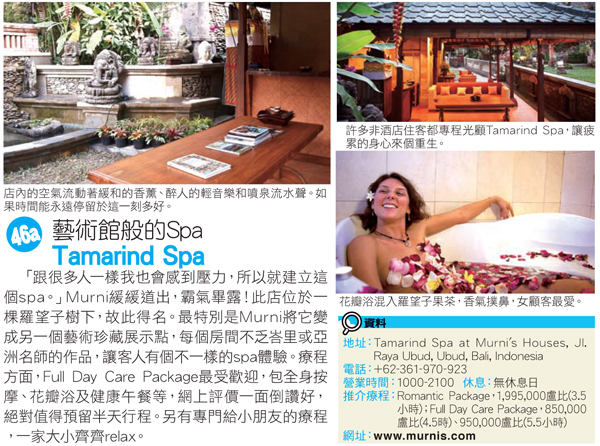
    Art Museum-like Spa

    Art Museum-like Spa

    Art Museum-like Spa
    Tamarind Spa

    Just like a lot of people, the owner Murni sometimes feels stressed, so she built this spa! What makes Tamarind Spa different is the abundant amount of artworks placed inside every treatment room. The most popular treatment is the Full Day Care Package, which includes whole body massage, flower bath, healthy lunch and more. There are also treatments for children. Let’s come and enjoy with your family!

    Sky Publishing Guide to Bali 2013-14
    Hong Kong

    Art Museum-like Spa

    Murni’s Very Personal Guide to Ubud

    Murni’s Very Personal Guide to Ubud
    Murni’s Very Personal Guide to Ubud

    When guests asked Murni for advice on where to go or what to do in Ubud or on what to buy, those inquiries gave birth to Murni’s Very Personal Guide to Ubud.

    Written by a native Ubud resident – the village of her birth – this eBook sells for only US$2.99 .


    Being digital, it can easily be carried around on your portable iPhone, iPad, Android or Kindle.

    In a sense, Murni has been researching this eGuide all her life, confiding with her guests what businesses she likes to patronize; what arts and crafts, courses, cultural sites and secret places she recommends and what galleries she supports.

    This 120-page guide, with its detailed descriptions and insightful observations, is all you need to experience the very best of what Ubud has to offer. Start reading Murni’s Very Personal Guide to Ubud in under a minute

    Balinese Painting

    Balinese Painting

    Introduction

    E.H. Gombrich begins his book The Story of Art, first published in 1950, with the opening sentences, “There really is no such thing as Art. There are only artists.”

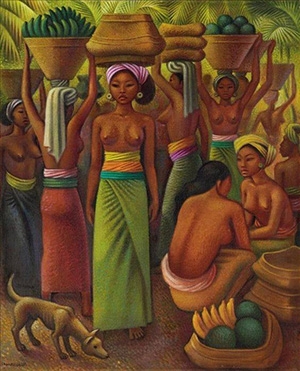
    Miguel CovarrubiasMiguel Covarrubias.

    The Mexican artist, Miguel Covarrubias, and his wife, Rose, went to Bali in 1930, visited Walter Spies in Ubud and wrote Island of Bali, the first major book on Bali, which is still widely read today. He began his chapter on “Art and the Artist” with the sentence, “Everybody in Bali seems to be an artist.” He also notes that there are no words in the Balinese language for “art” and “artist.”

    Art and artists

    As far back as the 9th century AD there are royal inscriptions. One provided a refugee for artists and exempted them from taxes. The inscriptions refer to blacksmiths, goldsmiths, musicians, singers, dancers and shadow puppet performers.

    The temples were the main source of patronage. The arts were required, and still are required, for the frequent temple ceremonies. The artists congregated near the temples. So, in places where there are many temples, there are many artists.

    Balinese temples and the ceremonies within them are entirely given over to the arts: sculpture, carving, music, painting, offerings, dances, drama, poetry readings, shadow puppet performances and so on.

    Ubud

    It is often said that Ubud is the cultural centre of Bali. This may be a slight exaggeration, but it is certainly true that Ubud is a very good place, probably the best, to survey the vast range of Balinese arts. Ubud has long been a centre of music and dance and later painting.

    There are many galleries and three excellent art museums, the Neka Art Museum, the Agung Rai Museum of Art and the Puri Lukisan.

    There are several distinct schools of art.

    Classical Wayang Style

    Painting probably started with wayang puppets for shadow puppet performances and then strayed into painting hand-woven cotton cloth. There was no separate art of Balinese painting. Until the 1930s there were not even artists, there were just artisans, multi-professionals, who did everything. Some still do. There was not a word for, or indeed a concept of, art. There were only concepts of religious and court needs.

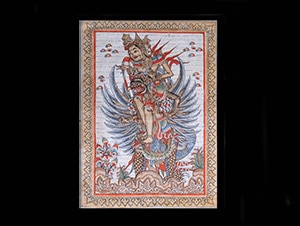
    Kamasan PaintingKamasan Painting. Buy here.

    The resemblance to wayang puppets of the figures in traditional Balinese paintings is clear. For details of the wayang puppets, see the chapter entitled Wayang Kulit: shadow puppet performances in Secrets of Bali. Painters were usually Sudras and formed themselves into communities called sangging. The kings of Gelgel and Klungkung recognized them up to the beginning of the 20th century. They supplied the courts with paintings.

    The rules for wayang puppets are followed in the paintings: the shapes, colours and headdresses of the characters, the positioning of the noble and divine characters on the left, coarse and evil ones on the right, as they would be in a performance from the point of view of the audience. Read more about it in Secrets of Bali.

    Puppeteers tell stories orally. Painters do it by drawing trees, buildings and even writing on paintings. Time is shown by depicting the same characters at different stages in the story in the same painting. The paintings can be several meters long and half a metre wide and tied to the eaves of a building during a religious ceremony – this type is called ider-ider.

    The village of Kamasan in the kingdom of Klungkung in the south became the centre for this kind of painting. The reason: court patronage of the arts. See the chapter entitled Balinese History – Pre-history to the Europeans in Secrets of Bali for the details. The Majapahit dynasty, following its arrival in Bali from Java, first established itself in Samprangan, later Gelgel, and subsequently Klungkung. Read more about it in Secrets of Bali.

    The Dewa Agung of Klungkung appointed the painters and sculptors of Kamasan to decorate his palace and they then became established as official court painters for generations. They received requests from other kings and their style of art spread. Paintings would also be used to decorate a household or a temple during ceremonies. After the ceremony they would be put away and stored in baskets.

    Manufactured cotton fabrics are used now rather than hand-woven fabrics, on which the artist initially draws the outlines with a sharp pen. This style of painting is also used on wooden panels to decorate the back walls of shrines and offering platforms, as well as bed heads, doors, windows, boxes, baby cradles and bowls.

    The subject matter tends to come from the Ramayana and the Mahabarata stories, frequently battle scenes and the story of Rama, Sita and Rawana. Paintings in calendar form, depicting gods, demons and mythical animals, are also popular.

    Rivalry between the courts was a major stimulus to the arts. Read more about it in Secrets of Bali.

    There was a brief flowering when the Dutch employed Kamasan artists to restore the palace at Klungkung, which the Dutch had destroyed during their invasion. As a result art flourished in the 1920s, but then declined again. A new patron was required and it was the tourist.

    The Pita Maha group of artists in Ubud, mentioned below, in the 1930s overshadowed Kamasan, but in the 1960s, Nyoman Mandara, a local artist from Kamasan, established a school of traditional Balinese painting, which is now supported by the Government, so the style continues.

    Famous Kamasan paintings of hell can be seen in all their glory in wood panels lining the ceiling of the old law court, Kirta Gosa, in Klungkung, recently restored by present-day Kamasan painters. Their purpose was to edify and teach.

    Lempad

    I Gusti Nyoman Lempad was the most remarkable painter that Bali has produced so far. Read more about it in Secrets of Bali. There are collections of his works in the Museum Puri Lukisan and the Neka Art Museum, Ubud.

    He was also an architect and talented wood carver. After the bad 1917 earthquake Lempad and his father designed the royal palace gate. It used to be very simple, but is now elaborate.

    His was an early departure from the Kamasan style paintings. The real explosion came with the arrival of the foreigners in Ubud in the late 1920s and early 1930s.

    Spies, Bonnet and Pita Maha

    Walter Spies, German (1895-1942), himself an artist, came to Bali at the suggestion of the royal family in Ubud. Spies told the local artists that they were merely churning out the same old themes and that they should paint scenes of daily life, the markets, planting rice, harvesting, temple festivals and dance performances.

    At that time painting was in a crisis. Read more about it in Secrets of Bali. Walter Spies is discussed in the chapter entitled Balinese History – the Europeans in Secrets of Bali.

    Up to that time, Ubud had concentrated on music and dance and was not a painters’ colony. Klungkung was up until then the centre of painting. Ubud became and still is an artists’ colony thanks to Spies and Rudolf Bonnet, a Dutch artist (1895-1978). Bonnet also encouraged the local artists and gave them modern paints, materials and canvasses and explained depth and perspective.

    Read more about it in Secrets of Bali.

     Until 1937 Museum Bali was the major outlet. Bonnet also bought from them and finally donated quite a lot of objects to the Puri Lukisan, Ubud Museum. Bonnet’s pupils are still around.

    At the meetings, Bonnet, in particular, explained, if the work was rejected, why it had not been selected. This led to an unfortunate, unhealthy Bonnet-style generation of painters in Ubud, who copied his style of half-turned torsos. Painters from outside Ubud, from villages such as Kamasan, Batuan and Sukawati, were also members of Pita Maha, but they retained their independence and were not so influenced by Bonnet.

    Pita Maha organized exhibitions in Java and outside Indonesia, and for the first time individual artists came to be recognized. They started to sign their paintings. They were at long last producing non-functional works, not merely objects for the temple.

    The association experienced some disruption when Spies was arrested for immoral conduct, homosexual relations with minors. Read more about it in Secrets of Bali.

    The Japanese invaded Bali in February 1942 and Pita Maha came to an end. During the Japanese Occupation, Bonnet was deported and interned in Makassar (Ujung Pandang) in the Celebes (Sulawesi) in East Indonesia. He returned after the War in the 1950s, but efforts to revive the association failed. The Ubud Painters Group replaced it, but it was a pale reflection.

    The Young Artists of Penestanan

    The Dutch painter, Arie Smit, who was born in 1916, came to live in Campuan, Ubud in 1956. Read more about it in Secrets of Bali.

    Fishes and frogs abounded. Bright colours in naive style filled the canvas: yellow skies, pink oceans, green men. It was vital and it was fun: ducks with hats, frogs riding bikes. There was a sudden freshness in Ubud and Penestanan.

    Sanur BeachSanur Beach.

    There was no better expression of rural, peasant life in Bali. The paintings were bought by foreigners mainly and embassies in Jakarta. The Bali Beach Hotel in Sanur had one in every room. The famous science visionary Buckminster Fuller, and anthropologist Margaret Mead, were collectors of this school.

    The Community Artists of Pengosekan

    Also adjoining Ubud is Pengosekan, where, in the 1960s, another group of artists saw a new demand in the market. Led by I Dewa Nyoman Batuan the group became known as the Community Artists of Pengosekan.

    Read more about it in Secrets of Bali.

    Batuan

    Batuan is a village that is not too far away from Ubud, but far enough, so that tourists rarely visited, which meant that the Batuan artists pursued a different style. They were also far from Kamasan. Much of the subject matter is concerned with controlling the powers of good and evil.

    There are at least three Batuan styles:

    Detail

    In the 1930s some of the painters joined Pita Maha, but kept to their old concerns, especially about mystical power, called sakti. Read more about it in Secrets of Bali.

    There is a lot of detail and the canvases are often covered in many miniscule characters. The linear interweave may have been influenced by Balinese Perada textiles, on which designs were traced in gold paint. See the chapter entitled Balinese Dress and Textiles in Secrets of Bali. To a great extent they kept to the old Ramayana and Mahabarata stories, but there is a disturbing feel of black magic in the air. Often there is a contrast between life in the village and life in the forest, between areas of security and areas of danger.

    Fantasy

    In the 1950s more colours were used and in the 1960s another style appeared, still Wayang figures and mythological stories, but treated in a fantastical manner.

    Daily life

    The third genre is a style of small figures, often in dark colours, and fine attention to detail, but instead of mythological figures, modern Balinese life, including cars, helicopters and tourists, is the subject matter.

    Western artists in Bali

    There have been excellent Western artists living and painting in Bali, but they have not influenced Balinese art much. Only Spies, Bonnet and Smit had an influence and that was because they involved themselves in the local artistic community.

    Spies and Bonnet have already been mentioned. So has Arie Smit in connection with the Young Artists of Penestanan. Read more about it in Secrets of Bali. The largest collection of his works is in the Neka Art Museum.

    Willem Gerard HofkerWillem Gerard Hofker.

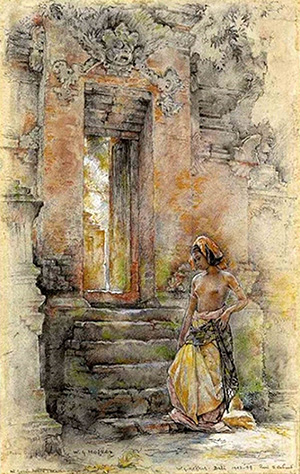
    The main Western artists in Bali, who painted very beautiful, sometimes romanticized paintings with Balinese themes, were the Swiss painter, Theo Meyer (1908-1982), who lived in Selat, the Austrian Roland Strasser in Kintamani, the Belgian aristocrat Adrien Le Mayeur (1880-1958) in Sanur, the Dutch painter Willem Gerard Hofker (1902-1981) in Denpasar, Australian Donald Friend (1915-1989). Dutch Han Snel (1925-1998) and Catalan Antonio Blanco (1926-1999), who both married Balinese ladies, who survived them, lived in Ubud.

    There are examples of their paintings in the art museums in Ubud. Blanco and Snel’s paintings can also be seen in their personal galleries at their homes in Ubud, Their widows still live there. Blanco designed a museum, but did not live long enough to see the opening of it, the Blanco Renaissance Museum, in 2001, which is next to Murni’s Warung.

    Balinese contemporary art

    There are many painters in Bali, especially in the Ubud area. Many come from the rest of the archipelago and overseas. Along with Nyoman Gunarsa, Made Wianta, who is in his Fifties, is considered the pioneer of Balinese contemporary art. His works have influenced younger artists.

    Born in Apuan village in Tabanan, Wianta graduated from the ASRI Yogyakarta Arts Institute in 1974.

    Read more about it in Secrets of Bali.

    His paintings are collected in Thailand, Japan, Australia, Germany, Luxembourg, France and Belgium.

    Puri Lukisan

    Bonnet still wanted to maintain the quality of the arts and had long been looking to build an art museum. The idea first formed before the Second World War. Cokorda Gede Agung Sukawati donated the land, which is now in the centre of Ubud, and Bonnet designed the gardens.

    Puri Lukisan opened in 1956 and has been very successful. Many heads of state visited. President Prasad of India visited in 1967. The same year President Tito and Madame Tito of Yugoslavia visited. In 1968 Ho Chi Minh, in a white Chinese jacket and black pants, visited from Vietnam – he did not say a word. Later the same year the King of Thailand and Queen Sirikit came. Then the Vice President of Egypt visited and after him Bobby Kennedy, the Attorney General of the United States. In 1971 the Queen of Holland paid a visit. Then Prince Philip arrived from England, but he just visited Cokorda Gede Agung Sukawati and not the museum.

    The ex-king and Queen of Belgium visited and so did Rockefeller, the Vice President of the United States, in 1975.

    There are now three buildings housing a permanent collection of Balinese art and often there is an exhibition.

    Balinese Painting

    Balinese History – Pre-history to the Europeans

    Balinese History – Pre-history to the Europeans

    The First Balinese

    The first wave of humans moved east out of Africa. About 1.8 million years ago they are believed to have reached China. At that time the levels of the sea rose and fell many times so they could have made it by land to Java. Later it would have to have been a journey by sea.

    China domesticated rice about 8,000 years ago. Linguists and archaeologists are widely agreed that the first Austronesian settlers sailed south from southern China via Taiwan and the Philippines into Indonesia between 4,000 and 5,000 years ago, cultivating rice as they went. They probably moved because of a population explosion. There is genetic evidence as well. It had been thought possible that the Polynesians could have come from America and not Asia – as Thor Heyerdahl had suggested in the Kon-Tiki expedition – but genetics has now shown this to be incorrect and that their journey began in coastal China or Taiwan.

    Between 3000 BC and 400 AD, a period of nearly 4,000 years, they had colonized most of the inhabitable islands of the Pacific from the Philippines to Hawaii and Easter Island. They also settled on Malaya’s coasts, south Vietnam and even Madagascar off the east coast of Africa. In these places, the Austronesian family of languages survives.

    In the Philippines, one group went east and another group went west. The one moving west towards Indonesia spoke Malayo-Polynesian languages, to which Balinese belongs. They had several religious practices that resemble Bali’s religion closely. Probably between 2,500 and 3,000 years ago they reached West Indonesia. Nothing is known about the people who lived in Bali (and there would have been some) before then.

    Perhaps these early seafarers kept moving because of population pressures. Or maybe they were reacting to volcanoes, earthquakes, typhoons or other natural disasters. The monsoon winds would have helped them as long as they kept near the equator.

    There is archaeological evidence of habitation about 2,000 years ago at two sites in Bali, one in Gilimanuk on the northwest coast and the other in Sembiran in the north-centre. Read more about it in Secrets of Bali.

    Rsi Markandeya

    The alternative story is that Rsi Markandeya, a great Siwaite Hindu saint, was the first person to set foot on Bali, when it was still joined to Java, around the end of the 8th century. Read more about it in Secrets of Bali.

    The Metal Age

    In northeast Vietnam, about 500 BC to 300 BC, around the Dong-Son area in the North Annam region there was a flourishing metalworking culture. Richly decorated gong-like drums, which were probably imported by Indian traders, were first starting to appear at this time. They were favourites amongst the Indonesians.

    By at least the first century AD Bali had acquired the skills to cast or smelt copper, bronze and iron. It may be, although there is a debate about it that the massive Pejeng kettledrum, called the Pejeng Moon, was made in Bali. It is still in the imperial temple, Pura Panataran Sasih, Pejeng, not far from Ubud. It is housed three meters above the ground, so it is wise to bring binoculars.

    Read more about it in Secrets of Bali.

    India and China

    Trade with India began in the first century AD. Indian ceramics of that period have been found in Bali. The Indians were just interested in trade, not conquest or migration.

    The Chinese were also trading with Indonesia by at least 400 AD. They came as Buddhist monks, traders and emissaries of the Middle Kingdom. Ships sailed back and forth between India, Indonesia and China. The Chinese scholar, Yi-tsing, reported in 670 AD that he had visited a Buddhist country called Bali.

    The Indians also introduced religions to Indonesia. By the 5th century AD a Hindu kingdom had been founded. By the 600s one of the kings of Sumatra was a Buddhist and the town of Palembang, a centre of Chinese trade, was much influenced by Buddhists coming from India and China. The kingdom of Srivijaya, around modern Palembang, in fact became a major centre of Mahayana Buddhism, whose political influence was felt all the way up the Malayan peninsula as far as Thailand. Monks and priests travelled to Bali from the kingdom of Srivijaya.

    BorobudurThe first photograph of Borobudur by Isidore van Kinsbergen after its first restoration about 1873. A Dutch flag is flying on top of the main dome.

    There were probably Buddhists in Java in the 5th century and certainly by the 8th century AD. In Java the great Sailendra dynasty built the largest Buddhist temple in the world, a great stepped, pyramid-shaped mandala, Borobudur, on the outskirts of Jogjakarta in south Java, some time between 750 and 850 AD.

    The Javanese kingdom of Mataram assumed regional power in the mid-9th century.

    Just as the dominance of Buddhism throughout the eastern half of Asia seemed inevitable, Islam attacked successfully. It moved into the Malay Peninsula and then captured most of the Indonesian islands, but not Bali. In east Java an early Islamic tombstone carved in about 1082 has been found. Islam swept through the southern part of the Philippines.

    The Early Balinese Kings

    The earliest evidence of kingship is from seven bronze edicts in Old Balinese from 882 – 914 AD. They are dated according to the Indian Saka calendar, which shows Indian influence. It is likely that the local rulers were impressed by stories of the Indian rajas and, wanting to strengthen their own control, asked for advice from the Brahman priests. The rituals of these powerful priests would supernaturally legitimise an increase in the ruler’s power. The princes tried to associate themselves with Indian culture as much as possible and created family trees with roots in Indian culture. They claimed to be temporary incarnations of the Hindu gods.

    The link between divinity and kingship is not only a Balinese concept. King Solomon was anointed by Zadok the Priest. Anointing is reserved for priests, prophets and kings and forms the central part of the coronation ceremony of the English monarch.

    The earliest ruler is Kesari Warmadewa, three of whose inscriptions have been found. He ruled around 913. This is probably the same man as Sri Wira Dalem Kesari, who is said to have built a palace at Besakih, the present day Merajan Selonding being his place of worship. He is said to have enlarged Pura Panataran Agung, which was then a small and simple temple, as well as building some other Besakih temples.

    Nine subsequent bronze edicts, from 915 – 942 AD, show the kings using Indianized names.

    Historical finds suggest that the capital was in the region of Intaran/Pejeng and Bedulu. Read more about it in Secrets of Bali.

    It was a feudal system. The king and the court offered protection and mediated in village disputes. In return the villagers provided services, maintained temples, carried out rituals and ceremonies. They paid taxes and on request provided the king with armed guards. Communications between the king and the commoners were through the village council.

    There are references to weavers, iron and goldsmiths, irrigation tunnel builders, carpenters, masons, shipbuilders, musicians, singers and dancers. These specialisations suggest a healthy surplus-producing economy, which would have been based on wet and dry rice cultivation. Vegetables, cotton and kapok were grown and horses, cattle, goats and pigs were bred.

    Relations with East Java

    The Java-inspired marriage of the great-granddaughter of the king of East Java to the Balinese prince Udayana brought about a Javanization of the Balinese court. Her name, Gunapriya Dharmapatni comes before that of her husband in documents. Read more about it in Secrets of Bali.

    Their two sons, Erlangga (sometimes spelt Airlangga) and Anak Wungsu inherited the right to rule. Airlangga was sent to Java and worked for his grandfather in East Java. He succeeded in uniting East Java, ruling it from 1037 to 1049, while his younger brother ruled Bali, perhaps in his name. Bali was therefore one of Erlangga’s domains and started a link with Java.

    Erlangga developed a deep interest in a mystical, inner religious life and became a hermit. Tradition has it that he had the body of a king and the head of a Hindu mystic.

    Nine massive, stupa-shaped royal tombs, called Gunung Kawi, near Tampaksiring, completed around 1080 AD, are evidence of royal funeral cults and strong Javanization. They are a short trip from Ubud and are reached by walking down 300 steps.

    Java rules Bali

    Bali was conquered for the first time in 1284. It became subject to foreign rule by the East Javanese king, Kertanegara, the founder of the Majapahit dynasty. Religion was brought back to and centred in the court. The influence of the mountain temples waned.

    There were strong Tantric elements again. Black magic and sorcery returned. These concepts are still evident in today’s trance cults, occult practices and beliefs in witches and goblins, which are especially dominant in the south and south-western parts of Bali, and particularly in Sanur, Kesiman, Tabanan and Gianyar, where the court had the most influence.

    Bali is independent again

    Kertanegara was murdered in 1292 and Bali was independent again for another 50 years.

    Java carves Bali up

    For the Balinese, history really begins with the Majapahits and with a myth. The myth is that in 1343 the great Majapahit kingdom of East Java, then at the height of its powers, sent armies to Bali to defeat the king of Bali, who was a supernatural monster with a pig’s head, who lived near Pejeng. The Balinese therefore see themselves as the descendants of the great Majapahits – with the exception of a few pockets of aboriginal Bali Aga people.

    Indonesian nationalists claim that the Majapahit Empire stretched over what is now modern Indonesia as well as the Malay peninsula. The actual area was probably only Java and some nearby coastal regions, with a nominal tribute being paid by other coastal states.

    Following the conquest the prime minister and commander-in-chief, Gajah Mada, asked a Javanese Brahman priest for help in bringing the Balinese into line. The priest sent his grandson, Ida Dalem Ketut Kresna Kapakisan, who established his court and palace at Samprangan, just east of Gianyar, around 1349. He founded a dynasty that would last until the 20th century. He was born a Brahman, but had to change his status to a Satria, in order to rule. It is noteworthy that caste can be changed. He had the full support of Javanese administrators, who were located strategically throughout the island.

    Kapakisan subdued most of Bali but there were a few areas that were difficult. Read more about it in Secrets of Bali.

    Two leading local clans, the Paseks and the Bandesas, who traced their origins to Javanese high priests, collaborated with Kapakisan. They were given special tasks in respect of the temple system and village order. King Airlangga and Empu Kuturan had already entrusted these clans with leadership. (For details on Empu Kuturan see the chapter entitled Famous Balinese Temples in Secrets of Bali.). The Paseks are still influential today.

    When Dalem Ketut Kresna Kapakisan died, his eldest son became the king, but he was weak and was replaced by his younger brother, I Dewa Ketut Tegal Besung, who moved the court to Gelgel, near Klungkung, on the southeast coast in 1383 and founded the Gelgel dynasty. Gelgel became an artistic centre.

    He died in 1460 and was succeeded by his son, Waturenggong, and the court flourished.

    Bali’s Golden Majapahit Age

    Over in Java, in the late 15th century, disputes sparked off civil wars and the Majapahit Empire was declining. Islam had entered through Sumatra in the 13th century and at the beginning of the 16th century was making headway in the coasts of Java. They pressed inland and dealt the Empire a fatal blow between 1515 and 1528. The aristocracy, priests, jurists, artists, artisans and those unwilling to be islamised moved to the easternmost parts of Java and Bali. The descendants of the former vassal Balinese kings stayed in power and eased the process.

    Read more about it in Secrets of Bali.

    God-king worship also changed. Although he was still believed to be the incarnation of Wisnu, people no longer actually worshipped him. Nevertheless he was directly associated with the divine. As far as religion went, there was emphasis on complex classification systems and numerological and colour symbolism. See the article entitled Balinese Symbolism.

    He kept close contact with ordinary people, travelled and mounted theatrical performances. Painting, literature, music and drama were promoted as useful propaganda for royal policy. During his reign, cremation, which was a privilege of the nobility, began to be practised by all strata. The Pasek and Bandesa clan members continued to be entrusted with temple properties and leadership tasks.

    Nirartha

    Government, caste and religion were reformed under King Waturenggong’s priestly teacher and poet, Nirartha, who came from East Bali in 1537. Read more about it in Secrets of Bali. See the chapter entitled Names, Titles and Castes.

    Decay

    With King Waturenggong’s death around 1558, the Golden Age went into rapid decline. There were tremendous rivalries, much scheming and inevitable decay. This state of affairs continued for about 100 years until eventually a new king, Dewa Agung Jambe came to power.

    Gelgel seemed to have lost its power and was polluted spiritually, so the capital was moved to neighbouring Klungkung. The Gelgel period is therefore roughly 1400 – 1700 and the time of its dissolution was about the same time that the Dutch were becoming solidly established in the rest of the country.

    Dewa Agung Jambe became the first king of Klungkung in 1686 and was known as Dewa Agung, a title inherited since then by all kings of Klungkung. For the next 200 years the Dewa Agung was the nominal, supreme king of Bali.

    Allegiances were withdrawn from Gelgel and a number of tiny autonomous states grew up, ruled by powerful aristocrats, who claimed to be descendants of the nobles who accompanied Kapakisan from Java in 1343. They ruled as kings or princes. In the end Bali became nine small kingdoms: Karangasem, Badung, Mengwi, Gianyar, Tabanan, Buleleng, Bangli, Negara and Klungkung. (These names still exist as distinct administrations called kabupaten. Their chief executives are called bupatis). Yet they all regarded Klungkung as the highest royal authority. There was great rivalry between them, which was good for the arts and created great artistic endeavours – and still does.

    So, Klungkung is the direct heir of Gelgel and Samprangan and through them the Majapahits.

    Ubud

    There is a story about the origins of the Ubud Royal family. Read more about it in Secrets of Bali.

    Bali Aga

    It is usually said that the Bali Aga people are those who were living in Bali before the Majapahits arrived from Java, although there is no evidence for this. Read more about it in Secrets of Bali.

    Balinese History – Pre-history to the Europeans

    Videos of Hotels

    Videos of Hotels


    Videos of Hotels