Tamarind Spa memprioritaskan Kesehatan dan Keselamatan
Kami berkomitmen untuk kesehatan dan keselamatan para tamu dan karyawan kami. Tidak ada yang lebih penting bagi kami.
Karena Coronavirus (Covid-19), dan dengan bimbingan dari Organisasi Kesehatan Dunia, dan Asosiasi Hotel dan Restoran Indonesia, Tamarind Spa telah menerapkan langkah-langkah kesehatan sebagai berikut.
1. Kami melakukan pemeriksaan suhu inframerah non-kontak staf setiap hari ketika mereka tiba dan ketika mereka pergi, dan log ini dalam buku. Jika demam, atau siapapun di keluarga mereka dalam kondisi yang sama, mereka harus segera pulang. Jika seorang karyawan merasa sakit atau sakit atau demam, mereka harus tinggal di rumah.
2. Kami juga melakukan hal yang sama dengan tamu dan tamu untuk keselamatan semua orang. Jika ada yang demam, kita akan mengundang mereka untuk memiliki tes cepat dari klinik terdekat di Ubud, yang terbuka 24 jam sehari.
3. Staf memiliki mandi air panas ketika mereka tiba untuk bekerja dan mengganti seragam dan topeng baru. Pakaian luar dan sepatu mereka disimpan di loker individu mereka sendiri.
4. Loker staf didesinfeksi setiap hari dan begitu juga untuk loker tamu didesinfeksi setiap saat sebelum dan sesudah pengambilan tamu.
5. Seragam kerja dicuci setiap hari.
6. Terapis kami memakai masker dan wajah bersih setiap saat.
7. Masker dan wajah dicuci setiap hari.
8. Kami tidak berjabat tangan.
9. Kami sering membersihkan dan membersihkan gagang pintu, pegangan tangan, meja, menu, telepon, mesin kartu kredit, dan area lain yang sering disentuh dengan deterjen anti-virus dan anti-bakteri.
10. Kami menawarkan tamu mandi segera pada saat kedatangan.
11. Kami memiliki formulir medis, yang dapat Anda selesaikan secara online, jika Anda mau.
12. Kami akan menanyakan apakah Anda atau anggota keluarga Anda memiliki gejala berikut dalam 14 hari terakhir, termasuk di bawah umur; Demam, Batuk, Napas Terengah-engah, Sakit Kepala, atau Sakit Tenggorokan.
13. Kami mendisinfeksi ruangan sebelum dan sesudah perawatan.
14. Kami mencuci semua linen setelah perawatan.
15. Terapis kami mencuci tangan dengan sabun dan air setidaknya selama 20 detik sebelum memulai dan setelah perawatan.
16. Kami akan terus bertanggung jawab untuk membersihkan semua peralatan kita, sebelum dan setelah merawat tamu, misalnya, untuk pijat yang menggunakan batu panas, aromatherapy, manikur dan pedikur. Kami mensterilkan wadah produk.
17. Anda memiliki pilihan AC atau tidak.
18. Anda memiliki pilihan perawatan di udara terbuka.
19. Kami dapat mengambil pembayaran di muka on line, sehingga tidak ada kontak dengan uang atau mesin kartu kredit.
20. Kami menawarkan tamu mandi segera setelah perawatan.
We are committed to the health and safety of our guests and staff. Nothing is more important to us.
Due to Coronavirus (Covid-19), and with guidance from the World Health Organization, and the Indonesian Hotels and Restaurants Association, Tamarind Spa at Murni’s Houses has implemented the following 20 health measures.
We conduct non-contact infrared temperature checks of staff every day when they arrive and when they leave, and log these in a book. If they have a fever, or anyone in their family is in the same condition, they must go home immediately. If an employee feels sick or unwell or has a fever, they must stay at home.
We do the same with guests and visitors for the safety of everyone. If anyone has a fever, we will invite them to have a rapid test from the nearby clinic in Ubud, which is open 24 hours a day.
Staff have a hot shower when they arrive for work and change into their uniforms and new mask. Their outside clothes and shoes are kept in their own individual lockers.
Staff lockers are disinfected every day. Guest lockers are disinfected every time before and after use.
Work uniforms are washed every day.
Our therapists wear clean masks and face shields at all times.
Masks and face shields are washed every day.
We do not shake hands.
We frequently clean and sanitise door handles, handrails, tables, menus, phones, credit card machines, and other frequently touched areas with anti-viral and anti-bacterial detergent.
We offer guests a shower immediately on arrival.
We have a medical form, which you can complete on line, if you wish.
We will ask you if you or any member of your household has had any of the following symptoms in the last 14 days, including minor; Fever, Cough, Breathlessness, Headaches, or Sore Throat.
We disinfect the room before and after treatments.
We launder all linen after treatments.
Our therapists wash their hands in soap and water for at least 20 seconds before starting and after treatments.
We will continue to be responsible for cleaning and sterilising all our equipment, before and after treating guests, for example, for hot stone massages, aromatherapy, manicures and pedicures. We sterilise product containers.
You have the option of air-conditioning or not.
You have the option of treatments in the open air.
We can take payment in advance on line, so there is no contact with money or credit card machines.
We offer guests a shower immediately after treatments.
The roads of Ubud are known for being uneven, and some parts are difficult to explore on foot. After a day spent outside, head to Tamarind Spa to get some much-needed relief for your sore muscles. If you’re staying at Murni’s Houses, you can easily access it from the hotel. Spa treatments include a full-body Balinese massage, hot stone massage, reflexology, facials, nail treatments, scrubs, and more. See for yourself why this spa has a handful of awards to its name. An afternoon of treatments from experienced staff and you’ll leave feeling rejuvenated and ready for another round of tours.
By Stephanie Brookes, Indonesia Expat, 20 November 2019
I stood near the rim of Kintamani volcano, taking in the sweeping views of Mount Batur and its expansive crater lake shimmering in the early morning light. Ahead of me lay the 35-kilometre, downhill bicycle ride to Ubud.
I headed off with my cycling guide and, soon enough, we started to weave through small villages, sharing the quiet, scenic roads with the people going about their day. We passed by duck farmers with long bamboo poles, a white flag on top, each with their gaggle of ducks trailing behind them. Vibrant green fields panned out on either side as we rode through the back lanes; many with groups of women threshing rice and sifting the grains with giant bamboo baskets.
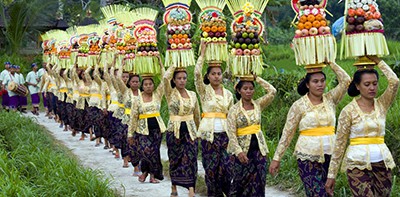
We passed lines of beautiful women dressed in bright, ceremonial finery with lacy white tops and brightly coloured sashes, as they made their way to the local village temple. They walked in procession, single file, carrying tall towers of fruit on their heads.
This made for extraordinary photo opportunities. Believe me, you do not see this in downtown Kuta, Nusa Dua, Canggu, or Seminyak.
By travelling at just 10km per hour, I felt like I was able to make intimate contact with the world around me and could see, hear, and feel so much more than I would have in a car or on a motorbike. I could hear temple bells in the distance. The quaint lanes we passed made me feel like I was discovering the authentic Bali, opening up to impromptu moments that might come along.
We stopped in a small village for a break and I got talking to a young Balinese man named Kadek, who was sitting under a makeshift shelter next to a small, ancient, stone temple. He had been clanging away on ancient-looking cymbals, surrounded by an array of other instruments.
“These are all part of our gamelan orchestra,” Kadek explained, pointing to the gongs and drums. He said, “these have been played at our temple ceremonies for many centuries.” I learned that they are still played at weddings and funerals as well as for other rites of passage and ceremonies. Gamelan is mastered by memory, by heart.
Kadek invited me to come back the next day to join his family temple birthday celebration. Not only would I hear the gamelan being played, but I would also meet the shadow puppet master and watch the wayang kulit, the ancient Indonesian art of shadow play. What an offer!
“No need to bring anything,” Kadek stressed. “We have prepared plenty of food, and we welcome guests. It is our great honour to share our customs with foreign guests.” He quickly gave me his Facebook name, we exchanged phone numbers, and I made a promise to return.
It seems that all the conversations you have with Balinese, from the hotel concierge to the local fruit seller, always seem to include some discussion of their culture and tradition. Balinese traditional life is still very much alive outside the main tourist areas of Bali. By basing yourself in the town of Ubud, for example, you get to observe a ritualistic Bali which is steeped in Hindu religious practices. For me, every day seemed to offer another lesson, unravelling slowly and naturally. Bali is, in all essence, a living culture.
The island has over 20,000 temples and shrines. For such a small island (153km x 112km), one is bound to run into a ceremony of some description. All you need to attend a ceremony is a sarong, a long sash, and a top that covers your shoulders. Men wear an additional item, an udeng, the Balinese male headdress.
If you choose to travel around Bali with a driver, these are pretty much a given item, tucked away neatly in the back of the car, at the ready for an impromptu moment. When you catch sight of a line of women walking down a road with offerings on their heads, all you need to do is join the procession at the back, and you will likely end up at a temple where you can participate in the celebrations and experience the culture.
As a foreigner, you’re always welcomed to join a temple prayer session and, if you are lucky, you can also catch temple dancing, and sometimes drama plays being acted out. These ceremonies often go late into the night, many ways past midnight.
My cycle tour finished with lunch, including a traditional Balinese salad with green beans and sprouts (urab), tempe with delicate spices, tantalising spicy, shredded, steamed chicken, satay on bamboo skewers with peanut sauce, and steamed vegetables cooked in coconut cream. This was served on a pile of steaming red rice. Our beverage was my favourite, fresh and young coconut water served in the shell, a natural energy drink and electrolyte replacement. We all hailed our coconut water with a “cheers” to celebrate our accomplishment of completing the ride.
The next day, my body told me it was time to take a rest. I booked in for a three-hour relaxation and rejuvenation treatment at Murni’s Tamarind Spa in Ubud. Locally, Murni is affectionately known as “the Mother of Ubud.” She pioneered tourism in Ubud in the 1970s by setting up her legendary restaurant, Murni’s Warung, where artists, adventurers, and academics hung out, drank mango lassies, ate smashed avocado on toast, and devoured Murni’s famous apple pie.
Murni lovingly presides over her dream creation on the jungle-clad Campuan gorge above the Wos River, and 50 years later, it’s still the same. The award-winning Tamarind Spa is the latest addition to Murni’s businesses and it was under the tamarind tree I discovered my massage therapist, Kartini, was the former personal therapist of the President of Seychelles.
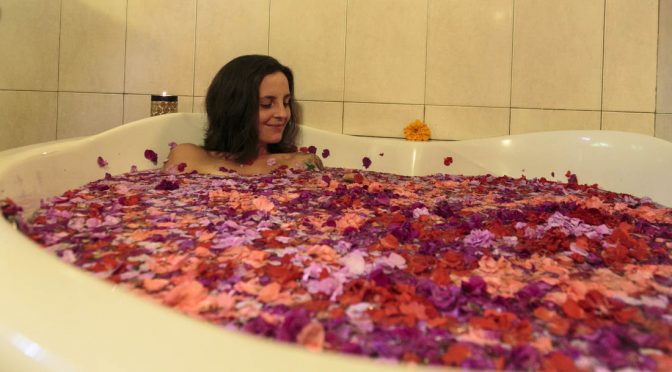
After a welcome drink, cold towel and foot ritual, Kartini started to weave her healing magic on me. This began with an hour-long traditional massage, deeply relaxing, mind soothing, and muscle quenching. This was followed by a fragrant green tea scrub and a yoghurt rubdown. My treatment finished by soaking in a warm bath with orange and red flower petals floating on top. To finish it off, I was served a pot of organic herbal tea and fresh tropical fruit.
The next day, I was on a mission to discover Bali’s secret photography spots. I decided on a David Metcalf Photography tour after reading some rave reviews online. I was collected bright and early, in time for the dramatic 6.00am sunrise over Mount Agung. Next, we ventured to a local traditional market which was teeming with piles of colourful, hot-red chillies, purple dragonfruit, snake fruit, bright green guavas, and pyramids of multi-coloured local spices. Next, we spent time at the river capturing some dramatic morning sun rays through the trees, and had a lovely chat with the local rice farmer.
After that, we headed to a beautiful 10th century water temple which we had entirely to ourselves. Lunch was up next and sumptuous traditional fare of steamed fish wrapped in banana leaves, coconut yellow curried vegetables, traditional Balinese salad with bean sprouts, and rice steamed in bamboo over an open fire. We ate in the home of a beautiful Balinese family. It was a delightful surprise to see a glimmer of gold shining through the thick foliage in the back of the garden, and soon enough, two delightful young dancers appeared.
They performed the Legong dance for us. It turned out these two little girls were temple dancers and loved to take the opportunity to dance for visitors. They were all of five and six years old and danced so elegantly, with beautiful flowing movements infused with pure grace and spirit. It was spellbinding.
What I really loved about my photography day, which also included plenty of one-on-one photo tips, was how immersed I was in Balinese culture all day. We did not see another foreigner all day. My kind of Balinese day.
Next on the agenda was yoga. Wandering the small streets of Ubud, I found myself walking towards “The Sari Organic Pathway,” which was well signposted from the centre of town, wending my way to the Yoga House; a yurt shaped building situated in the rice fields.
Sheila, the owner, offers classes five days a week and refers to them as yoga for everyone. Indeed, it was. As I eased into my gentle flow yoga class, my view was framed by three stunning, volcanic peaks fanning out from the yoga platform. The yoga studio was also surrounded by terraced rice fields that encircled the studio like a living green carpet. By being amongst nature, in the outdoors in this idyllic setting, I felt deeply connected to the yoga philosophy which connects the mind, body and spirit, through breath and movement.
In the late afternoon, I headed off to a remote, rural Bali village, Lokaserena, on the outskirts of Ubud. I was welcomed into the home of Kadek, who is an Ubud Village Plate host. Ubud Village Plate is a local initiative that supports the community and connects travellers over a shared lunch or dinner in the home of a Balinese family.
Cooking classes are offered as well, but I decided on the dinner-only option. On arrival, I was taken on a tour of Kadek’s house, which is part of his larger family compound. He explained the layout of his traditional compound and told me the history behind the ornate carvings and entranceways and the cultural aspects of the directions of the buildings.
Dinner was a succulent affair with sizzling chicken sate on bamboo sticks and steamed tuna baked in banana leaves, accompanied by a pile of fresh vegetables from Kadek’s garden. All was finished off with traditional black rice pudding with fresh coconut cream. We talked late into the night about tradition and customs and I didn’t want to leave.
My next journey of discovery was into the spiritual heart of a timeless temple called Gunung Kawi; my temple of choice, located only 20 minutes out of Ubud. I decided to visit this ancient 10th-century temple complex at 7.00am, which allowed me some solitude and a few quiet, reflective hours before the tourist buses arrived for 9.30am.
By chance, I meet Wayan, the temple sweeper, near the entrance and he offered to take me to some lesser-known parts of the complex. “Come with me. I will show you the way to a waterfall and a hidden temple, and we will pass by some ancient rice fields.” I eagerly took up Wayan’s kind offer, and he explained how the terraced rice fields, which grow right in the temple itself, date back to the 9th century and are now World Heritage-listed.
As we walked along the small path, the misty jungle clung to the edges of the steeply terraced rice fields. Wayan took me on a little trail where we passed by a waterfall on the way to some old meditation caves. Chiselled from the rock, I came to a series of open doorways, which stood in a straight line symbolically representing an open door. “A door to the other world,” Wayan said with a smile. Near the caves was a shrine, which Wayan explained, stood as a representation of King Anak Wungsu, 1050 AD.
I spent the rest of the morning walking in the shadows of a series of seven-metre high temple tombs known as the Queens Tombs. Wayan was excellent company and highly informative.
As Wayan continued with his morning temple sweeping routine, happy to have been interrupted by a lone traveller, I reflected on the beautiful Balinese people I had encountered over the week, whether that be by bicycle, in a Balinese home, or leaning on a broomstick. The famed Island of the Gods breathes with an even rhythm and welcomes the curiosity of a stranger to explore a very pure and authentic Bali.
Stephanie Brookes is a travel writer and blogger with tales from Indonesia and beyond.
It can take a lot of searching to find a perfect spa in Ubud as there are so many choices. You can seek out the five-star, high-end establishments, set in hanging gardens and on cliff tops, but they often come at a price that is over the top. On the other hand, you may be tempted by the numerous signs that greet you at every street corner in Ubud catering for the budget-minded with US$8 massages, which are of variable quality. The place will most likely be noisy. You will often just be separated from the next person by a hanging sheet. And forget about the hygiene!
Choosing a spa around the mid-range means finding somewhere with a soothing ambience where treatments are affordable. The minute I went through the tall Balinese gate of Tamarind Spa at Murni’s Houses, I knew I had found a winner.
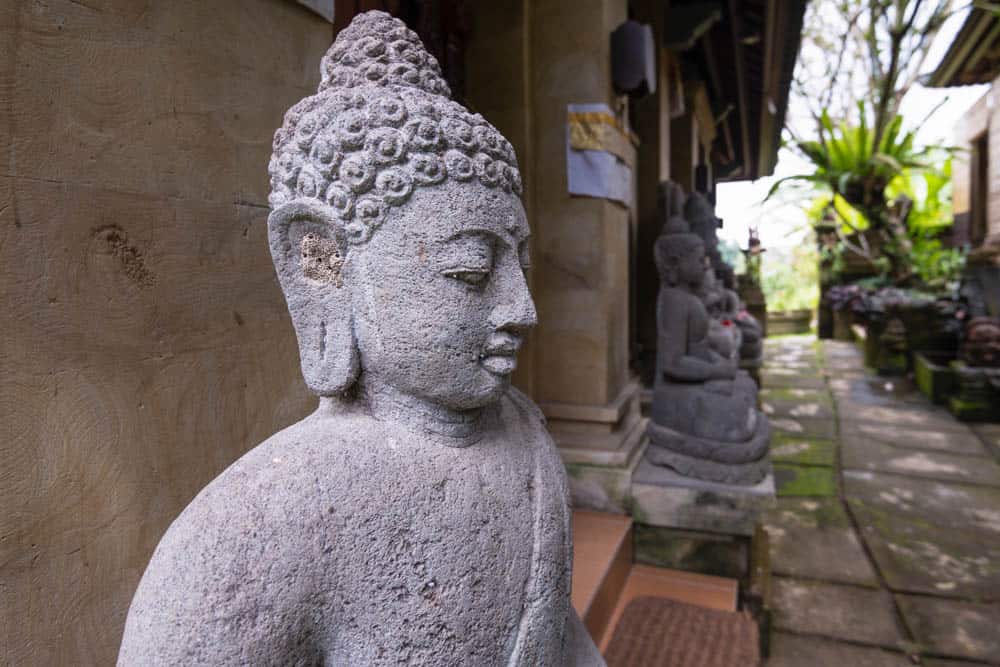
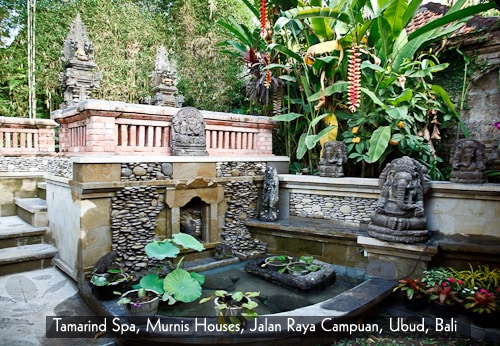
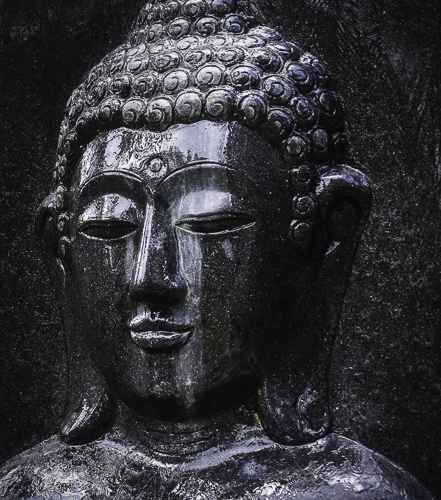
Walking into Tamarind Spa is like finding the old, authentic Bali. The Spa is set in a beautiful Balinese compound. The tropical gardens and elegant fountains and water features create a serene setting, as the sound of water is your constant companion. Nature abounds. The exquisitely carved Ganeshas and Buddhas are a reminder that you have come to a place of peace – a beautiful haven of relaxation and divine connection. Make sure you look for the tamarind tree in the garden. The spa was named after this tree.
Tamarind Spa and the adjacent Murni’s Houses are historic landmarks in Bali and the owner, Murni, is a bit of a legend in Ubud and beyond. In fact, a book has been written about her – Forty Delicious Years 1974-2014.
She is well known for her famous restaurant Murni’s Warung, which is located a short walk down the hill from the Spa. It was established over 40 years ago in Campuan, located at the old Dutch bridge, 5 minutes from central Ubud, with stunning views over the jungle gorge.
Tamarind Spa is a small, intimate facility. The professional therapists that take care of you have been trained, under Murni’s guidance, by a team of expert spa trainers from around the world. Most of them have worked at 5-star hotels in Bali and abroad. The wide range of treatments incorporate Balinese tradition and skills.
Word has spread about Tamarind Spa so, for example, in 2017 and 2018 awards included: Winner of UK Luxury Travel Guide Awards: Winner of Contemporary Spa of the Year, Indonesia, 2017 and Winner of Luxury Spa of the Year, Indonesia, 2018.
So how do you earn such prestigious awards? Murni explained, “The most important part of establishing a spa is the extensive research that must go into trying and testing the best of Bali’s masseurs and masseuses. This challenge took me one year.”
From personal experience, I recommend the indulgent Tamarind Spa Romantic Package. Mine started with a ritual flower petal footbath, followed by a heavenly one-hour massage delivered by the most intuitive hands, and by people who understand the complexities of the human body. They were able to balance the pressure points and create a gentle flow, resulting in an ultimate therapeutic experience. After the massage I had a foot reflexology treatment which helped with balancing my energy centres, creating a harmony of mind, body and soul. At this point, I was floating.
Next, came a luxurious Honey Seed Scrub. This left my skin feeling soft and smooth. Following the scrub, the paste was washed away under a warm shower, and I got to step into a gorgeous bath, filled with petals. As I floated among hundreds of petals, I was served a refreshing pot of organic tea and a platter of fresh tropical fruits.
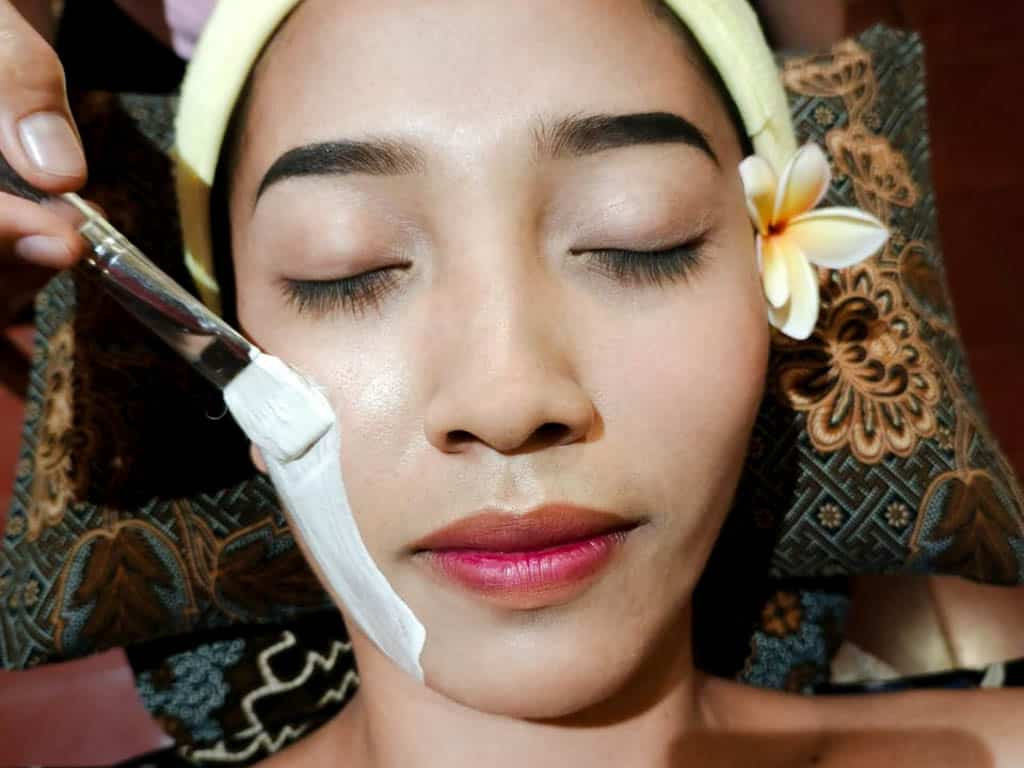
Apart from the package, the Spa offers many other treatments. I added on another treatment – a facial. This turned out to be one of the best facials I have ever had. The natural ingredients used included honey, yogurt, white clay, cucumber and rose water. They were mixed by the therapists themselves. After my facial, my skin felt rejuvenated, and I was feeling radiantly alive.
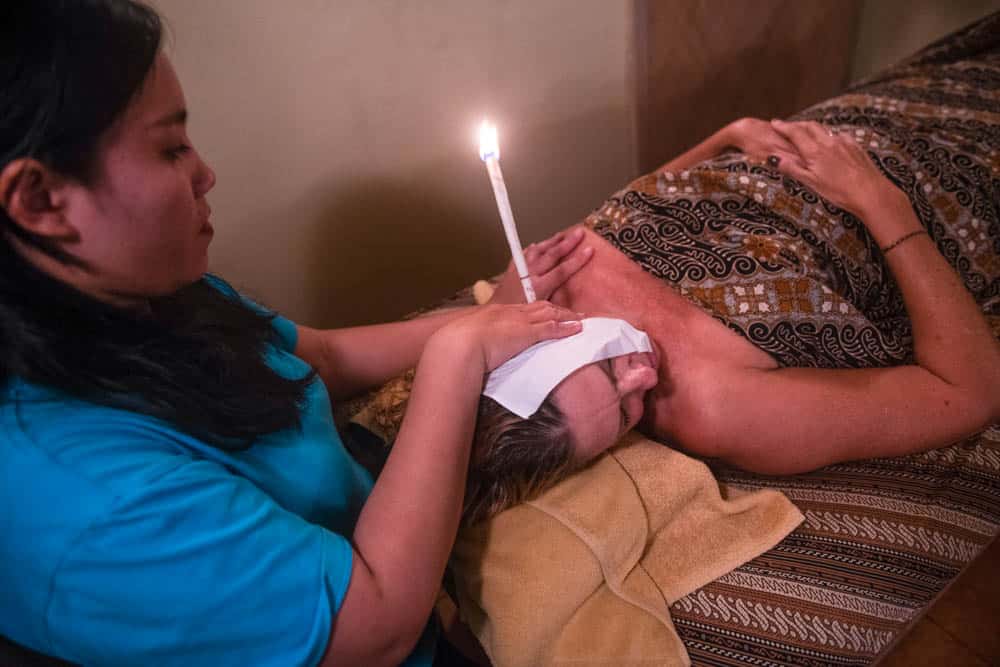
Ear candling is also on the Spa menu. I was way overdue for one and so added this to my pampering regime. Okay, so this was now a one-day spa experience and I was up for that. Ear candling safely removes excess wax and other debris from inside the ears and leaves you feeling very balanced and for some people results in better hearing. My ear candling treatment at the Spa was combined a deep relaxation neck massage. What a bonus!
Meals are available in the beautiful, quiet garden setting of Murni’s Houses. I took advantage of that, as after my 4 hours of treatments, I was ready for a nutritious lunch.
With the combination of very high standards and the beautiful Balinese ambience, it is no wonder Tamarind Spa is an award-winning spa, and I would put it on the top of your list of things to do in Ubud.
Tips – What to Know
– Do not eat a heavy meal before a massage.
– Arrive 10 minutes early and rest on one of the lovely spa lounges overlooking the gardens. Relax into your spa treatment.
– To maximise detoxifying effects, drink plenty of water afterwards and try to avoid caffeine, nicotine and alcohol for the next 24 hours. After, make a plan to rest and allow your body to feel the healing effects of your treatment.
– A specialised Children’s Package (age 5-12) includes a chocolate scrub and 4 other treatments and finishes with ice-cream.
Bali: Transformational Travel, Rediscovering You by Denise Baron, Bella, The Fashion Issue, September 2018
It’s no secret that travel changes perspective. For many, a simple vacation is all it takes to catch up on fun and rest. But when your main goal is to search “within”, a worldly discovery can lead to massive self-unfolding.
“Transformational Travel” embodies “Don’t try to change the world, let the world change you”.
This year, I took those words to heart. After experiencing a stroke at the young age of 49 and burying a dear friend, I desperately needed new introspections. Long before the literary arrival of “Eat Pray Love” I had traveled to Bali. And twenty-seven years later I found myself being called back.
Renewed hope
When I arrived I’m greeted with a welcoming hug by one of Bali’s best connectors, Wayan Elly, a connoisseur of food and gourmet coffee who is the absolute embodiment of a concierge. A charismatic storyteller wise in the secret back roads, we drive to my first destination, Sanur.
Once known as a fishing village, Sanur is internationally recognized for its historical charm, a laid-back coastal community with bespoke villas, eclectic cafes, artifact shops and local entertainment. I listen to limpid waves kiss the shores and my recent hardships understand they’ve lost the spotlight in my mind.
Strategically located in the heart of Sanur, the Maya Sanur Resort & Spa is a synergistic atmosphere that merges nature with contemporary design. Intimate spaces mixed with Balinese aesthetics offer a lush representation of the beauty and richness of Indonesian traditions designed by internationally recognized architect, Budiman Hendropurnomo.
New friends find you quickly in Bali and I pal around with my Kiwi and Aussie mates for a beer and local Indonesian bites. Here, I’m introduced to Bali’s best-kept secret: Suana, the Healer from Sanur.
Suana is a humble man with a global clientele. Over the course of seven lymphatic massage and reflexology sessions, his hands have the power of the Divine. My body feels renewed from tired sensibilities to eagerly hopeful and receptive.
A few sun-soaked days of bike riding, eating bowls of fresh mangosteen and dragon fruit and devouring tasty tacos at Warung Sanur Segar and I’m feeling rested enough to hit the road toward the holy hills of Ubud.
Unwind at Tamarind Spa at Murni’s Houses – Ubud
Secluded upon a hill along the Ayung River, Tamarind Spa at Murni’s Houses is an award-winning spa. This center for healing is in the heart of the deepest spiritual hub on earth.
Owned by local legend and “Mother of Ubud” known simply as Murni, a gracious businesswoman who hosts celebrities like Mick Jagger, Amy Tan, and Alice Walker in her bungalows and renowned restaurant Murni’s Warung. With Murni’s strong reputation for cultivating healing methods, I book 3 days and 2 nights in an old-world meets luxury spacious suite.
Pampered with curated oils, the massage therapist hands work their magic with a two-and-a-half hour massage to synch my still troubled body and mind. Followed with a fresh yogurt body scrub and, then, the finale in an exquisite flower bath.
Later, I walk to the center of town in search of Siam Sally to experience their delicious summer rolls and papaya salad. After a day of local culture, I squeeze in a Full Moon Agnihotra Vedic Fire Ceremony at the Five Elements Retreat Center.
Committed to a social media detox, I enjoy my time joining walking tours and sipping fresh mixed juice. My mind and body absorb the natural elements and release the constant battle of stress. I notice my heart is in rhythm with Bali, and for the first time in a long time, there isn’t tightness behind my eyes. The pain of the past year begins to slowly fade away.
Sample of ancient healings.
My driver takes me on a 30-minute ride up the misty-cloaked mountains and ancient emerald-green rice paddies to a hidden sanctuary called OneWorld Ayurveda. This authentic Panchakarma Ayurveda wellness retreat center is where splendor meets serenity. Senses come alive with the lush bougainvillea, delicately scented hibiscus and intoxicating aroma of frangipani as you enter the resort.
Upon my arrival, I’m greeted with fresh juice and a beautiful flower arrangement then escorted to a one-hour foot massage for my “Taste Of Ayurveda” package. Afterward, I dine under the stars in the warm evening breeze.
The next morning a full initial consultation with an Ayurvedic physician is planned, along with a full-body treatment and Shirodhara. Shiro helps relieve anxiety, stress, fatigue and hypertension.
For the next three days, motherly professionals begin each treatment with a blessing and singing mantra. Anointed with copious amounts of herbal oils helps me appreciate the connective power of human touch. I was placed gently into a copper tub filled with medicinal herbs. Two holistic therapists pour warm water over my body. During this experience, tears rolled down my face as I felt my spirit come home to my body.
The environment is hypnotic to the senses. Singing birds, intoxicating smells from the frangipani flower, gamelan drums and parades that pop out of out nowhere unify the five senses in their finest moments. I attend the holy Tirta Empul Temple traditional purification ceremony. Legend has it a magical king named Mayadenawa possessed the spiritual power to transform himself into any form he desired within the clean cool springs. There are some legends you really can feel the truth behind.
In addition to yoga, three delicious vegan meals per day, meditation, and guided rice field walks, I also I signed up for healthy cooking and beauty between services for skills to take back home.
The end is only the beginning of something newBali was a spiritually orgasmic journey where one can embrace their authentic vulnerability. I highly recommend anyone in search of higher awareness to discover your own brilliance with Bali as your guide.
Famed for its pristine beaches, striking sunsets and rich culture, the sought-after Indonesian destination also boasts a burgeoning number of highly lauded hotels, restaurants and bars. Meredith Woo goes on a gastronomic eight-day journey to the Island of the Gods.
An Ubud Invitation
An hour from the closest beach town, inland Ubud offers other attractions: art and culture, serenity and some of Mother Nature’s best views.
A day trip to the central foothills of Gianyar regency will not suffice. Ubud has so much more to offer – from meditative sunrise mountain peak views to villages known for intricate silver-smithing and the delicate craft of egg painting.
SHOP AND SAVOUR
If you seek museum quality relics, visit Murni’s Warung Shop. A plethora of rare pieces such as a Balinese comb bearing green and red carnellians (Rp 5,750,000) and intricate batik stamps (from Rp 385,000) feature in this 41-year-old establishment, which is part gallery.
The adjoining four-storey restaurant offers daily specials such as stir-fried duck (Rp 79,000) and beef rendang. Beyond Murni’s expertise in Asian antiques, textiles and food, she has expanded her portfolio to include a spa and guest houses in downtown Ubud.
26 February, 2015 Contented Traveller Paula McInerney
It was by great fortune that we found Murni’s Houses, Ubud, Bali through FlipKey by tripadvisor who had given us carte blanche to pick wherever we wanted to stay in Bali and we chose 6 nights at Murni’s Houses. This is all part of our Travel Series, Bali for Baby Boomers. We found Murni’s Houses but also found out that Murni is a living legend in not just Ubud, her hometown, but in all of Bali.
Straight away our interest was piqued about both the lady and the many businesses that she owns throughout Ubud and the reverence that she is held in. We quickly booked with Flipkey knowing that we were on to something unique and we were right. We also had read that Richard Gere, Richard Branson and David Copperfield the magician have visited Murni’s, so we thought that Gordon and I might just join this illustrious cast.
About Ubud
Ubud is Eat. Pray. Love territory and a book that I have yet to read, though I did see the movie and discussed whether Ubud had changed since that book and that movie. We have been here before and we have noticed the increase in visitors. That actually takes nothing away from this amazing place. Ubud is an artistic and culturally rich regency with its own king and royal family. Many tourists come here as do many expats seeking the alternative lifestyle. Food abounds and you would be hard pressed to find better foods than dining at streetside warungs. It is the home of art and you cannot avoid the skill of the Balinese artisans. It is also home to yoga, massages and all things alternative. You should head to the Sacred Monkey Forest at the end of Monkey Forest Rd. This is a magnificent jungle sanctuary, that is full of mysticism and lots of monkeys. The best way to see Ubud is to walk. Walk a lot, have a meal at a local warung and then treat yourself to a massage. It works.
Our first impressions on arriving at Murni’s Houses
This is a traditional Balinese compound where the houses are set in amazing gardens. Often referred to as the Villas of the 33 statues, there are waterfalls, and lush gardens and you hear the sounds in the distance of village life. There is Balinese art everywhere and there is serenity about this compound. There is also seclusion despite being a couple of minutes from the main road of Ubud.
Our traditional Balinese rooms, and we did have a number of rooms, and our outdoor areas overlooked the gardens yet protected us from the occasional Ubud rain storms. We loved it. We had Wi-Fi and were well taken care of, being given ginger tea to help a cough I had developed in the snow in Japan. This is a Balinese cure all and these herbal medicines known are known as ‘jamu’. (Turmeric and lemon grass also work).
This gave us a very real local experience meeting with the people who work here and getting to know a little more about the real way of life for the Balinese.
More About Murni’s Houses
In the early 1980s Murni started to build these open-air pavilions amongst the lush gardens and next to open fields. It is here that you can attest to her eye for tradition and art with the fountains and the statues everywhere you look.
About Murni the Lady
Ni Wayan Murni was born in Penestanan, Bali about 9 kms from Ubud to a farming family so it is no wonder that hard work comes naturally to her. During the early 1970s she owned 4 shops on Sanur beach. It was here, selling sarongs, that she actually sold some to president Sukarno and Mick Jagger of The Rolling Stones. This was not to be her first brush with fame, and Mick has some serious street cred.
She returned to Ubud and opened a shop and here she used to make her husband soup and a sandwich for lunch. Tourists stopped and wanted to have some too and that is how Ubud’s first real restaurant, Murni’s Warung, came into being. This institution has seen its fair share of celebs and tourists coming to savor her signature dishes. Try the famous Balinese smoked duck. Murni’s Warung is like her style in all of her ventures – traditional Balinese. There are four levels that cascade down a steep hillside overlooking the Wos River. The thatched roofs, traditional open wooden architecture, and a vast collection of stone carvings gives you a very Balinese experience. Talk to Ketut and he will share with you what it is like living in Bali.
She was also the first person in Ubud to open two antiques shops in the 80s and 90s. These galleries showcased many antiques, textiles and costumes and other pieces that she knew were special. Nowadays, many of the prized pieces are in Murni’s Warung,
Murni is active in the arts and culture scene of Ubud, and has lectured in the US on Balinese textiles.
She also plays in a women’s gamelan group at important religious ceremonies.
Tamarind Spa
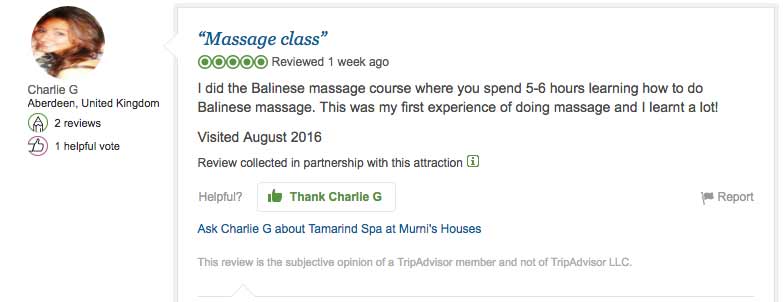
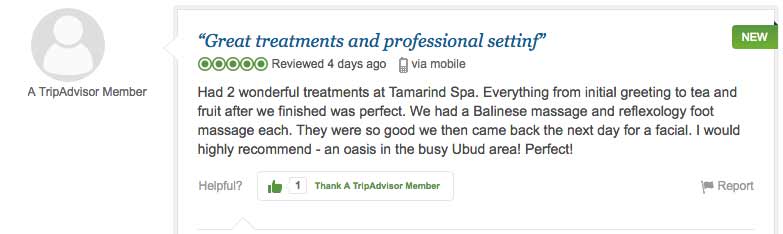
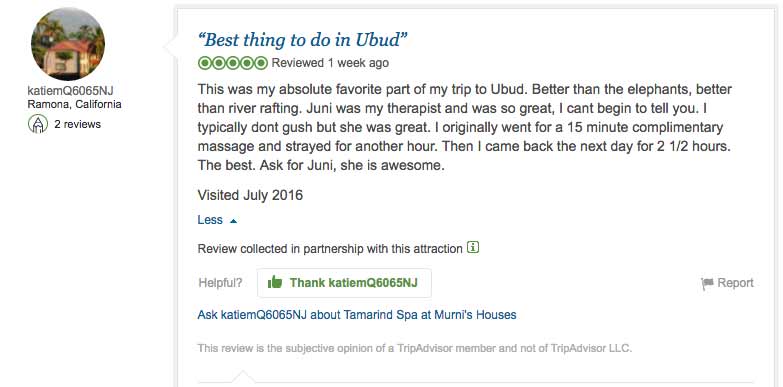
Murni has also created Tamarind Spa at Murni’s Houses and this spa was listed as the top spa in Ubud on Trip Advisor within 3 months of its opening. It is here that she continues with her ethos of everything Balinese, with traditional Balinese massages located within the stunning and serene gardens and waterfall. It is not the cheapest massage that you can get, but the staff are trained and located as it is in the art garden, it is a total experience.
Thank You to FlipKey by trip advisor for making this property available to us for 6 great nights. Great find, highly recommended and a perfect inclusion for our Travel Series.
The ultimate palms and paradise destination? There are many, and Bali is definitely on the shortlist. But there’s more to the Indonesian island besides white-sand beaches and clear blue water…
For me, the town of Ubud is the best place to base myself. I find myself among the tranquil, terraced rice fields and beautiful mountain scenery … my adventurous week … aimed at exploring and experiencing Bali’s local way of life.
Rejuvenation treatment
The next day, my body tells me it is time to take a rest. I book a three-hour relaxation and rejuvenation treatment at Murni’s Tamarind Spa in Ubud. Locally, Murni is affectionately known as ‘the Mother of Ubud’. She pioneered tourism in Ubud in the 1970s by setting up her legendary restaurant, Murni’s Warung, where artists, adventurers and academics hung out, drinking mango lassies. 42 years later, Murni still lovingly presides over her dream creation on the jungle-clad Campuan Gorge above the Wos River. The stellar-rated Tamarind Spa is the latest addition to Murni’s business. Under a beautiful tamarind tree, I find out that my massage therapist, Kartini, was the former personal therapist of the President of the Seychelles.
After a welcome drink, cold towel and foot ritual, Kartini starts to weave her therapeutic magic on me. She begins with an hour-long traditional massage, deeply relaxing, mind- soothing and muscle-relieving. A full-body exfoliation follows, with a fragrant green-tea scrub and a yoghurt rub down. After that heavenly treatment, my skin feels softer than that of a baby. I end up soaking in a warm bath with multi-coloured flower petals floating on the water’s surface. Finally, after a pot of organic herbal tea and fresh tropical fruit, I leave feeling relaxed as can be.
Places to eat
Murni’s Warung
This four-level open-air restaurant overlooks a jungle- clad ravine and raging river. Not only does the restaurant serve excellent Indonesian and western dishes, it also houses a shop with textiles, jewellery, tribal artefacts and collectables. Try their famous apple pie.
Things to do
Murni’s Tamarind Spa
Located in the heart of Ubud, this beautiful spa in quiet tropical gardens offers aromatherapy massages, traditional Balinese boreh herbal scrubs and more.
For many travelers, a trip to the spa for some pampering is one of the highlights of any trip. A few hours spent in a tranquil environment, getting massaged, cleansed and relaxed can do wonders for any stressed out globetrotter.
In the tropical paradise of Bali, the spa experience goes to a new level. Nestled in lush gardens or along sandy shores, the spas in Bali are legendary and thousands of travelers book flights to this tiny nation every year for rest and rejuvenation. From full service spa resorts to simple day spas, these are some of the best bets for your money in this paradise. All prices are in Australian dollars.
Tamarind Spa at Murni’s Houses
Located under the shade of a Tamarind tree in the tourist hotspot of Ubud, Tamarind Spa at Murni’s Houses is one of Bali’s most consistently top rated spas. With trademark Balinese hospitality, the spa is surrounded by tranquil gardens and fountains, and offers a full range of spa services from massages and rubs to manicures and pedicures. Tamarind Spa is also unique in that it is an artistic as well as relaxing experience. Murni, the owner of the spa and adjacent guest houses and villas, has a background in fine art and has filled the spa with Balinese and Indonesian art, offering a glimpse into the local heritage. Prices for such luxury are surprisingly reasonable, with full day packages average about $100.
“Tamarind Spa at Murni’s Houses, Jalan Raya (up the ramp opposite Pura Dalem on the main street, left at the top, 2nd gate on the right). Murni’s extremely popular new spa shot to the top of Trip Advisor within weeks of its opening. Rave reviews. Many repeat guests, including masseurs, say it’s the best they’ve ever experienced. Well-kept gardens, fountains, sounds of running water, soothing music, healthy lunches, reasonably priced.”
Bali, The Ultimate Guide to the World’s Most Spectacular Tropical Island, Linda Hoffman, Tuttle Publishing, 2012
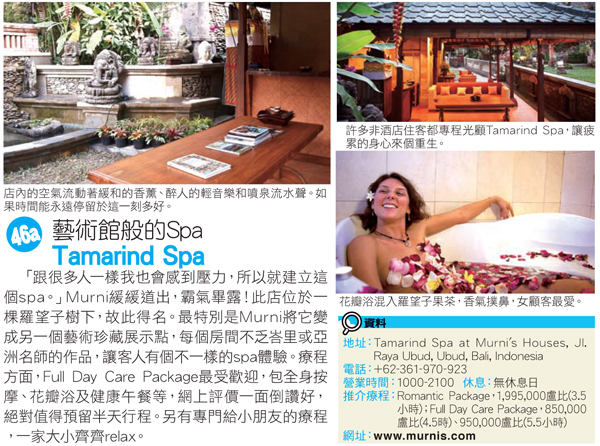
Just like a lot of people, the owner Murni sometimes feels stressed, so she built this spa! What makes Tamarind Spa different is the abundant amount of artworks placed inside every treatment room. The most popular treatment is the Full Day Care Package, which includes whole body massage, flower bath, healthy lunch and more. There are also treatments for children. Let’s come and enjoy with your family!
It can take a lot of searching to find a perfect spa in Ubud. There are plenty of five-star, high end establishments set in hanging gardens and on cliff tops, but they come at a price that is literally over the top and then, on the other hand, there are numerous low-grade spas which cater for the budget minded. So how do you find the perfect mid- range spa with value for money?
A couple of years ago a unique spa, right in the heart of Ubud was created under a Tamarind tree. Tamarind Spa at Murni’s Houses is a delightful find. Murni herself is a bit of a legend in Ubud. She is well known for her famous restaurant Murni’s Warung, which was established 40 years ago in Campuhan, located at the bridge with its stunning views over the gorge.
Tamarind Spa is a small, intimate spa facility. The tropical gardens and beautiful fountains create a relaxing, serene setting, as the sound of coursing water is your constant companion. The care taken in the design detail is reflected in the fact that Murni got advice from spa experts around the world, which she blended with her Balinese heritage and artistic talents to create this beautiful spa.
“The best part of starting a new spa is the extensive research that must go into trying and testing the best of Bali’s masseurs and masseuses,” said Murni. “ The challenge took one year.” This quest has resulted in the spa treatments at Tamarind being performed by the most intuitive hands, and by people who understand the complexities of the human body, the balance between the pressure points and allows for a therapeutic experience of the highest standard.
So, what kind of choices of treatments do I get at Tamarind Spa? I would recommend the hot stone massage or the honey seed scrub and for something very engaging try the four-hand massage.
The whole family, including children are very welcome at Tamarind. Lunch is available in the beautiful, quiet garden setting of Murni’s Houses and there is a separate massage menu for children. Because of the high level of expertise, massage training is also an additional feature of the Spa.
With the combination of very high standards and cleanliness, plus the beautiful Balinese ambience, it is no wonder within a couple of months Tamarind Spa was top of the list of all the spas in Ubud on Trip Advisor. As far as a quality spa experience is concerned, put it on the top of your list of things to do in Ubud and the good news is, you can book in by email or conveniently drop in – you just need to look for the Tamarind tree.
India Currents, The Complete Indian American Magazine, 12 July 2015
Vivienne Kruger
“A relaxing, rejuvenating day spa indulgence is another integral element in Ubud’s arsenal of healing, happiness, and wellness choices. I recommend the Tamarind Spa at Murni’s Houses in Ubud for the ultimate in luxurious, body-pampering bliss. It lives up to its beautiful name—a place for magical caretaking, delicious scents, and the ultimate in body and soul rejuvenation. Most spa products in Bali are natural and contain local Balinese herbs, plants, flowers, and spices grown in Ubud’s equatorial, tropical highland Garden of Eden. The native plants used in the Tamarind Spa all grow in rich, local volcanic soil. The village of Ubud (obad means “medicine” in Balinese) is the source of many of the Tamarind Spa’s superior concoctions—a naturally fertile area lush with emerald green leaves, roots, barks, and herbs.
In Bali, spiritual income is as important as physical income: the use of raw, organic spa ingredients benefits the local farmers. Honeycomb may come from area bee keepers, and seaweed is brought over from Bali’s pristine sister island, Nusa Lembongan. The high quality of the fragrant ingredients enhances the Spa’s body and bath treatments, scrubs, facials, massages, and exfoliants. You will stare—with love and longing, and anticipation—at your beautiful, fragrant bar of soap sitting on the treatment room ledge. It awaits your every pleasure. This is the type of soap that you bond with—that you build an intimate relationship with—an indulgent delight! You may find yourself lingering in the gorgeous hot shower in a fragrant haze. Your skin feels soft, silky, smooth, and relaxed—like everyone and everything else in Bali.
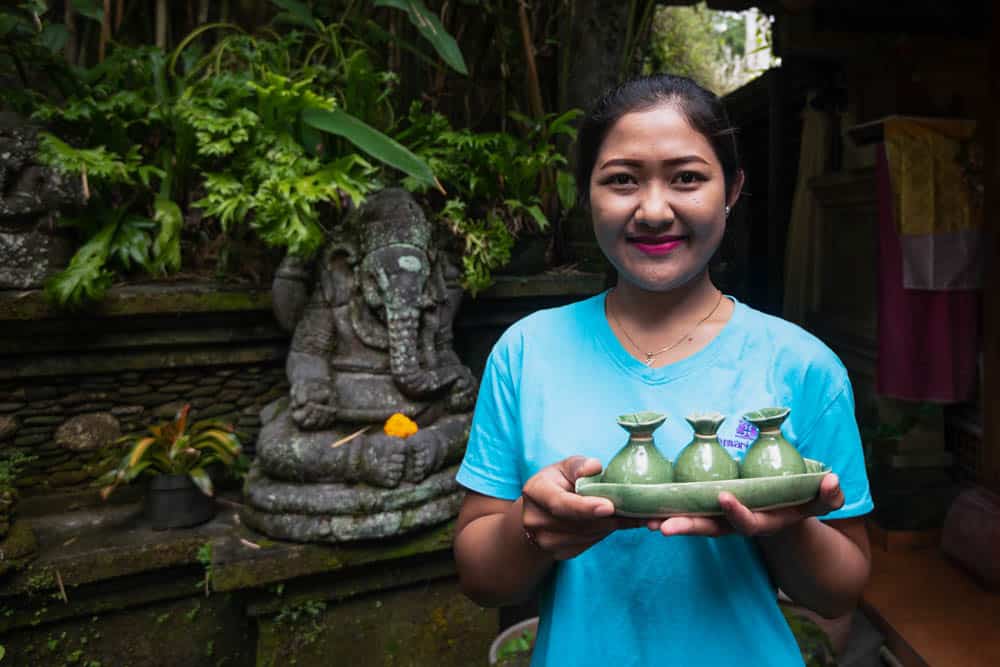
For the ultimate Balinese spa experience, you must take the famous, flower-filled, mandi lulur bathtub extravaganza—which originated in the sumptuous royal palaces of Java to preserve the beauty of the pampered royal princesses. You will luxuriate for an hour in a warm, gleaming tub filled with fresh flower petals, red hibiscus blossoms, and vivid marigold flowers and sip hot ginger tea from small, elegant, celadon-green stoneware cups. It does not get any better than this.”
Balinese Massage (90 minutes)
Green Tea Scrub and Yoghurt Rubdown (45 minutes)
Relaxing in a Flower Bath with Ginger and Lemongrass tea and Fruit (15 minutes)
2.5 hours Rp 650,000
February
We celebrate Valentine’s Day every day of the month!
Aromatherapy Massage (90 minutes)
Balinese Boreh Scrub (45 minutes)
Relaxing in a Flower Bath with Ginger and Lemongrass tea and Fruit (15 minutes)
2.5 hours Rp 650,000
March
Get Ready for Nyepi, the Balinese New Year.
Balinese Massage and Reflexology – Foot Massage (90 minutes)
Honey Seed Scrub (45 minutes)
Relaxing in a Flower Bath with Ginger and Lemongrass Tea and Fruit (15 minutes)
2.5 hours Rp.650,000
April
Get into the spirit for Galungan, one of the big Balinese Festivals.
Hot Stone Massage (90 minutes)
Traditional or Modern Facial (60 minutes)
2.5 hours Rp. 700,000
May
Make it Mother’s Month, not just Mother’s Day!
Balinese Massage (60 minutes)
Traditional or Modern Facial (60 minutes)
Tamarind Spa Manicure or Pedicure (60 minutes)
3 hours Rp 650,000
June
Celebrate fathers all month, and not just on Father’s Day!
Balinese Massage (60 minutes)
Honey Seed Scrub (45 minutes)
Relaxing in Flower Bath with Ginger and Lemongrass tea and Fruit (15 minutes)
Traditional or Modern Facial (60 minutes)
3 hours Rp 750,000
July
It’s Tamarind Spa’s Birthday!
Balinese Massage (60 minutes)
Salt Scrub (45 minutes)
Relaxing in Flower Bath with Ginger and Lemongrass tea and Fruit (15 minutes)
Tamarind Spa Manicure or Pedicure (60 minutes)
3 hours Rp 650,000
August
Before a night of Jazz at the Ubud Village Jazz Festival, get in the mood with our August Package.
Relaxing Massage and Reflexology – Foot Massage (90 minutes)
Traditional or Modern Facial (60 minutes)
2.5 hours Rp 650,000
September
Enjoy September, enjoy Tamarind Spa!
Aromatherapy Massage (90 minutes)
Traditional or Modern Facial (60 minutes)
2.5 hours Rp 650,000
October
Take time off from all that writing and reading at the Ubud Writers and Readers Festival and luxuriate in the Spa.
Hot Stone Massage (90 minutes)
Green Tea Scrub and Yoghurt Rubdown (45 minutes)
Relaxing in a Flower Bath with Ginger and Lemongrass tea and Fruit (15 minutes)
2.5 hours Rp 700,000
November
It’s the month to celebrate Thanksgiving!
Aromatherapy Massage (60 minutes)
Traditional or Modern Facial (60 minutes)
Tamarind Spa Manicure or Pedicure (60 minutes)
3 hours Rp 650,000
December
Every day is Christmas Day at Tamarind Spa!
Balinese Massage (60 minutes)
Balinese Boreh Scrub (45 minutes)
Relaxing in a Flower Bath with Ginger and Lemongrass tea and Fruit (15 minutes)
Tamarind Spa Manicure or Pedicure (60 minutes)
3 hours Rp 650,000
For Tamarind Spa Promotions: Email: murni (at) murnis.com




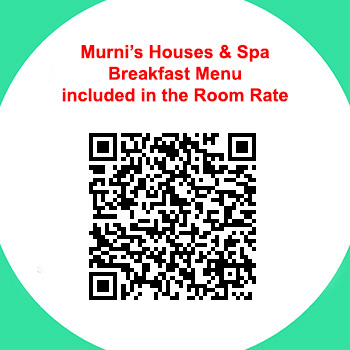
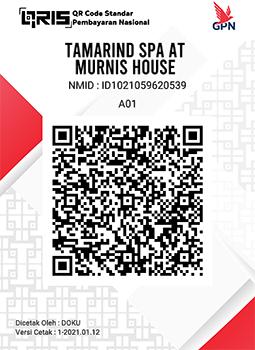
 To pay Murni’s Warung: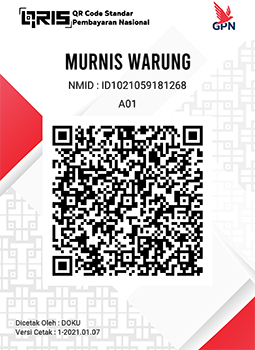





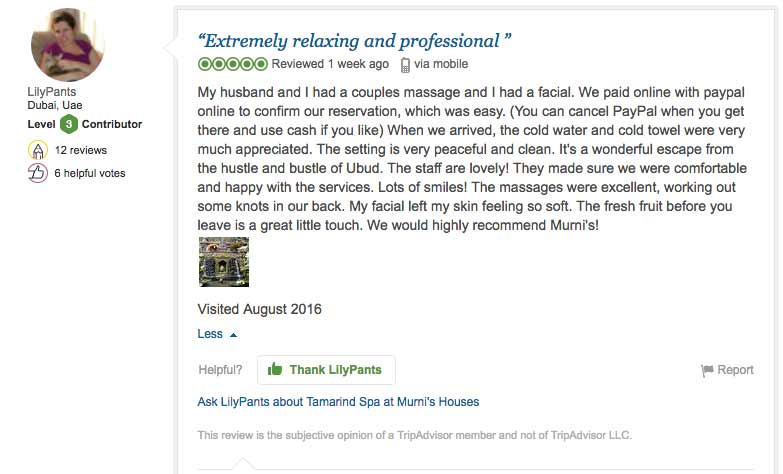

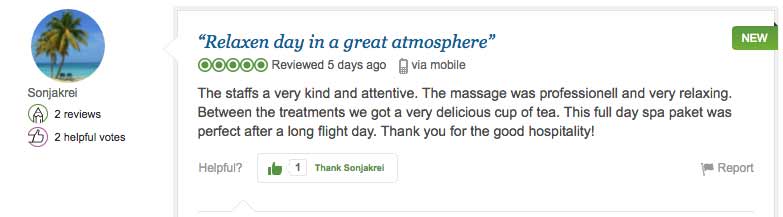
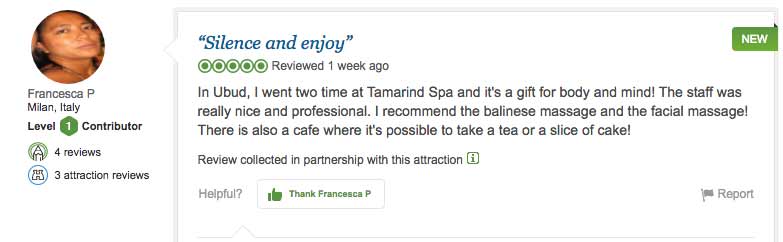

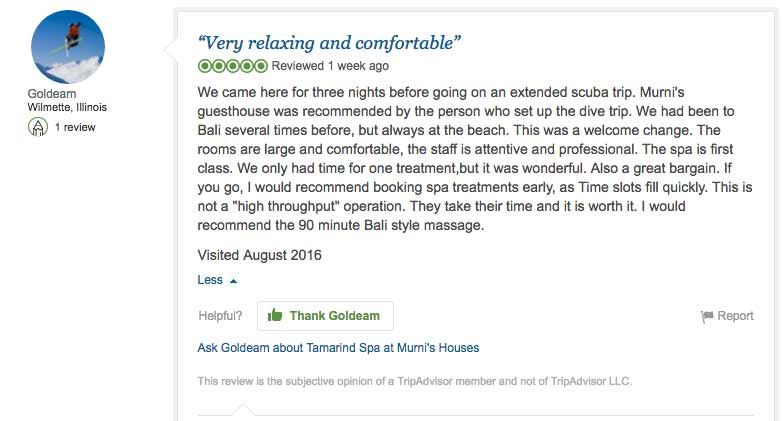



















 Tamarind Spa Gift Vouchers at our award winning spa are the perfect present for every occasion.