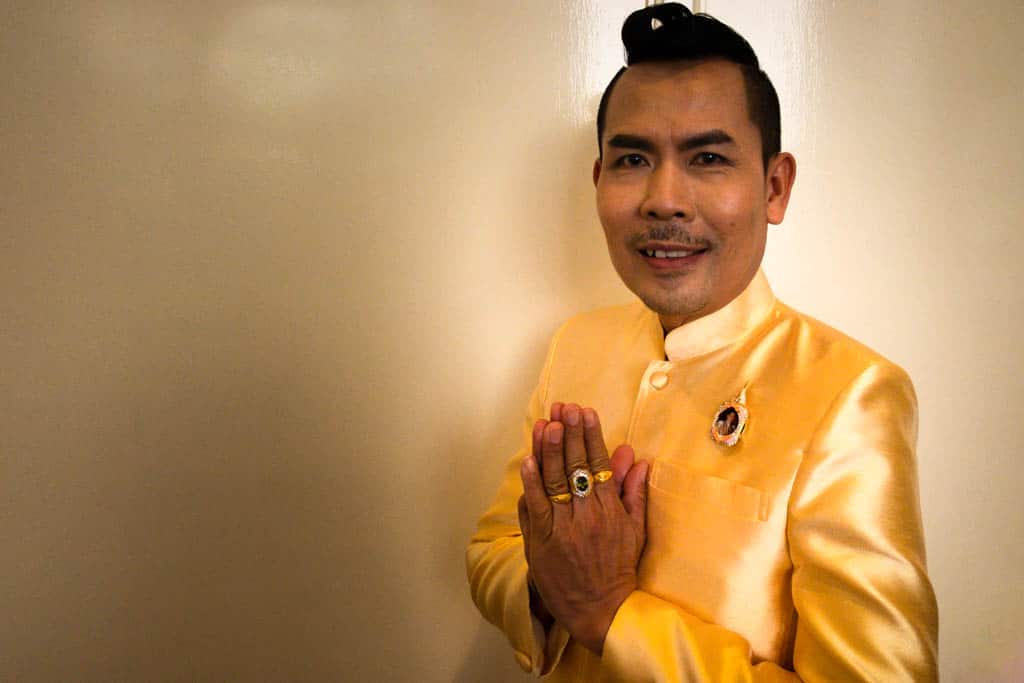
On 5 January 2019 the iconic Dusit Thani Hotel, Bangkok, closed its doors. Dusit Thani means ‘Heavenly City’. These photographs were taken on that sad day.
It was one of the earliest 5-star hotels in the city, known for its famous guest list, including Gwyneth Paltrow, Whitney Houston, Ronald Reagan and Tom Jones, and striking modernist architecture. At that time, Bangkok was full of American GIs, who were fighting the Vietnam War. They were there for rest and recreation. Most Bangkok hotels were emphasising Western modernity, but the Dusit Thai concentrated on Thainess. There were 517 rooms and suites and a funky hexagonal pool.
The hotel was on the corner of Rama IV and Silom roads across from Lumphini Park and opened on 27 February 1970. It was then Bangkok’s tallest hotel, designed by Japanese architect Yozo Shibata and had a golden spire on top of the roof, inspired by Bangkok’s Wat Run, Temple of Dawn, up the river. It was a favourite dining and events location, especially for weddings of the rich and famous. More than 20,000 couples were married in the hotel’s Grand Ballroom. At one time there was a white elephant standing outside at the front.
The Dusit Thani was the creation of Chanut Piyaoui. She opened her first Bangkok hotel, the 3 star Princess Hotel, in 1948. Over the next seven decades, her company owned 29 hotels in 18 countries – 9 self-owned and 20 managed. Dusit International also manages 240 luxury villas in Indonesia, Thailand, Sri Lanka and the Maldives.
It will be replaced by a mixed-use 440,000 square metre development on a 60 year lease. Upon completion in 2023/24, the project will comprise the 39 storey, 250 room Dusit Thani Bangkok Hotel, all rooms with a view of Lumphini Park, a 69 storey residences condominium, an 80,000 square metre Central Park Shopping Complex and 40 storey Central Park Offices. The investment is estimated to be 36.7 billion baht (US$1.16 billion). There will be a golden spire on the rooftop and an indoor waterfall.
The Hindu/Buddhist shrine near the junction of Silom and Rama IV roads will be kept. So will the banyan tree planted by Chanut decades ago.
Instead of settling for generic postcards and fridge magnets, head to Murni’s Warung Shop to purchase items unique to Bali and bring them back as gifts for friends and family. You don’t even have to go out of your way to find it, as you can simply stop by after having lunch at the restaurant. A purveyor of Balinese and Asian art, Murni’s own collection is displayed all around the hotel property in the form of sculptures and wall art. At the gift shop, you can purchase a number of quality items, including Asian antiques, Balinese puppets, rattan handbags, handmade fans, and ethnic jewellery. During your visit, you might even run into Murni herself, as she’s known to spend time either at the shop or the restaurant. From handpainted batik cards to authentic gold pieces, this is a great place to get your shopping done while visiting Ubud.
Traditional dish is so good that food critics struggle to describe it
Ian Lloyd Neubauer
Nikkei Asian Review, 28 February 2020
It’s what’s on the inside that counts: A duck is stuffed with the special mix of spices necessary to create the Indonesian delicacy bebek betutu.
UBUD, Indonesia — “No question about it, this is the best pig I have ever had. Absolutely the best. You think even the finest French chef could ever come up with anything as delicious or as beautiful as this?”
When the TV chef Anthony Bourdain uttered these words while filming in Indonesia in 2006, he turned babi guling — Balinese pig roasted on a spit — from a local favorite into a global delicacy.
There is, however, another Balinese dish that rivals or even exceeds babi guling: bebek betutu — roasted leaf-wrapped duck. Richly seasoned with chili, ginger, candlenuts and garlic, this melt-in-your-mouth masterpiece upstages the flavor profiles of China’s Peking duck, France’s confit de canard and every duck dish ever conceived, according to many prominent food judges.
“The duck meat was black and moist and so tender that it fell from the bone with a touch. It was so delicious and entirely unlike anything I had ever eaten,” wrote Sri Owen, the Indonesian food writer credited with introducing her country’s cuisine to the world, after she sampled bebek betutu for the first time in 1962.
Nicholas Jordan, a Sydney-based food writer, voiced similar sentiments after recently discovering the dish in Bali: “It’s one of the few things I’ve eaten in my life that’s so good it’s taken up a mythical status in my mind … something so beyond regular deliciousness it shouldn’t exist without some sort of paranormal ingredient.”
To learn more about bebek betutu I traveled to Ubud, the Balinese spiritual hub made famous by Elizabeth Gilbert’s bestselling memoir “Eat, Pray, Love” and the 2010 film based on the book. Now a booming tourist town with a cosmopolitan dining scene, Ubud has several restaurants that list bebek betutu as a signature dish. Among them is Murni’s, where duck legs are plated with pyramids of yellow rice and a spicy green bean and shredded coconut salad called lawar. With a lightly sweet and herbal finish, the recipe has not been altered since Murni’s opened in 1974.
Indus, a restaurant overlooking a coconut tree-fringed river valley owned by Australian-Indonesian culinary icon Janet DeNeefe, is also known for its bebek betutu, though it must be ordered as a whole bird for two or three people to share.
Aperitif, an extravagant 1920s-style restaurant that cost $2 million to build at the luxury Viceroy Bali resort, offers an East-West interpretation of the dish: duck magret (the boned breast of a duck reared for foie gras) injected with bebek betutu spice mix in place of orange sauce.
But according to Astrid Maharani Prajogo of Good Indonesian Food, a culinary tour company, the best bebek betutu is not found in any restaurant. It is made by specialists who work from home and supply locals with ducks for Hindu ceremonies, celebrations and Sunday roasts.
“There are lots of these duck specialists in Bali,” Prajogo says. “But the one I always take my clients to is Pak Rimpin near the Royal Palace in the center of Ubud. I went there because someone told me his duck was the freshest.”
“They’re all very good at what they do … but with Pak Rimpin, it was his idealism that struck me … his desire to preserve the culinary tradition. He was very keen to open up his kitchen and share his recipe and stories with tourists.” She adds: “It’s also where the royal family of Ubud get their bebek betutu.”
The labyrinthine streets and alleys of Ubud are still semi-deserted at 8 a.m. when I arrive at Rimpin’s home, a traditional Balinese compound with intricately decorated stone gates and Hindu shrines. There I find the specialist at work in a central courtyard kitchen filled with cooking aromas and shards of bouncing light.
Rimpin’s bebek betutu must be ordered at least two days in advance. Normally he cooks between 15 and 20 a day, but today it is relatively quiet; he is making only four, plus an order of duck satay sticks. When I ask his age, he consults quickly with his daughter-in-law Junek, who tells me he is “about 60.” He has been cooking duck “since the 1980s” and learned the craft from an older brother. “I asked him to stop working because he’s getting old and the work is exhausting,” Junek says. “But he won’t listen.”
Rimpin sighs and turns his attention to the four ducks soaking in a pail of water. He chooses one, rinses it dry and starts massaging it with a marinade of coconut oil, fermented shrimp paste, soy sauce and salt. He also adds tamarind paste to the blend to neutralize the naturally unpleasant odor of duck meat.
He then stuffs the bird’s cavity with a handful of bay leaves and bumbu — Balinese for “spice mix” — which in this case also contains sesame seeds, galangal and pepper. “There’s no secret recipe. If people think my bebek betutu tastes good it’s because of the attention to detail. I make them one at a time,” he says, wrapping the bird like a birthday present in betel-nut bark, which contains natural oils to further enhance the flavor.
Next, he takes the package to a room blackened by decades of soot with a series of raised mounds for cooking on the floor. He places the package in a steel wok, covers it with a second wok, rests it on one of the mounds and then covers it with a 30-cm-tall pyramid of rice husks. Finally, he tops the pyramid with a few coconut husks, adds a few squirts of kerosene and sets it alight.
The term “betutu” refers not to the recipe but to the use of rice husks — a time-consuming cooking process that gives the ducks cooked by specialists a robust flavor. The ducks are baked in these medieval-style ovens for a minimum of five hours, although Rimpin cooks his for 12 hours.
“You get this dry roasting effect similar with steaming and braising that commercial kitchens designed 1,000 years later still can’t replicate,” says Will Meyrick, an expatriate chef from Scotland who teaches tourists how to make chicken betutu, a popular variant, at the Canggu Cooking Retreat on the coast. “All the spices and ingredients get broken down into this rich juice and the flavor is amazing.”
Rimpin’s customers normally eat his bebek betutu at home. But I want to taste it straight out of the oven and unwrap my parcel in the middle of his kitchen. As the bark curls open I am struck by an aroma so complex it seems to possess texture.
The meat at the top is golden-yellow from the turmeric and black on the inside from the spice mix. I collect some on a fork, mop up some of the golden juice, and take my first bite. The flavor is so remarkable it speeds my heartbeat for a few moments. As much as I try, I can’t find the words to describe what I am tasting.
“What words would you use to describe the emotion of hearing ‘I love you’ for the first time, or the sensation of the sun on your face after a month of winter rain?” says Jordan. “How do you describe one of the best things you’ve ever eaten?”
Bali scores gastro-points with ‘indescribable’ roast duck
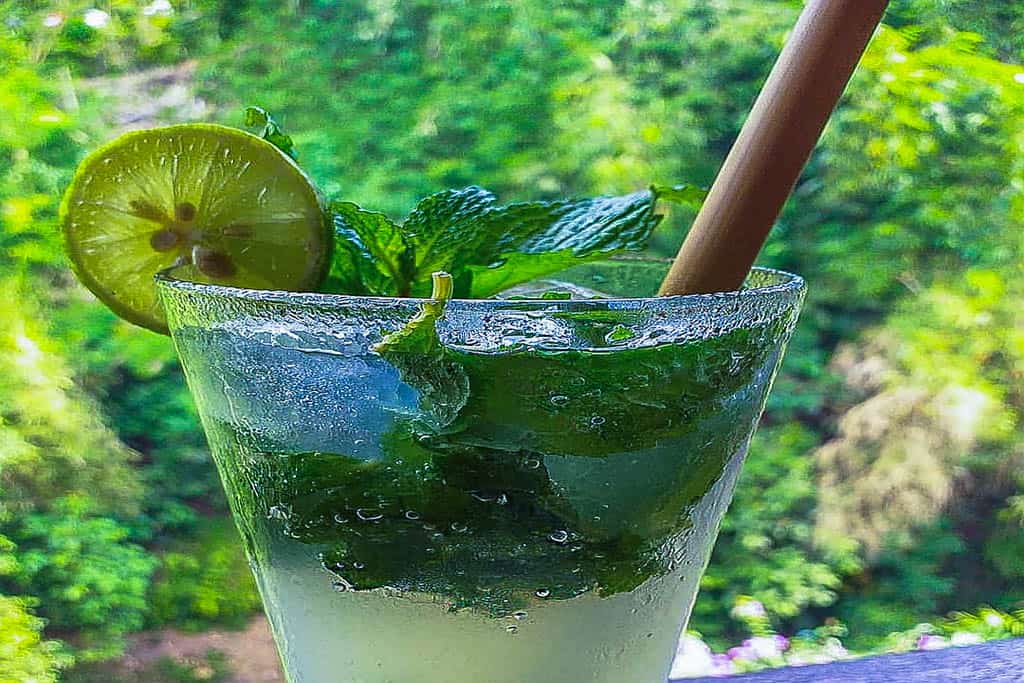
Fresh mint leaves, squeezed lime juice, simple syrup, topped with soda water, with a view of the green Campuhan jungle.
An extremely refreshing thirst quencher (try repeating that 10 times!)
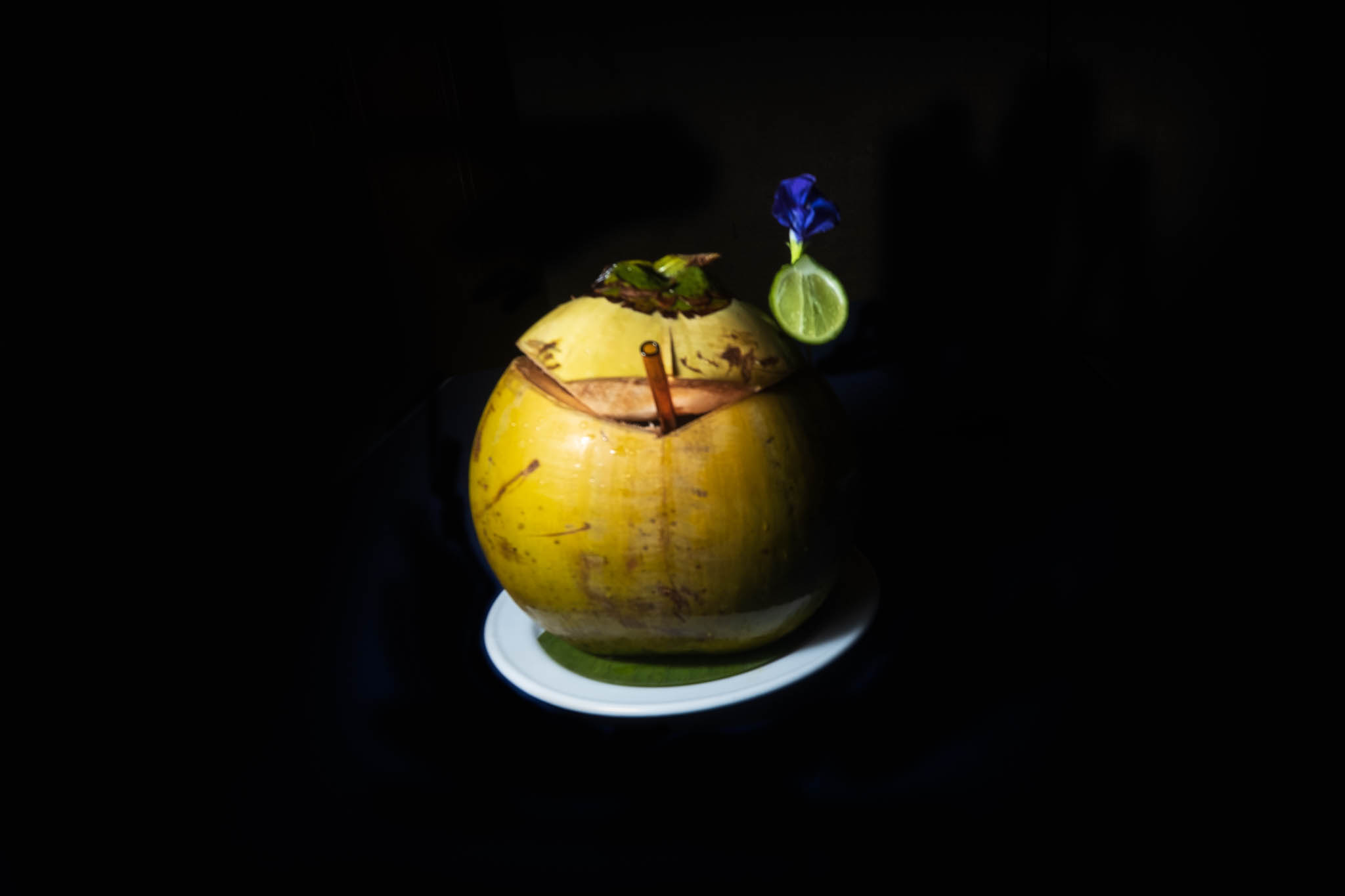
Coconut.
Whole young coconut fresh from the tree.
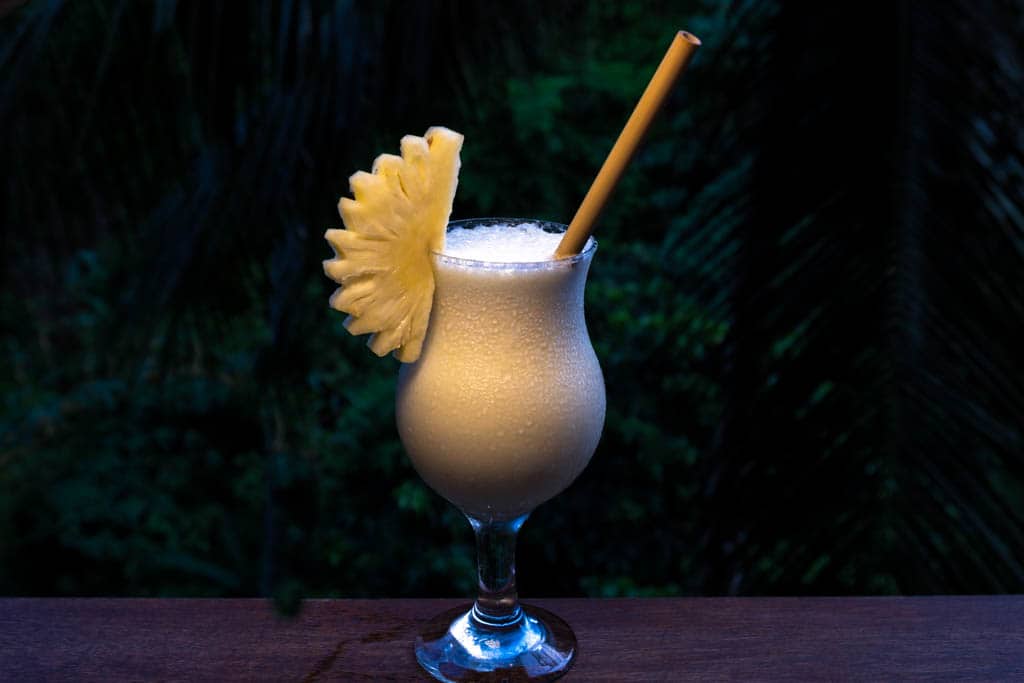
Piña Colada.
Puerto Rico officially declared the Piña Colada as its national drink in 1978.
The cocktail is so popular that 3 bartenders claim to have invented it, all from Puerto Rico, and 2 of them from the same bar. Ramón Pérez says he spent months perfecting it before launching it on 15 August 1952 at the Caribe Hilton Hotel’s Beachcomber Bar in San Juan. But his colleague Ricardo Garcia claims he discovered it. Then Ramón Mingot, bartender at Barrachina, a restaurant, also in San Juan, says he invented it in 1963.
Who cares? It’s a great drink. 10 July is National Piña Colada day. Murni’s Warung makes it from Bacardi, Pineapple Juice, Coconut Milk, and Triple Sec.
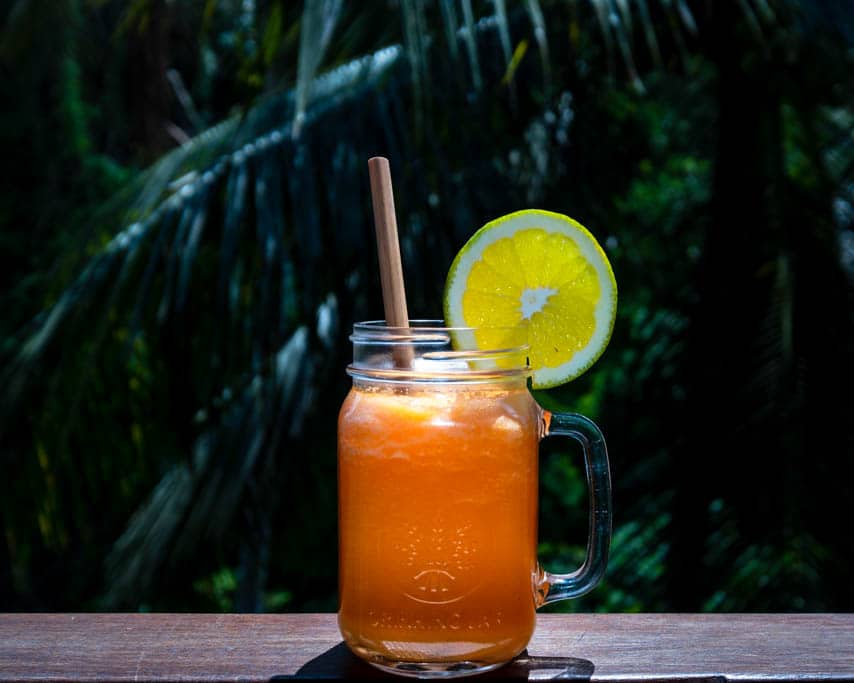
Cold and Flu Buster.
From our Healthy Juices Menu: Tangerine, carrot, apple and lemon.
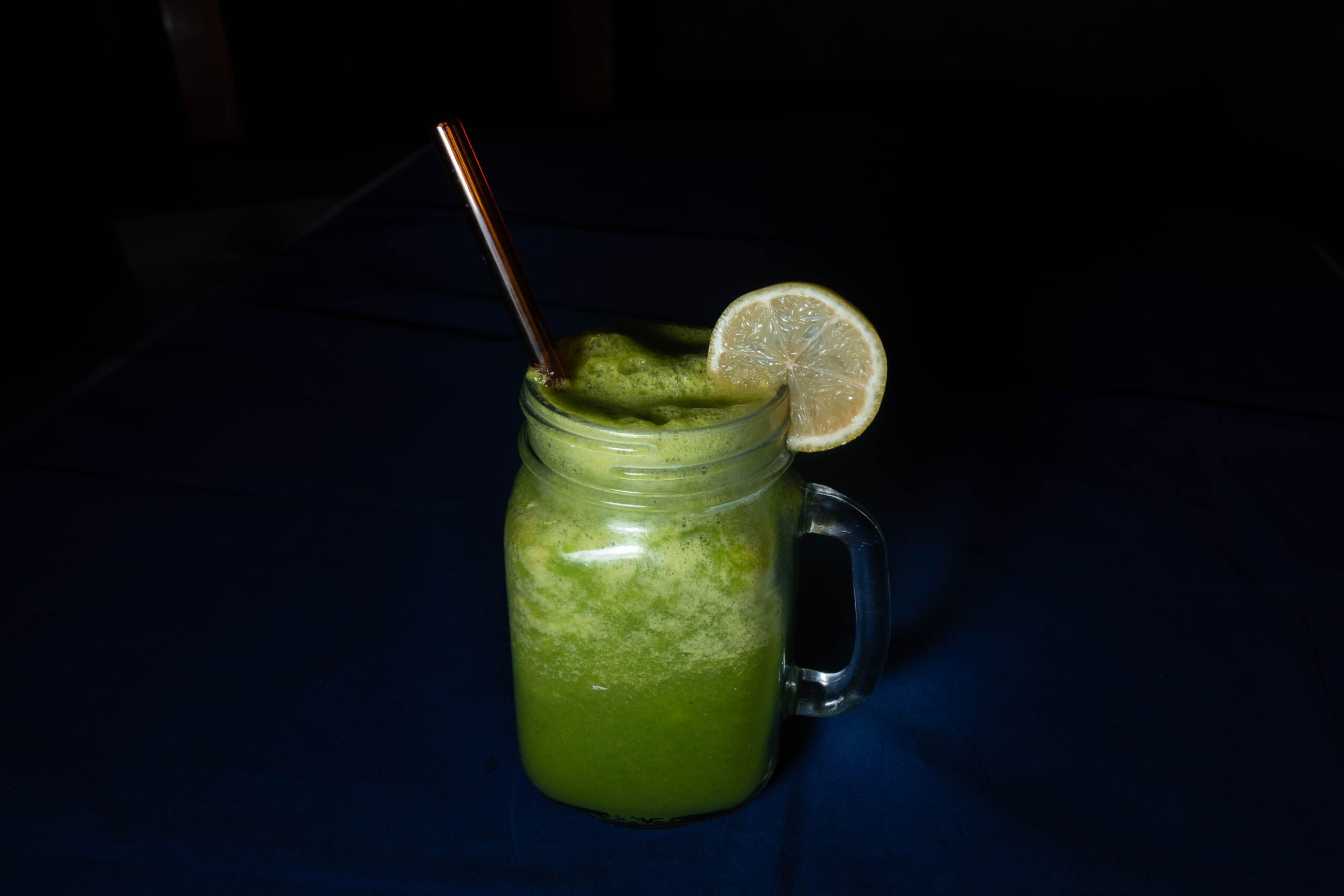
Super Green Juice.
From our Healthy Juices Menu: Cucumber, green vegetable, celery, ginger and lemon juice – helps reduce blood pressure.
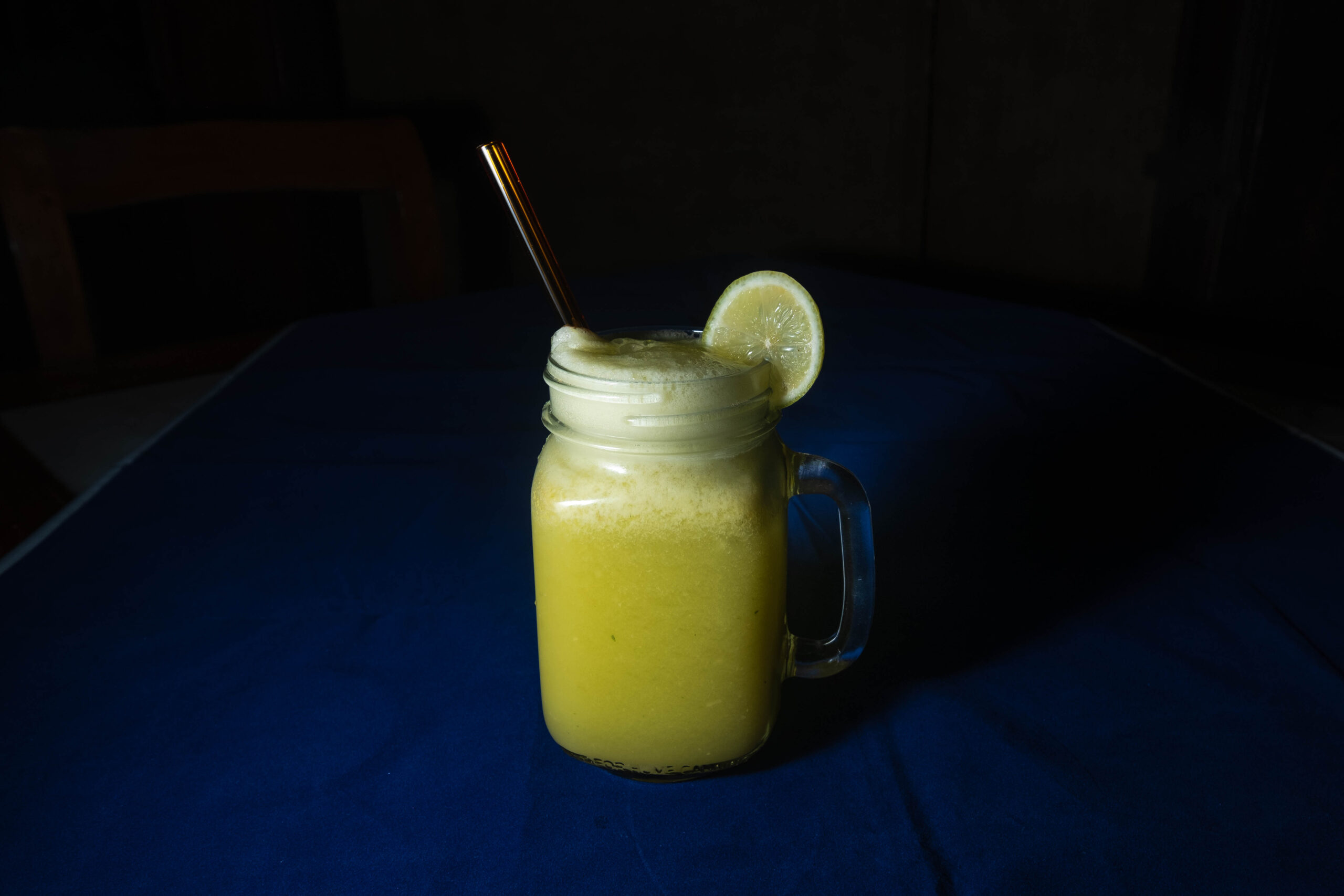
Moisturiser.
From our Healthy Juices Menu: Fresh cucumber, ginger, orange – improves skin texture, moisturizer and reduces body heat.
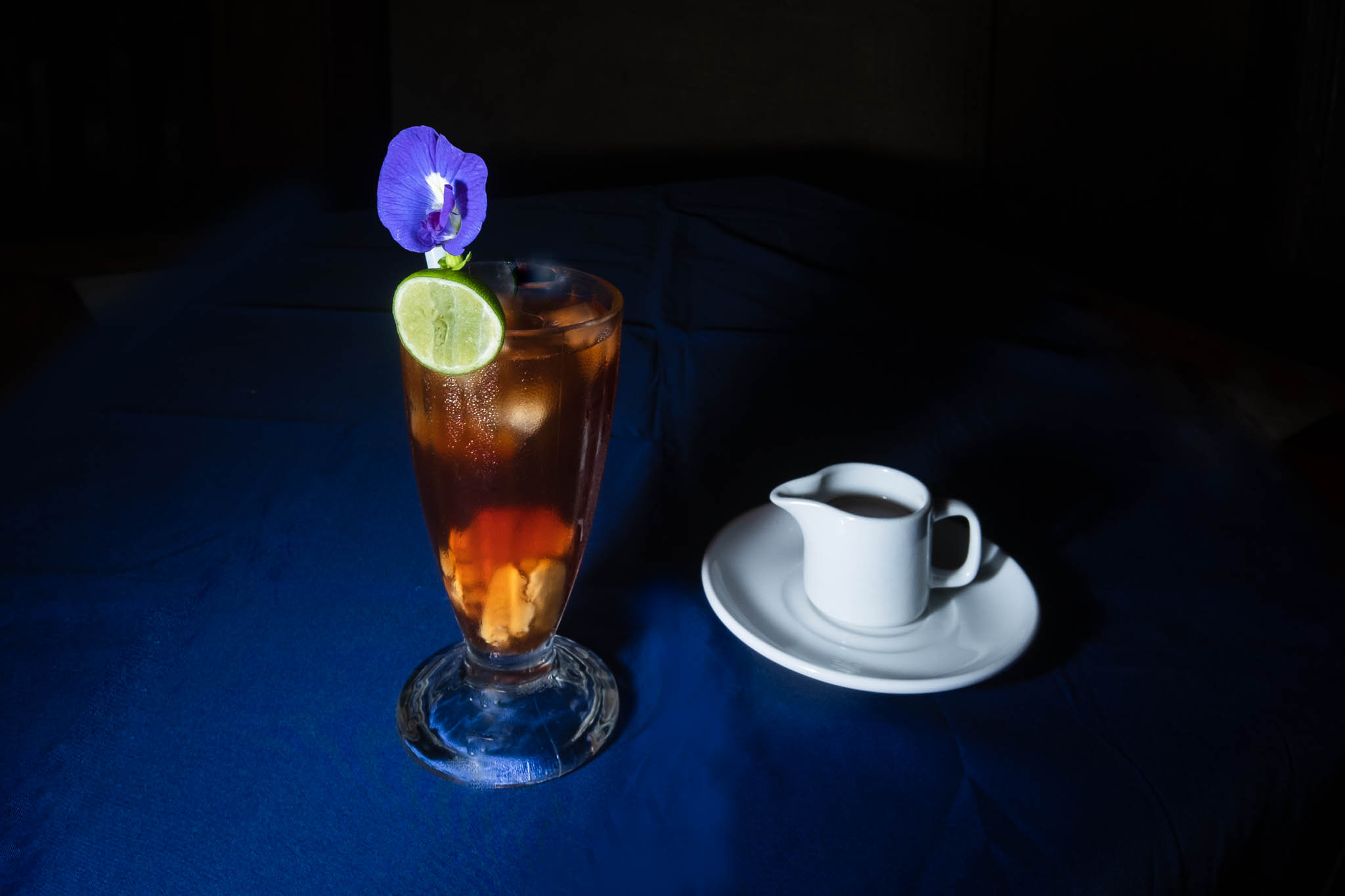
Iced Ginger Tea.
Ginger tea has a long history dating back to China some 5,000 years ago, where it was traditionally used as a health tonic. It’s good for digestion.
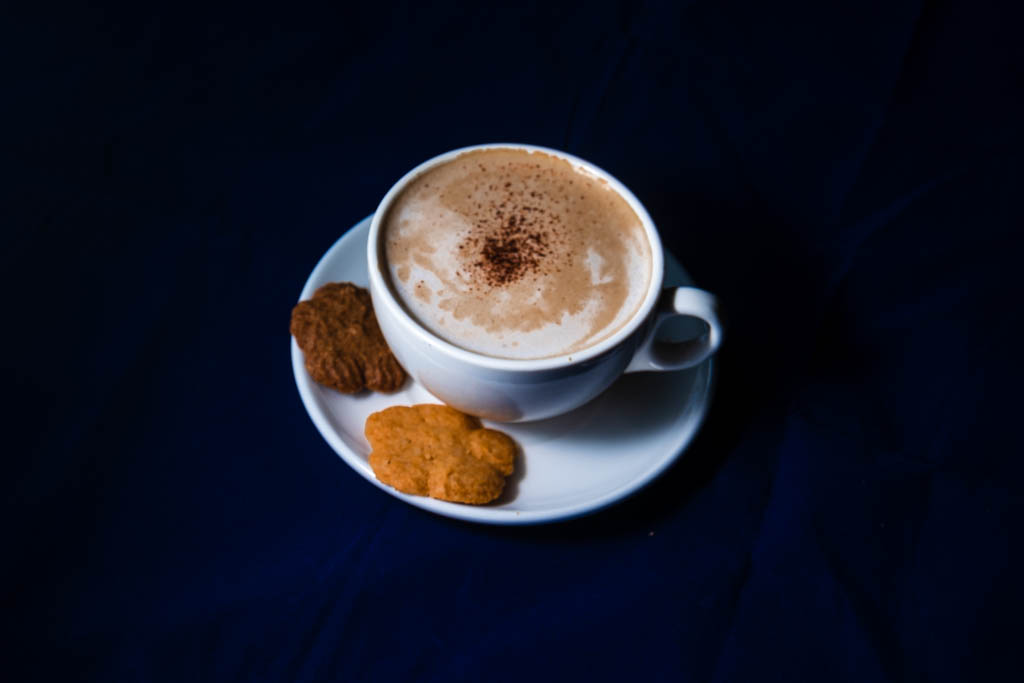
Cappuccino.
Made popular during both World Wars, a cappuccino has a bottom layer of one or two shots of espresso, a middle layer of steamed milk, followed by a thick, airy layer of foam to give a perfect, luxurious, velvety texture.
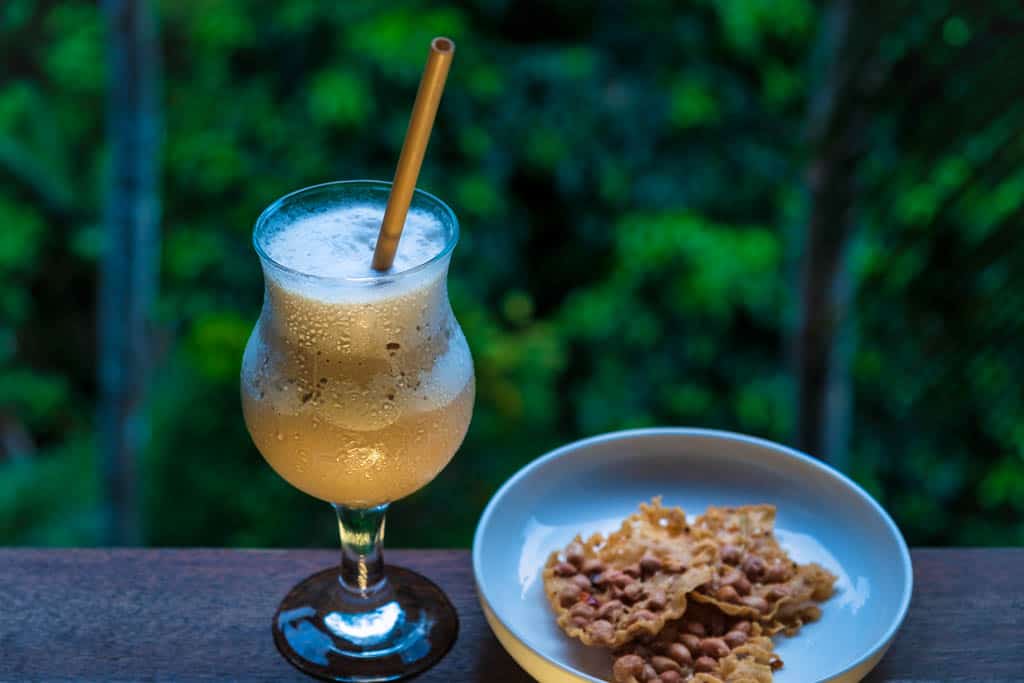
Vanilla Caramel Light Frappé.
Blended milk, cream, a dash of espresso, caramel and ice.
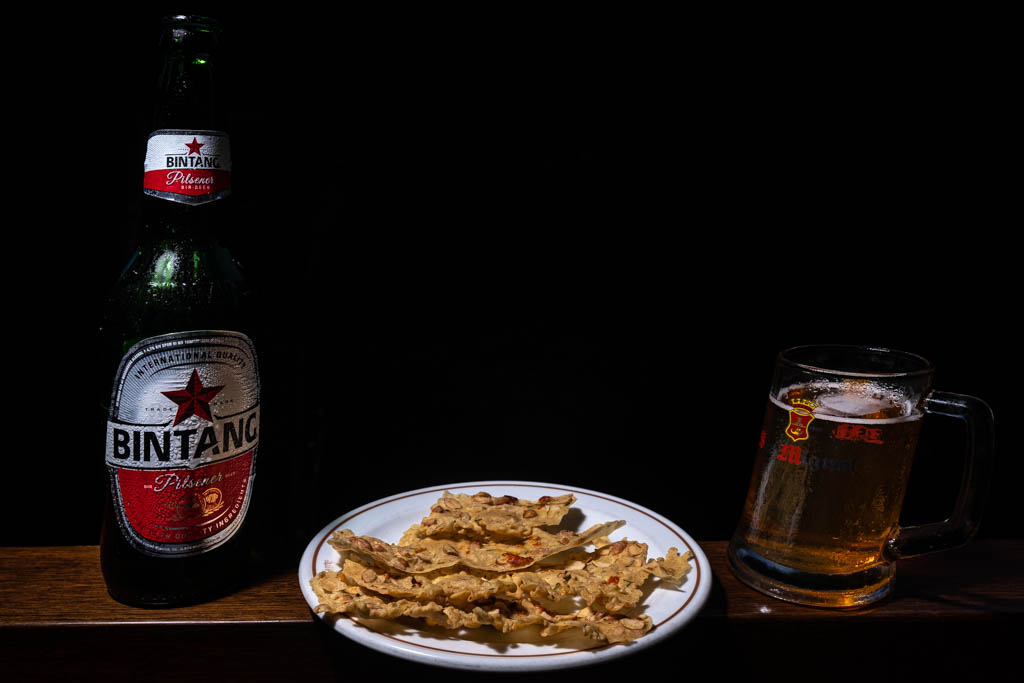
The snack is Rempeyek or ‘Peyek” for short. They are delicious Balinese, crunchy, savoury crackers, studded with peanuts. Peyek is the sound they make when you bite into them! Rempeyek are totally moreish – you can’t just stop at one!
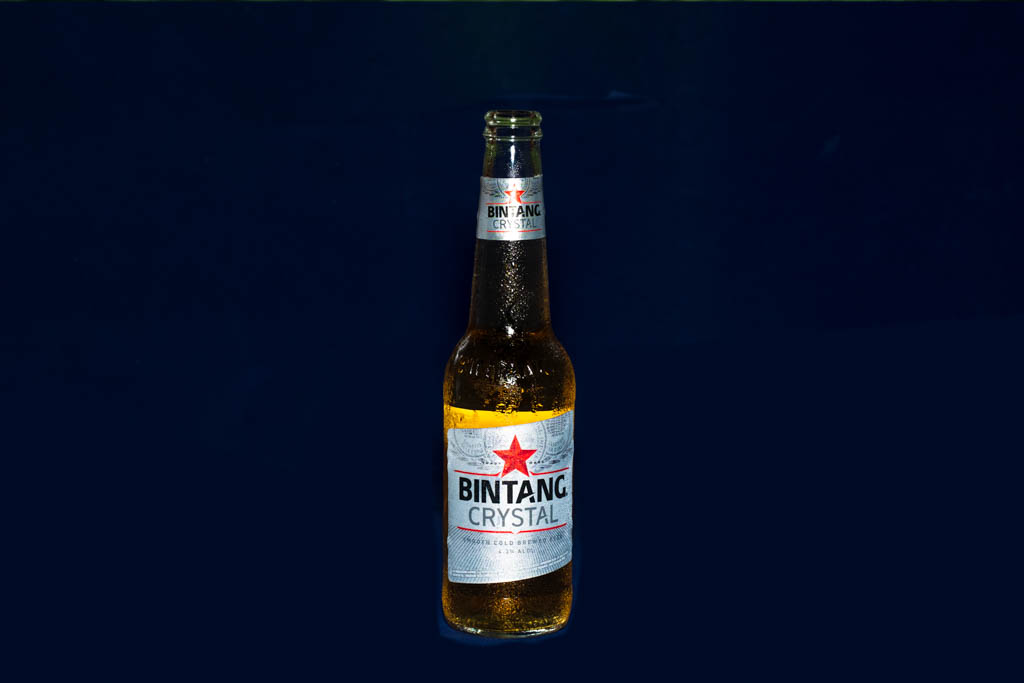
Bintang Crystal.
Bintang Crystal, Bali’s new, less bitter, smoother, cold-brewed beer.
Bintang and Rempeyek.
Bintang means ‘star’ in Indonesian. The star beer was first brewed in Surabaya in 1929 during Dutch colonial rule. In 1957, after Indonesia became independent, it was nationalised until Heineken retook control in 1967. The 4.7% alcohol malty beer is on every menu in Bali. We recommend our crunchy home made delicious Balinese snacks with every mouthful.
The roads of Ubud are known for being uneven, and some parts are difficult to explore on foot. After a day spent outside, head to Tamarind Spa to get some much-needed relief for your sore muscles. If you’re staying at Murni’s Houses, you can easily access it from the hotel. Spa treatments include a full-body Balinese massage, hot stone massage, reflexology, facials, nail treatments, scrubs, and more. See for yourself why this spa has a handful of awards to its name. An afternoon of treatments from experienced staff and you’ll leave feeling rejuvenated and ready for another round of tours.
Stay in comfort at the award-winning Murni’s Houses, a hotel just a short walk away from Ubud’s town center. With spotless guestrooms adorned with traditional Balinese art, shared amenities like swimming pool and garden, and a spectacular view of the mountain, this is an accommodation that won’t disappoint. Free Wi-Fi, coffee, breakfast, and parking are available for guests, and main attractions like Campuhan Ridge Walk and Saraswati Temple are just a stone’s throw away. This is a place you’ll love coming home to after a long day of activities.
Murni’s in Bali – Murni’s Houses & Spa – Trip101.com
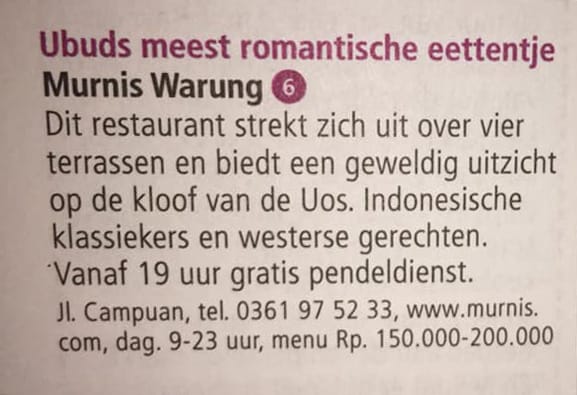
A household name in Bali, Ni Wayan Murni started out with Murni’s Warung, the first restaurant to open in the town of Ubud in the early 1970s. Now, Murni’s is an enterprise that includes a hotel, a spa, and a store. Besides embodying Balinese culture and hospitality, she has published a book and exhibited a collection of textiles in San Francisco. When planning a trip to Bali, a full experience at Murni’s will guarantee a wonderful vacation. Reserve a table and enjoy traditional Indonesian cuisine at a restaurant with an excellent view of the river, get a massage at the award-winning Tamarind Spa, and book a room inside the peaceful confines of Murni’s Houses. Keep reading because all these and more await at Murni’s in Bali.
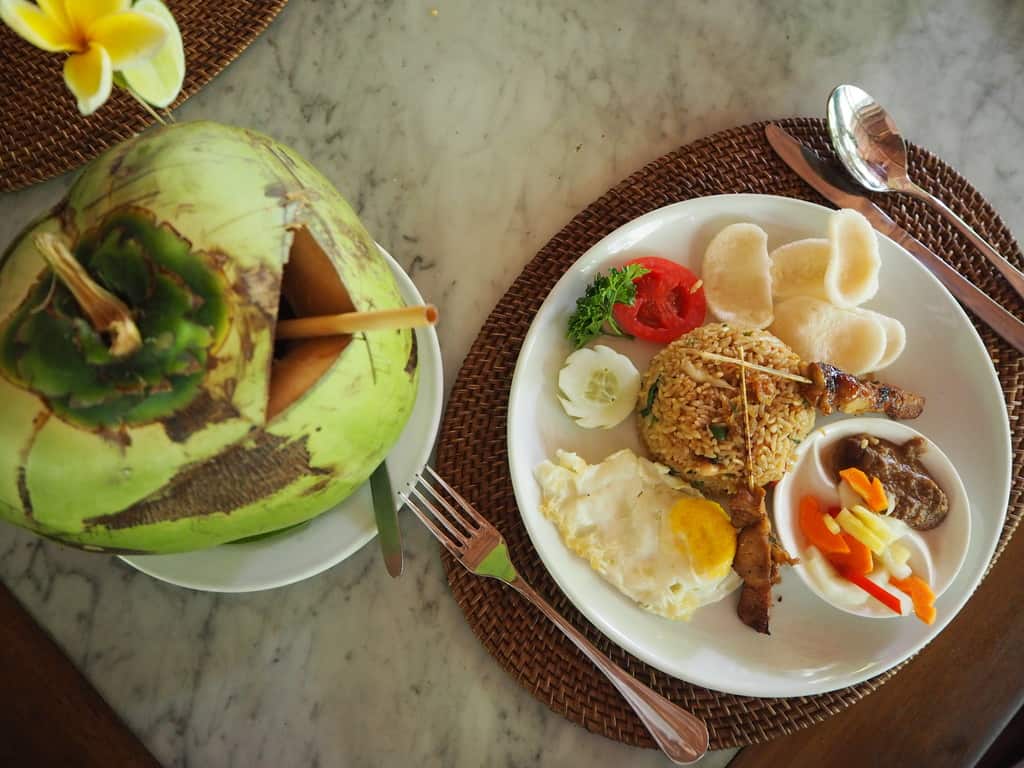
Before Murni became a restaurateur and businesswoman, she was selling food and beer at the local market. Murni’s Warung opened just as tourists were starting to discover the wonders of Ubud. An establishment that has stood the test of time, this is an iconic eatery in Bali that definitely warrants a visit. Guests typically come to taste the lauded Balinese duck and beef rendang, but you can also sample their delicious nasi goreng (Indonesian fried rice) served with homemade peanut sauce. The extensive à la carte menu includes a list of desserts, with must-tries like Murni’s world-famous carrot cake and the ooey-gooey cashew pie, as well as a list of cocktails, wines, and spirits from the lounge bar. Murni’s in Bali Trip 101.com
The Best Countries in the World: 2019 Readers’ Choice Awards
November 2019
Condé Nast Traveller’s 32nd annual Readers’ Choice Awards survey, with 600,000 registered voters, voted Indonesia on their favourite country in the World.
They say:
Indonesia is fast becoming the new travel destination for nomads. People are catching on to its modern resorts, secluded beaches, and awe-inspiring temples. The semi-secluded trio of the Gili islands beckon with sleepy, sun-drenched beaches—alongside spas and vacation homes. Bali continues to lure aspiring yogis and partygoers alike, with healers and spa retreats coexisting peacefully with popular beach clubs. It’s no surprise Indonesia scored the highest among our readers. We have a feeling the mix of ancient temples, world-renowned surfing, and inviting spirituality have something to do with it.
Here are the top 10:
Indonesia
Thailand
Portugal
Sri Lanka
South Africa
Peru
Greece
Philippines
Italy
Vietnam
Condé Nast Traveller – The Best Countries in the World
By Stephanie Brookes, Indonesia Expat, 20 November 2019
I stood near the rim of Kintamani volcano, taking in the sweeping views of Mount Batur and its expansive crater lake shimmering in the early morning light. Ahead of me lay the 35-kilometre, downhill bicycle ride to Ubud.
I headed off with my cycling guide and, soon enough, we started to weave through small villages, sharing the quiet, scenic roads with the people going about their day. We passed by duck farmers with long bamboo poles, a white flag on top, each with their gaggle of ducks trailing behind them. Vibrant green fields panned out on either side as we rode through the back lanes; many with groups of women threshing rice and sifting the grains with giant bamboo baskets.
We passed lines of beautiful women dressed in bright, ceremonial finery with lacy white tops and brightly coloured sashes, as they made their way to the local village temple. They walked in procession, single file, carrying tall towers of fruit on their heads.
This made for extraordinary photo opportunities. Believe me, you do not see this in downtown Kuta, Nusa Dua, Canggu, or Seminyak.
By travelling at just 10km per hour, I felt like I was able to make intimate contact with the world around me and could see, hear, and feel so much more than I would have in a car or on a motorbike. I could hear temple bells in the distance. The quaint lanes we passed made me feel like I was discovering the authentic Bali, opening up to impromptu moments that might come along.
We stopped in a small village for a break and I got talking to a young Balinese man named Kadek, who was sitting under a makeshift shelter next to a small, ancient, stone temple. He had been clanging away on ancient-looking cymbals, surrounded by an array of other instruments.
“These are all part of our gamelan orchestra,” Kadek explained, pointing to the gongs and drums. He said, “these have been played at our temple ceremonies for many centuries.” I learned that they are still played at weddings and funerals as well as for other rites of passage and ceremonies. Gamelan is mastered by memory, by heart.
Kadek invited me to come back the next day to join his family temple birthday celebration. Not only would I hear the gamelan being played, but I would also meet the shadow puppet master and watch the wayang kulit, the ancient Indonesian art of shadow play. What an offer!
“No need to bring anything,” Kadek stressed. “We have prepared plenty of food, and we welcome guests. It is our great honour to share our customs with foreign guests.” He quickly gave me his Facebook name, we exchanged phone numbers, and I made a promise to return.
It seems that all the conversations you have with Balinese, from the hotel concierge to the local fruit seller, always seem to include some discussion of their culture and tradition. Balinese traditional life is still very much alive outside the main tourist areas of Bali. By basing yourself in the town of Ubud, for example, you get to observe a ritualistic Bali which is steeped in Hindu religious practices. For me, every day seemed to offer another lesson, unravelling slowly and naturally. Bali is, in all essence, a living culture.
The island has over 20,000 temples and shrines. For such a small island (153km x 112km), one is bound to run into a ceremony of some description. All you need to attend a ceremony is a sarong, a long sash, and a top that covers your shoulders. Men wear an additional item, an udeng, the Balinese male headdress.
If you choose to travel around Bali with a driver, these are pretty much a given item, tucked away neatly in the back of the car, at the ready for an impromptu moment. When you catch sight of a line of women walking down a road with offerings on their heads, all you need to do is join the procession at the back, and you will likely end up at a temple where you can participate in the celebrations and experience the culture.
As a foreigner, you’re always welcomed to join a temple prayer session and, if you are lucky, you can also catch temple dancing, and sometimes drama plays being acted out. These ceremonies often go late into the night, many ways past midnight.
My cycle tour finished with lunch, including a traditional Balinese salad with green beans and sprouts (urab), tempe with delicate spices, tantalising spicy, shredded, steamed chicken, satay on bamboo skewers with peanut sauce, and steamed vegetables cooked in coconut cream. This was served on a pile of steaming red rice. Our beverage was my favourite, fresh and young coconut water served in the shell, a natural energy drink and electrolyte replacement. We all hailed our coconut water with a “cheers” to celebrate our accomplishment of completing the ride.
The next day, my body told me it was time to take a rest. I booked in for a three-hour relaxation and rejuvenation treatment at Murni’s Tamarind Spa in Ubud. Locally, Murni is affectionately known as “the Mother of Ubud.” She pioneered tourism in Ubud in the 1970s by setting up her legendary restaurant, Murni’s Warung, where artists, adventurers, and academics hung out, drank mango lassies, ate smashed avocado on toast, and devoured Murni’s famous apple pie.
Murni lovingly presides over her dream creation on the jungle-clad Campuan gorge above the Wos River, and 50 years later, it’s still the same. The award-winning Tamarind Spa is the latest addition to Murni’s businesses and it was under the tamarind tree I discovered my massage therapist, Kartini, was the former personal therapist of the President of Seychelles.
After a welcome drink, cold towel and foot ritual, Kartini started to weave her healing magic on me. This began with an hour-long traditional massage, deeply relaxing, mind soothing, and muscle quenching. This was followed by a fragrant green tea scrub and a yoghurt rubdown. My treatment finished by soaking in a warm bath with orange and red flower petals floating on top. To finish it off, I was served a pot of organic herbal tea and fresh tropical fruit.
The next day, I was on a mission to discover Bali’s secret photography spots. I decided on a David Metcalf Photography tour after reading some rave reviews online. I was collected bright and early, in time for the dramatic 6.00am sunrise over Mount Agung. Next, we ventured to a local traditional market which was teeming with piles of colourful, hot-red chillies, purple dragonfruit, snake fruit, bright green guavas, and pyramids of multi-coloured local spices. Next, we spent time at the river capturing some dramatic morning sun rays through the trees, and had a lovely chat with the local rice farmer.
After that, we headed to a beautiful 10th century water temple which we had entirely to ourselves. Lunch was up next and sumptuous traditional fare of steamed fish wrapped in banana leaves, coconut yellow curried vegetables, traditional Balinese salad with bean sprouts, and rice steamed in bamboo over an open fire. We ate in the home of a beautiful Balinese family. It was a delightful surprise to see a glimmer of gold shining through the thick foliage in the back of the garden, and soon enough, two delightful young dancers appeared.
They performed the Legong dance for us. It turned out these two little girls were temple dancers and loved to take the opportunity to dance for visitors. They were all of five and six years old and danced so elegantly, with beautiful flowing movements infused with pure grace and spirit. It was spellbinding.
What I really loved about my photography day, which also included plenty of one-on-one photo tips, was how immersed I was in Balinese culture all day. We did not see another foreigner all day. My kind of Balinese day.
Next on the agenda was yoga. Wandering the small streets of Ubud, I found myself walking towards “The Sari Organic Pathway,” which was well signposted from the centre of town, wending my way to the Yoga House; a yurt shaped building situated in the rice fields.
Sheila, the owner, offers classes five days a week and refers to them as yoga for everyone. Indeed, it was. As I eased into my gentle flow yoga class, my view was framed by three stunning, volcanic peaks fanning out from the yoga platform. The yoga studio was also surrounded by terraced rice fields that encircled the studio like a living green carpet. By being amongst nature, in the outdoors in this idyllic setting, I felt deeply connected to the yoga philosophy which connects the mind, body and spirit, through breath and movement.
In the late afternoon, I headed off to a remote, rural Bali village, Lokaserena, on the outskirts of Ubud. I was welcomed into the home of Kadek, who is an Ubud Village Plate host. Ubud Village Plate is a local initiative that supports the community and connects travellers over a shared lunch or dinner in the home of a Balinese family.
Cooking classes are offered as well, but I decided on the dinner-only option. On arrival, I was taken on a tour of Kadek’s house, which is part of his larger family compound. He explained the layout of his traditional compound and told me the history behind the ornate carvings and entranceways and the cultural aspects of the directions of the buildings.
Dinner was a succulent affair with sizzling chicken sate on bamboo sticks and steamed tuna baked in banana leaves, accompanied by a pile of fresh vegetables from Kadek’s garden. All was finished off with traditional black rice pudding with fresh coconut cream. We talked late into the night about tradition and customs and I didn’t want to leave.
My next journey of discovery was into the spiritual heart of a timeless temple called Gunung Kawi; my temple of choice, located only 20 minutes out of Ubud. I decided to visit this ancient 10th-century temple complex at 7.00am, which allowed me some solitude and a few quiet, reflective hours before the tourist buses arrived for 9.30am.
By chance, I meet Wayan, the temple sweeper, near the entrance and he offered to take me to some lesser-known parts of the complex. “Come with me. I will show you the way to a waterfall and a hidden temple, and we will pass by some ancient rice fields.” I eagerly took up Wayan’s kind offer, and he explained how the terraced rice fields, which grow right in the temple itself, date back to the 9th century and are now World Heritage-listed.
As we walked along the small path, the misty jungle clung to the edges of the steeply terraced rice fields. Wayan took me on a little trail where we passed by a waterfall on the way to some old meditation caves. Chiselled from the rock, I came to a series of open doorways, which stood in a straight line symbolically representing an open door. “A door to the other world,” Wayan said with a smile. Near the caves was a shrine, which Wayan explained, stood as a representation of King Anak Wungsu, 1050 AD.
I spent the rest of the morning walking in the shadows of a series of seven-metre high temple tombs known as the Queens Tombs. Wayan was excellent company and highly informative.
As Wayan continued with his morning temple sweeping routine, happy to have been interrupted by a lone traveller, I reflected on the beautiful Balinese people I had encountered over the week, whether that be by bicycle, in a Balinese home, or leaning on a broomstick. The famed Island of the Gods breathes with an even rhythm and welcomes the curiosity of a stranger to explore a very pure and authentic Bali.
Le studio à partir de 475 000 Rp jusqu’à 2 500 000 Rp l’appartement pour 5 personnes. Petit déjeuner en option.
A seulement trois minutes de la rue principale d’Ubud, vous pouvez profiter du calme de ce lieu devenu une institution. Cet établissement possède 12 maisons confortables à la décoration traditionnelle balinaise. Certaines maisons comportent deux chambres, un salon, une véranda et deux baignoires. Le salon possède également un lit. Murni’s Houses and Spa appartenait au célèbre pionnier local Murni qui a fondé Murni’s Warung, le premier restaurant international d’Ubud en 1974, ainsi que le magasin Murni’s shop, le premier magasin d’arts tribaux et d’antiquités à Ubud. Les objets d’art ornent les murs et font du Murni’s Houses un véritable musée. Aux maisons, au restaurant et à la boutique s’ajoute un spa où le personnel qualifié vous accueille dans une ambiance propice à la détente.
Just three minutes from the main street of Ubud, you can enjoy the calm of this place becoming an institution. The hotel has twelve comfortable houses with traditional Balinese decoration. Some have two bedrooms, a living room, a veranda and two bathrooms. The lounge also has a bed. Murni’s Houses and Spa belongs to the famous local pioneer Murni who founded Murni’s Warung, Ubud’s first international restaurant in 1974, as well as the Murni’s shop, the first tribal arts and antiques store in Ubud. Art objects adorn walls and make Murni’s Houses a real museum. As well as the houses, the restaurant and the shop, there is Tamarind Spa where qualified staff welcomes you in an atmosphere conducive to relaxation.
Murni has created a special Romantic Honeymoon Package at Murni’s Houses & Spa.
Stay at Murni’s Houses & Spa with its lovely garden full of sculptures and tribal art objects, which the New York Times said is one of the best small hotels in the world and that was even before Murni improved it!
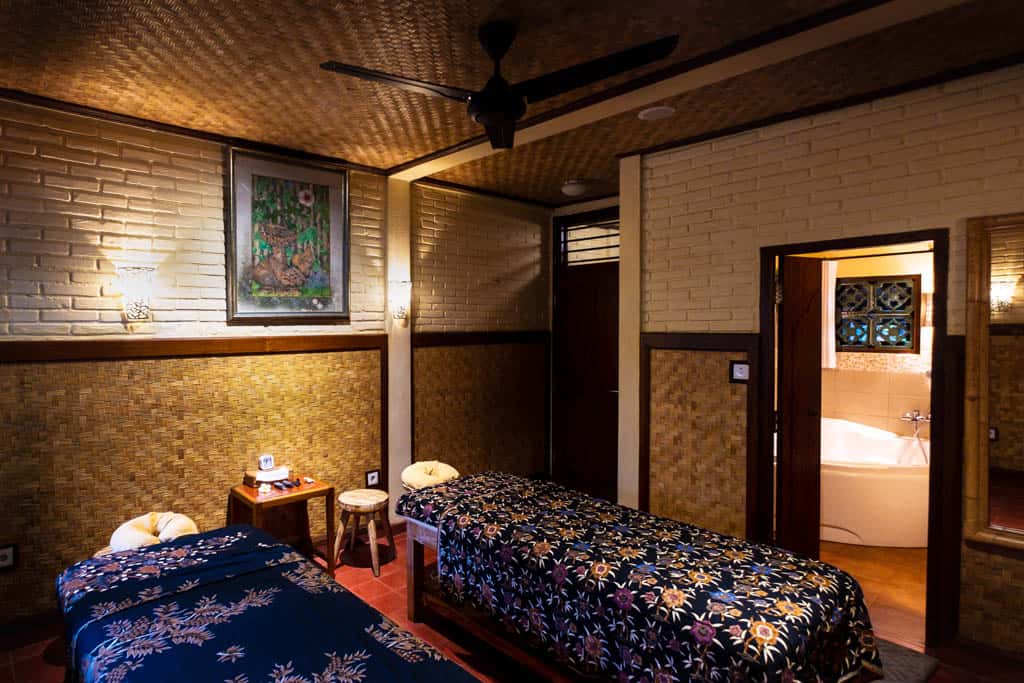
Relax in one of our new luxurious couple’s rooms at the popular Tamarind Spa at Murni’s Houses, which many say is the best spa in Bali, and a spa enthusiast even said was the best spa in the world (and she should know). En suite baths and showers, subdued lighting, individually controlled music, air conditioned.
Dine at the historic Murni’s Warung which was first real international restaurant in Ubud, now celebrating over 50 years, in a stunning, riverside gorge, a real photogenic location, and try Bali’s most famous local dishes.
Malang in East Java is a charming city to visit and easily accessible from Bali, Jakarta and Surabaya.
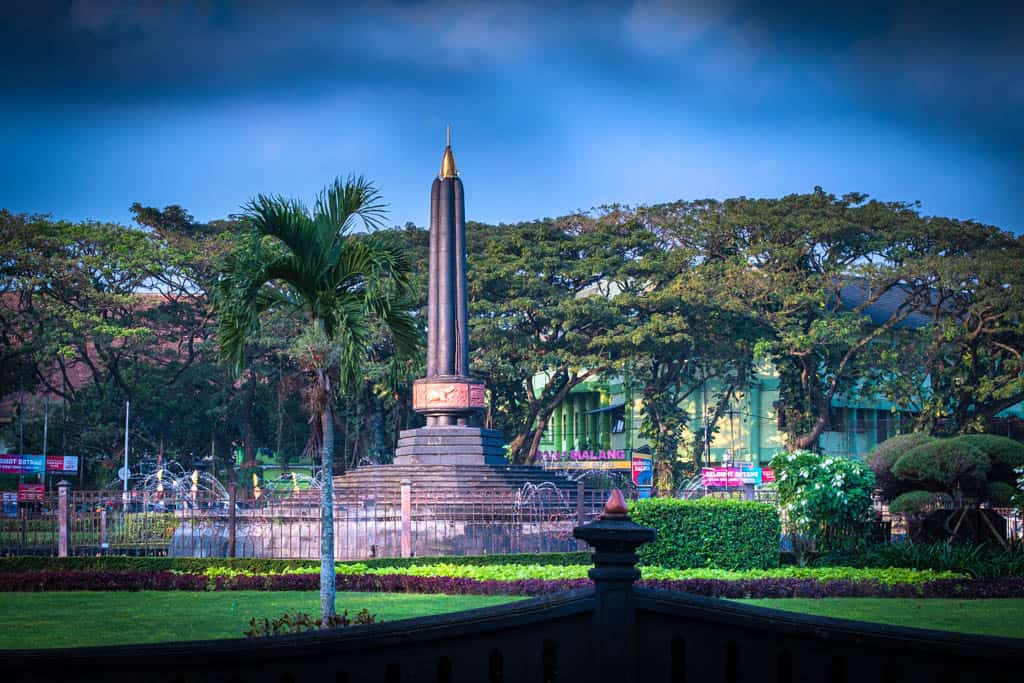
In front of the magnificent Tugu Hotel Malang, and the City Hall, stands the majestic Tugu Monument, landmark of Malang, and symbol of independent Indonesia, in a big colourful garden with a fountain and a pool. Old trembesi trees abound.
The Dutch built the city of Malang and the garden was the former garden of the notorious Governor of East Indies, Jan Pietersen Zoen Coen. It covers 11.923 square metres.
The Mayor planned to build an Independence Monument and construction began on Independence Day, 17 August 1946. The monument was signed by President Sukarno and AG Suroto, head of the Committee of Monument Construction. When it was 95% complete, the Dutch destroyed it on 23 December 1948. They were not willing to give up their colony.
On 9 July 1950 a new committee was formed to rebuild the monument and it was finished on 20 May 1953 and opened by President Sukarno, Indonesia’s first President. It is known as Alun Alun Bunder (Bunder = round shape) or Alun Alun Tugu or Taman Tugu.
Monument Tugu is shaped like a sharpened bamboo, the weapon used by Indonesian freedom fighters against the Dutch to gain independence. The chain stands for unity in Indonesia’s fight for freedom. The sets of stairs have 4 and 5 corners – 45, the year Indonesia gained Independence, 1945.
The monument is in the middle of a lotus fish pond – white and red symbolise the courage and purity of the heroes. There is an Indonesian map and the face of Bung Karno and Bung Hatta reading the Independence proclamation text.
Everyone knows that Ubud is the cultural capital, but in the last decade it’s also become the foodie capital of Bali , so much so that it could become a United Nations World Tourism Organization Global Gastronomy Destination.
It would be the first in Indonesia, so I was honoured a few days ago, as owner of the first restaurant in Ubud, to be invited to meet the representatives from the WTO and entertain them on the lowest and most romantic level of Murni’s Warung.
They were on a fact finding mission and carrying out interviews with “gastronomy stakeholders, hotels, restaurants, cooks, food festival initiators, local administration, academics, transportation service providers and tourists.” We had a great chat about gastronomy tourism and they stayed more than double their allotted time.
They now have to analyse what they’ve learnt from their visit and make an official recommendation.
If it’s positive, Ubud should receive its title as a Global Gastronomy Destinationin 2020.